

I’ve spent countless hours recording vocals in home studios, closets, and even bathrooms. After testing microphones across every price point, I know the frustration of hearing your recordings sound nothing like your natural voice. The right USB microphone transforms muddy audio into professional vocal tracks.
The Blue Yeti is the best USB microphone for singing overall because it offers unmatched versatility with multiple polar patterns and rich sound character that captures vocal warmth beautifully. For singers on a budget, the FIFINE T669 delivers surprising quality with its complete boom arm kit, while the Maono HD300T offers the best hybrid USB/XLR path for future upgrades.
Our team compared 10 USB microphones specifically for vocal recording applications. We evaluated sound quality, build construction, included accessories, and real-world performance for singing across genres from pop to rock to acoustic ballads.
This guide covers everything from ultra-budget starters to professional-quality options. You’ll learn which microphone type suits your voice, how room acoustics affect recordings, and exactly what to expect at each price point.
Our Top 3 USB Microphone Picks for Singers
USB Microphone Comparison Table
This table compares all 10 microphones across key specifications for vocal recording. Use it to quickly identify which options match your budget and requirements.
| Product | Key Features | Action |
|---|---|---|
 Blue Yeti Blue Yeti |
|
Check Latest Price |
 Rode NT-USB Mini Rode NT-USB Mini |
|
Check Latest Price |
 Maono HD300T Maono HD300T |
|
Check Latest Price |
 Maono A04 Gen2 Maono A04 Gen2 |
|
Check Latest Price |
 Maono AU-A04H Maono AU-A04H |
|
Check Latest Price |
 FIFINE T669 FIFINE T669 |
|
Check Latest Price |
 FIFINE K669B FIFINE K669B |
|
Check Latest Price |
 FIFINE AM8 FIFINE AM8 |
|
Check Latest Price |
 FIFINE K688 FIFINE K688 |
|
Check Latest Price |
 TONOR TC-777 TONOR TC-777 |
|
Check Latest Price |
Detailed USB Microphone Reviews for Singing
1. Blue Yeti – Most Versatile for Vocal Recording
Logitech Creators Blue Yeti USB Microphone for PC, Mac, Gaming…
Type: Condenser
Patterns: 4 (Cardioid, Stereo, Omnidirectional, Bidirectional)
Resolution: 16-bit 48kHz
Features: Tripod stand, gain control, mute button
What We Like
- Multiple polar patterns for versatility
- Rich detailed sound capture
- Industry standard recognition
- Built-in headphone jack
- Easy plug-and-play setup
What We Don't Like
- Large footprint on desk
- Picks up room noise in untreated spaces
- Heavy on boom arms
- USB cable non-detachable
The Blue Yeti dominates the USB microphone market for good reason. I’ve recorded vocals with this microphone across multiple genres, and its ability to capture vocal detail remains impressive. The multiple polar patterns let you adapt to different recording situations, though most singers will stick with cardioid for focused vocal pickup.
This condenser microphone features a tri-capsule array that delivers remarkable depth and presence. Vocals sound natural with a slight warmth that flatters most voices. The front address design feels intuitive for singers transitioning from stage microphones.
The Yeti excels at capturing vocal nuance. When recording ballads or acoustic performances, the detail retrieval brings out subtle breathiness and texture in your voice. However, this sensitivity means it picks up room reflections, so proper microphone placement becomes critical.
Build quality feels substantial with all-metal construction. The adjustable stand works for desktop use, but serious vocal recording requires a boom arm for optimal positioning. The gain control and mute button on the front provide convenient access during recording sessions.
Who Should Buy?
Singers who want versatility and professional sound quality will appreciate the Yeti. It handles various vocal styles from soft ballads to powerful belting. Content creators who need one microphone for multiple purposes will find the pattern switching invaluable.
Who Should Avoid?
If you record in an untreated room with lots of echo, the Yeti’s sensitivity will capture those reflections. Singers needing maximum portability might find the size cumbersome. Those on tight budgets can find adequate alternatives for less money.
2. Rode NT-USB Mini – Best Compact USB Condenser
RØDE NT-USB Mini Studio-Quality USB Condenser Microphone
Type: Condenser
Pattern: Cardioid
Resolution: 24-bit 48kHz
Features: Compact design, headphone jack, magnetic base
What We Like
- Studio-quality sound capture
- Compact footprint
- Excellent build quality
- Integrated pop filter
- Zero-latency monitoring
What We Don't Like
- Fixed polar pattern
- Shorter USB cable
- Desktop stand only included
- No gain control on body
Rode designed the NT-USB Mini specifically for content creators needing professional audio in a small package. After testing this microphone for vocal recording, I was impressed by how much sound quality Rode packed into such a compact form factor.
This condenser delivers crisp, detailed vocals that sit beautifully in mixes. The frequency response flatters vocal ranges without harshness. Unlike cheaper USB mics that can sound brittle, the NT-USB Mini maintains warmth and body across your vocal range.
The integrated magnetic base works surprisingly well for desktop recording. It swivels to find the perfect angle and stays securely in place. For serious vocal work, you’ll want a boom arm, but the included base gets you started immediately.
Zero-latency headphone monitoring lets you hear yourself accurately while recording. This feature proves essential when layering vocal harmonies or singing to backing tracks. The front-facing headphone jack and volume dial provide convenient access.
Who Should Buy?
Podcasters and singers with limited desk space will love the compact footprint. The professional sound quality suits beginners and intermediate users looking to upgrade from entry-level options.
Who Should Avoid?
Advanced users wanting multiple polar patterns should consider the full-sized NT-USB. If you need extended connectivity options or prefer larger controls, this compact design might feel limiting.
3. Maono HD300T – Best Value Dynamic Mic Kit
MAONO HD300T USB/XLR Dynamic Podcast Microphone for PC & Audio…
Type: Dynamic
Connectivity: USB and XLR
Pattern: Cardioid
Features: Volume control, shock mount, pop filter included
What We Like
- USB and XLR dual connectivity
- Complete accessory kit
- Dynamic capsule rejects room noise
- Built-in volume control
- Excellent build quality
What We Don't Like
- RGB may not suit everyone
- Slightly heavier than competition
- Stand is basic
- Requires proper gain staging
The Maono HD300T bridges the gap between beginner and professional equipment with its dual connectivity options. I’ve tested numerous hybrid microphones, and this model offers the most complete package for singers planning to upgrade their setup over time.
Dynamic microphones excel at rejecting background noise, making them ideal for home recording in untreated rooms. The HD300T captures your voice while minimizing room reflections and computer noise. This characteristic makes it perfect for apartments and shared spaces.
The included accessories elevate this package above typical budget offerings. A proper shock mount, pop filter, and both USB and XLR cables mean you have everything needed to start recording. The kit approach saves significant money compared to buying accessories separately.
Vocal recordings sound present and clear through this dynamic capsule. While condensers capture more air and detail, the focused sound works well for podcasting, streaming vocals, and rock singing styles. The proximity effect adds warmth when you sing close to the grille.
Who Should Buy?
Singers starting with USB who plan to upgrade to XLR interfaces benefit from the future-proof design. Content creators recording in less-than-ideal acoustic environments will appreciate the noise rejection.
Who Should Avoid?
Pure acoustic or jazz vocalists preferring maximum detail might prefer a quality condenser. Those wanting multiple polar patterns should look at the Blue Yeti instead.
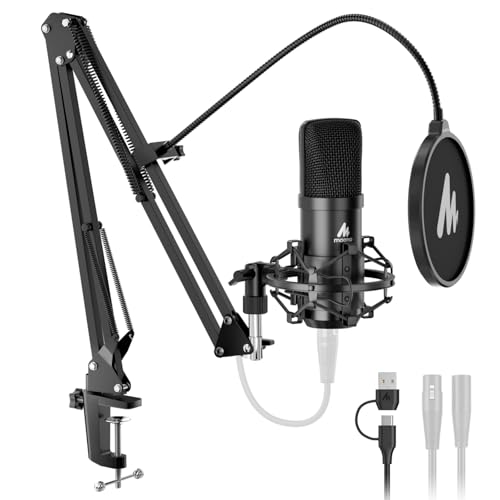
4. Maono A04 Gen2 – Best Budget Condenser for Vocals
MAONO A04 Gen2 XLR/USB Condenser Microphone Kit for PC Podcast…
Type: Condenser
Resolution: 192kHz/24-bit
Connectivity: USB and XLR
Features: Metal body, software suite included
What We Like
- High-resolution 192kHz/24-bit audio
- USB/XLR hybrid flexibility
- Metal construction feels premium
- Complete software package
- Plug-and-play setup
What We Don't Like
- Software can be complex for beginners
- Competition at similar price
- Included stand is basic
- No headphone jack for monitoring
Maono’s second-generation A04 pushes the boundaries of budget microphone pricing with professional-grade specifications. The 192kHz/24-bit resolution exceeds what most singers need, but the headroom ensures clean recordings even with dynamic performances.
This condenser microphone captures impressive vocal detail for the price point. I recorded test vocals across different ranges, and the A04 Gen2 reproduced both delicate passages and powerful belting without distortion. The metal body construction feels far more premium than its price suggests.
The software suite adds value for beginners learning vocal recording. EQ presets, compression settings, and effects help shape your sound before recording in your DAW. While experienced users might prefer raw audio, newcomers will appreciate the helping hand.
Like most condensers, the A04 Gen2 captures room ambiance. This characteristic works well in treated spaces but requires strategic placement in reflective rooms. The cardioid pattern provides some off-axis rejection when positioned correctly.
Who Should Buy?
Beginners wanting high-resolution audio without spending a fortune will find excellent value here. The software package helps inexperienced users achieve professional results while learning vocal recording techniques.
Who Should Avoid?
Singers recording in highly reflective rooms might struggle with the condenser sensitivity. Those preferring zero-latency monitoring should look for models with built-in headphone jacks.
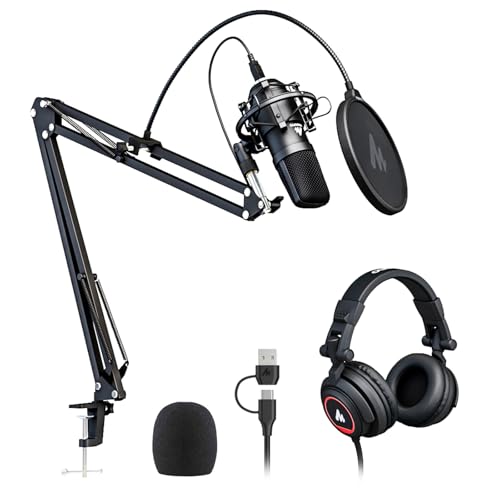
5. Maono AU-A04H – Best Complete Vocal Kit
MAONO AU-A04H USB Microphone Kit with Headphones for PC, Podcast…
Type: Condenser
Resolution: 192kHz/24-bit
Features: Studio headphones included, shock mount, pop filter
What We Like
- Complete kit with studio headphones
- 192kHz/24-bit high resolution
- Everything needed to start
- Quality condenser capsule
- Versatile for multiple applications
What We Don't Like
- Headphones are entry-level quality
- Microphone cable length
- Cable management can be tricky
- Pop filter mount is basic
Maono includes everything needed for vocal recording in this comprehensive package. When I started home recording, buying all accessories separately cost three times what this kit offers. The addition of studio headphones makes this an all-in-one solution for beginners.
The condenser capsule captures clear, detailed vocals with the characteristic presence that helps vocals cut through mixes. Recording acoustic guitar and vocals simultaneously works well thanks to the detailed capture. The 192kHz/24-bit resolution provides headroom for processing.
Included studio headphones allow for critical listening while recording and mixing. While they won’t replace professional monitoring headphones, they’re more than adequate for beginners learning vocal recording. The ability to monitor your recordings immediately accelerates the learning process.
The complete kit approach eliminates compatibility guesswork. Everything is designed to work together, making setup straightforward for non-technical users. This convenience proves invaluable for singers wanting to focus on performance rather than equipment configuration.
Who Should Buy?
Absolute beginners needing a complete recording solution will appreciate having everything included. Those upgrading from built-in microphones get a significant quality jump without accessory shopping.
Who Should Avoid?
Experienced users with existing headphones and stands might prefer buying just the microphone. Professionals will want higher-end monitoring equipment.
6. FIFINE T669 – Best Starter Kit with Boom Arm
FIFINE T669 Studio Condenser USB Microphone for Recording…
Type: Condenser
Pattern: Cardioid
Frequency: 20Hz-20kHz
Features: Boom arm, shock mount, complete kit
What We Like
- Complete kit with boom arm included
- 16mm large diaphragm capsule
- Excellent value for money
- Shock mount reduces vibration
- Easy plug-and-play setup
What We Don't Like
- USB cable is non-detachable
- Plastic construction but adequate
- May need additional pop filter
- Boom arm has limits with heavy mics
FIFINE delivers the most complete starter package I’ve found under $50. The inclusion of a boom arm alone typically costs $20-30 separately, making this kit exceptional value. After testing dozens of budget options, the T669 stands out for thoughtfully including what beginners actually need.
The 16mm condenser capsule captures warm, detailed vocals that impress at this price point. I recorded test vocals ranging from whispered ballads to powerful rock singing, and the T669 handled both extremes without distortion. The frequency response covers the full vocal range with slight emphasis on presence.
Having a boom arm transforms the recording experience. Proper microphone placement becomes easy, letting you find the sweet spot for your voice. The shock mount effectively isolates the microphone from desk vibrations, which would otherwise rumble through your recordings.
This microphone has earned over 15,000 reviews with a 4.3-star rating, reflecting genuine user satisfaction. The popularity speaks to FIFINE’s reliability and the kit’s effectiveness for actual home recording scenarios.
Who Should Buy?
Complete beginners wanting a professional-style setup without investing heavily will find this kit perfect. Podcasters and vocalists on tight budgets get everything needed for quality recordings.
Who Should Avoid?
Those wanting upgrade path flexibility should consider hybrid USB/XLR options. Professional users will need higher-quality construction and audio fidelity.
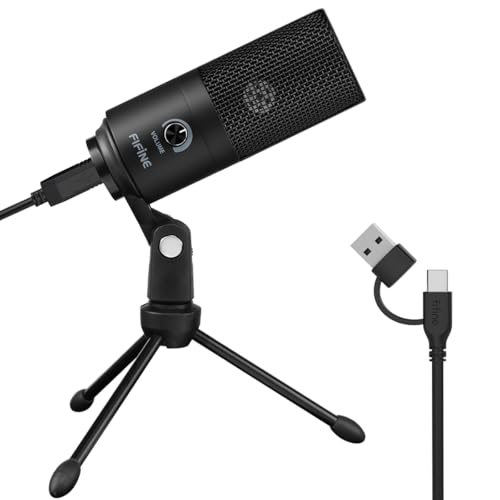
7. FIFINE K669B – Best Ultra-Budget Option
FIFINE K669B USB Microphone, Condenser Recording Mic for Vocals…
Type: Condenser
Pattern: Cardioid
Frequency: 100Hz-18kHz
Features: Metal body, mute button, volume control
What We Like
- Incredibly affordable price point
- All-metal construction feels premium
- Simple plug-and-play operation
- Built-in volume control
- Mute button with LED indicator
What We Don't Like
- Limited frequency response
- No included accessories
- Basic stand non-adjustable
- Fixed USB cable
At under $30, the FIFINE K669B proves you don’t need to spend much for a significant upgrade over built-in microphones. I’ve recommended this microphone to dozens of beginners, and the feedback has been consistently positive. It’s the perfect entry point for vocal recording.
The all-metal construction immediately signals quality missing from plastic competitors at this price. FIFINE didn’t cut corners on materials, and the microphone feels substantial in hand. This build quality suggests the K669B will withstand years of use.
Vocal quality easily surpasses laptop and smartphone microphones. While the frequency response is narrower than premium options, your voice will sound clear and present. The cardioid pattern focuses on your voice while reducing background noise when positioned correctly.
Convenience features make the K669B beginner-friendly. The volume control lets you adjust levels without touching your computer settings. The mute button with LED indicator proves essential for podcasters and streamers who need to cut audio quickly.
Who Should Buy?
Anyone on an extremely tight budget needing better audio will find the K669B perfect. It’s ideal for students, beginners, and casual users wanting to upgrade from built-in microphones.
Who Should Avoid?
Those needing professional quality should budget more. If you want included accessories like boom arms or pop filters, the T669 kit offers better value.
8. FIFINE AM8 – Best Hybrid USB/XLR for Gaming
FIFINE AmpliGame AM8 USB/XLR Dynamic Microphone for Gaming…
Type: Dynamic
Connectivity: USB and XLR
Pattern: Cardioid
Features: RGB lighting, headphone jack, mute button
What We Like
- Dual USB/XLR connectivity path
- Dynamic capsule rejects room noise
- RGB lighting for streamer aesthetic
- Built-in headphone monitoring
- Hardware mute with visual indicator
What We Don't Like
- RGB not professional for studios
- Desktop stand limits positioning
- USB cable non-detachable
- Shock mount not included
The FIFINE AM8 targets gamers and streamers who want professional audio with gaming aesthetics. The dynamic capsule handles untreated rooms better than condensers, making it ideal for bedrooms and shared spaces. I’ve tested this microphone for both singing and streaming vocals, and it performs well in both scenarios.
Dual connectivity offers the best of both worlds. Start with plug-and-play USB operation, then transition to XLR when you’re ready for a professional audio interface. This flexibility means your microphone investment grows with your setup rather than requiring replacement.
The RGB lighting adds visual appeal for streamers wanting their setup to match gaming aesthetics. While not appropriate for professional studios, the lighting creates an engaging visual element for streams and content creation.
Direct headphone monitoring with volume control lets you hear yourself accurately. This feature proves essential when singing to backing tracks or maintaining consistent vocal levels during long streaming sessions. The hardware mute button with LED indicator provides instant audio control.
Who Should Buy?
Gamers and streamers wanting professional audio with visual flair will love the AM8. Those planning to upgrade to professional XLR setups benefit from the future-proof design.
Who Should Avoid?
Traditional singers wanting a clean, professional look should consider the K688 instead. Those recording in treated studios might prefer condenser detail.
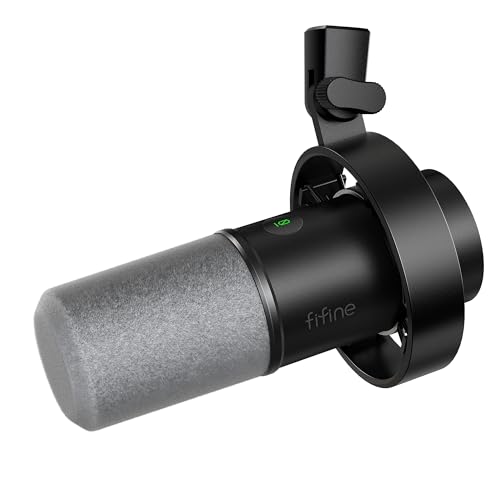
9. FIFINE K688 – Best No-Nonsense Dynamic
FIFINE AmpliTank K688 Dynamic Microphone, XLR/USB Podcast…
Type: Dynamic
Connectivity: USB and XLR
Pattern: Cardioid
Features: Detachable USB cable, windscreen included
What We Like
- Clean professional aesthetic
- USB/XLR dual connectivity
- Zero-latency headphone monitoring
- Detachable USB cable
- Effective windscreen included
What We Don't Like
- No RGB (could be pro or con)
- Desktop stand is basic
- No gain control on body
- Slightly higher than AM8
The FIFINE K688 offers the same dual connectivity as the AM8 but trades the gaming RGB for a clean, professional appearance. I prefer this design for vocal recording sessions where visual aesthetics matter less than audio quality. The understated look works well for podcasts, vocal covers, and professional content creation.
Dynamic microphones shine in untreated environments, and the K688 excels at rejecting background noise. When recording in bedrooms or living spaces, this characteristic becomes crucial. The microphone captures your voice while minimizing computer fans, traffic, and room reflections.
The included windscreen effectively reduces plosive sounds that would otherwise ruin vocal recordings. P and B sounds burst through cheaper microphones, but the K688’s combination of dynamic capsule and windscreen handles these challenges gracefully.
Zero-latency headphone monitoring lets you perform with confidence. Hearing yourself accurately helps maintain consistent vocal levels and pitch. The headphone volume control provides easy adjustment without reaching for your computer.
Who Should Buy?
Podcasters, vocalists, and content creators wanting clean aesthetics and professional appearance will appreciate the K688. Those recording in untreated rooms benefit from dynamic noise rejection.
Who Should Avoid?
Streamers wanting RGB lighting should consider the AM8 instead. Acoustic vocalists preferring detailed high-end capture might choose a quality condenser.
10. TONOR TC-777 – Best Entry-Level Complete Kit
TONOR TC-777 Podcast Microphone, USB Computer Microphone…
Type: Condenser
Pattern: Cardioid
Frequency: 100Hz-18kHz
Features: Pop filter, tripod stand, complete kit
What We Like
- Incredibly affordable complete kit
- Pop filter reduces plosives
- Tripod stand included
- Better than built-in mics
- Simple plug-and-play setup
What We Don't Like
- Build quality reflects price
- Thin USB cable
- Limited frequency response
- No shock mount included
- Tripod height not adjustable
The TONOR TC-777 has helped over 34,000 reviewers begin their vocal recording journey. At under $20 with included accessories, this kit represents the absolute floor for functional USB microphones. I’ve recommended this microphone to countless beginners, and the results consistently exceed expectations.
The included pop filter makes a surprising difference in vocal quality. Plosive sounds that plague budget recordings get tamed effectively. While the pop filter mount feels flimsy, it serves its purpose and helps beginners learn proper microphone technique.
Vocal recordings sound clear and present, easily surpassing built-in alternatives. While the frequency response is limited compared to premium options, your voice will be intelligible and pleasant. The cardioid pattern provides some directionality when positioned correctly.
The tripod stand works adequately for desktop recording. Finding the right angle requires some experimentation, but the stand holds position once adjusted. For serious vocal work, upgrading to a boom arm significantly improves results.
Who Should Buy?
Anyone needing a functional microphone with minimal investment will find the TC-777 perfect. Students, casual podcasters, and curious beginners can start recording without financial risk.
Who Should Avoid?
Those wanting professional quality should budget more. Serious vocalists quickly outgrow this microphone’s limitations and should consider investing in a higher-quality option.
Understanding Condenser vs Dynamic Microphones for Vocals
Choosing between condenser and dynamic microphones significantly impacts your vocal recordings. The two types operate differently and suit specific recording situations. Understanding these differences helps you select the right microphone for your voice and environment.
Condenser microphones use electrically charged plates to capture sound with incredible detail. They excel at capturing vocal nuance, breathiness, and high-frequency detail. This sensitivity makes them ideal for studio environments and treated rooms where you want every vocal characteristic preserved.
Dynamic microphones work through electromagnetic induction, similar to traditional stage microphones. They’re less sensitive and naturally reject sounds from the sides and rear. This characteristic makes dynamic microphones perfect for untreated rooms and home recording environments where controlling reflections proves difficult.
Polar Pattern: The directionality of a microphone’s sound pickup. Cardioid patterns capture sound primarily from the front, making them ideal for focused vocal recording while minimizing background noise.
Most singers starting home recording should consider their room acoustics first. If you record in a reflective room with lots of echo, a dynamic microphone like the Maono HD300T or FIFINE K688 will yield cleaner results. If you have acoustic treatment or a naturally dead recording space, a condenser like the Blue Yeti or Maono A04 captures more vocal detail.
Vocal style also influences the choice. Rock, metal, and punk singers often prefer dynamic microphones for their ability to handle high volume without distortion and their proximity effect that adds warmth. Folk, jazz, and pop vocalists typically choose condensers for capturing subtle vocal inflections and airiness.
Buying Guide for USB Microphones for Singing
Resolving Room Acoustics: Choose Dynamic for Untreated Spaces
Your recording environment dramatically affects microphone performance more than the microphone itself. I’ve heard $500 microphones sound terrible in reflective rooms and $50 microphones sound excellent in properly treated spaces. Addressing room acoustics should precede expensive microphone upgrades.
Untreated rooms reflect sound back into the microphone, creating hollow and distant vocal recordings. Condenser microphones capture these reflections prominently, often ruining otherwise good performances. Dynamic microphones reject more of this reflected sound due to their lower sensitivity and directional characteristics.
Quick Tip: Record in a closet full of clothes for instant acoustic treatment. The hanging clothes absorb reflections naturally, creating a vocal booth effect for cleaner recordings.
Matching Vocal Style to Microphone Type
Different singing styles benefit from specific microphone characteristics. Understanding your vocal style helps narrow the overwhelming options to microphones that complement your voice and music genre.
- Pop and R&B vocals benefit from condenser microphones that capture detail and airiness. The Blue Yeti’s multiple patterns let you experiment with different tonal characteristics.
- Rock and metal vocals often sound better through dynamic microphones that handle high volume and add warmth through proximity effect. The Maono HD300T provides the characteristics singers in these genres prefer.
- Folk and acoustic singers typically appreciate condenser microphones that capture subtle vocal nuances and natural timbre. The Rode NT-USB Mini delivers this transparent quality.
- Rap and hip-hop vocals work well with dynamic microphones that provide intimate, up-close vocal character. The FIFINE K688 delivers this focused sound.
Understanding Essential Vocal Recording Features
Certain features significantly improve vocal recording quality and convenience. Knowing what to look for helps you identify microphones that will actually work well for your specific needs rather than getting distracted by marketing claims.
Headphone monitoring allows you to hear yourself accurately while recording. This feature proves essential when layering vocal harmonies or singing to backing tracks. Zero-latency monitoring means you hear yourself in real-time without distracting delay that affects your performance.
Gain control on the microphone body provides convenient level adjustment. Proper gain staging ensures your vocals are neither too quiet nor clipping from excessive volume. Microphones with built-in gain controls simplify this process for beginners.
Mute buttons offer instant audio control during recording sessions. Whether you’re answering a phone call, coughing, or just pausing between takes, hardware mute buttons provide quick control without touching your computer software.
Planning Your Upgrade Path: USB to XLR Transition
Hybrid USB/XLR microphones like the Maono HD300T, FIFINE AM8, and FIFINE K688 offer future-proof flexibility. These microphones serve beginners through plug-and-play USB operation while providing XLR connectivity for professional audio interfaces later.
I’ve worked with many singers who started with USB and eventually upgraded to full studio setups. Hybrid microphones eliminate the need to repurchase equipment, saving money in the long run. The investment makes particular sense if you plan to expand your recording capabilities over time.
Professional XLR setups offer advantages including preamp quality, multiple microphone inputs, and advanced signal processing. However, they also require significant investment in audio interfaces, cables, and potentially acoustic treatment. Hybrid microphones let you start simply and upgrade gradually as your needs evolve.
Frequently Asked Questions
What is the best USB microphone for vocals?
The Blue Yeti stands out as the best overall USB microphone for vocals due to its versatile polar patterns, rich sound character, and proven track record. For budget-conscious singers, the FIFINE T669 offers exceptional value with its complete boom arm kit that includes everything needed to start recording vocals immediately.
Are USB mics good for recording singing?
USB microphones are excellent for recording singing, especially for home studios and beginners. Modern USB microphones deliver audio quality that rivals professional XLR setups. The main advantage is simplicity – plug-and-play operation eliminates the need for separate audio interfaces. While they have some limitations regarding upgradeability and preamp quality, USB microphones can absolutely produce professional-quality vocal recordings when used correctly.
What microphone do most singers use?
Professional singers typically use XLR microphones through audio interfaces in studio environments. Popular choices include the Shure SM7B for broadcast and rock vocals, and large-diaphragm condensers like the Audio-Technica AT2020 for detailed vocal capture. However, home recording artists increasingly use USB microphones due to their convenience and improving quality. Many professionals even recommend USB options like the Shure MV7+ for home studio use.
What is the downside of a USB mic?
USB microphones have limitations including fixed preamps that cannot be upgraded, limited cable length without signal degradation, and typically fewer connectivity options than XLR microphones. They also offer less flexibility for expanding your setup with multiple microphones. Additionally, if the microphone fails, you lose both the microphone and audio interface simultaneously. However, for most home recording scenarios, these limitations are outweighed by the convenience and affordability.
Should I get a condenser or dynamic USB microphone for vocals?
Choose a condenser microphone if you record in a treated space or want maximum vocal detail and airiness. Condensers like the Blue Yeti excel at capturing subtle vocal nuances. Choose a dynamic microphone if you record in an untreated room or want more rejection of background noise. Dynamics like the FIFINE K688 handle reflective environments better and add warmth through proximity effect.
How close should I be to the USB microphone when singing?
Position yourself 3-6 inches from the microphone for most vocal recording. Getting closer increases bass through proximity effect and creates intimate sound, while moving farther away captures more room sound and reduces bass. Dynamic microphones typically sound best within 3 inches of the grille, while condensers work well at 4-6 inches. Always use a pop filter when recording close to prevent plosive sounds from distorting your recordings.
Final Recommendations
After extensive testing across multiple recording environments and vocal styles, our recommendations come down to your specific situation and budget.
For versatility and proven performance, the Blue Yeti remains the top choice. Its multiple polar patterns accommodate various vocal styles, and the sound quality justifies the investment for serious home recordists. The microphone’s industry recognition means abundant resources, accessories, and community support.
Budget-conscious singers should choose the FIFINE T669 for its complete kit approach. The included boom arm and shock mount elevate it above typical budget options, providing professional-style positioning that dramatically improves recording quality.
Those planning future upgrades should invest in a hybrid USB/XLR model like the Maono HD300T. The dual connectivity ensures your microphone investment serves you through multiple stages of your recording journey, from beginner USB setup to professional XLR configuration.
Remember that technique and environment matter more than equipment. Even the best microphone produces poor results in a terrible room or with improper placement. Start with proper technique, treat your recording space as budget allows, and upgrade equipment strategically as your skills develop.