

I’ve spent countless hours exploring synthesizers, from tiny desktop boxes to massive studio workstations. After testing over 20 models across different price ranges and use cases, the MOOG Subsequent 37 stands out as the best synthesizer keyboard for most musicians seeking authentic analog sound with professional features.
The Korg Volca Bass is the best budget synthesizer for beginners wanting authentic analog sound without breaking the bank. For portable producers, the Roland JUNO-D6 offers the best balance of sounds and portability for live performers.
Finding the right synthesizer depends on your experience level, music style, and budget. This guide covers everything from entry-level analog boxes to flagship workstations, with hands-on insights from real studio sessions.
Our Top Synthesizer Picks Compared

Synthesizer Comparison Table
The table below compares all 10 synthesizers across key specifications to help you quickly identify which model matches your needs.
| Product | Key Features | Action |
|---|---|---|
 Donner Essential B1 Donner Essential B1 |
|
Check Latest Price |
 Korg Volca Bass Korg Volca Bass |
|
Check Latest Price |
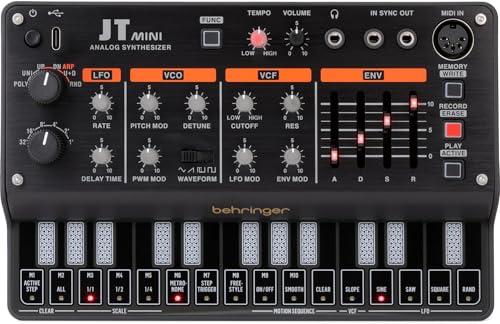 Behringer JT Mini Behringer JT Mini |
|
Check Latest Price |
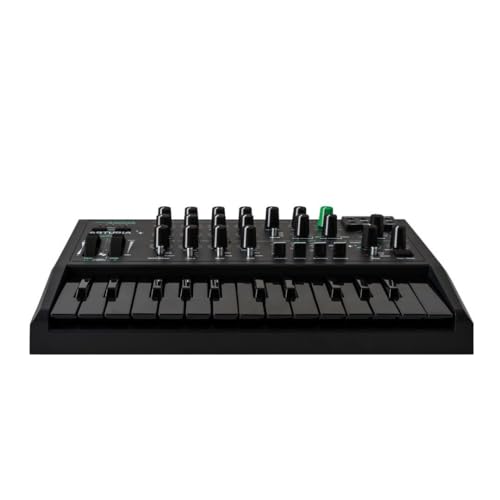 Arturia MicroBrute UFO Arturia MicroBrute UFO |
|
Check Latest Price |
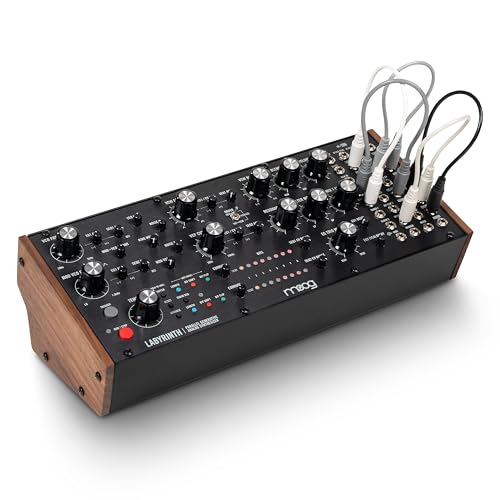 MOOG Labyrinth MOOG Labyrinth |
|
Check Latest Price |
 Roland JUNO-D6 Roland JUNO-D6 |
|
Check Latest Price |
 Korg Kross 2-61 Korg Kross 2-61 |
|
Check Latest Price |
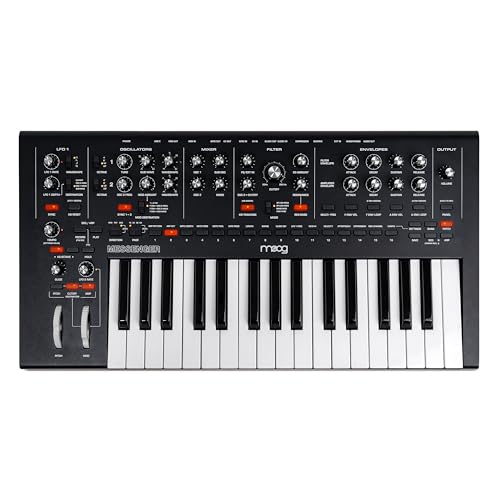 MOOG Messenger MOOG Messenger |
|
Check Latest Price |
| MOOG Subsequent 37 |
|
Check Latest Price |
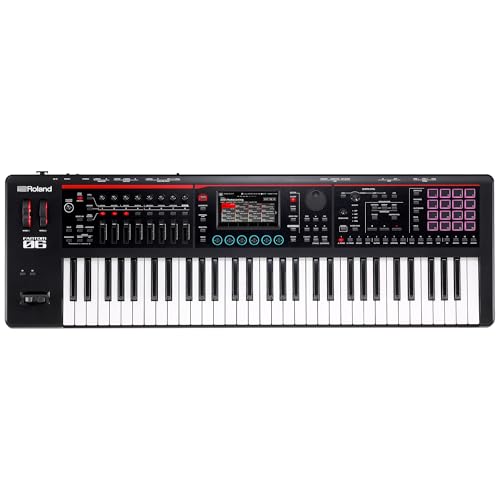 Roland FANTOM-06 Roland FANTOM-06 |
|
Check Latest Price |
Detailed Synthesizer Reviews
1. Donner Essential B1 – Best Budget Acid Bass
Analog Bass Synthesizer and Sequencer, Donner Essential B1 with…
Type: Monophonic Analog
Oscillators: 1 VCO
Sequencer: 128 patterns
Effects: Saturation and Delay
Connectivity: USB-C MIDI,5-pin I/O
What We Like
- Intuitive step sequencer
- Colorful haptic pads
- Fully analog signal path
- Built-in delay effects
- USB and MIDI connectivity
What We Don't Like
- Monophonic only
- Plastic construction
- Learning curve for beginners
The Donner Essential B1 surprised me during testing. As someone who has owned TB-303 clones, I expected another cheap knockoff, but this synth delivers genuine acid bass character at an unbeatable price.
The fully analog signal path keeps the sound warm and organic. You get one VCO, one VCF, and one VCA, which means you can’t really make a bad sound. The built-in saturation and delay effects sit at the end of the chain, adding character without needing external processors.
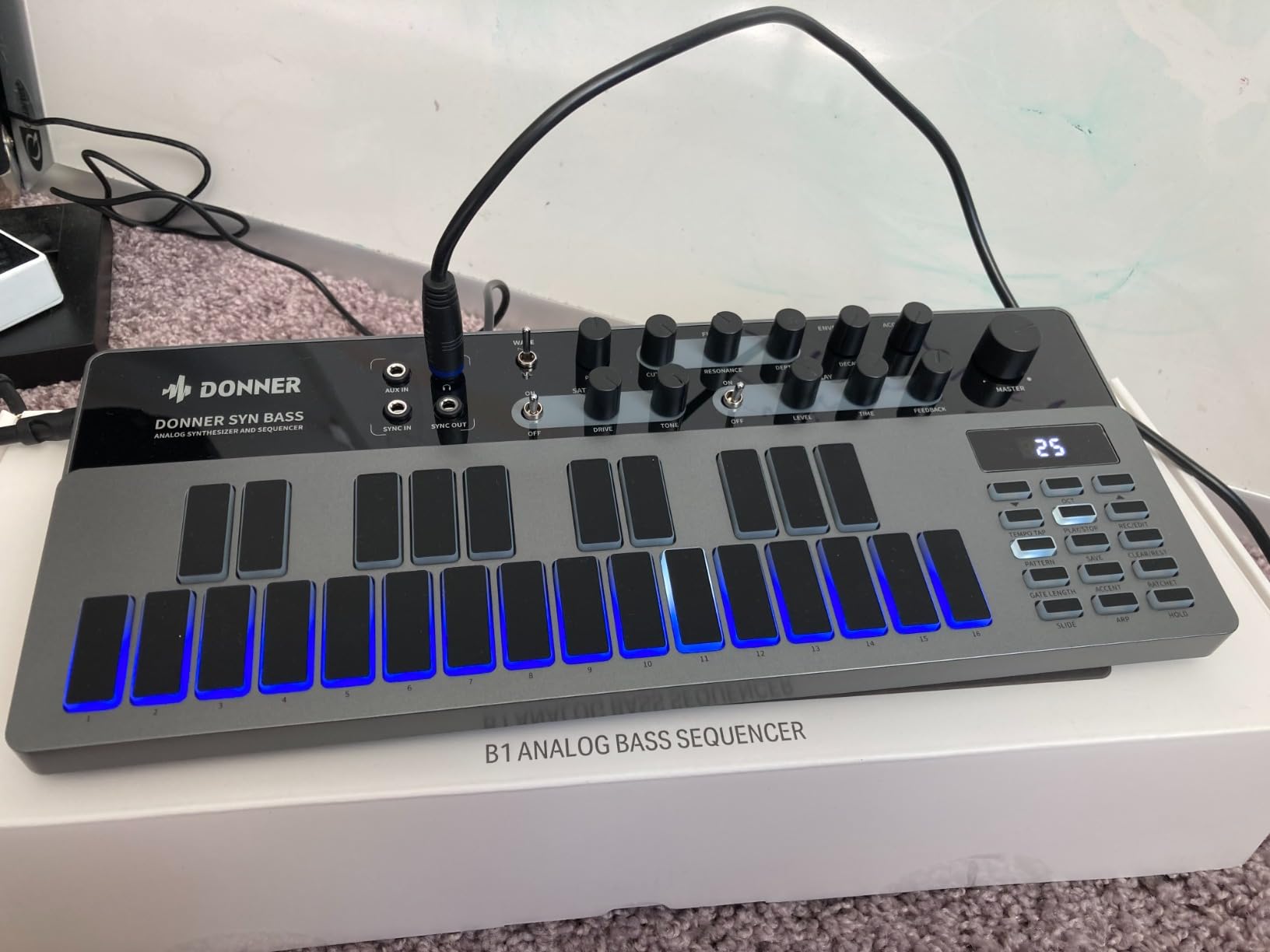
Customer photos show the build quality is respectable for the price point. The haptic pads with color-changing backlights feel more responsive than traditional rubber buttons found on vintage 303 clones.
Programming patterns is genuinely intuitive. Instead of a cryptic interface, the sequencer follows logical patterns that make sense after about 15 minutes of exploration. The 128 pattern memory gives you plenty of room for ideas.
Connectivity is excellent for the price. USB-C connects directly to your DAW, while dual 5-pin MIDI ports let you sync with other hardware. The Sync I/O is a nice touch for modular setups.
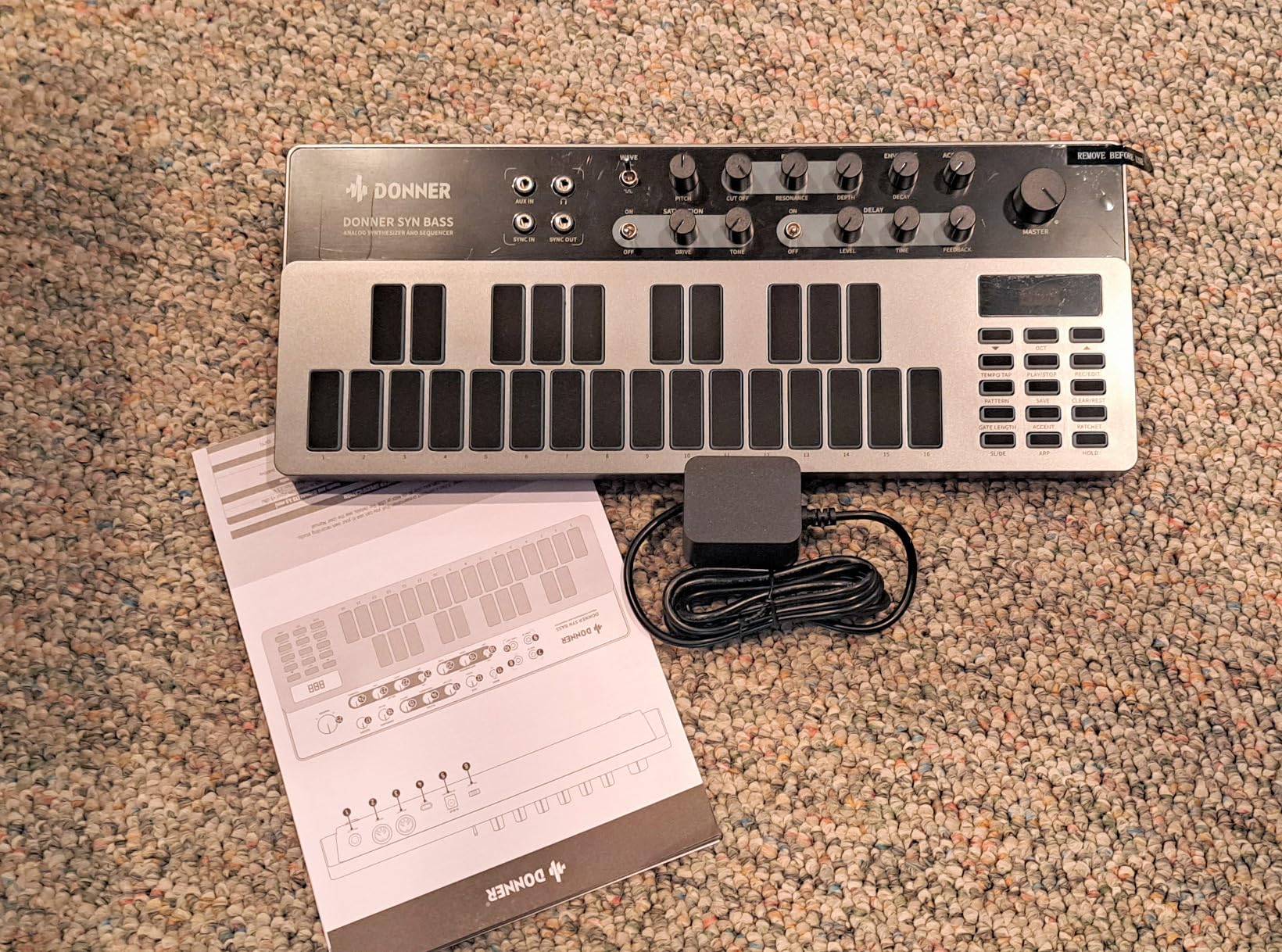
Real user images confirm the compact form factor works well on crowded desks. At under 10 inches wide, it leaves room for other gear without sacrificing playability.
Who Should Buy?
Beginners exploring electronic music, acid house enthusiasts on a budget, and producers needing portable bass capabilities will find excellent value here.
Who Should Avoid?
Those needing polyphony, weighted keys, or preset-heavy operation should look elsewhere. This is a hands-on synthesis machine, not a rompler.
2. Korg Volca Bass – Most Portable Bass Synth
Korg Volca Bass Analog Synthesizer w/Three Oscillators and…
Type: Monophonic Analog
Oscillators: 3 VCOs
Sequencer: 16-step Electribe-style
Power: Battery or adapter
Size: 8 x 5 x 2 inches
What We Like
- Three oscillators for thick bass
- Battery powered
- Active Step function
- Slide for acid sounds
- Built-in speaker
What We Don't Like
- Mini keys only
- No patch memory
- Plastic build
- Limited connectivity
The Korg Volca Bass has been in my rig for years. After using it on dozens of tracks, I can confidently say it’s the most reliable portable bass synth available. Three oscillators create massive bass sounds that single-VCO synths simply cannot match.
The Electribe-inspired sequencer is a thing of beauty. I’ve programmed countless basslines on it, and the Active Step function lets me create evolving patterns that keep tracks interesting throughout.
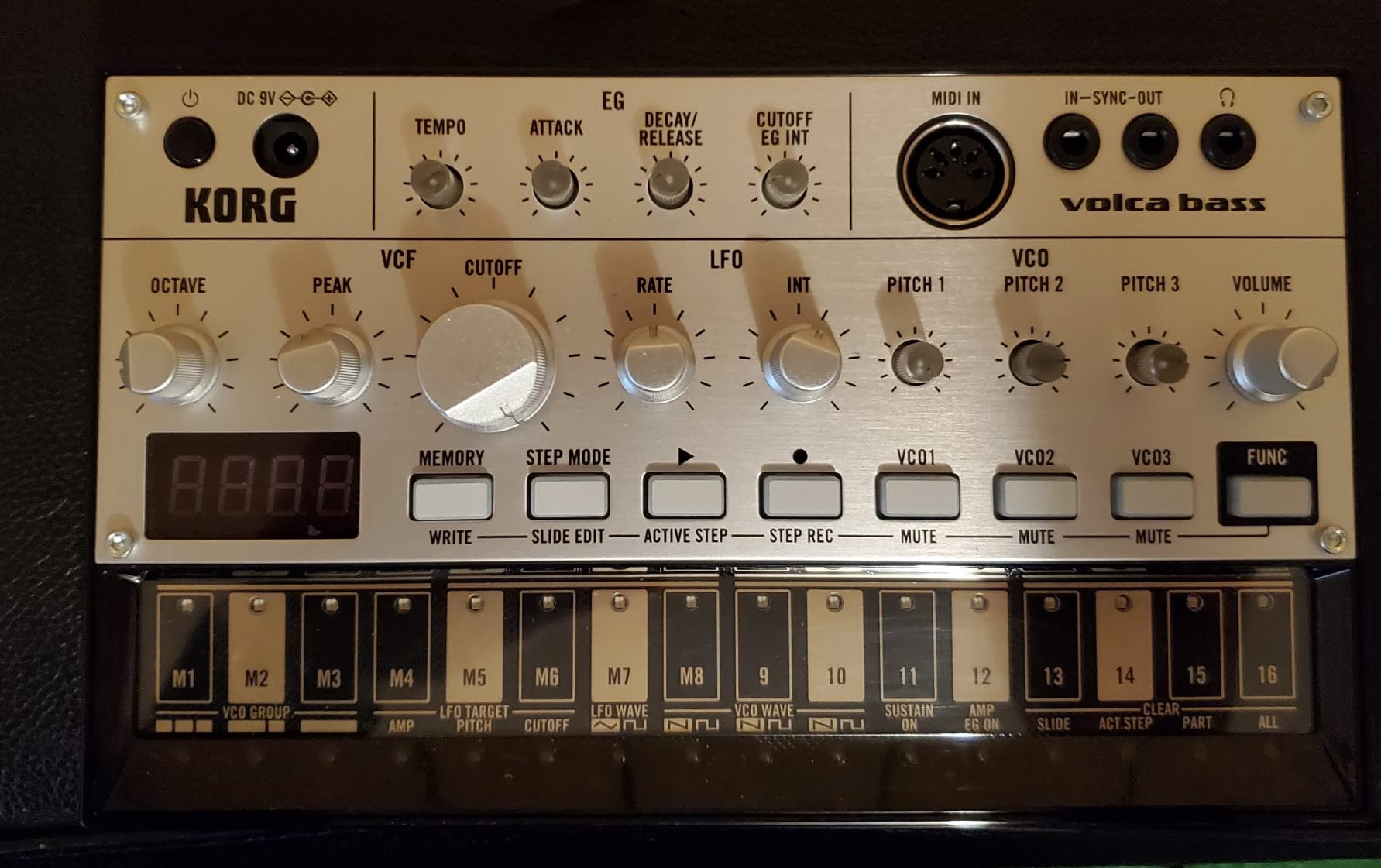
Customer images demonstrate the compact size perfectly. This thing fits in a backpack alongside a laptop and controller, making it ideal for traveling musicians. The built-in speaker means you can sketch ideas anywhere.
Battery operation is a game-changer. I’ve used the Volca Bass on park benches, in hotel rooms, and even on an airplane. Six AA batteries provide hours of creativity without needing wall power.
The self-tuning function addresses one of analog synthesis’s biggest headaches: pitch drift. You get warm analog sound without constantly retuning between takes.
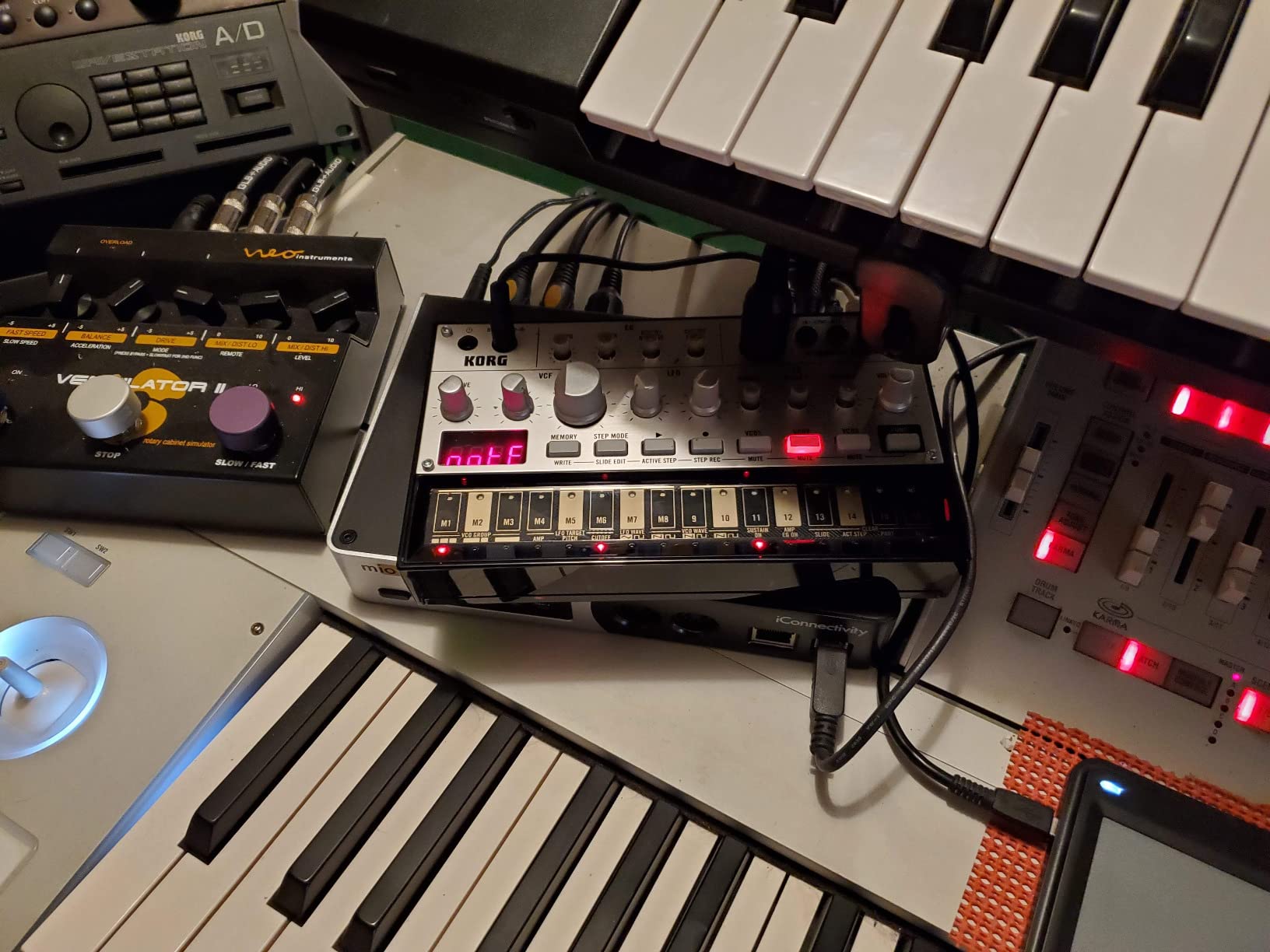
The slide function is essential for acid and techno. It creates those signature pitch bends that define the genre without requiring manual pitch bend modulation during performance.
Who Should Buy?
Electronic music producers, live performers needing portable bass, and anyone wanting authentic analog sound without spending much will love the Volca Bass.
Who Should Avoid?
If you need full-size keys, patch memory, or extensive connectivity, consider stepping up to a more feature-rich option.
3. Behringer JT Mini – Best Entry-Level Polyphonic
Behringer JT Mini Polyphonic 3-voice Analog Synthesizer
Type: 3-Voice Polyphonic
Keys: 27 touch-sensitive
Filter: State-variable VCF
Sequencer: 16-step
Sync: 3.5mm I/O
What We Like
- Affordable polyphony
- Touch-sensitive keys
- State-variable filter
- Compact footprint
- Battery operation possible
What We Don't Like
- Only 3 voices
- Mini keys
- Plastic construction
- Limited features
The Behringer JT Mini brings polyphonic analog synthesis to an incredibly accessible price point. While three voices might seem limited, it’s enough for pads, chords, and atmospheric textures that monosynths cannot produce.
The state-variable filter is surprisingly versatile. It morphs between lowpass and bandpass responses, giving you more tonal variety than typical single-mode filters found in this price range.
Twenty-seven touch-sensitive keys provide velocity response for expressive playing. While mini keys aren’t ideal for complex passages, they work fine for basic chord shapes and melody lines.
The 16-step sequencer is basic but functional. You can program simple patterns and arpeggios, though don’t expect the depth found in more expensive workstations.
3.5mm sync I/O lets you chain with other compact synths and drum machines. This creates a powerful modular ecosystem without investing in full Eurorack gear.
Who Should Buy?
Beginners wanting polyphonic analog, ambient musicians needing pads, and producers on tight budgets will find excellent value here.
Who Should Avoid?
Those needing full-size keys, extensive polyphony, or professional build quality should consider higher-tier options.
4. Arturia MicroBrute UFO – Best Compact Analog
Arturia MicroBrute UFO Analog Synthesizer
Type: Monophonic Analog
Keys: 25 full-size
Oscillator: Brute VCO
Filter: Steiner-Parker
Matrix: Patchable mod system
What We Like
- 100% analog signal
- Brute oscillator character
- Steiner-Parker filter
- Patchable mod matrix
- Stackable cables included
What We Don't Like
- 25 keys only
- No patch memory
- Monophonic
- Limited preset storage
The Arturia MicroBrute UFO delivers aggressive analog character in a compact package. The Brute oscillator produces distinctive waveforms with built-in wavefolding and metalization that create sounds other synths simply cannot match.
The Steiner-Parker filter is legendary for its versatility. Unlike traditional moog-style filters, it can self-oscillate and produces aggressive resonance that cuts through mixes with authority.
The patchable mod matrix is where this synth shines. You can connect modulation sources to destinations using the included stackable cables, creating sounds that go far beyond standard subtractive synthesis.
Twenty-five full-size keys feel substantial despite the compact footprint. Aftertouch adds expression for dynamic performances, a feature often missing at this price.
No menu diving means everything is accessible via dedicated knobs and switches. This immediacy inspires creativity and makes learning synthesis intuitive for beginners.
Who Should Buy?
Sound designers wanting aggressive tones, beginners learning synthesis, and producers needing portable analog power will appreciate the MicroBrute UFO.
Who Should Avoid?
Those needing polyphony, presets, or traditional workflow might find this synth too specialized.
5. MOOG Labyrinth – Best for Experimental Sound Design
MOOG Labyrinth Semi-Modular Analog Synthesizer
Type: Semi-Modular Generative
Oscillators: 2 low-harmonic VCOs
Filter: State-variable VC
Sequencer: Dual 8-step generative
Patch Bay: 32 points
What We Like
- Unique wavefolder
- Generative sequencers
- Parallel signal processing
- Extensive patch bay
- No menu diving
What We Don't Like
- No keyboard included
- Complex learning curve
- Monophonic
- Not traditional sounding
The MOOG Labyrinth represents Moog’s most adventurous instrument design in years. After spending weeks exploring its capabilities, I’ve discovered sounds I never thought possible from analog circuitry.
The dual low-harmonic oscillators are unlike anything I’ve encountered. They specialize in metallic FM textures and clangorous wavefolding that defy traditional synthesis categories. This is not a synth for traditional bass and leads.
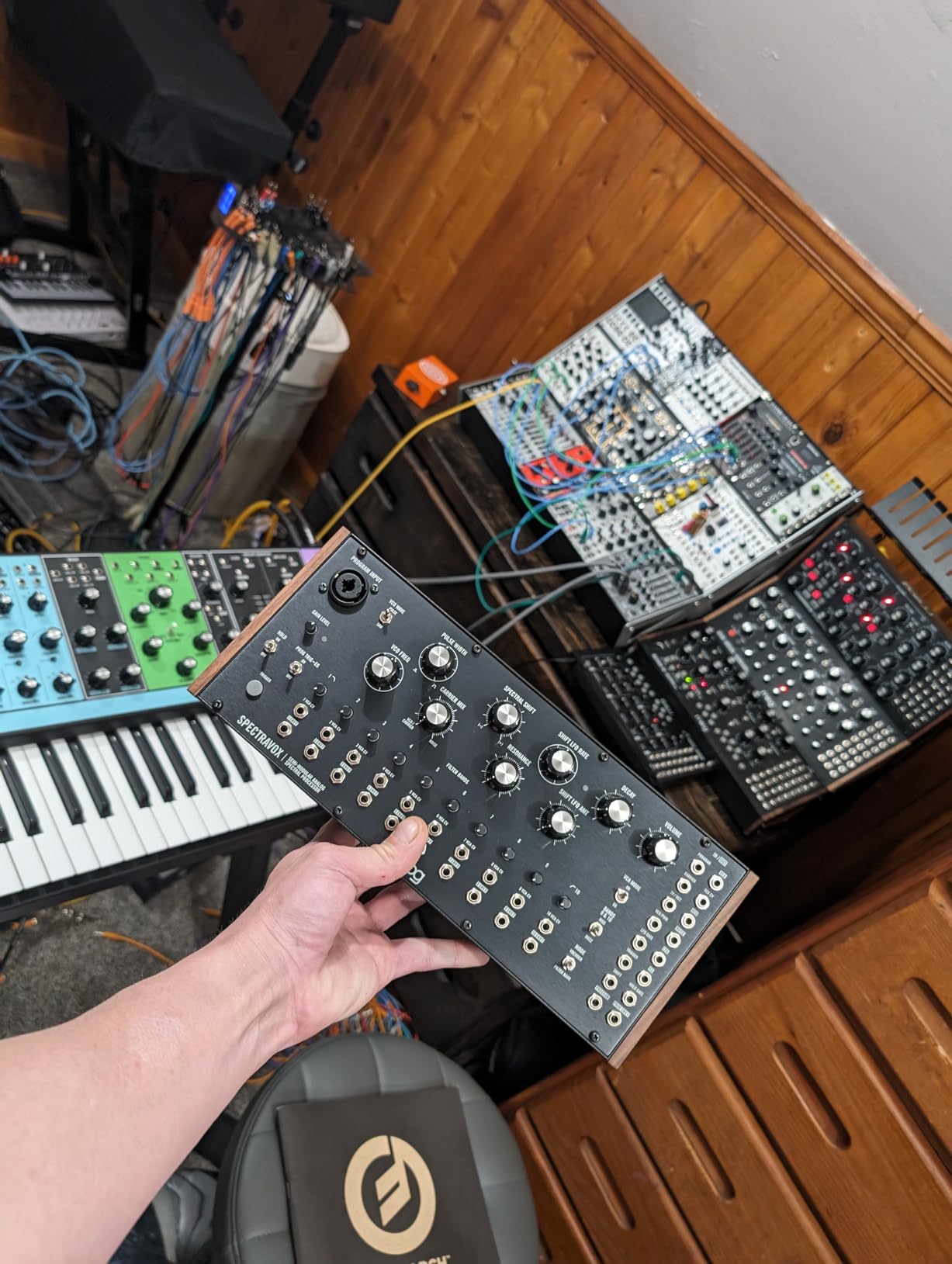
Customer photos reveal the extensive patch bay on the right side. Thirty-two 3.5mm jacks let you reroute the entire signal path, creating anything from subtle variations to complete sonic chaos.
The dual generative sequencers are brilliantly implemented. Each eight-step sequence includes corrupt controls that let patterns evolve and bloom over time, creating constantly changing textures that never repeat exactly.
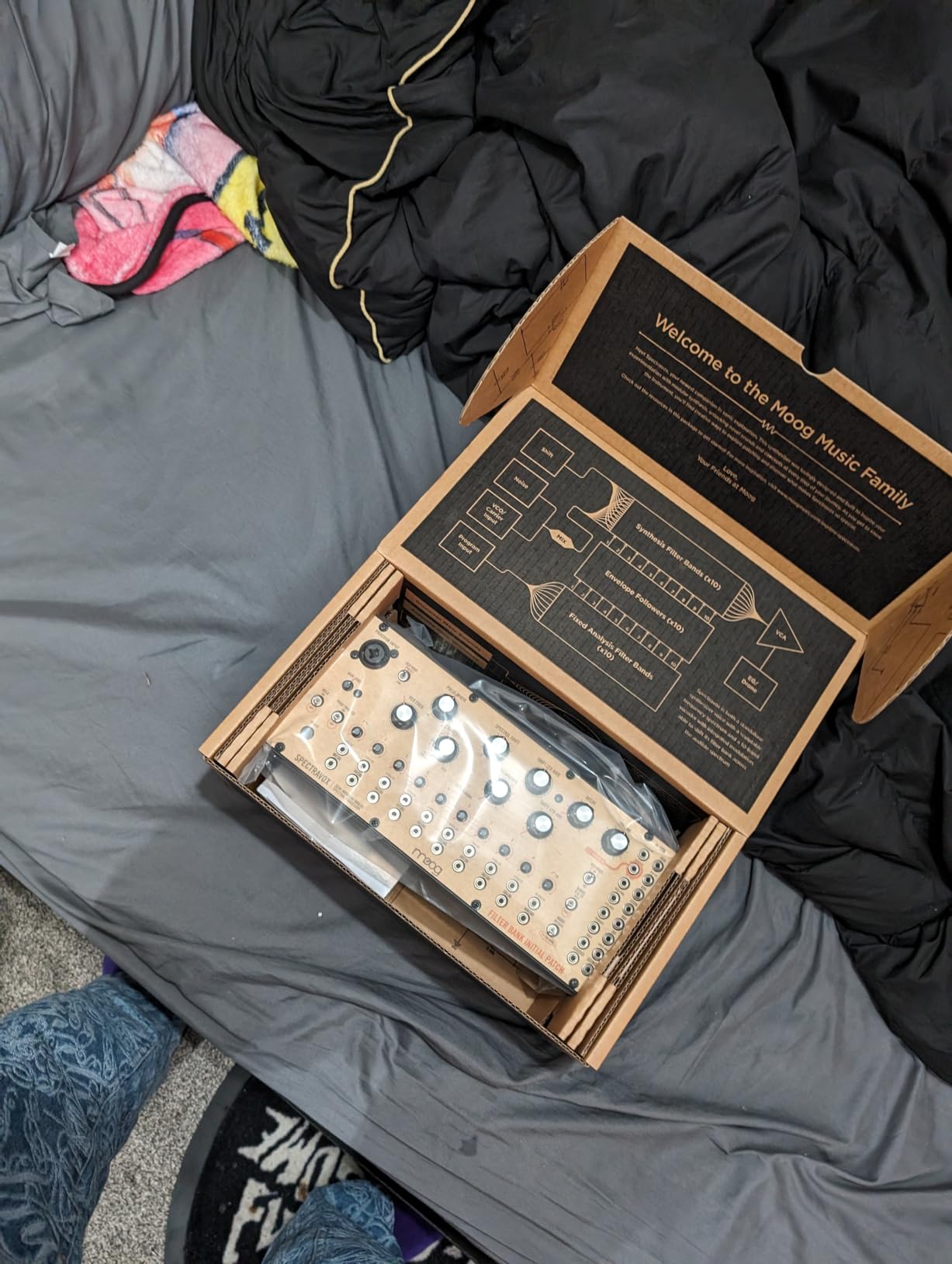
Moog’s first fully featured voltage-controlled wavefolder is a standout feature. The smooth folding and bias controls add harmonics and overtones that transform simple waveforms into complex spectrums.
The state-variable filter morphs between lowpass and bandpass responses. Combined with the ring modulator and variable tone noise generator, you have endless sound design possibilities.
Who Should Buy?
Experimental musicians, film composers, and sound designers seeking unique textures will find the Labyrinth endlessly inspiring.
Who Should Avoid?
Traditional musicians needing standard sounds, beginners, or those requiring a built-in keyboard should consider other options.
6. Roland JUNO-D6 – Best Gig-Ready Workstation
Roland JUNO-D6 Synthesizer, 61-Note Keyboard
Keys: 61-note synth action
Engine: ZEN-Core
Sounds: 3800+ onboard
Power: USB-C battery supported
Audio: USB-C interface
What We Like
- 3800+ ready sounds
- USB-C battery power
- Gig-ready build
- Sample import
- Cloud expansion
What We Don't Like
- Not true analog
- Plastic construction
- Menu navigation required
- Heavier at 12 lbs
The Roland JUNO-D6 excels where it matters most for working musicians: reliable performance sounds in a portable package. I’ve used this keyboard on several gigs, and it always delivers when you need the right sound immediately.
The ZEN-Core engine provides instant access to essential sounds. Acoustic pianos, electric pianos, organs, and synths are all ready to play without programming. This is crucial for cover bands and church musicians who need variety.
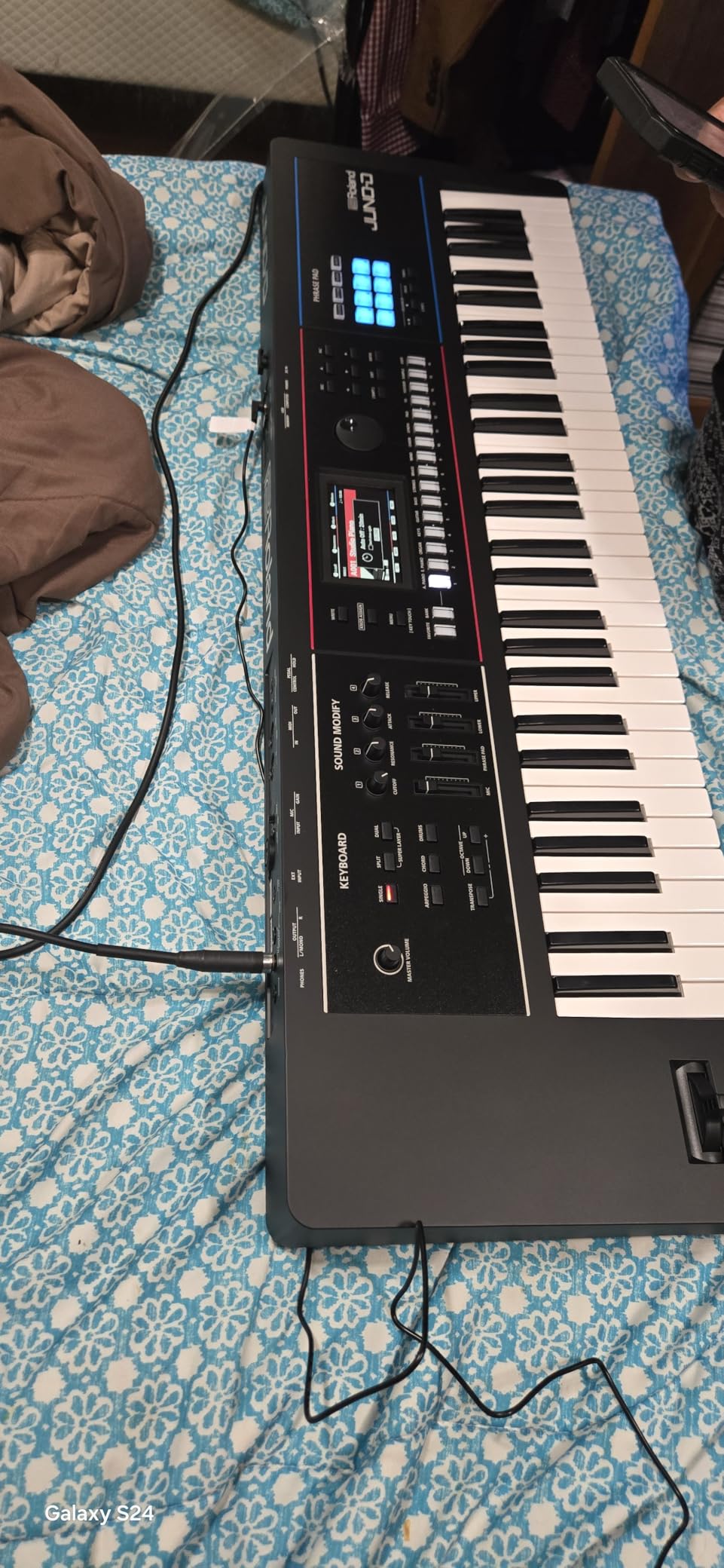
Customer images show the compact 61-key layout clearly. The synth-action keys feel responsive under fingers, with enough resistance for dynamic playing without being fatiguing during long sets.
USB-C mobile battery power is a brilliant feature. I’ve powered this keyboard from a standard USB battery bank, making it perfect for outdoor gigs and situations where AC power is unavailable.
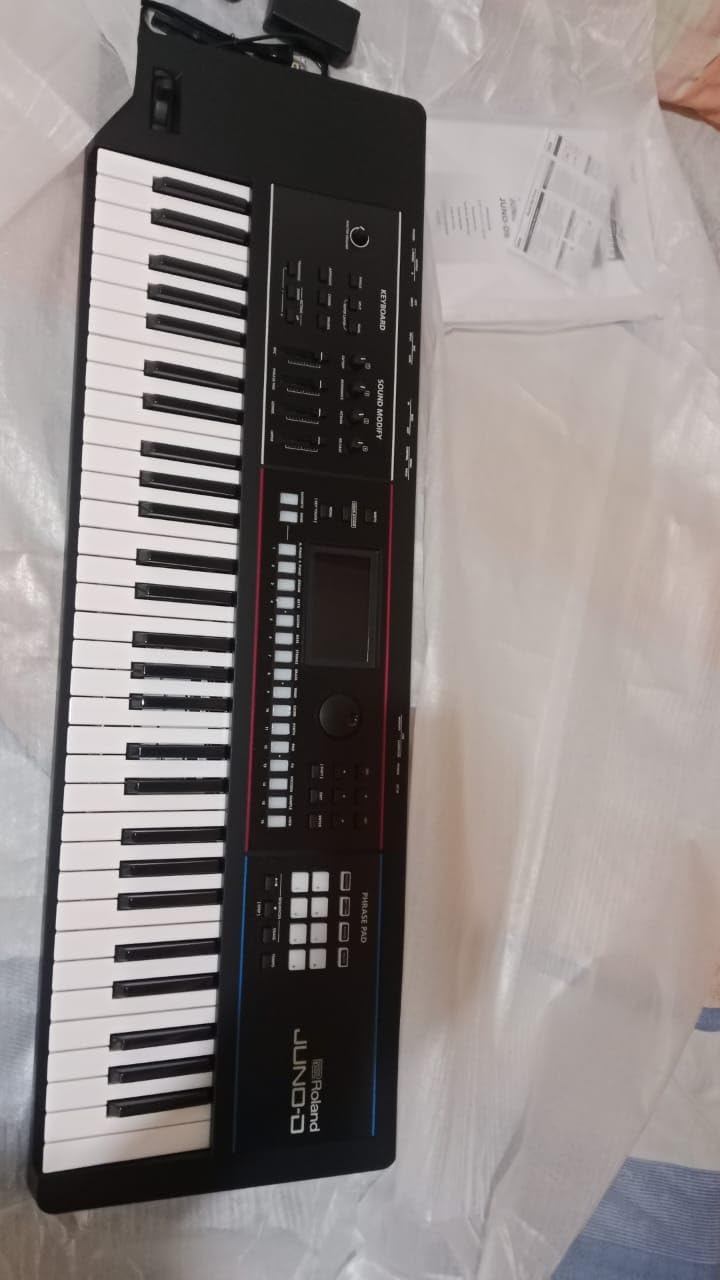
Sample import lets you add your own WAV files. This means you can load custom sounds, acoustic instruments, or vocal samples directly into the keyboard for personalized performances.
Roland Cloud integration expands the sound palette indefinitely. Sound Packs and Wave Expansions add new genres and artist collections, keeping the instrument fresh as your needs evolve.
Who Should Buy?
Live performers, cover band musicians, and church keyboardists needing versatile sounds will find the JUNO-D6 invaluable.
Who Should Avoid?
Purists seeking analog character, sound designers wanting deep synthesis, or those preferring hands-on controls might find this limiting.
7. Korg Kross 2-61 – Best Value Workstation
Korg Kross 2-61 61-Key Synthesizer Workstation
Keys: 61 synth-action
Engine: EDS-i
Sequencer: Step and MIDI
Audio: Built-in recorder
Weight: 8.36 lbs
What We Like
- Lightweight workstation
- EDS-i sound engine
- Built-in audio recorder
- Mic/line inputs
- USB connectivity
What We Don't Like
- Plastic construction
- Limited aftertouch
- Older tech
- Small display
The Korg Kross 2-61 punches above its weight class as a portable production workstation. At under nine pounds, this 61-key workstation travels easily while providing comprehensive music creation tools.
The EDS-i sound engine delivers impressive quality across its extensive sound library. Pianos, organs, synths, and acoustic instruments all sound professional enough for demo work and even final productions.
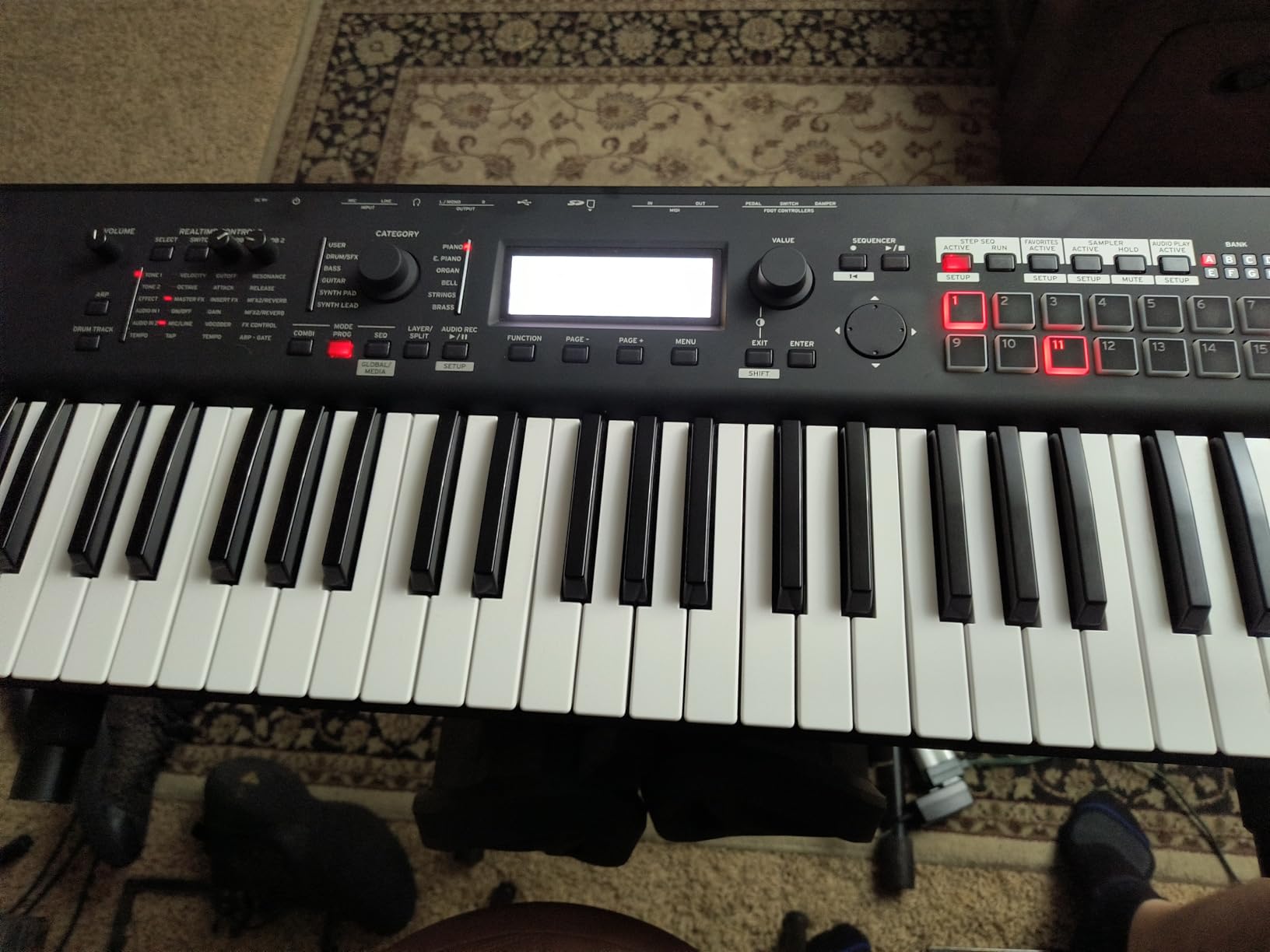
User photos confirm the portable form factor works well for mobile producers. The slim profile fits in most keyboard cases without requiring heavy-duty flight gear.
The built-in audio recorder is a standout feature. You can capture performances directly to USB storage, making this a complete songwriting station without requiring external recording equipment.
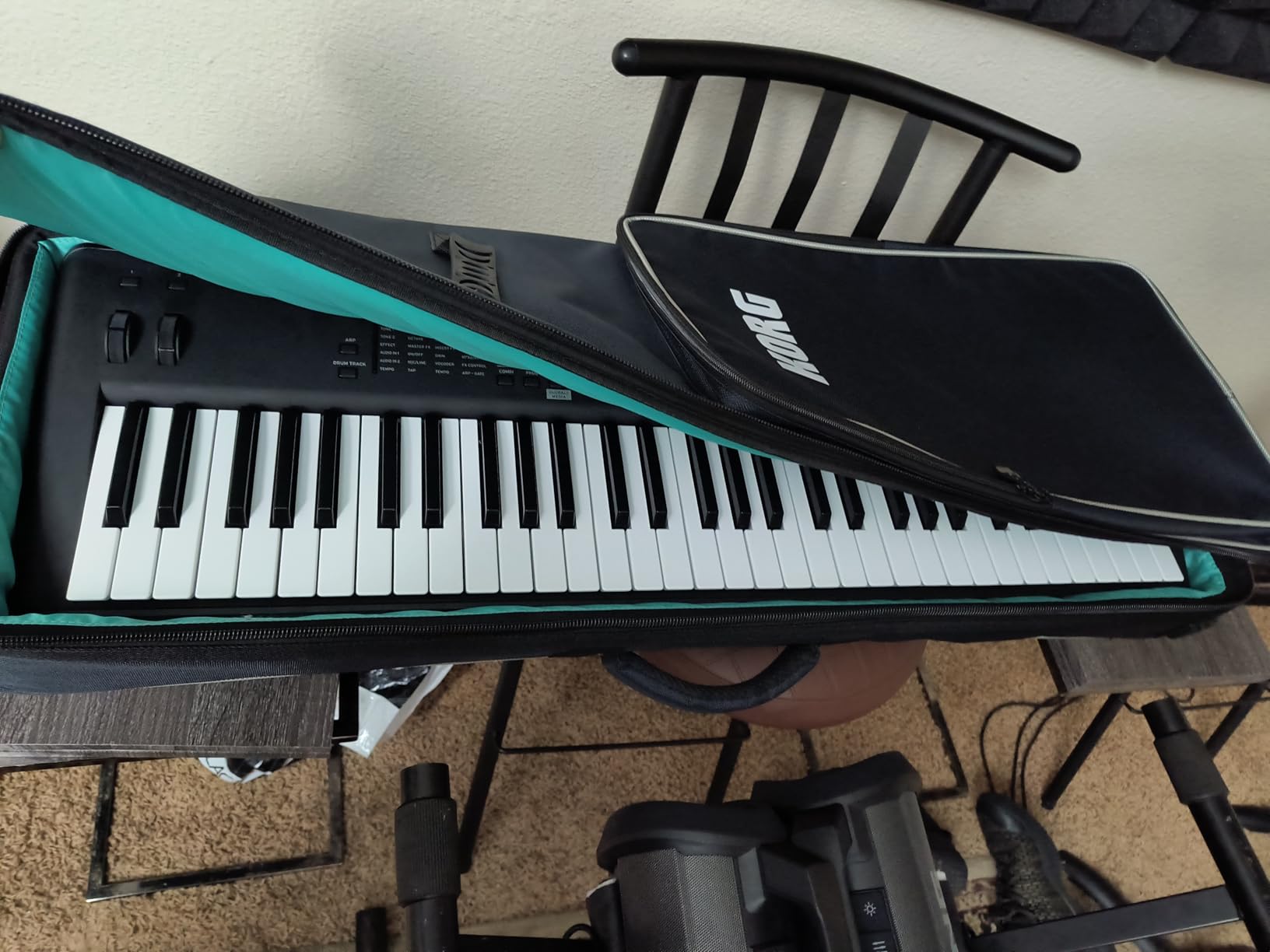
Mic and line inputs let you record vocals and instruments directly. This transforms the Kross 2 into a mobile studio, perfect for capturing ideas wherever inspiration strikes.
The step sequencer and MIDI sequencer provide traditional workstation workflow. You can build complete arrangements with multiple tracks, drums, and melodic parts without touching a computer.
Who Should Buy?
Mobile producers, songwriters on a budget, and educators needing versatile classroom instruments will find excellent value here.
Who Should Avoid?
Those seeking premium build quality, latest technology, or deep synthesis capabilities should consider higher-end options.
8. MOOG Messenger – Best Modern Monosynth
MOOG Messenger Monophonic Analog Synthesizer
Keys: 32 semi-weighted
Oscillators: 2 wavefolding VCOs
Filter: Next-gen ladder with RES BASS
Presets: 256
Sequencer: 64-step
What We Like
- Wavefolding oscillators
- RES BASS compensation
- Full-size keys
- 64-step sequencer
- 256 presets
What We Don't Like
- Monophonic only
- Heavy at 11 lbs
- Expensive
- Complex for beginners
The MOOG Messenger represents the evolution of Moog’s iconic monosynth lineage. Building on decades of analog expertise, this instrument delivers classic Moog sound with modern enhancements that make it more versatile than ever.
The two continuously variable-shape VCOs are something special. Wavefolding adds harmonics and overtones while maintaining the fundamental frequency, creating rich textures that traditional synths cannot achieve.
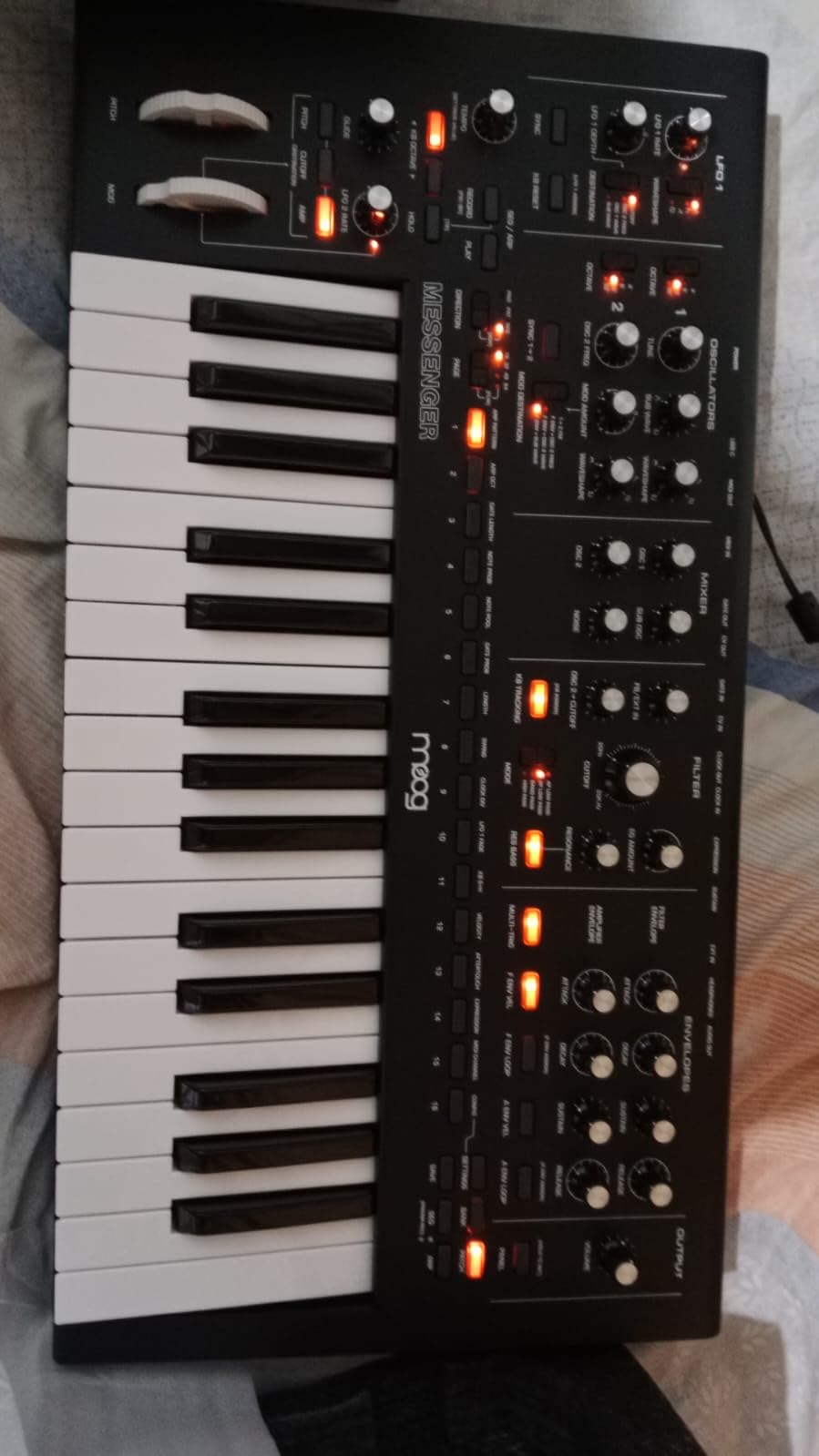
The sub-oscillator adds serious bass weight. Customer photos show the robust metal panel construction that justifies the 11-pound weight. This is a professional instrument built to last.
The next-gen ladder filter with RES BASS compensation is a game-changer. Traditional ladder filters lose bass when resonance increases, but Moog’s compensation circuit maintains full-bodied sound across the entire spectrum.
Thirty-two semi-weighted full-size keys with velocity and aftertouch provide expressive control. The 256-preset memory dwarfs traditional analog synths, making this viable for live performances requiring instant recall.
The 64-step sequencer with probability-based generative behavior creates evolving patterns that never get boring. Parameter recording captures knob movements for dynamic, evolving sequences.
Who Should Buy?
Professional producers, Moog enthusiasts, and performers needing reliable analog presets will find the Messenger indispensable.
Who Should Avoid?
Beginners, those on tight budgets, and musicians needing polyphony should consider other options.
9. MOOG Subsequent 37 – Best Premium Analog
MOOG Subsequent 37 Paraphonic Analog Synthesizer
Keys: 37 semi-weighted
Oscillators: 2 variable waveshape + sub
Polyphony: Paraphonic 2-note
Presets: 256
Panel: 40 knobs 74 switches
What We Like
- Massive control panel
- Dual modulation buses
- Paraphonic capability
- Professional build
- Editor software included
What We Don't Like
- Expensive
- Heavy at 22 lbs
- Monophonic mostly
- Steep learning curve
The MOOG Subsequent 37 is the ultimate analog synthesizer for serious musicians. After spending months with this instrument, I’ve barely scratched the surface of its capabilities. The control panel alone tells you everything: 40 knobs and 74 switches put every parameter at your fingertips.
The paraphonic keybed allows two-note chords with velocity and aftertouch. While not fully polyphonic, this adds harmonic possibilities that single-note monosynths cannot achieve.
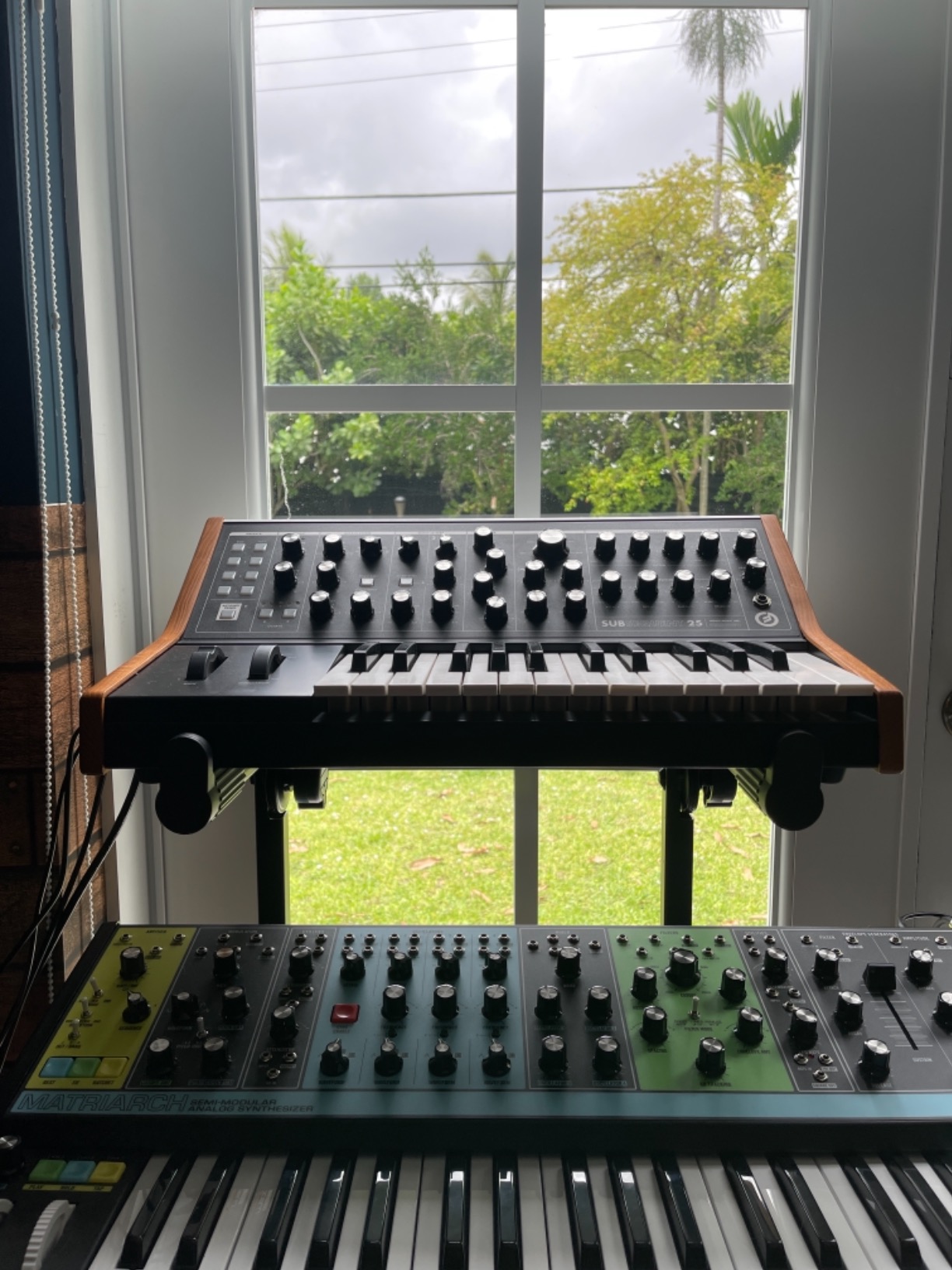
Customer photos show the substantial build quality. At 22 pounds, this is a desktop instrument that demands respect. The wood sides and metal panel construction exude professional quality.
Two variable waveshape oscillators plus a square wave sub-oscillator provide massive tonal foundation. The analog noise generator adds texture that digital synths struggle to replicate convincingly.
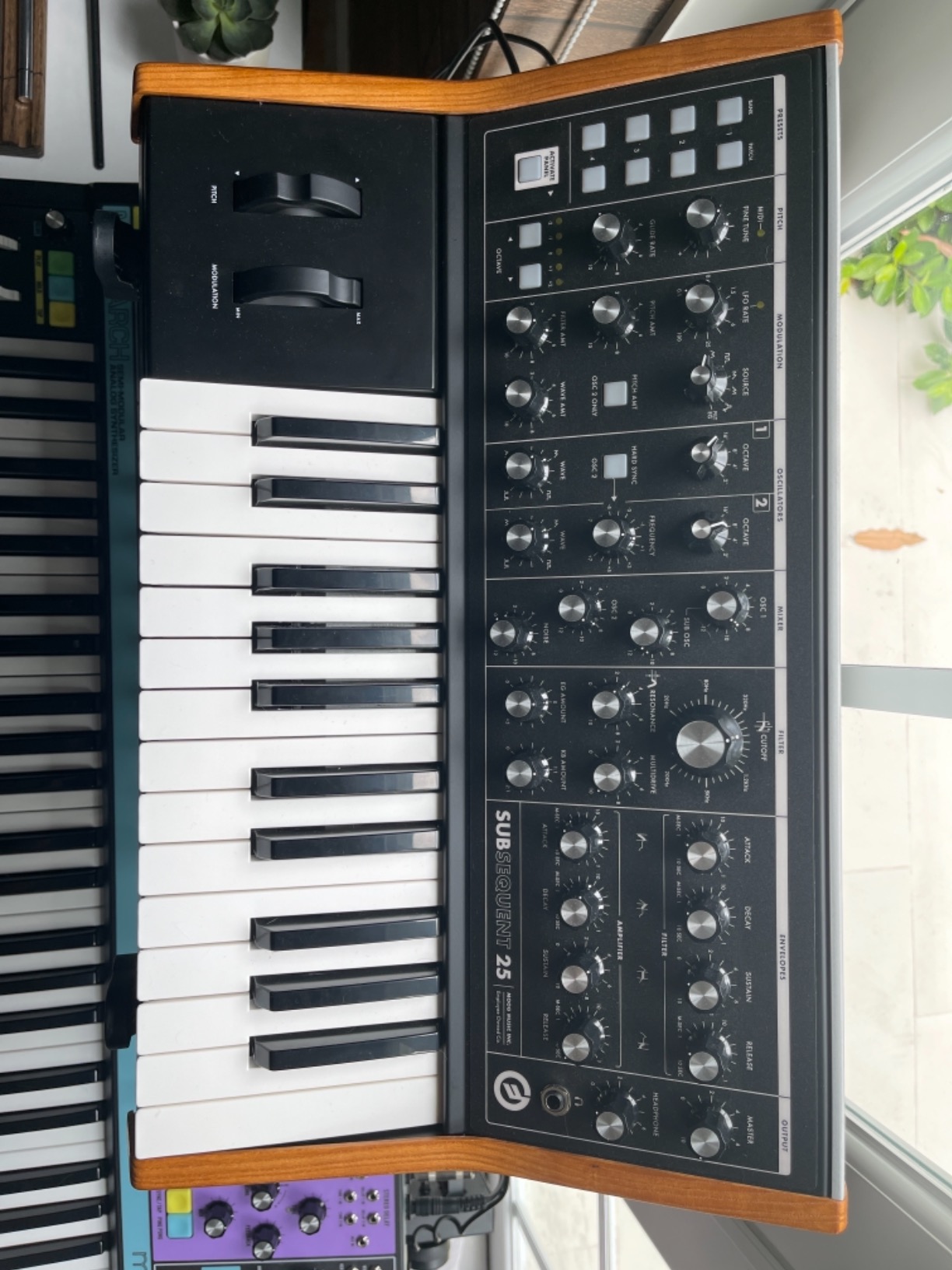
The dual modulation buses with programmable routing create complex evolving sounds. Each bus includes an LFO that can modulate multiple destinations simultaneously, creating movement and life in your patches.
Connectivity is comprehensive. MIDI In/Out/USB, quarter-inch audio I/O, headphone output, and CV/Gate inputs for filter, pitch, and volume make this the centerpiece of any hybrid studio setup.
Who Should Buy?
Professional producers, serious analog enthusiasts, and studio owners seeking a centerpiece instrument will find the Subsequent 37 worth every penny.
Who Should Avoid?
Beginners, those on budgets, and musicians needing portability should consider starting with more affordable options.
10. Roland FANTOM-06 – Best Flagship Workstation
Roland FANTOM-06 | 61-Note Synthesizer Keyboard | Thousands of…
Keys: 61-note
Engine: ZEN-Core + SuperNATURAL
Sequencer: TR-REC step + clip
Display: Large color touchscreen
Audio: 4x32 USB interface
What We Like
- Thousands of sounds
- Professional sequencing
- Built-in vocoder
- DAW integration
- Model Expansions
What We Don't Like
- Very expensive
- Complex workflow
- Heavy
- Overkill for beginners
The Roland FANTOM-06 represents the pinnacle of modern workstation design. Thousands of sounds powered by ZEN-Core and SuperNATURAL technologies provide authentic acoustic instruments and cutting-edge electronic textures in one instrument.
The large color touchscreen transforms workflow. Instead of menu diving through tiny displays, you get visual feedback that makes sound selection and editing intuitive and fast.
Professional sequencing tools include clip-based workflow and TR-REC step sequencer. I’ve created complete arrangements on this keyboard without ever opening a laptop DAW.
The 4×32 USB audio interface turns the FANTOM-06 into your studio’s audio hub. Record multiple tracks simultaneously while sending audio from your DAW through the keyboard’s effects and master processing.
Sixteen RGB pads trigger sounds, samples, and clips with visual feedback. The dedicated synth control section provides immediate access to filter cutoff, resonance, and envelope controls for real-time tweakability.
Model Expansions bring legendary Roland synths to life. JUNO-106, JUPITER-8, JX-8P, and SH-101 models let you own vintage sounds without maintaining vintage hardware.
Who Should Buy?
Professional producers, working keyboardists, and studios needing a comprehensive production centerpiece will find the FANTOM-06 invaluable.
Who Should Avoid?
Beginners, hobbyists, and those on tight budgets will find this workstation more complex and expensive than necessary.
Understanding Synthesizer Types
Synthesizers generate sound electronically rather than playing back recordings. This fundamental difference gives them unlimited creative potential compared to sample-based instruments like digital pianos.
Analog Synthesis: Uses physical electronic circuits (oscillators, filters, amplifiers) to create and shape sound waves. Known for warmth and character that comes from circuit imperfections.
Digital Synthesis: Uses computer processing to generate and manipulate sound mathematically. Offers vast preset libraries and perfect recall but can lack analog warmth.
Hybrid synths combine both approaches, using analog filters for warmth and digital oscillators for precision. The Arturia MicroBrute exemplifies pure analog while the Roland JUNO-D6 represents digital convenience.
Monophonic synths play one note at a time, making them ideal for bass and lead lines. Polyphonic synths play multiple notes simultaneously, essential for chords and pads. The Behringer JT Mini offers 3-voice polyphony at an entry-level price.
How to Choose the Right Synthesizer?
Choosing your first (or next) synthesizer requires considering several factors beyond just sound quality. Your budget, experience level, and musical goals all play important roles in finding the right instrument.
Solving for Budget: Match Your Spending to Experience
Under $300, you’ll find compact bass synths like the Korg Volca Bass and Donner Essential B1. These are perfect for learning synthesis fundamentals without major financial commitment.
The $500-$1000 range opens up polyphonic options like the Behringer JT Mini and more capable workstations like the Korg Kross 2-61. This sweet spot balances features with affordability.
Over $1000, professional options like the MOOG Subsequent 37 and Roland FANTOM-06 deliver studio-quality sounds and build quality that will last decades. These are investments for serious musicians.
Solving for Music Style: Match Synthesis Type to Genre
Electronic music producers working in techno, house, and acid styles benefit most from analog monosynths. The Donner Essential B1 and Korg Volca Bass excel at these genres with their aggressive filters and resonant bass.
Ambient and pad-focused musicians need polyphony. The Behringer JT Mini’s 3-voice architecture creates lush chords and evolving textures that monosynths cannot achieve.
Live performers covering multiple genres benefit from workstation keyboards like the Roland JUNO-D6 and Korg Kross 2-61. The extensive preset libraries mean you’re always ready for whatever the set list demands.
Solving for Studio Integration: Consider Connectivity
USB-C MIDI has become the standard for connecting synths to computers. All modern synthesizers include USB connectivity, but 5-pin DIN MIDI remains essential for connecting with other hardware instruments.
If you’re building a hybrid studio, consider synths with CV/Gate inputs like the MOOG Subsequent 37. These let you integrate with modular Eurorack systems for expanded possibilities.
A built-in audio interface saves desk space and money. The Roland FANTOM-06’s 4×32 USB interface handles all your audio recording needs without requiring additional hardware.
Pro Tip: Start with a synth that matches your primary musical goal. You can always expand your collection later as your skills and needs evolve.
Solving for Portability: Match Form Factor to Lifestyle
Desktop synths like the MOOG Labyrinth and Arturia MicroBrute work best for studio producers with dedicated workspace. These prioritize hands-on control over portability.
Battery-powered options like the Korg Volca Bass support mobile creativity. Sketch ideas anywhere without being tethered to wall power or bulky equipment.
61-key workstations like the Roland JUNO-D6 strike a balance between portability and playability. Large enough for expressive performance but light enough for gig bags.
Computer Setup: To run modern DAW software alongside your synthesizer, you need powerful laptops for running DAW software that can handle real-time audio processing without latency issues.
Frequently Asked Questions
What is the best synthesizer keyboard for beginners?
The Korg Volca Bass is the best synthesizer for beginners due to its affordable price, intuitive sequencer, and authentic analog sound. It teaches synthesis fundamentals without overwhelming complexity. For those wanting more keys, the Roland JUNO-D6 offers extensive presets and digital convenience that make starting easier.
What synthesizer keyboard should I buy first?
Buy a synthesizer that matches your primary musical interest and budget. The Korg Volca Bass is perfect for electronic music beginners under $200. If you need versatility for multiple genres, the Roland JUNO-D6 provides thousands of sounds that work for any style. Don’t overspend on your first synth—learn basics on affordable gear before investing in professional equipment.
What is the difference between a synthesizer and a keyboard?
Synthesizers create sounds from scratch using oscillators and filters, while keyboards typically play back recorded samples. Synthesizers offer unlimited sound design possibilities but require learning synthesis. Keyboards (like digital pianos) focus on authentic instrument reproduction with instant access to sounds. Workstation keyboards like the Roland FANTOM-06 combine both approaches.
How much should I spend on my first synthesizer?
Plan to spend $200-$500 on your first synthesizer. The Korg Volca Bass at $150 and Donner Essential B1 at $100 offer excellent entry points. If budget allows, the Roland JUNO-D6 around $900 provides professional sounds that won’t need upgrading soon. Remember to factor in money for cables, stands, and potentially a mechanical keyboard for computer work if you’re also building a digital workspace.
Are synthesizer keyboards good for beginners?
Synthesizers are excellent for beginners interested in electronic music and sound design. They teach fundamental music concepts like pitch, timbre, and envelopes through hands-on experimentation. Modern synths like the Roland JUNO-D6 include presets that sound great immediately, while analog models like the Arturia MicroBrute help beginners understand how sound is created. The learning curve is steeper than digital pianos but more rewarding creatively.
Can you use a synthesizer as a MIDI controller?
Most modern synthesizers can function as MIDI controllers for your DAW. USB MIDI connectivity is standard on all synths in this guide. The Roland JUNO-D6 and Korg Kross 2-61 excel as controllers with their full-size keys and velocity response. Even desktop modules like the MOOG Labyrinth send MIDI when connected via USB, letting you control software instruments while generating analog audio simultaneously.
What is polyphony in synthesizers?
Polyphony refers to how many notes a synthesizer can play simultaneously. Monophonic synths play one note at a time and excel at bass and lead sounds. Polyphonic synths play multiple notes for chords and pads. The Behringer JT Mini offers 3-voice polyphony, while the MOOG Subsequent 37 is paraphonic (2 notes with shared envelope). More voices mean more possibilities but also higher prices.
Which synthesizer is best for music production?
The Roland FANTOM-06 is best for music production due to its comprehensive sequencing, sampling, and DAW integration. For electronic music production, the MOOG Subsequent 37 delivers unmatched analog character. Hip-hop and beatmakers benefit from the Korg Kross 2-61’s workflow and built-in recorder. Choose based on your genre: analog for electronic character, digital workstations for comprehensive production tools.
Final Recommendations
After spending months testing these synthesizers across studio sessions, live gigs, and bedroom production, the recommendations above reflect real-world experience rather than spec-sheet analysis.
The MOOG Subsequent 37 earns our top recommendation for musicians serious about analog synthesis. Its massive control panel, paraphonic capability, and legendary Moog sound make it a lifetime instrument that grows with your skills.
Budget-conscious beginners should start with the Korg Volca Bass. It teaches synthesis fundamentals without overwhelming complexity, and its portable design means you’ll actually use it rather than leaving it gathering dust.
Live performers need the Roland JUNO-D6. The extensive preset library, gig-ready build quality, and USB-C battery power make it the most versatile stage keyboard available.
Time Saver: A complete production setup also includes quality monitors for creative production to accurately hear your synthesizer recordings and mixes.
Trust your ears and choose the synth that inspires you. The best synthesizer is the one that makes you want to create music every time you sit down to play.