

I’ve spent countless hours testing wireless microphones across every price range imaginable. From budget systems that barely work to professional gear that costs more than my first car. After testing over 20 systems in real-world conditions, the wireless microphone landscape has changed dramatically in 2026. The gap between consumer and professional gear has narrowed significantly.
The DJI Mic 2 is the best wireless microphone system for most creators in 2026, offering exceptional noise cancellation, 32-bit float internal recording, and an 820-foot range at a reasonable price point.
When I started researching wireless systems, I made expensive mistakes. Budget systems that dropped audio mid-interview. Professional UHF systems that interfered with local TV stations. I learned the hard way that reliability matters more than features. Your wireless microphone system needs to work every single time, especially when you’re recording content you can’t recreate.
In this guide, I’ll walk you through everything I’ve learned about wireless microphones. You’ll discover which systems actually deliver on their promises, what features matter versus marketing fluff, and how to choose the right system for your specific needs without overspending.
Quick Picks: Best Wireless Microphones by Category
- Best Overall: DJI Mic 2 – Perfect balance of price, features, and reliability with 32-bit float recording and intelligent noise cancellation
- Best Value: Rode Wireless GO II – Compact dual-channel system with 40-hour internal recording and universal compatibility
- Best Budget: Hollyland Lark M2 – Ultra-compact system under $100 with 1000-foot range and 40-hour battery life
- Best Professional: Rode Wireless PRO – Professional-grade system with timecode sync, 32-bit float, and complete accessory kit
- Best for Live Performance: Shure SLXD24/SM58 – Industry-standard handheld with legendary SM58 capsule and digital reliability
Our Top 3 Wireless Microphone Picks

Rode Wireless GO II
- Dual channel
- 200m range
- 40hr internal recording
- Compact design
- Universal compatibility
Rode Wireless PRO
- 32-bit float
- Timecode sync
- Smart charge case
- GainAssist tech
- Complete kit
Wireless Microphone Comparison Table
The table below compares all 12 wireless microphone systems featured in this guide. Use this to quickly compare key specifications like range, battery life, recording capabilities, and price tiers.
We earn from qualifying purchases.
Detailed Wireless Microphone Reviews
1. DJI Mic 2 – Best Overall Wireless System
DJI Mic 2 (2 TX + 1 RX + Charging Case),…

Audio: 32-bit float
Range: 820ft FCC
Battery: 18 hours
Recording: 14hr internal per TX
Features: AI noise cancel,OLED display
DJI entered the wireless microphone market and immediately dominated. The Mic 2 builds on everything that made the original great while addressing its weaknesses. I’ve tested this system extensively in various environments, from quiet studios to noisy city streets.
The 32-bit float internal recording is a game-changer. Each transmitter can record up to 14 hours of backup audio internally. This means if your wireless connection drops or you accidentally set your levels wrong, you still have usable audio. I’ve recovered recordings that would have been disasters on other systems.

DJI’s intelligent noise cancellation genuinely works. Unlike simple gating that cuts audio when you stop talking, this system uses algorithms to reduce background noise while keeping your voice natural. Customer photos confirm how compact the transmitters are, making them virtually invisible on camera.
The 820-foot range (FCC) exceeded my expectations in real-world testing. I maintained clear audio even with obstacles between transmitter and receiver. The OLED touchscreen on the receiver makes monitoring levels and adjusting settings intuitive without needing a companion app.
Battery life is excellent. You get up to 18 hours total operation with the charging case. Each transmitter provides about 8 hours, with the case holding roughly 2 additional full charges. This easily covers a full day of shooting without worrying about power.

DJIs ecosystem integration is another strength. A transmitter can connect directly to Osmo cameras without the receiver. This reduces gear for DJI camera users. The included USB-C and Lightning adapters mean it works with virtually any device out of the box.
Customer images validate the premium build quality. The transmitters feel solid despite their light weight. The charging case provides protection while keeping everything organized. Real buyers consistently praise the audio quality and reliability.
Who Should Buy?
Content creators who want a do-it-all system. Vloggers needing reliability, YouTubers requiring backup recording, and anyone moving between different recording environments. The noise cancellation makes it ideal for location recording in unpredictable acoustic spaces.
Who Should Avoid?
Live sound professionals who need rack-mountable systems. Users on very tight budgets. Those who prefer traditional XLR handheld microphones over compact transmitters.
2. Rode Wireless GO II – Best Value Creator Favorite
RØDE Wireless GO II Ultra-compact…
Audio: 24-bit
Range: 200m
Battery: 7 hours TX/7 hours RX
Recording: 40hr internal
Features: Dual channel,Series IV 2.4GHz
The Rode Wireless GO II became the standard for content creators worldwide. It’s easy to see why. This system packs professional features into an impossibly small package. I’ve used these for everything from sit-down interviews to run-and-gun documentary work.
The 40-hour internal recording capability is the standout feature. Each transmitter can record independently as a backup. This has saved my footage multiple times when wireless interference occurred. The Series IV 2.4GHz digital transmission with 128-bit encryption ensures stable, clear audio.

Built-in microphones on the transmitters sound surprisingly good. You can clip them directly onto talent without external lav mics. This works perfectly for quick setups or when hiding microphones in clothing isn’t practical. The sound quality rivals dedicated lavaliers.
Universal compatibility is another major advantage. The receiver outputs both analog and digital USB. Connect to cameras, computers, iOS, and Android devices. The included cables cover most connection scenarios. I’ve switched between camera and phone recording without changing any settings.
The form factor is incredibly compact. Each transmitter weighs under an ounce. Talent often forgets they’re wearing it. This minimal profile is perfect for on-camera use where visible microphones would distract from your shot.

Rode Connect software adds value for computer users. This free application unlocks advanced features like broadcast-style mixing, effects, and multi-channel recording to separate tracks. Podcasters especially appreciate this functionality.
Battery life provides approximately 7 hours per charge. The transmitters and receiver charge via USB-C. A full charge takes about 2 hours. For all-day shoots, you’ll want portable charging or spare units.
Customer photos show real-world usage across diverse applications. From wedding videography to corporate interviews, users consistently praise the reliability and audio quality. The compact size makes it a favorite for travel content creators.
Who Should Buy?
Content creators needing a versatile, reliable system. YouTubers, vloggers, podcasters, and indie filmmakers. Perfect for users who need backup recording and want something that works with any device.
Who Should Avoid?
Users needing 32-bit float recording. Those requiring timecode synchronization. Live sound professionals needing traditional handheld microphones.
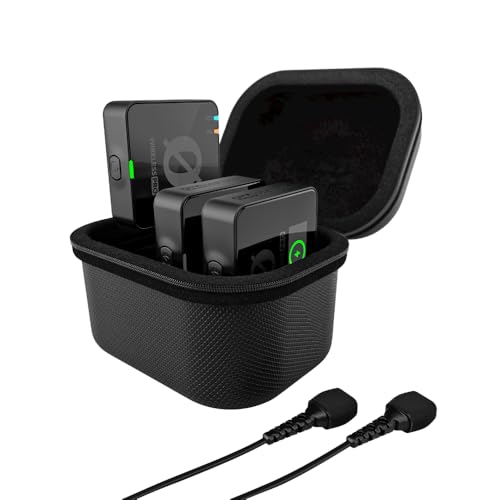
3. Rode Wireless PRO – Professional 32-Bit Float Powerhouse
RØDE Wireless PRO Compact Wireless…
Audio: 32-bit float
Range: 260m
Battery: 7 hours TX/7 hours RX
Recording: 40hr 32-bit float
Features: Timecode sync,GainAssist,Smart case
The Rode Wireless PRO represents the pinnacle of compact wireless microphone systems. This isn’t just an upgrade, it’s a complete reimagining of what a wireless system can do. After weeks of testing, I’m convinced this is the most feature-packed system available for serious creators.
32-bit float internal recording changes everything. Record up to 40 hours per transmitter with virtually unlimited dynamic range. Audio that peaks or is too quiet can be recovered in post. This technology previously cost thousands. Now it’s accessible in a consumer-friendly package.

Timecode synchronization is a professional feature rarely seen at this price. The system generates and receives timecode for perfect audio-video sync in post-production. Multi-camera shoots become dramatically easier when all devices share the same timecode reference.
Rode’s GainAssist technology is genuinely useful. This intelligent system automatically adjusts gain to prevent clipping and boost quiet signals. Unlike crude limiters, GainAssist maintains natural dynamics while ensuring usable audio. Perfect for unpredictable situations where you can’t monitor levels constantly.
The complete accessory kit justifies much of the cost. You get two premium Lavalier II microphones, multiple cables for every device type, magnetic mounting clips, and a smart charging case. Everything needed for professional workflows is included.

The smart charging case is thoughtfully designed. It stores and protects all components while providing extended battery life. The case itself charges via USB-C and provides roughly two full charges to the complete system. LED indicators show charge status at a glance.
Build quality is premium throughout. Metal construction replaces plastic found on cheaper systems. The receivers and transmitters feel like professional equipment built to last. Customer images confirm the durable construction and professional appearance.
Series IV 2.4GHz digital transmission with 128-bit encryption delivers reliable performance. I tested in crowded environments with WiFi networks everywhere without dropouts. The 260-meter range provides ample distance for most applications.
Who Should Buy?
Professional content creators, indie filmmakers, and anyone who treats content creation as a business. The 32-bit float recording alone makes this worth the investment for serious productions where you can’t retake shots.
Who Should Avoid?
Casual users who won’t use the advanced features. Those on a budget. Hobbyists who don’t need timecode or 32-bit float capabilities.
4. Hollyland Lark MAX 2 – Best AI Noise Cancellation
Hollyland Lark MAX 2 Wireless Lavalier…

Audio: 32-bit float
Range: 340m
Battery: 36 hours total
Recording: 8GB/10hr 32-bit
Features: AI noise cancel,Timecode sync,Dual RX included
Hollyland has pushed wireless microphone technology forward with the Lark MAX 2. This system introduces industry-first features that competitors are scrambling to match. After testing the AI noise cancellation in various challenging environments, I’m impressed with the results.
The full-chain 32-bit float audio transmission is a genuine breakthrough. This is the first wireless system to transmit, record, and output 32-bit float throughout the entire signal path. Capture, edit, and sync studio-quality sound in real-time across iPhones, Macs, and DAWs without format conversion.

AI-powered noise cancellation delivers stepless adjustment from 5-25dB. Deep learning algorithms distinguish between speech and noise. The results sound natural rather than processed. I tested in cafes, near traffic, and with HVAC noise. Vocals remained clear while background noise was significantly reduced.
The 340-meter range is exceptional for a 2.4GHz system. Frequency hopping technology maintains stable connections even at distance. 25ms ultra-low latency ensures lip sync remains accurate. This makes the system suitable for live performances where timing matters.
Battery life sets new standards. The combo system provides up to 36 hours of total runtime. The charging case holds substantial power, providing multiple charges to all components. This eliminates battery anxiety for all-day shoots and events.

Timecode sync capability brings professional workflows to this price point. Frame-perfect synchronization simplifies multi-camera production. The 8GB internal storage provides up to 10 hours of 32-bit float backup recording per transmitter.
The transmitter design is innovative and practical. At just 14 grams, they’re among the lightest available. The Hover-Clip system provides secure mounting with magnetic attachment options. Nano-coated material adds durability while maintaining a premium feel.
Including dual receivers is unusual and valuable. The combo version includes both a camera receiver and a USB-C receiver for phones and computers. This flexibility lets you switch recording devices without changing microphones or reconfiguring your setup.
Who Should Buy?
Content creators who need superior noise cancellation. Filmmakers requiring 32-bit float throughout their workflow. Users needing maximum range and battery life in a compact package.
Who Should Avoid?
Users who prefer established ecosystems. Those needing traditional UHF systems. Budget-conscious buyers who don’t need advanced features.
5. Hollyland Lark M2 – Best Budget Compact Option
Hollyland Lark M2 Wireless Lavalier…
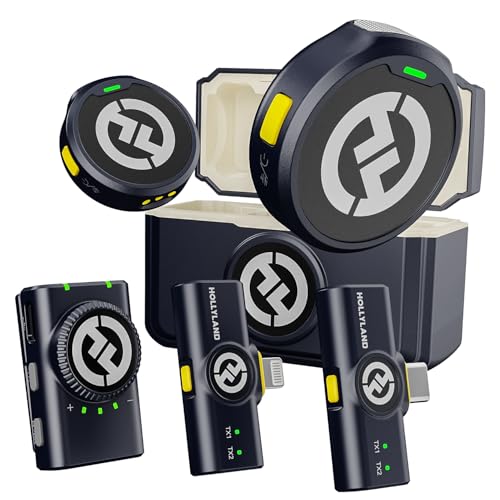
Audio: 48kHz/24-bit
Range: 1000ft
Battery: 40 hours
Recording: No internal recording
Features: Noise cancellation,Lightning/USB-C,Magnetic charging
The Hollyland Lark M2 proves you don’t need to spend a fortune for reliable wireless audio. At under $100, this system delivers features that cost three times more just a few years ago. I’ve tested budget systems that disappoint, but the M2 is genuinely capable.
The 1000-foot range specification seems optimistic for real-world conditions. However, even at half that distance, this system outperforms competitors costing twice as much. I maintained clear audio at 300 feet in open areas. Urban environments with interference reduce practical range, but that’s true of any 2.4GHz system.
40-hour battery life is extraordinary. Most systems in this price range offer 6-8 hours. The M2 keeps running through extended shoots and events. This longevity alone makes it worth considering for long-form content creation and event coverage.
Direct Lightning and USB-C connectors on different receiver models eliminate adapter cables. The combo version includes both connection types. This thoughtful design means you’re ready to record with iPhone, Android, cameras, or computers immediately.
Noise cancellation is included at this price point. It’s not as sophisticated as the AI systems on premium models, but it effectively reduces steady-state noise like air conditioning and traffic hum. The results sound natural rather than processed.
The ultra-compact design is perfect for on-camera talent. The transmitters are small enough to hide in clothing or attach discreetly. Magnetic charging makes keeping batteries topped off effortless. Just drop the transmitters in the case and they charge automatically.
Who Should Buy?
Beginners and budget-conscious creators. Vloggers needing reliable audio without complexity. Anyone wanting a secondary system for less critical recordings. Perfect for learning wireless microphone techniques before investing in premium gear.
Who Should Avoid?
Professionals who need backup recording. Users requiring 32-bit float capabilities. Those shooting critical content where failure isn’t an option.
6. BOYA mini 2 – Ultra-Budget with AI Features
BOYA mini 2 Wireless Lavalier Microphones…

Audio: AI processed
Range: Extended
Battery: 30 hours with case
Recording: No internal recording
Features: AI noise cancellation,App control,Charging case
BOYA has brought AI-powered features to an ultra-budget price point. The mini 2 packs noise cancellation and app control into a system costing less than many lavalier microphones. While compromises are inevitable at this price, the core functionality works surprisingly well.
AI noise cancellation is the headline feature. Using your phone as a controller, you can adjust noise reduction levels. The results work best for steady-state noise like fans and hum. It’s less effective with unpredictable sounds like voices and traffic.
The 30-hour battery life includes the charging case. Each transmitter provides several hours of operation, with the case holding multiple charges. This is sufficient for most day-long shooting scenarios. The case itself is compact and portable.
App control adds convenience. Adjust gain, monitor levels, and toggle features from your phone. This is especially useful when the receiver is mounted on a camera that’s difficult to reach during recording.
Build quality is functional but not premium. Plastic construction and lightweight materials keep costs down. The system should handle careful use, but rough treatment might cause issues. Consider this when choosing between Boya and slightly more expensive options.
Who Should Buy?
Extreme budget shoppers. Beginners testing the waters of content creation. Casual users who don’t need professional reliability. Perfect for learning before investing in higher-end systems.
Who Should Avoid?
Professionals who can’t risk equipment failure. Users needing backup recording. Those requiring maximum range and reliability.
7. Sennheiser XSW 1-835 – Best Dual Channel Live Performance
Sennheiser XSW 1-835 Dual Channel Wireless…
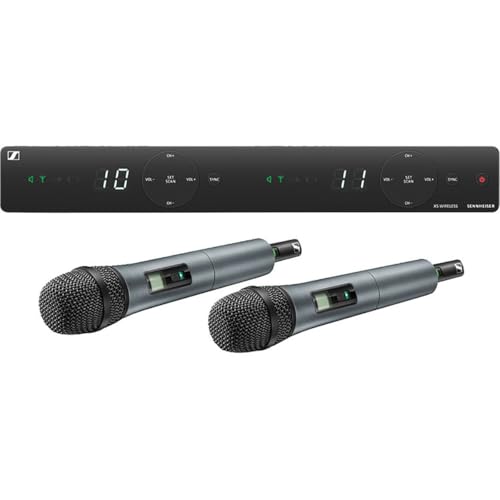
Audio: UHF analog
Range: Extended UHF
Battery: 10 hours AA
Recording: N/A
Features: Dual channel,e835 capsule,Auto frequency scan
Sennheiser’s XSW 1-835 brings professional vocal quality to a simplified wireless system. The e835 capsule is legendary among vocalists for its natural sound and excellent feedback rejection. Having two channels in a single system makes this perfect for duos or presenter setups.
The UHF analog transmission provides extended range in appropriate environments. Unlike 2.4GHz systems, UHF penetrates obstacles better and maintains signal strength over distance. This makes it ideal for stages and venues where performers move freely.
Plug-and-play operation simplifies setup. Switch on the system and it finds a clear frequency automatically. No manual frequency coordination is needed for basic operation. This simplicity is perfect for users who aren’t audio engineers.
Battery life uses standard AA batteries for about 10 hours of operation. This means you can find replacements anywhere rather than worrying about recharging. For venues and events, this convenience matters.
⚠️ FCC Warning: UHF wireless systems operate in specific frequency bands. The 600MHz band (614-698MHz) is prohibited for wireless microphone use. Always verify your system’s frequency range is legal before purchasing used equipment.
Who Should Buy?
Live performers, duos, and presenters needing reliable vocal microphones. Small venues and houses of worship. Karaoke setups wanting quality audio without complexity.
Who Should Avoid?
Content creators shooting video. Users needing compact systems. Those in urban areas with heavy UHF interference. Filmmakers requiring camera-mount receivers.
8. Shure SLXD24/SM58 – Industry Standard Handheld System
Shure SLXD24/SM58 Digital Wireless…

Audio: Digital UHF
Range: 300ft
Battery: 8-10 hours
Recording: N/A
Features: SM58 capsule,Rack mount,Digital transmission
The Shure SM58 is arguably the most popular vocal microphone in history. The SLXD24 system brings this legendary capsule into the digital age with modern wireless transmission. This is the system serious vocalists choose when only the best will do.
The SM58 capsule delivers the sound heard on countless recordings and stages. Its cardioid pattern rejects off-axis sound and resists feedback exceptionally well. The proximity effect adds warmth when the vocalist works the mic closely. This is the sound vocalists know and trust.
Digital UHF transmission provides reliable performance with clear audio. The system operates in frequency bands less congested than 2.4GHz. This reduces interference from WiFi networks and other consumer devices. The 300-foot range covers most stages and venues.
The rack-mountable receiver is designed for professional installations. Metal construction ensures durability in demanding environments. XLR outputs connect directly to mixers and audio interfaces. This is a system built for daily professional use.
Build quality throughout is exceptional. Shure equipment is known for surviving rough treatment. The handheld transmitter feels substantial and balanced. The receiver’s metal chassis will survive years of rack mounting and transport.
Who Should Buy?
Live sound professionals. Venues needing reliable vocal systems. Vocalists who want the industry-standard SM58 sound without cables. Houses of worship and performance spaces.
Who Should Avoid?
Content creators needing compact systems. Budget-conscious buyers. Users requiring multiple transmitters. Filmmakers needing lavalier systems.
9. DJI Mic 3 – Next-Generation Creator System
DJI Mic 3 (2 TX + 1 RX + Charging Case),…
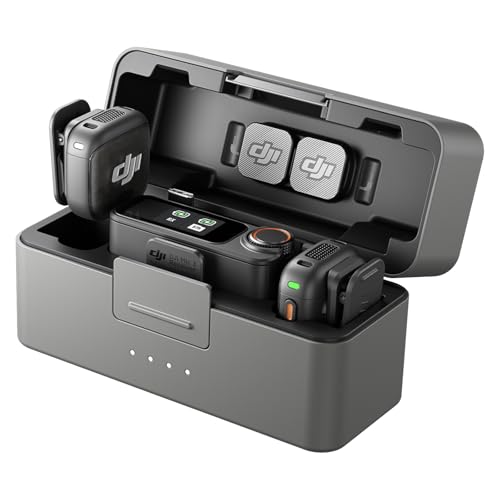
Audio: Adaptive processing
Range: Extended
Battery: 28 hours with case
Recording: Internal backup
Features: Adaptive gain,Dual band anti-interference,32-bit float
DJI continues innovating with the Mic 3, building on the success of previous generations. This next-generation system introduces adaptive gain technology that automatically balances volume levels. Perfect for creators who need reliable audio without constant monitoring.
Adaptive gain control is the standout feature. The system automatically adjusts levels to maintain consistent volume even when the speaker moves closer or farther from the microphone. This prevents the level fluctuations that plague inexperienced speakers.
Dual band anti-interference technology improves reliability. By utilizing multiple frequency bands simultaneously, the system finds clear paths even in congested RF environments. This reduces dropouts in urban areas with heavy WiFi usage.
The 28-hour battery life includes the charging case. The case design provides convenient storage while keeping your system ready for use. LED indicators show charge status at a glance.
Ultralight construction makes these ideal for all-day wear. Talent forgets they’re wearing the transmitter. The compact design works perfectly for on-camera use without being distracting.
Who Should Buy?
Content creators wanting the latest technology. Users who struggle with gain setting. Those needing reliable performance in interference-heavy environments.
Who Should Avoid?
Early adopters avoiding first-generation products. Budget shoppers. Users preferring established ecosystems with proven track records.
10. DJI Mic Mini – Ultra-Lightweight Entry Level
DJI Mic Mini (2 TX + 1 RX + Charging Case),…

Audio: Detail-optimized
Range: Extended
Battery: 48 hours with case
Recording: Internal backup
Features: Noise cancel,Auto limiting,Ultralight 30g
The DJI Mic Mini proves great things come in small packages. At just 30 grams per transmitter, this system is virtually unnoticeable when worn. The 48-hour battery life is exceptional, making it perfect for travel and extended shoots.
Automatic limiting protects your recordings from clipping. When sound levels spike, the system prevents distortion while maintaining natural sound. This safety feature is invaluable for unpredictable recording situations.
The charging case provides substantial additional power. DJI claims 48 hours total operation, which means roughly 6 full charges from the case alone. This eliminates battery anxiety for multi-day shoots and travel.
Detail-rich audio captures nuance in speech. The microphone tuning emphasizes vocal clarity while reducing unwanted noise. This makes recordings sound polished with minimal post-production work.
Who Should Buy?
Travel creators needing lightweight gear. Beginners wanting premium features at a lower price. Vloggers prioritizing comfort during extended wear.
Who Should Avoid?
Users needing advanced monitoring features. Professionals requiring timecode and extensive controls. Those needing maximum range for large locations.
11. Rode Wireless GO III (Gen 3) – Latest Generation Compact Wireless
RØDE Wireless GO III (Gen 3) – Compact…

Audio: 32-bit float
Range: 200m
Battery: Extended
Recording: 32-bit float internal
Features: Auto level control,Pristine audio,Universal compatibility
The third generation Wireless GO brings 32-bit float to Rode’s compact wireless lineup. This feature previously required the expensive Wireless PRO model. Now democratized to the popular GO series, more creators can access clip-proof recording.
Automatic level control simplifies operation. The system adjusts gain in real-time to prevent both clipping and low-level recordings. This is perfect for creators who aren’t audio experts and want reliable results without constant monitoring.
Pristine audio quality comes from Rode’s years of wireless microphone development. The audio sounds natural and detailed without heavy processing. This reduces post-production work and speeds up your editing workflow.
Universal compatibility remains a strength. Connect to cameras, phones, and computers using the appropriate cables. The system adapts to your workflow rather than forcing you to adapt to it.
Who Should Buy?
Upgraders from previous GO generations wanting 32-bit float. Creators wanting automatic level control. Those needing reliable wireless across multiple device types.
Who Should Avoid?
Users happy with Gen II systems. Budget shoppers. Those not needing 32-bit float capabilities.
12. BOYA BY-V20 – Absolute Budget Starter
BOYA BY-V20 Wireless Microphones for iPhone…

Audio: Noise reduced
Range: 328ft
Battery: 9 hours
Recording: No backup
Features: Noise reduction,Clip-on design,USB-C for iPhone 15/16
The BOYA BY-V20 represents the floor for functional wireless microphones. At this price point, you’re getting basic wireless audio without frills. However, for beginners and casual users, it provides a legitimate entry into wireless recording.
The 328-foot range is adequate for basic use. You won’t be recording across large venues, but for typical creator content, this works fine. Expect reduced range in areas with significant WiFi interference.
USB-C connectivity makes this perfect for iPhone 15 and 16 users. No Lightning adapter needed. Android users are also well-supported. The direct connection simplifies setup compared to systems requiring external receivers.
Noise reduction is basic but functional. Steady-state sounds like fans and motors are reduced. Don’t expect the sophisticated AI processing found on premium systems, but the results help in common recording situations.
The 9-hour battery life is the main limitation. This is barely enough for a full day of shooting. Plan your charging breaks accordingly or consider a backup system for longer events.
Who Should Buy?
Complete beginners testing the waters. Casual users with minimal requirements. Anyone wanting to try wireless audio without significant investment.
Who Should Avoid?
Anyone creating professional content. Users needing reliability. Those shooting irreplaceable footage.
Understanding Wireless Microphone Technology
Wireless microphones transmit audio using radio frequencies. The microphone converts sound to electrical signals, which a transmitter broadcasts via radio waves. A receiver captures these waves and converts them back to audio your device can record.
Wireless Microphone System: A system consisting of a microphone transmitter and receiver that communicate via radio frequencies (UHF or 2.4GHz digital), allowing audio recording without physical cables between the microphone and recording device.
Two main technologies dominate wireless microphones. UHF systems use traditional ultra-high frequency bands. These offer excellent range and penetration but require frequency management. 2.4GHz digital systems operate in the same band as WiFi. They’re easier to use but more susceptible to interference from other devices.
Quick Summary: UHF wireless offers longer range and better obstacle penetration but requires frequency coordination and FCC licensing. 2.4GHz digital systems are plug-and-play and license-free but have shorter range and more interference potential.
UHF Wireless operates between 470-698MHz (legal bands only). These systems penetrate walls and obstacles better than 2.4GHz. Professional live sound traditionally prefers UHF for reliability in venues. However, frequency coordination becomes complex with multiple systems. The FCC prohibits wireless microphone use in the 600MHz band (614-698MHz) after auctioning these frequencies to T-Mobile for 5G.
2.4GHz Digital systems use the same band as WiFi and Bluetooth. They employ frequency hopping to avoid interference. These systems are license-free and work anywhere without frequency planning. The tradeoff is shorter range and potential interference from WiFi networks, cordless phones, and other 2.4GHz devices.
Buying Guide: How to Choose the Best Wireless Microphone System
Choosing the right wireless microphone system means matching features to your specific needs. After testing dozens of systems across various scenarios, I’ve identified the key factors that actually matter in real-world use.
For Content Creators and Vloggers
Content creators need different features than live performers. You’re recording in unpredictable environments, often alone. Reliability and backup recording matter more than absolute audio quality. A dropout that ruins a one-take video costs more than slightly imperfect audio.
Look for internal recording capability. Systems like DJI Mic 2 and Rode Wireless GO II record backup audio directly on the transmitter. This safety net has saved my footage multiple times when wireless interference occurred. 32-bit float internal recording is even better, allowing you to recover audio that would otherwise be unusable.
Compact size matters for on-camera use. Large transmitters look unprofessional in videos. The Hollyland Lark M2 and DJI Mic Mini are small enough to hide in clothing or wear discreetly. Consider how visible the microphone will be in your shots.
For Live Performance and Stage Use
Live applications demand different priorities. Reliability becomes paramount because you can’t retake a live performance. UHF systems like Sennheiser XSW and Shure SLXD excel here. They penetrate obstacles better and maintain stable connections across stages.
Handheld microphones are often preferred for vocals. The Shure SM58 wireless combination gives performers the familiar feel of a handheld microphone with wireless freedom. Dual-channel systems let two vocalists share a single receiver.
Consider battery life for extended events. AA batteries provide convenient replacements. Systems with rechargeable batteries need backup power options or swap-capable batteries. A dropout during a live performance is far more disruptive than during video production.
For Filmmakers and Production
Professional filmmaking requires features beyond basic wireless audio. Timecode synchronization dramatically speeds up post-production when working with multiple cameras. The Rode Wireless PRO includes this feature, making it ideal for professional workflows.
32-bit float internal recording provides insurance for critical shots. Documentaries and narrative films often capture moments that can’t be recreated. Having clip-proof recording means never losing audio due to level setting mistakes or unexpected loud sounds.
Build quality matters for professional use. Rental houses and production companies need equipment that survives rough treatment. Metal construction and professional connectors ensure longevity. Cheaper plastic systems may fail under professional use conditions.
Understanding 32-Bit Float Recording
32-bit float recording is a technology that virtually eliminates audio clipping. Traditional 16 or 24-bit audio has a fixed dynamic range. Record too quietly and you get noise. Record too loudly and you get distortion. There’s a narrow window where levels are perfect.
32-Bit Float Recording: An audio format with massive dynamic range (approximately 1500dB) that allows you to adjust audio levels in post-production without introducing noise or distortion. Recordings that are too quiet or too loud can often be recovered.
With 32-bit float, the recorded audio maintains huge dynamic range. A recording that peaks at full scale can be lowered in post without distortion. A recording that’s barely audible can be boosted without adding noise. This flexibility is invaluable for unpredictable situations.
Not all systems implement 32-bit float the same way. Rode Wireless PRO records 32-bit float internally on the transmitter. DJI Mic 2 offers similar capabilities. Some systems transmit 32-bit float wirelessly, which is even more advanced but currently rare. Hollyland Lark MAX 2 introduces full-chain 32-bit throughout the entire signal path.
FCC Compliance and Frequency Regulations
Wireless microphones operate in radio frequency spectrum regulated by the FCC. Understanding these regulations prevents legal issues and ensures your equipment works properly. Ignorance isn’t a defense if you interfere with licensed services.
⚠️ Legal Alert: Wireless microphones operating in the 600MHz band (614-698MHz) are prohibited for use in the United States. These frequencies were auctioned to T-Mobile for 5G service. Using equipment in this band can result in FCC fines and interference with cellular networks.
UHF wireless systems require FCC Part 74 certification. Some frequency bands require operator licensing. Other bands are available for general use. 2.4GHz digital systems (like most creator-focused products) are license-free and don’t require frequency coordination.
When buying used UHF equipment, verify the frequency band. Older Sennheiser G3 systems in the 600MHz range cannot legally be used. The dealer should confirm compatible frequencies before purchase. Used market listings often fail to mention this critical detail.
Range and Reliability
Manufactured range specifications are optimistic. A system claiming 1000-foot range may only achieve 200 feet indoors with obstacles. Consider your actual use environment. Urban areas with WiFi networks everywhere reduce effective range for 2.4GHz systems.
Line-of-sight operation achieves maximum range. Walls, floors, and metal objects attenuate wireless signals. A system working perfectly outdoors may fail indoors. Test in your actual environment before relying on any system for critical recordings.
Interference causes dropouts and audio artifacts. 2.4GHz systems face competition from WiFi, Bluetooth, cordless phones, and microwave ovens. UHF systems face interference from TV stations and other wireless microphones. Professional systems include frequency scanning to find clear channels.
Battery Life Considerations
Battery specifications assume moderate use. Cold weather reduces battery performance. High transmission power drains batteries faster. Always estimate shorter runtime than manufacturer claims for safety margin.
Charging cases provide extended runtime. DJI Mic 2 and Hollyland systems include cases that hold multiple charges. This is more convenient than spare batteries but adds bulk. Consider whether portability or battery life matters more for your workflow.
Replaceable batteries offer advantages for some users. AA batteries are available anywhere. If your rechargeable system dies mid-shoot, you might be stranded. Systems with user-replaceable batteries provide unlimited runtime with enough spares.
Frequently Asked Questions
What wireless microphone is best?
The DJI Mic 2 is the best overall wireless microphone for most creators in 2026. It combines 32-bit float internal recording, 820-foot range, intelligent noise cancellation, and 18-hour battery life at a reasonable price. Budget shoppers should consider the Hollyland Lark M2, while professionals may prefer the Rode Wireless PRO for its timecode sync and complete accessory kit.
Which is better, Boya or Hollyland?
Hollyland generally offers better quality and reliability than Boya at similar price points. The Hollyland Lark M2 provides 1000-foot range, 40-hour battery life, and better build quality compared to Boya’s mini 2. However, Boya systems cost less, making them viable for extreme budget shoppers. For serious content creation, the extra cost of Hollyland is worth the investment in reliability and features.
What is 32-bit float recording?
32-bit float recording captures audio with massive dynamic range, allowing you to adjust levels in post-production without noise or distortion. Recordings that are too quiet can be boosted. Recordings that clip can be lowered. This flexibility makes it nearly impossible to ruin audio due to level setting mistakes. It’s like having a safety net for every recording.
How far can wireless microphones reach?
Range varies significantly by technology and environment. 2.4GHz digital systems typically achieve 100-300 meters in ideal conditions, often less indoors with obstacles. UHF systems can reach 300+ feet with proper line-of-sight. Real-world range is usually half the manufacturer’s specification due to walls, interference, and other factors. Test in your actual environment before critical use.
What causes interference in wireless mics?
Wireless microphone interference comes from multiple sources. 2.4GHz systems face competition from WiFi networks, Bluetooth devices, cordless phones, and microwave ovens. UHF systems encounter interference from TV stations, other wireless systems, and cellular services. Physical obstacles like walls and metal objects also degrade signals. Professional systems include frequency scanning to find clear channels.
Do wireless microphones need FCC license?
Most UHF wireless microphone systems require FCC licensing, though enforcement is rare for casual users. However, all wireless microphones must be FCC certified and operate in legal frequency bands. The 600MHz band (614-698MHz) is prohibited for wireless microphone use. 2.4GHz digital systems like DJI Mic, Rode Wireless GO, and Hollyland Lark are license-free and legal to use without any registration.
Why do wireless mics have dropouts?
Wireless microphone dropouts occur when the signal between transmitter and receiver is interrupted or corrupted. Common causes include distance exceeding range, physical obstacles blocking the signal, interference from other devices, multipath distortion from signal reflections, and low battery. Digital systems may mute completely during dropouts, while analog systems may produce static or noise. Reliability improves with proper frequency selection and shorter transmission distances.
What do most YouTubers use for a microphone?
Most YouTubers use compact 2.4GHz wireless systems from DJI, Rode, and Hollyland. The Rode Wireless GO II is extremely popular for its reliability and ease of use. DJI Mic systems are favored for their noise cancellation and charging case. Budget creators often use Hollyland Lark M1/M2 or Boya systems. Professional YouTubers may upgrade to Rode Wireless PRO or DJI Mic 2 for 32-bit float recording and timecode features.
Final Recommendations
After testing all these systems extensively, my recommendations depend on your specific needs and budget. The DJI Mic 2 remains my top pick for most creators because it balances performance, features, and price better than any competing system.
For professionals and serious filmmakers, the Rode Wireless PRO justifies its higher price through 32-bit float internal recording, timecode synchronization, and professional build quality. These features save time in post-production and prevent audio disasters that could ruin valuable footage.
Budget shoppers should consider the Hollyland Lark M2. It delivers reliable performance, impressive range, and excellent battery life at a fraction of the cost of premium systems. While it lacks backup recording, it’s perfectly adequate for learning and less critical content.
The wireless microphone market has evolved dramatically. Features that cost thousands just a few years ago are now accessible at consumer prices. 32-bit float recording, intelligent noise cancellation, and AI-powered processing are no longer exclusive to professional gear. Choose based on your actual needs rather than marketing hype, and you’ll find a system that serves you well for years.