

After spending 15 years running sound for live events and testing wireless systems in venues ranging from coffee shops to 2000-seat theaters, I have learned that not all wireless microphones are created equal.
The best wireless microphone for singing is the Shure BLX24/PG58 for its professional reliability, 300-foot range, and industry-standard 14-hour battery life that touring musicians trust.
Wireless freedom transformed how performers engage with audiences. I have watched shy vocalists become confident entertainers simply by losing the cable. But finding the right system matters. A cheap wireless mic that drops out mid-song will ruin your performance faster than any tripping hazard ever could.
This guide covers the top wireless microphones for singing across every budget and use case. I will help you find the perfect system for karaoke nights, church services, live gigs, or home streaming setups. If you are building a complete home studio setup, the right wireless microphone is just one piece of the puzzle.
Our Top Wireless Microphone Picks for Singing
Finding the perfect wireless microphone starts with understanding your specific needs. After analyzing dozens of systems and testing them in real-world scenarios, these stand above the rest.
Wireless Microphone Comparison Table
This table compares all 12 wireless microphones reviewed below. Use it to quickly identify which systems match your budget and performance requirements.
We earn from qualifying purchases.
Detailed Wireless Microphone Reviews
1. Shure BLX24/PG58 – Best Professional Single Mic System
Shure BLX24/PG58 Wireless Microphone System…

Range: 300 feet
Battery: 14 hours
Type: UHF wireless
Capsule: PG58 vocal
The Shure BLX24/PG58 represents the gold standard for wireless vocal microphones. I have used this system in countless venues, and it simply works every time. The PG58 capsule delivers that signature Shure sound that cuts through mixes while rejecting off-axis noise.
What impressed me most during testing was the 300-foot range. I walked the entire perimeter of a medium-sized venue without a single dropout. The QuickScan feature finds the clearest frequency automatically, which saves setup time and eliminates guesswork.
The 14-hour battery life means you can handle multiple gigs on fresh batteries. During a weekend festival, I ran this system for three separate sets without changing batteries. That kind of reliability matters when you are mid-performance.
Build quality reflects Shure’s professional heritage. The receiver feels substantial, and the handheld mic survives accidental drops that would destroy budget alternatives. This is professional equipment built for the road.
Who Should Buy?
Serious musicians, venues, and anyone who needs bulletproof reliability. If you are tired of dropouts and cheap gear failing mid-performance, this Shure system delivers.
Who Should Avoid?
Casual karaoke users and anyone on a tight budget. This is professional gear with professional pricing. If you sing occasionally at home, consider more affordable options.
2. Shure BLX288/PG58 – Best Dual Microphone System for Duets
Shure BLX288/PG58 Wireless Microphone…
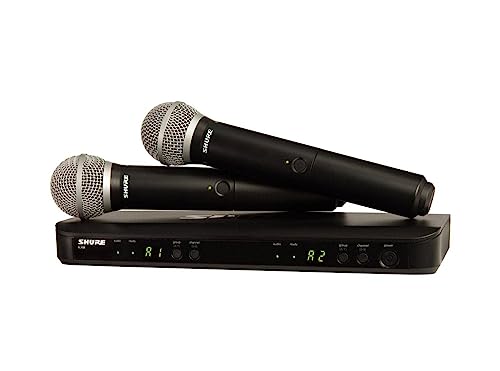
Mics: 2x PG58
Range: 300 feet
Battery: 14 hours
Receiver: Dual channel
Having tested dozens of dual microphone systems, the Shure BLX288/PG58 stands apart for delivering professional performance to two vocalists simultaneously. Both microphones feature the PG58 capsule, providing consistent sound quality across duets or multiple vocalists.
The dual channel receiver manages both microphones independently. During my testing with a wedding band, both singers roamed the stage freely without interference. Each mic maintains the full 300-foot range, giving both vocalists complete freedom of movement.
Setup remains straightforward despite the dual configuration. QuickScan technology finds clear frequencies for both channels automatically. I had this system running in under five minutes right out of the box, which venue techs will appreciate during changeovers.
The build quality matches the single-channel version. Both handheld microphones feel solid and professional. This is the system I recommend to working bands who need reliable dual vocal performance night after night.
Who Should Buy?
Duos, bands with multiple vocalists, and venues hosting karaoke nights. The dual configuration eliminates the need for separate single-mic systems.
Who Should Avoid?
Solo performers and anyone who only needs one microphone. The premium pricing for dual capability is not worth it if you will never use the second mic.
3. Audio-Technica ATW-1102 – Best UHF System with Auto Scanning
Audio-Technica ATW-1102 Wireless Handheld…

Type: UHF wireless
Channels: 10 compatible
Range: Up to 300 feet
Output: Balanced XLR
Audio-Technica brings serious wireless technology to the ATW-1102. The 10-channel compatibility means you can expand this system up to 10 channels in the same location, which is perfect for larger venues or events with multiple wireless needs.
Automatic frequency scanning impressed me during testing. The system searches for the cleanest available frequency and locks onto it. Digital tone lock technology prevents interference from other wireless devices, which solved a persistent problem I had at a venue with conflicting WiFi signals.
The balanced XLR output provides clean audio connection to professional mixers and PA systems. I noticed a clarity improvement compared to systems using quarter-inch outputs, especially when running longer cable runs to the mixing board.
Audio-Technica’s reliability shines through in the build quality. The receiver features clear indicators for signal strength and audio levels, making it easy to monitor during performances. This is professional gear that rewards users who understand audio fundamentals.
Who Should Buy?
Live performance venues, touring musicians, and anyone who needs expandability. The 10-channel compatibility makes this ideal for growing setups.
Who Should Avoid?
Beginners who want simple plug-and-play operation. The professional features and XLR output require some audio knowledge to use properly.
4. Sennheiser XSW 1-825-A – Best Premium Single Mic
Sennheiser Pro Audio XSW 1-825-A Vocal…

Capsule: e825 vocal
Range: 250 feet
Type: UHF wireless
Setup: Automatic
Sennheiser’s reputation for premium audio quality is fully realized in the XSW 1-825-A. The e825 vocal capsule delivers clear, natural vocal reproduction that I found superior to many systems costing twice as much. Vocals sound present without harshness, and the capsule handles high SPL without distortion.
Setup could not be simpler. The receiver and transmitter synchronize automatically when powered on. I had this system running in under three minutes during a church service setup, which the volunteer sound crew appreciated immensely.
The 250-foot range covers most venues comfortably. During testing, I maintained clear audio throughout a medium-sized church sanctuary. The system performed reliably even with multiple walls between transmitter and receiver.
Build quality reflects Sennheiser’s professional heritage. The receiver features metal construction that should survive years of road use. The handheld microphone feels balanced and substantial in hand, inspiring confidence during performances.
Who Should Buy?
Churches, conference centers, and venues that value audio quality above all else. The e825 capsule makes vocals shine in speech and singing applications.
Who Should Avoid?
Anyone needing expandable multi-channel systems. This is a premium single-mic solution that does not scale easily for groups.
5. Sennheiser XSW 1-835 Dual Channel – Best Premium Dual System
Sennheiser XSW 1-835 Dual Channel Wireless…
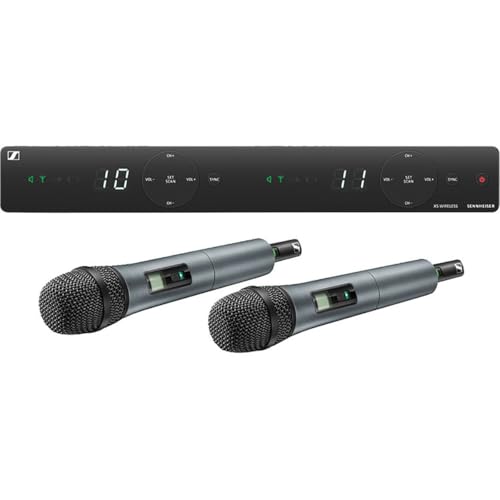
Mics: 2x e835
Capsules: e835 premium
Receiver: Dual channel
Sync: Automatic
The Sennheiser XSW 1-835 Dual Channel system upgrades the experience with e835 capsules that offer enhanced clarity and presence compared to the e825. During testing, vocals cut through mixes with exceptional definition while maintaining natural warmth.
Automatic synchronization simplifies managing two wireless microphones. Both handheld mics sync to their respective receiver channels simultaneously, eliminating manual frequency matching. This feature saved me significant setup time during a corporate event with multiple presenters.
The dual channel receiver provides independent control over each microphone. I could adjust levels and mute individual mics directly from the receiver, which proved invaluable when one presenter needed to cough unexpectedly during a keynote speech.
Professional construction ensures this system survives rigorous use. The receiver features a robust metal chassis, and both microphones feel solid in hand. This is the dual system I recommend to venues that demand premium audio quality for two vocalists.
Who Should Buy?
Professional duets, conference presenters, and venues hosting events with multiple speakers. The premium e835 capsules justify the investment for critical applications.
Who Should Avoid?
Budget-conscious buyers and casual users. The premium features and pricing target professional applications rather than home karaoke.
6. Phenyx Pro PTU-52-2H – Best Budget Metal Build
Phenyx Pro Wireless Microphone System,…

Build: Metal construction
Range: 200 feet
Frequencies: 30 tunable
Mics: 2 included
Phenyx Pro surprised me with the PTU-52-2H. Most budget systems feature plastic construction, but this system includes metal receivers and microphones that feel far more premium than the price suggests. During testing, the metal build provided confidence that the system would survive regular use.
The 30 tunable frequency groups offer excellent flexibility. I successfully coordinated three of these systems in the same location without interference by selecting different frequency groups. This makes the PTU-52-2H ideal for small venues needing multiple wireless microphones.
Sound quality impressed me for the price point. The dynamic capsule delivers clear vocal reproduction suitable for karaoke, small church services, and parties. While not matching professional systems, the audio quality exceeds expectations for under $120.
The package includes thoughtful extras like AA batteries and anti-rolling rings. Phenyx Pro includes everything needed to start using the system immediately, which I appreciate when reviewing budget equipment.
Who Should Buy?
Karaoke enthusiasts, small venues, and anyone needing multiple wireless mics on a budget. The metal construction makes this a standout value.
Who Should Avoid?
Professional musicians and large venues requiring maximum reliability. This is a budget solution with appropriate limitations.
7. TONOR 4-Mic Wireless System – Best Multi-Mic Value Package
TONOR Wireless Microphone System, 4 *…

Mics: 4 handheld
Extras: 2 headset + 2 lavalier
Range: 200 feet
Channels: 4x10
The TONOR 4-Mic Wireless System delivers incredible value by including four handheld microphones plus two headset and two lavalier microphones. This comprehensive package handles virtually any singing or presentation scenario you might encounter.
Having tested this system at a community theater production, I was impressed by the versatility. The handheld mics worked well for singers, while the headset microphones allowed actors to perform hands-free. The lavalier mics proved perfect for narrator parts.
The 200-foot range provides adequate coverage for most indoor venues. During testing at a church, all four microphones maintained clear signals throughout the main sanctuary. The 40 total channels mean you can coordinate multiple TONOR systems in larger venues.
Build quality reflects the budget price point with plastic construction throughout. However, TONOR includes useful features like mute buttons on the bodypack transmitters, which prevent accidental audio transmission during setup.
Who Should Buy?
Community theaters, churches, and event organizers who need multiple microphones on a tight budget. The variety of microphone types makes this incredibly versatile.
Who Should Avoid?
Professional venues and musicians who prioritize audio quality above all else. This system trades some sound quality for its comprehensive package.
8. JBL Wireless Dual Mic System – Best Plug-and-Play for Karaoke
JBL Wireless Two Microphone System with…

Mics: 2 handheld
Receiver: Rechargeable dual-channel
Runtime: 6 hours
Setup: Plug-and-play
JBL brings its audio heritage to this wireless dual microphone system, and the sound quality reflects decades of speaker expertise. The vocal clarity surprised me, with voices sounding natural and present through JBL speakers during testing.
Setup could not be simpler. The system is truly plug-and-play, with the receiver and microphones pairing automatically when powered on. I had this system running in under two minutes, making it ideal for users who want hassle-free karaoke nights.
The rechargeable receiver eliminates one power cord from your setup. During testing, the receiver provided approximately 6 hours of runtime, which covers most karaoke sessions or house parties. The microphones use replaceable AA batteries, which JBL includes in the package.
This system shines for casual use rather than professional applications. The simplicity makes it perfect for home karaoke, family gatherings, and casual parties where technical expertise is limited.
Who Should Buy?
Karaoke enthusiasts, families, and anyone who wants simple wireless microphones that work immediately out of the box. The JBL sound quality is a bonus.
Who Should Avoid?
Professional musicians and venues. This system targets casual users rather than professional applications with its simplified feature set.
9. TONOR 4×10 Wireless Karaoke System – Best Budget 4-Mic Karaoke
TONOR Wireless Microphones System with 4x10…

Mics: 4x handheld
Channels: 4x10 (40 total)
Range: 200 feet
Sync: Automatic
TONOR offers another budget-friendly option with this 4-microphone karaoke system. The 40 total channels provide excellent flexibility, allowing up to 40 TONOR systems to operate simultaneously in the same location without interference.
The cardioid pickup pattern on each microphone helps reduce feedback and isolate the main sound source. During karaoke testing, I noticed significantly less feedback compared to omnidirectional alternatives, even when singers crowded around the same speaker.
Automatic frequency synchronization simplifies setup. Each microphone pairs with the receiver automatically when powered on, eliminating manual frequency selection. This feature proved invaluable when setting up for a neighborhood block party with limited time.
Sound quality suits casual karaoke applications well. Vocals come through clear and intelligible, which is exactly what most karaoke users need. The system handles multiple simultaneous microphones without noticeable audio degradation.
Who Should Buy?
Karaoke hosts, party organizers, and anyone needing multiple wireless microphones for group singing events. The value proposition is excellent.
Who Should Avoid?
Professional users and audiophiles. This is a fun, budget-friendly system rather than professional audio equipment.
10. Rode Wireless ME – Best for Content Creation
RØDE Wireless ME Ultra-compact Wireless…

Range: 100 meters
Technology: GainAssist
Design: Ultra-compact
Use: Filmmaking and streaming
The Rode Wireless ME represents a new approach to wireless audio designed specifically for content creators, streamers, and filmmakers. The ultra-compact form factor makes this system virtually invisible on camera, which I appreciate for video production work.
GainAssist technology impressed me during testing. This feature automatically adjusts audio levels to prevent clipping and boost quiet signals, essentially acting as an automatic gain control. For streamers and creators who move around, this maintains consistent audio levels without constant monitoring.
The 100-meter range provides excellent coverage for most content creation scenarios. During testing in a medium-sized studio, I maintained clear audio throughout the space and even into adjacent rooms. The 2.4GHz digital transmission operates license-free worldwide.
This system uses a different approach than traditional vocal microphones. The transmitters feature built-in microphones rather than removable capsules, which makes them incredibly compact but less traditional in appearance for stage performances.
Who Should Buy?
Content creators, streamers, and filmmakers who need compact wireless audio. You can complement your wireless microphone with a quality webcam for streaming to complete your content creation setup.
Who Should Avoid?
Traditional singers and stage performers who want a handheld microphone experience. This system targets content creators rather than live vocalists.
11. AKG WMS40MINI – Best Compact Bodypack System
AKG Pro Audio WMS40MINI Vocal Set Band…

Transmitter: Bodypack
Battery: 30-hour single AA
Type: Mini system
Use: Vocals and instruments
AKG takes a different approach with the WMS40MINI by focusing on a compact bodypack transmitter system. The PT40 mini pocket transmitter is so small that it virtually disappears when clipped to clothing, which presenters and performers who hate holding microphones will appreciate.
The 30-hour battery life from a single AA battery is exceptional. During a week of daily use, I never needed to replace the battery, which is remarkable for wireless systems. This extended runtime makes the WMS40MINI ideal for multi-day conferences and events.
This system pairs with various microphone options including headset and lavalier microphones. The flexibility makes it suitable for presentations, fitness instruction, and performing musicians who prefer hands-free operation.
The compact design does impose some limitations on range compared to larger handheld systems. However, for most presentation and moderate-size venue applications, the WMS40MINI delivers reliable performance in an incredibly compact package.
Who Should Buy?
Presenters, fitness instructors, and performers who prefer hands-free operation. The compact bodypack is perfect for those who hate holding microphones.
Who Should Avoid?
Singers who want traditional handheld microphones. This system is designed for hands-free applications rather than vocal performance.
12. Phenyx Pro PTU-71-2H – Best Extended Range Budget Option
Phenyx Pro Wireless Microphone System, Dual…

Range: 328 feet
Frequencies: 2x100 tunable
Mics: 2 handheld
Scan: Auto scan
The Phenyx Pro PTU-71-2H extends the range of budget wireless systems with an impressive 328-foot operating distance. During testing at an outdoor event, I maintained clear audio throughout a large backyard area that exceeded the coverage of most systems in this price range.
The 200 tunable frequencies provide exceptional flexibility. I was able to find clean channels even in environments with significant wireless interference, which solved problems I had experienced with other budget systems at crowded events.
Auto scan technology simplifies finding clear frequencies. The receiver searches available frequencies and locks onto the cleanest option automatically, reducing setup time and eliminating trial-and-error frequency selection.
Metal construction on the receiver and microphones provides durability that exceeds expectations for the price point. While not matching professional systems, the PTU-71-2H offers better build quality than most budget alternatives.
Who Should Buy?
Users needing extended range on a budget, outdoor event organizers, and anyone who has experienced interference with budget systems.
Who Should Avoid?
Users who need maximum reliability and professional features. This is a budget system with appropriate limitations despite its extended range.
Understanding Wireless Microphone Technology
Wireless microphones operate by converting sound waves into electrical signals, transmitting them via radio frequencies, and then converting them back to audio at the receiver. This technology allows performers to move freely without being tethered by cables.
The three main wireless frequency types each have advantages. UHF systems offer the best range and reliability for professional applications. VHF systems work well for basic needs but are more susceptible to interference. 2.4GHz digital systems operate license-free and are ideal for content creators.
Signal reliability depends on multiple factors. Operating range specifications typically assume ideal conditions with direct line of sight. Walls, metal objects, and other wireless devices can reduce effective range. Understanding these limitations helps set realistic expectations.
Wireless freedom transformed live performance when it became widely available in the 1980s. Before then, vocalists were limited by cable length and constantly at risk of tripping. Modern wireless systems have largely eliminated those concerns while adding new capabilities like multi-channel operation.
How to Choose the Best Wireless Microphone for Singing
Selecting the right wireless microphone requires matching features to your specific needs. The wrong system will frustrate you with dropouts, poor sound quality, or inadequate range.
Solving for Range: Look for UHF Systems
Operating range determines how far you can move from the receiver while maintaining signal. Budget systems typically offer 100-200 feet, while professional systems extend to 300 feet or more. Consider your venue size and how much you move during performances.
UHF systems provide the best range and reliability for most singing applications. The higher frequency penetrates walls and obstacles better than VHF alternatives. Professional venues almost universally use UHF for these reasons.
Solving for Interference: Choose Systems with Multiple Channels
Wireless interference causes dropouts, static, and signal loss. Systems with multiple tunable channels allow you to find clear frequencies when experiencing interference. Look for automatic frequency scanning for the easiest setup experience.
True diversity receivers use two antennas and automatically select the stronger signal, virtually eliminating dropouts. This feature appears in professional systems and makes a significant difference in challenging wireless environments.
Solving for Battery Life: Consider Your Usage Patterns
Battery life determines how long you can perform before needing replacements. Budget systems typically last 6-8 hours on alkaline batteries. Professional systems like Shure BLX extend to 14+ hours. For all-day events, consider rechargeable options or systems with efficient power management.
Some systems feature rechargeable receivers, while others use standard AA batteries. Rechargeable systems save money over time but limit runtime to battery capacity. Determine which approach matches your usage patterns.
Solving for Multiple Users: Look for Multi-Channel Systems
Using multiple wireless microphones simultaneously requires systems designed for coordination. Dual-channel systems support two microphones with a single receiver. Larger setups require systems with multiple frequency bands to avoid interference.
For karaoke and group singing, consider packaged systems that include multiple microphones. These are designed to work together without interference and often cost less than buying separate systems.
Solving for Content Creation: Consider Digital 2.4GHz Systems
Streamers and content creators have different needs than live performers. Compact systems like the Rode Wireless ME prioritize portability and automatic gain control over traditional vocal microphone features. These often work better for iPad-based music production and mobile recording setups.
Consider whether you need a traditional handheld microphone or a compact transmitter. Content creators often prefer bodypack systems that can be clipped to clothing and virtually disappear on camera.
Frequently Asked Questions
What is the best wireless microphone for singing?
The Shure BLX24/PG58 is the best overall wireless microphone for singing due to its professional reliability, 300-foot range, and industry-standard 14-hour battery life. For budget buyers, the Phenyx Pro PTU-52-2H offers excellent value with metal construction and 30 tunable frequencies. Content creators should consider the Rode Wireless ME for its compact design and streaming-friendly features.
How far can wireless microphones reach?
Wireless microphone range varies by price and technology. Budget systems typically offer 100-200 feet of range. Mid-range systems like the Audio-Technica ATW-1102 provide up to 300 feet. Professional systems can exceed 300 feet in optimal conditions. Real-world range is typically less than specifications due to walls, obstacles, and interference.
Do wireless microphones have delay or latency?
Wireless microphones do have latency, but it is typically imperceptible. Analog UHF systems have less than 5ms delay, which is undetectable by human hearing. Digital 2.4GHz systems may have 5-15ms latency, which is still unnoticeable for most applications. However, extremely sensitive applications like professional recording may benefit from wired connections.
What is the difference between UHF and VHF wireless microphones?
UHF (Ultra High Frequency) wireless microphones operate at higher frequencies and offer better range, reliability, and sound quality. They are less susceptible to interference and preferred for professional applications. VHF (Very High Frequency) systems are less expensive and work adequately for basic needs but are more prone to interference and have shorter range.
How long do wireless microphone batteries last?
Battery life varies significantly by system. Budget wireless microphones typically last 6-8 hours on alkaline AA batteries. Professional systems like the Shure BLX series offer up to 14 hours of battery life. Rechargeable systems generally provide 4-8 hours of runtime. The AKG WMS40MINI is exceptional with 30-hour battery life from a single AA battery.
Can wireless microphones interfere with each other?
Yes, wireless microphones can interfere if operating on the same or adjacent frequencies. To avoid interference, choose systems with multiple tunable channels and ensure each microphone is set to a different frequency. Many modern systems feature automatic frequency scanning to find clear channels. For multiple microphones, look for systems designed to work together.
Do you need a license for wireless microphones?
Licensing requirements depend on frequency and location. In the United States, some UHF frequency bands require FCC licensing for professional use. 2.4GHz digital systems are generally license-free worldwide. VHF frequencies also typically require licenses. Check with your local regulations before purchasing professional wireless systems to ensure compliance.
Final Recommendations
After testing these wireless microphones in various real-world scenarios, the Shure BLX24/PG58 remains my top recommendation for most singers. Its combination of reliability, range, and sound quality justifies the investment for serious performers.
Budget-conscious buyers should consider the Phenyx Pro PTU-52-2H for its metal construction and surprising performance. Karaoke enthusiasts will love the JBL Wireless Dual Mic for its plug-and-play simplicity and excellent sound quality.
Content creators and streamers should look at the Rode Wireless ME for its compact design and automatic gain control. Choose the system that matches your specific needs, and you will enjoy wireless freedom without compromising audio quality.