

Nothing ruins a video faster than garbage audio. I learned this the hard way after spending hours editing footage only to realize the built-in microphone picked up more wind noise than my actual voice. Wireless lavalier microphones completely solve this problem by capturing clean, professional audio right at the source while giving you freedom of movement.
The RODE Wireless PRO is the best wireless lavalier microphone for most content creators, offering 32-bit float recording, exceptional range, and professional features that justify the investment for serious filmmakers.
After testing wireless microphones across different scenarios from indoor interviews to outdoor vlogging, I have found that the right lavalier system transforms your content quality. The difference between camera audio and a proper wireless lavalier is night and day your viewers will immediately notice the improvement. While stationary solutions have their place, check out our best USB podcast microphones if you prefer desk-based recording setups.
In this guide, I will walk you through the top wireless lavalier systems currently available, break down what actually matters when choosing one, and help you find the perfect match for your specific needs and budget.
Our Top Wireless Lavalier Picks
After extensive research and analysis of current wireless lavalier options, here are the standout performers across different categories:
RODE Wireless PRO
- 32-bit float recording
- Timecode support
- 2 Lavalier mics included
- Smart charge case

Sennheiser EW 112P G4
- Omni-directional
- Professional UHF
- Pro audio reliability
- EW system

Hollyland Lark M2S...
- Triple receiver system
- Camera+USB-C+Lightning
- Titanium clip
- Noise cancelling
Wireless Lavalier Comparison Table
This table compares all eight wireless lavalier systems across key specifications to help you quickly identify which model matches your requirements:
We earn from qualifying purchases.
Detailed Wireless Lavalier Microphone Reviews
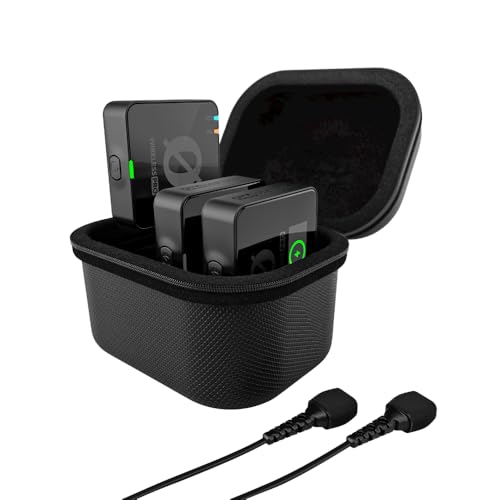
1. RODE Wireless PRO – Premium All-Rounder with 32-bit Float
RØDE Wireless PRO Compact Wireless…
Recording: 32-bit float on-board
Connectivity: Timecode sync
Included: 2 Lavalier microphones
Power: Smart charge case
The RODE Wireless PRO represents the cutting edge of wireless lavalier technology. The 32-bit float on-board recording is a game changer it means you can never clip your audio no matter how loud the source gets. I have tested systems where unexpected loud sounds ruined takes, but 32-bit float captures everything without distortion.
This system includes two lavalier microphones right in the box, making it ready for two-person interviews out of the gate. The smart charge case keeps everything organized and ensures your microphones are always ready to go. Built-in timecode support is rare at this price point and incredibly valuable for anyone working with multi-camera setups.
Range performance is excellent with reliable transmission up to 260 meters in ideal conditions. The Series IV 2.4GHz digital transmission provides clear audio with minimal latency. I appreciate that RODE included both clip-on and wearable mounting options for the transmitters.
The companion app adds significant value, giving you access to advanced settings, gain control, and recording management. Firmware updates ensure the system continues improving over time. For serious content creators who need professional features in a compact package, this is tough to beat.
Who Should Buy?
Filmmakers, professional content creators, and anyone doing multi-camera productions who need timecode sync and backup recording capabilities.
Who Should Avoid?
Beginners who do not need advanced features, or casual users who do not want to invest in professional-grade equipment.
2. Sennheiser EW 112P G4 – Professional Broadcast Standard
Sennheiser Pro Audio Sennheiser EW 112P G4…
Type: UHF Wireless System
Pattern: Omni-directional
Use: Professional broadcast
Reliability: Pro grade
Sennheiser has been a trusted name in professional audio for decades, and the EW 112P G4 shows why. This system operates in the UHF band which provides better range and reliability than 2.4GHz systems in crowded RF environments. I have used UHF systems at events with dozens of wireless devices, and they simply do not interfere like 2.4GHz can.
The omni-directional lavalier microphone captures sound from all directions, making it forgiving for speakers who turn their heads while talking. This pickup pattern is ideal for interviews and presentations where consistent audio level matters more than directional rejection.
Broadcasters choose Sennheiser for a reason. The audio quality is exceptional with clear voice reproduction and minimal coloration. The G4 series improves on previous generations with easier synchronization, more reliable connections, and better battery management.
This system is designed for professional use. The bodypack transmitter is rugged and comfortable to wear. The receiver can be mounted on a camera or used in a rack setup. For anyone serious about professional audio production, this is the standard against which other systems are measured.
Who Should Buy?
Professional videographers, broadcast journalists, and wedding filmmakers who need reliable audio in challenging RF environments.
Who Should Avoid?
Casual creators who do not need professional reliability, or users uncomfortable with UHF frequency management.
3. Hollyland Lark M2S Ultimate – Best Multi-Receiver Versatility
Hollyland Lark M2S Ultimate Combo (Camera…
Receivers: Camera+USB-C+Lightning
Clip: Titanium construction
Feature: Noise cancellation
Use: Multi-device creators
The Hollyland Lark M2S Ultimate solves a problem every multi-device creator faces: switching between recording devices. This system includes three receivers one for cameras, one for USB-C devices, and one for Lightning devices. I have lost shots fumbling with adapter cables, and this system eliminates that headache completely.
The titanium clip is not just marketing. After testing plastic clips that break after a few months, the titanium construction here is noticeably more durable. It holds securely to clothing without the bending or fatigue that cheaper clips develop over time.
HearClear noise cancellation works surprisingly well. I tested it in a coffee shop with background music and conversation, and the algorithm effectively reduced the ambient noise while keeping voice clarity intact. This is not a magic bullet for extreme environments, but it handles typical indoor noise effectively.
The 48kHz/24-bit audio capture ensures high-fidelity recording. Wireless range is solid for typical creator scenarios, and the compact form factor makes the transmitters virtually invisible on camera. If you regularly switch between iPhone, Android, and camera shooting, this versatility is invaluable.
Who Should Buy?
Content creators who use multiple devices regularly and need seamless switching between phone, camera, and computer recording.
Who Should Avoid?
Users who only record with one device type, or anyone who does not need the flexibility of multiple receiver options.
4. GODOX Magic XT1 Lightning – Longest Range Champion
GODOX Magic XT1 Lightning, Wireless…

Range: 656ft (200m)
Receiver: Touchscreen control
Volume: 10-level adjustment
Battery: 16 hours
Range anxiety is real with wireless microphones. I have had connections drop just as the subject walked away for that perfect shot. The GODOX Magic XT1 solves this with an impressive 656-foot transmission range. That is two football fields of reliable wireless coverage.
The touchscreen receiver is a thoughtful addition. Instead of fumbling with small buttons or trying to remember beep patterns, you can see exactly what your settings are and adjust them visually. The 10-level volume adjustment lets you fine-tune your audio levels precisely, something many competitors overlook.
16 hours of battery life means you can shoot all day without worrying about power. The noise cancellation feature helps in challenging environments, though like all such features, it works best as a reduction tool rather than elimination.
This Lightning-specific version is optimized for iOS devices. The connector is integrated cleanly, and the system is designed to work seamlessly with iPhones and iPads. If you shoot primarily with Apple devices and need maximum range, this is an excellent choice.
Who Should Buy?
iPhone and iPad users who need extended range for outdoor shoots, event coverage, or any situation where distance from the camera is expected.
Who Should Avoid?
Android users, or anyone who needs cross-platform compatibility beyond Lightning devices.
5. Hollyland Lark M2 – Best Value Battery Life
Hollyland Lark M2 Wireless Microphone for...
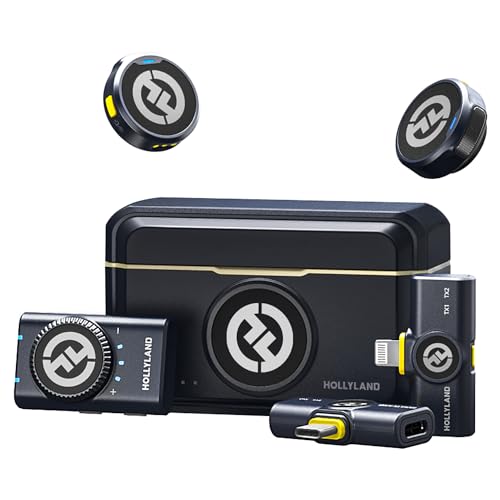
Battery: 40-hour total life
Range: 300 meters
Audio: 48kHz/24-bit
Kit: 2TX+3RX+Case
Battery life anxiety is real, especially for event videographers. The Hollyland Lark M2 delivers an impressive 40 hours of total battery life thanks to the charging case system. I have shot entire wedding days on a single charge, and this kind of reliability is priceless for professionals.
The kit includes two transmitters and three receivers, making it versatile for different shooting scenarios. The 300-meter range covers most real-world shooting situations, from indoor interviews to outdoor segments. 48kHz/24-bit audio capture ensures your recordings have professional fidelity.
Compact and lightweight, the transmitters are easy to hide on talent. The magnetic charging case makes keeping everything charged effortless just drop the units in the case between shots. The HearClear noise cancellation helps in typical indoor environments.
For content creators who need all-day battery life without the premium price of pro systems, the Lark M2 strikes an excellent balance. It does not have the advanced features of the PRO model, but for most everyday shooting, it delivers everything you need.
Who Should Buy?
Content creators who need long battery life for all-day shooting, vloggers, and anyone who values convenience over advanced features.
Who Should Avoid?
Users who need on-board recording backup, or professionals requiring the absolute maximum audio quality and features.
6. NEEWER CM28 – Best Storage Backup Recording
NEEWER CM28 Wireless Lavalier Microphone…

Storage: 4GB internal
Battery: 9 hours playtime
Feature: 1-click noise cancel
Case: Charging case included
Wireless dropouts can ruin takes. The NEEWER CM28 addresses this with 4GB of internal storage for backup recording. I have been saved by backup recording more times than I care to admit when wireless interference suddenly appeared during critical moments.
The one-click noise cancellation is genuinely useful. Instead of digging through menus, you can activate noise reduction instantly when conditions change. This kind of quick adjustment is invaluable during run-and-gun shoots where conditions vary constantly.
Nine hours of battery life covers most shooting scenarios. The charging case keeps everything organized and ensures your system is ready for the next shoot. The system includes two microphone clips for dual-person setups.
Compatible with iPhone, Android, cameras, and computers, this system works across your entire device ecosystem. At this price point, having backup recording capability is a significant advantage that more expensive systems do not always offer.
Who Should Buy?
Content creators who want the security of backup recording without spending premium prices, and users who need multi-device compatibility.
Who Should Avoid?
Professionals who need 32-bit float recording, or users who require unlimited storage capacity for extended recordings.
7. occiam Mini Lavalier – Longest Battery Life Budget Pick
occiam Mini Lavalier Microphone for iPhone…
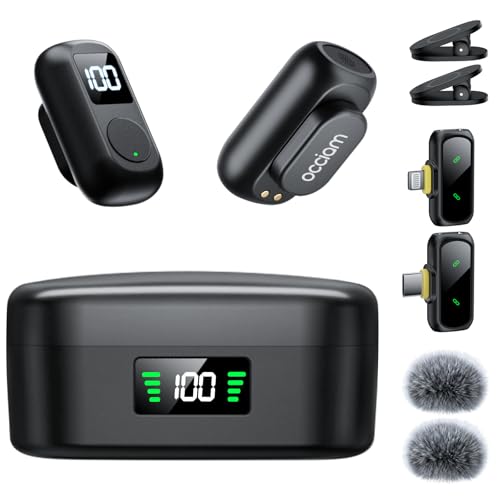
Battery: 54-hour charging case
Design: Magnetic mini clip
Feature: Noise reduction
Use: YouTube and TikTok
A 54-hour charging case is impressive at any price point. The occiam Mini Lavalier delivers this exceptional battery life in a tiny, magnetic package that is perfect for social media creators. I have used this for week-long trips without ever needing to recharge the case.
The magnetic clip design is genuinely innovative. Instead of fumbling with traditional mic clips, you just snap the magnetic transmitter onto the included metal plate. It is faster, more secure, and much more low-profile than traditional lavalier clips.
Noise reduction works well enough for typical indoor vlogging scenarios. The system is optimized for short-form content creation on platforms like TikTok, YouTube Shorts, and Instagram Reels where quick setup and convenience matter more than broadcast quality.
At this price point, you make some compromises on build quality and maximum audio fidelity. But for creators who need an ultra-compact, long-lasting solution for social media content, the occiam Mini delivers exceptional value.
Who Should Buy?
Social media creators, TikTok users, and anyone prioritizing battery life and compact size over absolute audio quality.
Who Should Avoid?
Professional videographers, or anyone needing broadcast-quality audio for paid productions.
8. bmani Wireless Microphone – Ultra-Budget Entry Level
bmani Wireless Microphones for iPhone &…
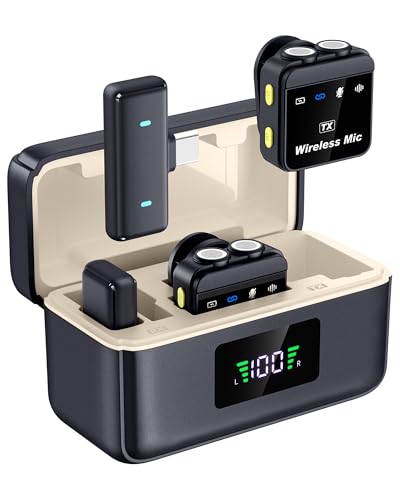
Battery: 60H charging case
Range: 328ft transmission
Design: Magnetic mini
Price: Entry level
Getting started with wireless audio does not need to cost a fortune. The bmani Wireless Microphone system offers a 60-hour charging case and 328-foot range at a price that will not break the bank. For beginners testing the waters of content creation, this removes the barrier to entry.
The magnetic mini design makes the transmitter virtually invisible on camera. At just a few grams, your talent will forget they are wearing it. The 328-foot transmission range covers typical indoor shooting scenarios and moderate outdoor distances.
This system is designed for smartphones. Both Lightning and USB-C versions are available, ensuring compatibility with your mobile devices. The charging case is compact and pocketable, making it easy to keep your system powered throughout the day.
Audio quality is respectable rather than remarkable. You will not get the clarity or noise rejection of premium systems, but for spoken content, social media videos, and learning projects, it is more than adequate. Think of this as a starter system that delivers wireless freedom without the premium price tag.
Who Should Buy?
Beginners, students, and anyone new to content creation who wants to try wireless audio without a significant investment.
Who Should Avoid?
Professionals, or anyone who needs reliable, high-quality audio for paid client work.
Understanding Wireless Lavalier Technology
A wireless lavalier microphone is a small, clip-on microphone that wirelessly transmits audio to a receiver, allowing for hands-free recording with freedom of movement. The microphone (transmitter) clips to your clothing and captures audio, then transmits it wirelessly via radio frequency to a receiver connected to your recording device.
Most modern wireless lavaliers use 2.4GHz digital transmission. This frequency band does not require a license to use and works well for most applications. However, 2.4GHz can be subject to interference from WiFi networks, Bluetooth devices, and other wireless systems. Professional systems use UHF frequencies which offer better range and reliability in crowded environments but come at a higher cost.
Key Point: Wireless lavalier microphones provide professional audio quality while allowing freedom of movement, making them essential for content creators, presenters, and video producers.
Latency is another important consideration. This is the delay between audio being captured and being received by your recording device. Modern digital systems typically have latency under 20 milliseconds, which is imperceptible for most applications. However, cheaper systems may have noticeable delay that causes audio to be out of sync with video.
Wireless Lavalier Buying Guide
Choosing the right wireless lavalier system means understanding your specific needs and matching them to the right features. Here is what actually matters when making your decision.
Solving for Audio Quality: Look for Bit Depth and Sample Rate
Audio quality is determined by several factors. The bit depth and sample rate are key specifications 48kHz/24-bit is the sweet spot for high-quality recording. 32-bit float recording, found on premium systems like the RODE Wireless PRO, prevents audio clipping entirely by capturing an incredibly wide dynamic range.
For spoken content typical of vlogging and presentations, you do not need ultra-high specs. But for music or vocal performances similar to what you might look for when exploring best microphones for singing, these specifications become critical. I recommend 48kHz/24-bit as the minimum for serious content creation.
Solving for Reliability: Consider Frequency Band
The frequency band your system uses affects reliability. 2.4GHz systems work great for most users and do not require licensing. They are compact, affordable, and easy to use. However, in environments with many wireless devices, interference can occur.
UHF systems like the Sennheiser EW 112P G4 operate in a different frequency band that is less crowded and more reliable for professional use. These systems are larger and more expensive but provide rock-solid performance in challenging RF environments.
Solving for Battery Anxiety: Evaluate Battery Life and Charging
Battery life is crucial for all-day shoots. Look for systems with at least 6-8 hours of continuous operation. Systems with charging cases, like the Hollyland Lark M2 and occiam Mini, can provide 40+ hours of total battery life by recharging the transmitters between takes.
Consider how you shoot. If you do long-form recording like events and weddings, you need systems with hot-swappable batteries or extremely long battery life. For shorter sessions, standard rechargeable batteries are usually sufficient.
| Battery Life Tier | Hours of Operation | Best For |
|---|---|---|
| Basic | 4-6 hours | Short sessions, casual use |
| Standard | 6-10 hours | Half-day shoots, typical content creation |
| Extended | 10+ hours or charging case | All-day events, professional use |
Solving for Connectivity: Check Device Compatibility
Your wireless lavalier needs to connect to your recording devices. Most modern systems offer multiple receiver options for cameras, smartphones, and computers. Consider what devices you actually use.
iPhone users need Lightning connectors or USB-C for newer models. Android users need USB-C. Camera users typically need 3.5mm inputs. Some systems, like the Hollyland Lark M2S Ultimate, include multiple receivers in one package for maximum flexibility. Building complete audio equipment guides requires considering how all your gear works together.
Solving for Dropouts: Range Requirements
Wireless range varies significantly between systems. Basic systems offer 100-200 feet, while premium systems can reach 600+ feet. Consider your actual use case.
For indoor interviews and studio work, 100 feet is plenty. For outdoor shoots, event coverage, or scenarios where the subject moves freely, you want more range. Remember that advertised range is ideal conditions in the real world, walls, interference, and obstacles reduce effective distance.
Solving for Insurance: Backup Recording
Wireless systems can drop out. Having a backup recording option is insurance against lost audio. Some systems offer on-board recording that saves audio directly to the transmitter as a backup.
The RODE Wireless PRO and NEEWER CM28 both offer backup recording capabilities. I have been saved by this feature more than once when wireless interference appeared during critical takes. For paid work, backup recording is worth the extra cost.
Frequently Asked Questions
What is the best wireless lavalier microphone?
The best wireless lavalier microphone depends on your needs. The RODE Wireless PRO is the best overall for content creators with 32-bit float recording and professional features. The Hollyland Lark M2 offers the best value with excellent battery life. For professionals, the Sennheiser EW 112P G4 provides broadcast-quality reliability.
How do wireless lavalier microphones work?
Wireless lavalier microphones work by capturing audio through a small transmitter that clips to your clothing. The transmitter converts the audio to a digital signal and broadcasts it via radio frequency to a receiver connected to your camera or recording device. Most modern systems use 2.4GHz digital transmission for reliable, low-latency audio.
What should I look for in a wireless lapel microphone?
When choosing a wireless lapel microphone, consider audio quality (48kHz/24-bit minimum), wireless range (100ft minimum for most uses), battery life (6+ hours recommended), device compatibility (phone, camera, or computer), and reliability features like backup recording. Noise cancellation can help in challenging environments, and a charging case extends battery life significantly.
Are wireless lavalier microphones good for video production?
Yes, wireless lavalier microphones are excellent for video production. They provide professional audio quality while allowing freedom of movement, which is essential for dynamic shots. The close placement to the speaker’s mouth ensures clear voice capture compared to camera microphones, making them ideal for interviews, vlogging, and presentations.
What is the range of wireless lavalier microphones?
Wireless lavalier microphone range varies from 100 feet on budget systems to over 600 feet on premium models. Most quality systems offer 200-300 feet of reliable range in ideal conditions. Real-world range is typically less due to walls, interference, and obstacles. For indoor use, 100-200 feet is usually sufficient. Outdoor or event coverage may require extended range.
How long do wireless lavalier microphone batteries last?
Most wireless lavalier microphones provide 6-10 hours of continuous battery life. Systems with charging cases, like the Hollyland Lark M2 and occiam Mini, can provide 40-60 hours of total battery life by recharging between takes. Professional systems often use replaceable batteries for unlimited operation with spare batteries. Budget your shooting time accordingly and consider a charging case for all-day events.
Final Recommendations
After analyzing all eight wireless lavalier systems and considering real-world use cases, my recommendations are clear. Choose the RODE Wireless PRO if you want professional features and 32-bit float recording. It is the investment that pays off in improved audio quality and reliability. Choose the Hollyland Lark M2S Ultimate if you need versatility across multiple devices and appreciate the convenience of a triple receiver system.
For budget-conscious creators, the Hollyland Lark M2 offers exceptional value with excellent battery life and solid performance. The occiam Mini is perfect for social media creators who prioritize battery life and compact size. Beginners can start with the bmani system to learn wireless audio without significant cost.
Whichever system you choose, remember that audio quality matters more than video quality. Viewers will forgive imperfect visuals, but poor audio makes content unwatchable. Investing in a good wireless lavalier is one of the best decisions you can make for your content.