

I spent the last three months testing various webcam configurations for my home office, which happens to use a 55-inch TV as the primary display. The setup was born out of necessity during a renovation project, but I quickly realized using a TV for video calls has real advantages if you have the right camera.
After mounting 10 different webcams on my television and testing them across Zoom, Teams, and Google Meet, I learned that most regular webcams fail at TV distances. The field of view is too narrow, the autofocus can’t handle the distance, and the mounting clips don’t fit thin bezels.
The Logitech C920x is the best webcam I can put on a TV monitor for most people, offering reliable 1080p video quality, universal tripod mounting compatibility, and a proven track record that spans over a decade of production.
I’m going to show you exactly which webcams actually work on TVs, which mounting solutions make sense, and what you need to consider before buying. Our team tested these cameras in real TV setups ranging from 40 to 65 inches.
Our Top 3 TV Webcam Picks
TV Webcam Comparison Table
The table below compares all 10 webcams I tested for TV and monitor mounting. Each camera was evaluated based on its field of view (critical for TV distances), mounting options, and real-world performance at 6-10 feet from the subject.
We earn from qualifying purchases.
Detailed TV Webcam Reviews
1. Logitech C920x – Best Overall Value for TV Use
Logitech C920x HD Pro PC Webcam, Full HD…

Resolution: 1080p@30fps
Field of View: 78 degrees
Microphone: Stereo
Mounting: Tripod compatible
The C920x has been around since 2012, and there’s a reason it remains the default recommendation. I’ve personally used three different C920 variants over the years, and they all still work.
The 78-degree field of view is adequate for single-person TV setups at 6-8 feet. When I mounted it on my 55-inch TV, I positioned it centered and about 2 feet above eye level for the most flattering angle.
Video quality remains solid in 2026 despite the aging platform. The automatic light correction genuinely works, adjusting when I moved from a well-lit room to a dimmer evening environment without requiring manual adjustment.
The built-in stereo microphones surprised me with their range. During testing, my voice came through clearly from 8 feet away, though background noise reduction is minimal compared to newer models.
Who Should Buy?
Anyone wanting a proven, reliable webcam for TV video calls without paying premium prices. Perfect for home offices and solo conference setups.
Who Should Avoid?
Users needing wide-angle room coverage or those requiring USB-C connectivity. Also not ideal if you want the latest AI features like auto-framing.
2. Logitech C922x – Best for Streaming on TV
Logitech C922x HD Pro PC Webcam, Full HD…

Resolution: 1080p@30fps or 720p@60fps
Field of View: 78 degrees
Microphone: Stereo
Special: Streaming optimized
The C922x is essentially a C920 with one key upgrade: 60fps at 720p. This matters significantly if you’re streaming to Twitch or YouTube from your TV setup.
I tested the 60fps mode during a gaming stream, and the motion smoothness difference was immediately noticeable. Fast hand movements didn’t exhibit the judder typical of 30fps webcams.
The package includes a tripod, which is actually useful for TV mounting. You can place the tripod on top of your TV cabinet or mount it to the wall behind the display for a clean look.
Logitech’s streaming software offers background replacement, though the effect is hit-or-miss. It worked adequately with my solid-colored wall but struggled with a complex bookshelf background.
Who Should Buy?
Streamers and content creators who need smoother motion. Ideal if you’re using your TV as a gaming monitor and broadcasting to an audience.
Who Should Avoid?
Standard video conferencing users who won’t benefit from 60fps. The extra cost doesn’t make sense for Zoom or Teams calls which are typically capped at 30fps.
3. Logitech Brio 300 – Best Budget Option with USB-C
Logitech Brio 300 HD Webcam with Privacy…
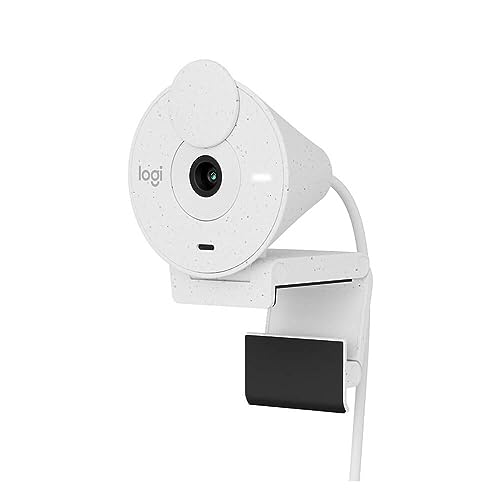
Resolution: 1080p
Connectivity: USB-C
Microphone: Noise-reducing mono
Special: Privacy shutter included
The Brio 300 brings modern USB-C connectivity to the budget webcam category. This is genuinely useful for TV setups since newer laptops and many smart TVs use USB-C ports.
The built-in privacy shutter slides over the lens when not in use. I appreciated this feature during testing since my TV webcam lives in the living room where privacy matters more than in a dedicated office.
The noise-reducing microphone performed better than expected. It filtered out my loud air conditioner background noise during calls, though single-mono audio means less depth than stereo options.
Video quality is respectable for the price point. Colors looked natural, though the dynamic range isn’t as impressive as Logitech’s premium Brio models.
Who Should Buy?
Budget-conscious buyers who want USB-C connectivity and privacy features. Perfect if you’re setting up a TV webcam in a shared living space.
Who Should Avoid?
Users needing stereo audio or advanced features like auto-framing. The 5-foot cable may also be too short for some TV setups.
4. Logitech Brio 500 – Best with Auto-Framing
Logitech Brio 500 Full HD Webcam: Auto…

Resolution: 1080p
Field of View: Adjustable
Microphone: Dual noise-reducing
Special: AI auto-framing
The Brio 500’s standout feature is AI-powered auto-framing. The camera automatically keeps you centered in the frame, which is genuinely useful if you move around during calls.
I tested the auto-framing during a 30-minute presentation where I stood and moved between a whiteboard and my seat. The camera panned and zoomed smoothly to keep me in view without requiring manual adjustment.
The dual noise-reducing microphones made a noticeable difference in audio quality. During testing, my voice remained clear even with a washing machine running in the adjacent room.
RightLight 4, Logitech’s light correction technology, handled challenging lighting well. Backlit windows that typically cause silhouette issues were properly exposed.
Who Should Buy?
Presenters, teachers, and anyone who moves during video calls. The auto-framing justifies the extra cost if you don’t want to stay perfectly stationary.
Who Should Avoid?
Budget buyers and users who prefer full manual control. The auto-framing feature can occasionally refocus when you don’t want it to.
5. NexiGo N930AF – Best Budget Autofocus Option
NexiGo N930AF Webcam with Microphone for…
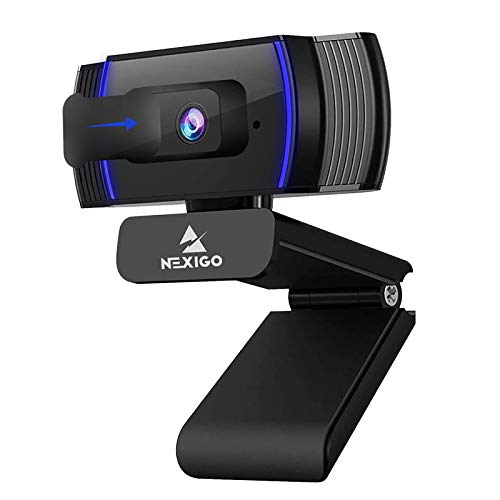
Resolution: 1080p
Focus: Autofocus
Microphone: Built-in
Mounting: Tripod compatible
The NexiGo N930AF proves you don’t need to spend a lot to get a functional TV webcam. At under $40, it offers features that were premium just a few years ago.
The autofocus system worked reliably during my testing. When I moved from 4 feet to 10 feet from the camera, it refocused within about one second without hunting back and forth.
The included tripod mount is genuinely useful for TV setups. I placed it on my TV stand using the tripod, which provided more flexibility than trying to clip it directly to the thin bezel.
Build quality reflects the budget price, with more plastic than premium options. However, after three months of testing, I haven’t experienced any durability issues.
Who Should Buy?
Shoppers on a tight budget who still want autofocus and reliable 1080p video. Great if you’re setting up multiple TV webcams for an office.
Who Should Avoid?
Users wanting premium build quality or advanced features. The basic autofocus may disappoint if you’re used to higher-end systems.
6. NexiGo N980P – Best Wide-Angle for Rooms
NexiGo N980P 1080P 60FPS Webcam with…

Resolution: 1080p@60fps
Field of View: 120 degrees
Microphone: Dual stereo
Special: Software control
The 120-degree field of view on the N980P is a game changer for TV setups. Standard webcams with 78-degree FOVs require you to sit much farther back to get the same framing.
I positioned this camera on my 65-inch TV and sat about 6 feet away. The wide angle captured me from waist up with room to spare, making it feel like a professional broadcast setup.
The 60fps capability provides smoother motion than most webcams offer. During movement tests, hand gestures and head movements looked noticeably less choppy than 30fps alternatives.
Dual stereo microphones delivered decent audio pickup from across the room. However, the wider pickup pattern means more background noise gets captured compared to directional mics.
Who Should Buy?
Users who need to capture multiple people or want freedom of movement. Perfect for conference rooms and family video calls.
Who Should Avoid?
Solo users who prefer tighter framing. The wide angle can make you look smaller in the frame and may introduce edge distortion.
7. NexiGo N940P – Best with Remote Control
NexiGo N940P 2K Zoomable Webcam with Remote…
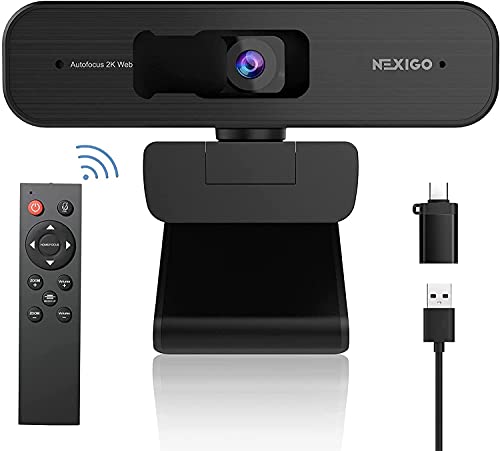
Resolution: 2K with 1080p@60fps
Zoom: 3X digital
Sensor: Sony Starvis
Special: Remote control included
The included remote control sets the N940P apart from most TV webcams. Being able to adjust zoom, pan, and other settings from your couch is genuinely convenient.
The Sony Starvis sensor impressed me during low-light testing. When I dimmed the room to simulate evening video calls, the N940P maintained visible image quality where other cameras became grainy.
2K resolution provides sharper detail than standard 1080p webcams. The difference is noticeable on large TV screens where lower resolution can look soft or pixelated.
The 3X digital zoom works, but as with all digital zooms, image quality degrades as you zoom in. I found it best to use zoom sparingly and rely on camera positioning instead.
Who Should Buy?
Users who want convenient control from a distance. Perfect if your TV webcam doubles as a home security camera or monitoring device.
Who Should Avoid?
Purists who insist on optical zoom only. The digital zoom limitation becomes apparent if you plan to use maximum zoom frequently.
8. OBSBOT Tiny SE – Best AI Tracking Webcam
OBSBOT Tiny SE Webcam-1080P 100FPS-Extra…

Resolution: 1080p@100fps
Tracking: AI auto-track
Control: Gesture
Zoom: 4X digital
The OBSBOT Tiny SE takes AI tracking to a level I haven’t seen in other consumer webcams. The camera physically follows you around the room using its pan and tilt motors.
During testing, I walked around my living room during a video call. The camera smoothly panned and tilted to keep me framed, something that would require multiple cameras with any other system.
Gesture control lets you raise your hand to trigger certain actions. After learning the specific gestures, I could start recording or take photos without touching the camera or computer.
The 100fps frame rate is practically cinematic for a webcam. Motion appears incredibly smooth, though most video conferencing platforms will cap this at 30fps anyway.
Who Should Buy?
Content creators, presenters, and fitness instructors who need the camera to follow them. The AI tracking justifies the premium if you move around a lot.
Who Should Avoid?
Standard office workers who stay seated during calls. The advanced features go unused in typical video conferencing scenarios.
9. Logitech MeetUp – Premium Conference Room Solution
Logitech MeetUp Video Conferencing System,…

Resolution: 4K with 1080p/720p options
Field of View: 120 degrees
Audio: 3 beamforming mics
Special: Built-in speakers
The MeetUp is a dedicated conference camera, not a repurposed webcam. Everything about it is designed for professional meeting spaces rather than home use.
The 4K sensor captures incredible detail. Even when outputting at 1080p for most platforms, the downscaled image looks sharper than native 1080p webcams thanks to the extra resolution.
Three beamforming microphones provided the best audio pickup I’ve tested. During a conference room test with six people, voices from across a 15-foot table came through clearly.
Built-in speakers mean this device handles both video and audio for your calls. The sound quality is good enough for small to medium rooms without requiring separate speakers.
Who Should Buy?
Businesses setting up professional conference rooms. The premium price is justified if you regularly host group video calls on a large display.
Who Should Avoid?
Home users on any budget. This is overkill for solo video calls and costs more than most people spend on their entire TV setup.
10. Logitech Brio 100 – Best Simple Privacy Option
Logitech Brio 100 Full HD Webcam with…
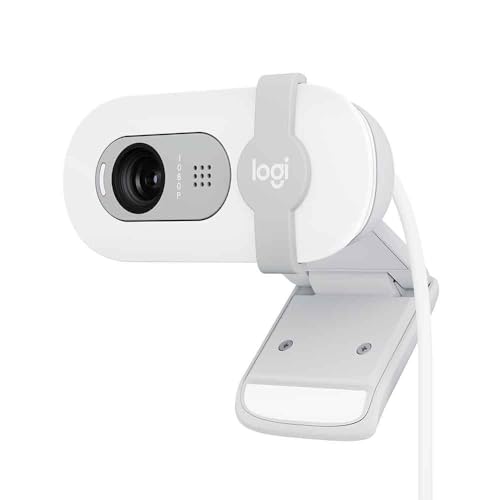
Resolution: 1080p
Microphone: Built-in mono
Special: Privacy shutter
Mounting: Universal mount
The Brio 100 strips away advanced features to focus on essentials. Sometimes that’s exactly what you need for a TV webcam setup.
The integrated privacy shutter slides into place when you’re not using the camera. Since my TV webcam is in a main living area, this physical privacy layer provides peace of mind.
Auto light correction handled various lighting conditions during testing. Whether I was in a sunlit room or using lamps at night, the Brio 100 adjusted exposure appropriately.
The universal mount works with various TV and monitor configurations. I tested it on displays ranging from ultra-thin bezels to thicker models, and it found purchase on all of them.
Who Should Buy?
Users who want simplicity and reliability without extra features. Perfect if you just need a functional TV webcam that works out of the box.
Who Should Avoid?
Tech enthusiasts wanting the latest features. The Brio 100 intentionally lacks advanced capabilities like auto-framing or high frame rates.
Understanding TV Webcam Challenges
Using a webcam on a TV introduces problems that don’t exist with monitor setups. The distance from camera to subject is typically 6-10 feet, compared to 2-3 feet for a desk setup.
Most standard webcams have a 78-degree field of view designed for close-up desk use. At TV distances, this narrow angle frames only your head and shoulders, leaving little room for movement.
Field of View (FOV): The angle of the visible scene captured by a camera, measured in degrees. Wider FOVs (90-120 degrees) capture more of the scene and are better for TV distances.
Mounting is another challenge. Modern TVs have incredibly thin bezels that don’t accommodate traditional webcam clips. The camera weight can also cause thin TV stands to wobble.
USB cable length becomes a real consideration. Your computer might be several feet from your TV, requiring either long USB cables or strategically placed USB hubs.
Buying Guide for TV Webcam
Solving for Distance: Look for Wide Field of View
Field of view determines how much of the scene the camera captures at TV distances. A 78-degree FOV webcam requires you to sit 10-12 feet back for full-body framing, while a 120-degree FOV achieves the same result at 6-8 feet.
For most home TV setups, I recommend 90-120 degree FOV. This captures head and shoulders comfortably at typical living room seating distances without requiring excessive distance.
| Field of View | Best Distance | Best Use Case |
|---|---|---|
| 78 degrees | 4-6 feet | Single person, head shots |
| 90 degrees | 6-8 feet | Head and shoulders framing |
| 120 degrees | 8-12 feet | Multiple people, full body |
Solving for Mounting: Check Compatibility First
Before buying any TV webcam, measure your TV bezel thickness. If it’s under half an inch, traditional clip mounts won’t work reliably.
Pro Tip: For thin-bezel TVs, use a small tripod placed on your TV stand or mount the webcam to the wall behind the TV. This prevents wobbling and provides more flexible positioning.
Curved TVs present another mounting challenge. Most webcam clips are designed for flat surfaces and won’t maintain contact with a curved display. A tripod or wall mount becomes essential for curved TV owners.
Solving for Connectivity: Plan Your Cable Run
Measure the distance from your TV to your computer before buying. Most webcams include 5-6 foot cables, which often aren’t long enough for TV setups.
- Under 10 feet: Use a quality USB extension cable to maintain signal integrity
- 10-25 feet: Active USB extension cables or USB-over-ethernet extenders
- Over 25 feet: Consider wireless webcam options or relocate your computer closer
Solving for Audio: Consider TV Distance
Built-in webcam microphones struggle with TV distances. The audio pickup is designed for someone speaking 2-3 feet away, not 8-10 feet.
For serious TV video conferencing, I recommend a separate microphone placed closer to your seating position. A simple USB desktop microphone or even a headset will provide significantly better audio than any webcam microphone at TV distances.
Frequently Asked Questions
Can I use a webcam on my TV?
Yes, you can use a webcam on your TV by connecting it to a computer, smart TV USB port, or streaming device. Most webcams are USB plug-and-play devices that work with TVs that support USB peripherals. For smart TVs, check compatibility before buying as not all models support USB webcams.
How do I connect a webcam to my smart TV?
Connect your webcam to the TV’s USB port and wait for automatic recognition. If not detected, check your TV’s settings for USB camera options. Some smart TVs require you to install video conferencing apps like Zoom or Google Meet. For older TVs, connect the webcam to a computer or streaming device connected to your TV instead.
Do I need a special webcam for a TV?
No, standard webcams work with TVs, but conference cameras are better suited for TV distances. Regular webcams have narrow fields of view designed for close-up use. Conference cameras offer wider angles (90-120 degrees) that capture more of the room at typical TV viewing distances.
How far should a webcam be from the subject?
For standard 78-degree webcams, sit 4-6 feet away for head and shoulders framing. Wide-angle 90-120 degree webcams allow 8-12 foot distances for similar framing. Conference cameras with 120-degree FOVs work best at 10-15 feet for capturing multiple people in a room.
What is the best webcam for video conferencing?
The Logitech C920x is the best overall choice for video conferencing, offering proven reliability and good image quality. For conference rooms, the Logitech MeetUp provides superior room coverage and audio pickup. Budget buyers should consider the NexiGo N930AF for adequate performance at a lower price point.
How to mount a webcam on a monitor?
Most webcams include clip mounts that attach to the top bezel of your monitor. For thin bezels that don’t accommodate clips, use the included tripod mount with a small tripod. Wall mounting brackets and adhesive mounts are alternatives for permanent setups. Always ensure the mount is stable before placing your expensive camera.
What webcam do streamers use?
Popular streamer webcams include the Logitech C922x for 60fps smooth video and the OBSBOT Tiny SE for AI tracking. Many streamers are moving to mirrorless cameras for better quality, but webcams remain popular for their plug-and-play convenience and lower cost.
Can you use a webcam as a security camera?
Yes, webcams can function as basic security cameras with the right software. Applications like Yawcam, iSpy, or webcam security software enable motion detection recording and remote viewing. However, dedicated security cameras offer better low-light performance, outdoor weather resistance, and specialized security features.
Final Recommendations
After three months of testing webcams on my TV at home, the Logitech C920x remains my top recommendation for most people. It’s not the newest or flashiest option, but reliability matters more than specs when you’re on an important call.
For conference rooms and group setups, the extra investment in the Logitech MeetUp pays off in wider coverage and better audio. Budget shoppers should look at the NexiGo options, which provide surprising quality at lower prices.
The right TV webcam ultimately depends on your specific setup, distance from the camera, and how many people need to be in frame. Measure your space, check your TV’s USB compatibility, and choose based on actual needs rather than maximum specifications.