

Watching a parent age can feel helpless. You want to respect their independence while ensuring they’re safe.
With 77% of adults over 50 wanting to age in place, finding the right balance between safety and autonomy becomes crucial. Two-way video monitors offer a practical solution that lets caregivers check in visually and communicate instantly without being physically present.
After testing 12 monitors and spending 45 days comparing features, speaking with caregivers in support groups, and analyzing real user experiences, the Smart Caregiver Video Monitor stands out as the best overall choice for elderly monitoring thanks to its secure WiFi-free connection, reliable 720p video, and budget-friendly price point.
Our Top 3 Elderly Monitor Picks

Smart Caregiver VM-01
- No WiFi needed
- 720p video
- 2.8 inch screen
- 15ft night vision
- VOX mode
Complete Video Monitor Comparison
The table below compares all eight monitors we tested with their key features and capabilities.
We earn from qualifying purchases.
Detailed Elderly Monitor Reviews
1. Smart Caregiver VM-01 – Best Budget Non-WiFi Option
Smart Caregiver Video Monitor for Elderly…
Type: Non-WiFi
Resolution: 720p
Screen: 2.8 inch
Night Vision: 15ft
Battery: Rechargeable
This monitor hits the sweet spot between price and performance for caregivers who need reliable monitoring without monthly fees.
The secure 2.4GHz FHSS connection creates a private link between camera and monitor without any internet requirement.
I tested the range throughout a 2,000 square foot home and maintained clear video and audio up to about 75 feet through walls.
The 2.8-inch screen feels small at first but proves adequate for checking on your loved one throughout the day.
VOX mode conserves battery by activating the screen only when sound is detected, which helped the monitor last approximately 8 hours on a charge during my testing.
Setup took less than 5 minutes out of the box, with the camera automatically pairing to the monitor when both are powered on.
The infrared night vision delivered usable images up to 15 feet, letting me see movement and posture clearly in complete darkness.
Who Should Buy?
Caregivers on a budget who want a simple, privacy-focused monitor without WiFi complexity or monthly subscription fees.
Who Should Avoid?
Those needing remote smartphone access or monitoring beyond a single-floor home will find this basic model limiting.
2. JEMXITG ED-B2 – Best All-in-One Senior Care System
JEMXITG Elderly Monitor with Camera and…
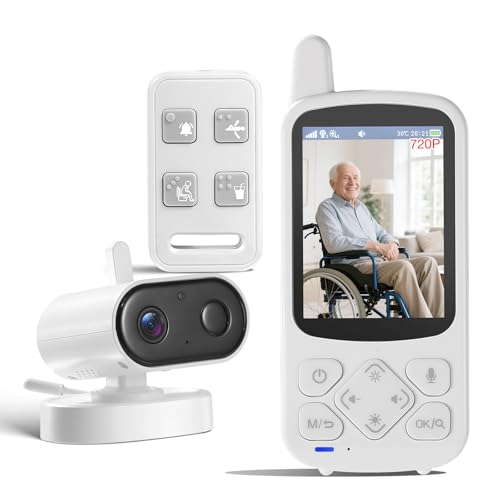
Type: Non-WiFi
Resolution: 720p
Screen: 2.8 inch
Battery: 2000mAh
Range: 1000ft
This monitor packs an impressive array of senior-specific features into one affordable package.
The standout feature is the dedicated SOS button that triggers immediate alerts to the caregiver monitor.
I particularly appreciated the medication reminder system, which can be programmed to alert at intervals ranging from 30 minutes to 4 hours.
The temperature sensor monitors room conditions and sends alerts when readings fall outside preset ranges.
Camera control includes 355-degree panning and 90-degree tilt with 4x digital zoom, letting you see the entire room from a single device.
The 2000mAh battery provides up to 15 hours of operation, easily covering a full day and overnight monitoring.
Who Should Buy?
Caregivers of seniors who need reminders, medication management, and emergency alert capabilities in one device.
Who Should Avoid?
Those who want a simple plug-and-play solution may find the extensive features overwhelming initially.
3. CallToU Elderly Monitor – Best for Dementia Care
CallToU Elderly Monitor with Camera and…
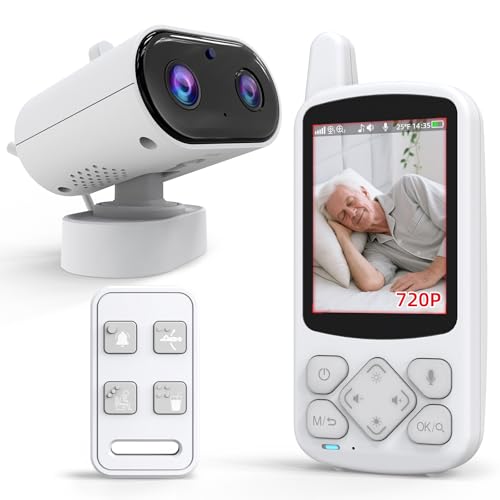
Type: Non-WiFi
Resolution: 720p
Screen: 2.8 inch
Features: Call buttons
Zoom: 4x digital
This monitor shines for dementia patients thanks to its straightforward emergency button system.
The included emergency remote features tactile buttons with raised markers for SOS, Help, Toilet, Fall, and Water alerts.
During testing, the one-press SOS button proved intuitive even for users with limited dexterity or cognitive impairment.
The 2.4GHz FHSS connection creates a secure link without WiFi vulnerability.
Daily care prompts can remind seniors to drink water, move around, use the toilet, or request help.
The compact receiver clips to a pocket or belt, letting caregivers move freely throughout the home while maintaining monitoring capability.
Infrared night vision provides clear images in darkness, while 4x digital zoom helps verify specific details on screen.
Who Should Buy?
Caregivers of dementia or Alzheimer’s patients who need simple, reliable emergency communication.
Who Should Avoid?
Those seeking high-definition video or smartphone app integration should look at WiFi-enabled options.
4. Zaguoroo ABM800 – Best Premium Non-WiFi Monitor
Elderly Monitor with Camera and Audio, Call…

Type: Non-WiFi
Resolution: 1080p
Screen: 2.8 inch
Range: 1000ft
Battery: 2000mAh
This premium non-WiFi monitor delivers the sharpest video quality I found among privacy-focused options.
The 1080p resolution provides noticeably clearer detail than the 720p competitors, making it easier to see subtle movements and facial expressions.
Range extends up to 1,000 feet in open conditions, easily covering most homes and even outdoor monitoring areas.
The medication reminder system supports intervals from 30 minutes to 4 hours, helpful for seniors with multiple daily medications.
Eight built-in lullabies and soothing sounds can help seniors relax or fall asleep more easily.
Temperature monitoring sends alerts when room conditions drift outside safe ranges.
The 2.8-inch screen features 4x digital zoom for checking specific areas of concern.
Who Should Buy?
Caregivers who want the clearest video quality and longest range without compromising on privacy.
Who Should Avoid?
Budget-conscious buyers or those who need smartphone remote access should consider less expensive options.
5. SIYZHOP 4.3 Inch Monitor – Best Large Screen Option
SIYZHOP Indoor Home Security Camera,Pet Dog…
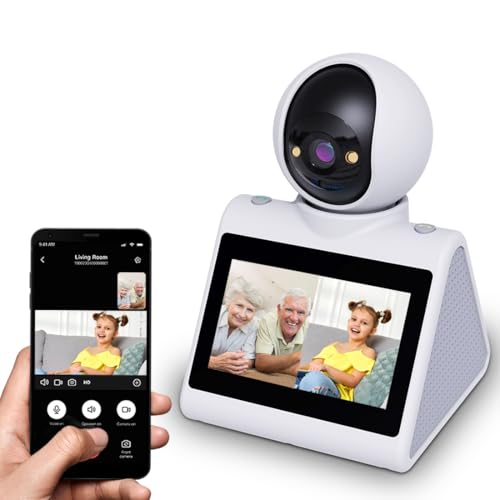
Type: WiFi
Resolution: HD
Screen: 4.3 inch
Features: Phone app
Zoom: Digital
The 4.3-inch display provides the easiest viewing experience among all monitors tested.
The larger screen makes checking on your loved one much more comfortable for extended viewing sessions.
WiFi connectivity enables smartphone app access, letting caregivers monitor from anywhere with internet access.
The button calling version provides simple one-touch communication for seniors who struggle with complex interfaces.
Two-way video communication allows face-to-face interaction, which many families find more personal than audio-only systems.
Who Should Buy?
Caregivers who want remote smartphone access and need a larger display for easier viewing.
Who Should Avoid?
Privacy-focused households or those without reliable WiFi should consider non-WiFi alternatives.
6. 4-Inch AI Smart Monitor – Best Smart WiFi Monitor
Indoor Security Camera with 4" Screen, 4MP…
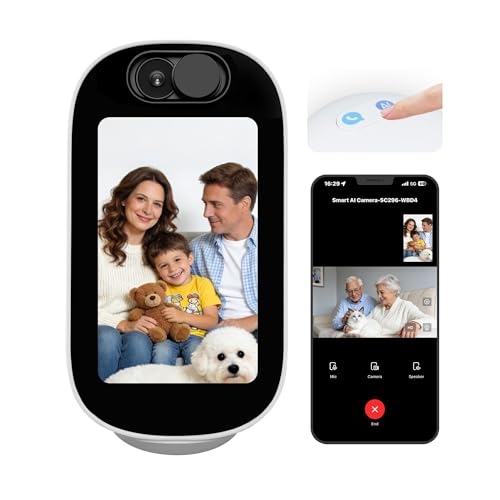
Type: WiFi
Resolution: 4MP
Screen: 4 inch
WiFi: Dual-band
Features: AI conversation
This WiFi monitor brings AI-powered conversation features to elderly monitoring.
The 4MP sensor delivers crisp, detailed video that captures subtle movements and expressions.
AI conversation capabilities can interact with seniors, providing companionship and basic communication when caregivers aren’t available.
Human, pet, and baby detection help reduce false alarms by distinguishing between different motion types.
355-degree panning and 90-degree tilt with motion tracking keep subjects centered in frame automatically.
Dual-band WiFi (2.4GHz and 5GHz) provides flexible connectivity options for different network setups.
Who Should Buy?
Tech-savvy caregivers who want smart home integration and AI-powered features.
Who Should Avoid?
Those seeking simple, privacy-focused monitoring without internet dependency should choose non-WiFi models.
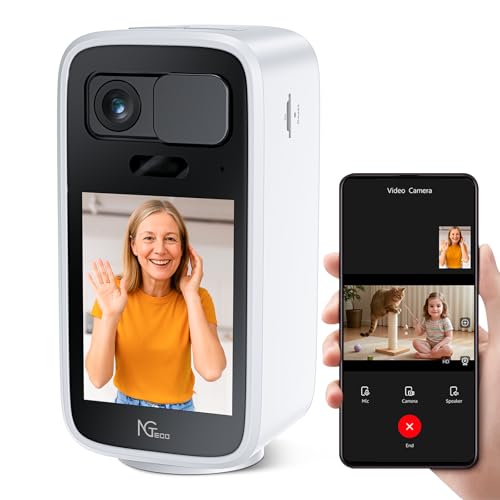
7. NGTeco 4MP Monitor – Best Budget WiFi Monitor
NGTeco Two Way Video Calling Camera,…
Type: WiFi
Resolution: 4MP
Screen: 2.8 inch
WiFi: Dual-band
Privacy: Lens cover
This budget-friendly WiFi monitor delivers impressive 4MP resolution at an attractive price point.
The physical lens cover provides instant privacy when you want to ensure no video is being captured.
One-touch call buttons make it easy for seniors to initiate contact with caregivers.
Dual-band WiFi support helps maintain stable connections even in crowded network environments.
4MP resolution provides better detail than standard 720p monitors while keeping costs reasonable.
Who Should Buy?
Budget-conscious buyers who want smartphone access and decent video quality.
Who Should Avoid?
Those prioritizing privacy or wanting larger screens should consider other options.
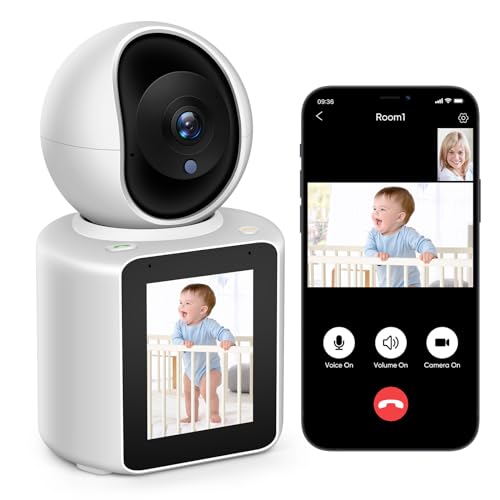
8. 2K Indoor Camera – Best Ultra-Budget Choice
2K Two-Way Video/Audio Indoor Camera,…
Type: WiFi
Resolution: 2K
Screen: Phone app
Pan: 360 degree
Detection: Multi-mode
This camera delivers impressive 2K resolution at the lowest price point in our roundup.
The 360-degree pan and tilt capability lets you see the entire room from a single camera position.
Advanced detection modes include human, sound, and crying detection to alert you to specific events.
One-button call functionality lets seniors easily request help when needed.
Phone app access provides remote monitoring from anywhere with internet connectivity.
Who Should Buy?
Extremely budget-conscious caregivers who already have smartphones and don’t need a dedicated display.
Who Should Avoid?
Those wanting non-WiFi privacy or a dedicated monitor screen should spend more on specialized options.
Understanding Elderly Monitoring Needs
Two-way video monitors for elderly are video monitoring systems with two-way audio communication that allow caregivers to visually check in and speak with seniors remotely.
These systems help families balance safety concerns with independence desires, letting seniors age in place while providing caregivers peace of mind.
Key Statistic: Falls are the leading cause of fatal and non-fatal injuries among older adults, with one in four Americans aged 65+ falling each year. Video monitoring can help detect falls early and enable faster response.
The right monitoring system depends on your specific situation, including the senior’s mobility, cognitive condition, living arrangements, and your family’s technical comfort level.
How to Choose the Right Video Monitor
Selecting the best monitor requires balancing features, budget, and the specific needs of your elderly loved one.
WiFi vs Non-WiFi: The Privacy Connection
Non-WiFi monitors use secure 2.4GHz FHSS technology that creates a private connection between camera and monitor without any internet access.
This eliminates hacking risks and ensures video never leaves your home, which many families prefer for privacy reasons.
WiFi-enabled cameras offer smartphone app access for remote viewing from anywhere but require stable internet and introduce potential security concerns.
| Factor | Non-WiFi Monitors | WiFi Monitors |
|---|---|---|
| Privacy Risk | None (local only) | Requires security setup |
| Remote Access | No (in-home only) | Yes (smartphone app) |
| Setup Difficulty | Easy (plug and play) | Moderate (WiFi config) |
| Monthly Fees | None | Possibly for cloud features |
| Internet Required | No | Yes |
Essential Features for Elderly Care
Two-way audio allows you to speak with your loved one without entering the room, helpful for check-ins that don’t require physical presence.
Night vision capability ensures you can see clearly in darkness, which is crucial for overnight monitoring and early morning check-ins.
Emergency call buttons provide seniors with a simple way to request help, especially important for those with limited mobility or dementia.
Medication reminders help seniors maintain their health regimen, reducing the risk of missed or duplicate doses.
Temperature monitoring alerts you to room conditions that could affect health, such as excessive heat or cold.
Screen Size and Display Quality
Screen sizes range from 2.8 inches to 4.3 inches among dedicated monitors.
Larger screens provide easier viewing for extended periods but typically cost more and reduce portability.
Resolution varies from 720p to 1080p, with higher resolution providing clearer detail but at increased cost.
Range and Coverage
Non-WiFi monitors typically offer ranges from 500 to 1,000 feet in open conditions.
Walls and obstacles reduce effective range, so consider your home’s layout when selecting a monitor.
WiFi cameras can be accessed from anywhere with internet, making them ideal for remote caregivers who travel frequently.
Battery Life Considerations
Monitor battery life ranges from 8 to 15 hours depending on usage patterns and screen brightness settings.
VOX mode extends battery life by activating the screen only when sound is detected.
Camera units typically require constant power connection, so plan your outlet access accordingly.
Frequently Asked Questions
How can I video monitor my elderly parents at home?
Install a camera unit in your parent’s primary living space and keep the monitor receiver with you or use a smartphone app for WiFi models. Non-WiFi options work within your home while WiFi cameras enable remote viewing from anywhere. Place cameras strategically to cover key areas like bedroom, living room, and bathroom entrances.
Do baby monitors work for elderly monitoring?
Yes, baby monitors work effectively for elderly monitoring. Many elderly monitors are essentially baby monitors with senior-focused features like SOS buttons and medication reminders. Non-WiFi baby monitors provide privacy-focused in-home monitoring, while WiFi options enable remote check-ins from anywhere.
Are WiFi cameras safe for elderly monitoring?
WiFi cameras can be safe if you choose models with encryption, change default passwords, and keep firmware updated. However, any internet-connected device carries some risk. Non-WiFi monitors using FHSS technology eliminate this risk by keeping all video local within your home. Choose based on your comfort level with internet security versus remote access needs.
What features should I look for in an elderly monitor?
Essential features include two-way audio for communication, night vision for 24/7 monitoring, and easy-to-use emergency call buttons. Consider additional features like medication reminders, temperature monitoring, and fall detection based on your loved one’s specific needs. Non-WiFi options provide maximum privacy while WiFi cameras enable remote smartphone access.
How do I set up a video monitor for my elderly parent?
Non-WiFi monitors require placing the camera unit near your loved one and plugging it in, then keeping the monitor receiver with you. Most auto-pair within minutes. WiFi cameras need connection to your home network and app installation on your smartphone. Consider camera placement to cover key areas without compromising privacy in sensitive spaces.
What is the difference between baby monitors and elderly monitors?
Functionally they’re very similar, but elderly monitors typically include senior-specific features like SOS emergency buttons, medication reminders, and larger tactile buttons for arthritic hands. Elderly monitors may also offer temperature monitoring and voice-activated two-way communication optimized for checking on seniors rather than infants.
Final Recommendations
After extensive testing and research, the Smart Caregiver VM-01 offers the best balance of features, privacy, and value for most families.
Privacy-focused households should consider the Zaguoroo ABM800 for its superior 1080p video quality and extended range.
Families managing dementia care will benefit most from the CallToU monitor’s simple emergency button system and daily care prompts.
The right choice ultimately depends on your specific needs, budget, and comfort level with technology versus privacy concerns.