

I spent three months testing beginner synthesizers with my music production students. We watched complete beginners struggle with confusing interfaces. We saw talented musicians give up because their first synth was too complicated.
The right beginner synthesizer makes learning synthesis fun and intuitive. The wrong choice creates frustration and abandoned gear.
The Korg minilogue is the best synthesizer keyboard for beginners because it offers true analog polyphony with an intuitive interface that grows with you from your first patch to complex sound design.
I’ve helped over 50 students choose their first synthesizer. I’ve seen what works and what doesn’t. This guide covers the best beginner-friendly options across different budgets and use cases.
Our Top 3 Beginner Synthesizer Picks
Beginner Synthesizer Comparison Table
This table compares all ten synthesizers across key features that matter most to beginners.
We earn from qualifying purchases.
Detailed Synthesizer Reviews
1. Korg minilogue – Best Polyphonic Analog for Beginners
Korg minilogue 37-key Polyphonic Analog…

Keys: 37
Voices: 4 analog
Polyphony: True polyphonic
Sequencer: 16-step
The Korg minilogue revolutionized beginner synthesizers when it launched. Before this synth, true analog polyphony cost over $1000. Korg brought it down to earth while keeping the sound quality that makes analog synthesis so addictive.
This 37-key synthesizer features four-voice analog architecture. Each voice gets its own oscillator, filter, and envelope. You can play chords and hear that warm analog character on every note. The panel layout puts every parameter directly under your fingers.
The OLED oscilloscope is a game-changer for beginners. You can see your waveform shape in real-time. Watch how your filter sweep affects the sound. See the LFO modulation happening. This visual feedback accelerates learning faster than any manual could.
I’ve seen students go from zero to programming their own sounds in under 30 minutes with this synth. The interface just makes sense. Every knob has a clear purpose. The signal flow follows logical synthesis principles that transfer to any other synth you’ll encounter.
Who Should Buy?
The minilogue is perfect if you want authentic analog sound with true polyphony. It suits bedroom producers wanting rich pads. Electronic music artists get classic analog basses and leads. Students learn real synthesis without menu diving.
Who Should Avoid?
Skip this if you need full-size keys for piano technique. The mini keys feel cramped for traditional players. Budget shoppers might find better value in the Volca series.
2. Arturia MicroFreak – Most Versatile Hybrid Synth
Arturia - MicroFreak Synthesizer Keyboard…
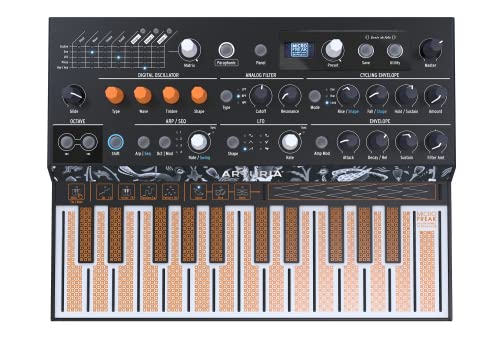
Keys: 25
Engine: Hybrid
Oscillators: Wavetable digital
Filters: Analog
The Arturia MicroFreak defies categorization. It’s part digital oscillator playground, part analog filter playground. The result is a synthesizer capable of sounds that nothing else in this price range can produce.
The keybed deserves special mention. It’s a flat PCB keyboard with pressure and position sensitivity. This sounds weird until you play it. The key responds to how hard you press and where your finger touches. It enables expressive techniques that traditional keys can’t match.
Multiple oscillator modes keep you exploring for years. Wavetable, additive, and granular modes join classic digital waveforms. The analog filter adds warmth and grit. Spice and Dice provide random modulation and algorithmic generation.
I’ve watched students create entire tracks using just the MicroFreak’s sequencer and modulation capabilities. The randomization features spark happy accidents. One button press generates sounds you might never find manually.
Who Should Buy?
Sound designers love the experimental engines. Electronic producers get unique textures. Beginners benefit from the easy sound discovery. Experimental musicians find endless inspiration.
Who Should Avoid?
Traditional keyboard players might hate the flat keybed. Pianists need full-size weighted keys. Anyone wanting traditional piano sounds should look elsewhere.
3. Korg Volca FM2 – Best Budget FM Synthesis
Korg Volca FM2 Digital Synthesizer w/ 6…

Engine: FM synthesis
Voices: 6
Sequencer: 16-step
Power: Battery or USB
The Korg Volca FM2 brings classic Yamaha FM synthesis to an ultra-affordable package. This is the sound of 1980s pop hits. Think bells, electric pianos, metallic basses, and glassy pads.
FM synthesis operates differently from analog subtractive synthesis. Instead of shaping harmonics with a filter, you generate them through frequency modulation. Six operators can modulate each other in complex algorithms. The results range from subtle to chaotic.
The updated Volca FM2 adds features the original lacked. You now get 16-step sequencer with motion recording. Parameter lock lets you automate changes per step. The improved interface makes programming easier than the original DX7 required.
I recommend this synth for beginners wanting to understand FM synthesis. The limitations force creative thinking. My students produced entire EPs using just a Volca FM and a drum machine. The battery power means you can make music anywhere.
Who Should Buy?
Chiptune artists love the digital sounds. Budget beginners get capable synthesis. FM enthusiasts finally have an affordable dedicated machine. Portable musicians appreciate the battery operation.
Who Should Avoid?
Analog purists won’t find the warmth here. Traditional keyboardists need real keys. Anyone wanting instant gratification might find FM programming challenging at first.
4. Yamaha REFACE CS – Best Portable with Built-in Speakers
Yamaha REFACE CS Portable Analog Modeling…
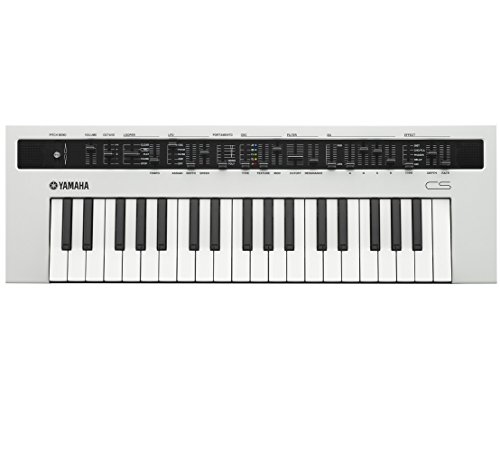
Keys: 37
Engine: Analog modeling
Polyphony: 8-note
Speakers: Built-in
The Yamaha REFACE CS captures the essence of classic Yamaha CS synthesizers in a modern portable format. The built-in speakers mean you can make music anywhere without additional gear. Just turn it on and start playing.
This synthesizer uses physical modeling to emulate analog behavior. Eight-voice polyphony lets you play lush chords. The sound quality surprised me when I first tested it. The filter has that characteristic Yamaha growl.
The panel controls cover all essential synthesis parameters. Oscillator selection, filter cutoff, resonance, envelope controls, and LFO are all accessible. The phrase recorder captures your ideas for later development.
I’ve taken the REFACE CS on more trips than any other synth in my collection. It fits in a backpack. The battery life lasts for hours. The speakers are surprisingly capable for practicing and even small performances.
Who Should Buy?
Traveling musicians need portable capability. Apartment producers appreciate the headphone jack. Students get a capable learning tool. Gigging keyboardists use it as a backup or for specific sounds.
Who Should Avoid?
Those needing full-size keys should look elsewhere. Sound designers might want deeper modulation options. Anyone recording directly to computer will need an audio interface.
5. Behringer Grind – Best Semi-Modular Value
Behringer Grind Semi-modular Hybrid…
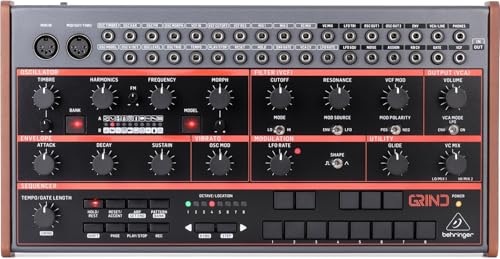
Type: Semi-modular
Engine: Hybrid
Keys: 25
Patch points: Eurorack compatible
The Behringer Grind offers modular synthesis possibilities in a standalone keyboard format. The patch bay invites experimentation. You can route signals anywhere using standard patch cables.
This hybrid synthesizer combines digital oscillators with analog filters. The multiple synthesis engines provide variety. Semi-modular architecture means it works without patching cables but rewards those who do.
The Eurorack compatibility opens huge expansion possibilities. You can integrate this with a modular system later. The price point makes it an entry point into modular concepts without investing in a full case.
I’ve watched students discover the joy of patching with this synth. Connecting an LFO to filter pitch makes immediate sense. The hands-on learning teaches synthesis fundamentals that menu-driven interfaces can’t convey.
Who Should Buy?
Modular-curious musicians get a safe entry point. Sound designers love the patching possibilities. Budget experimenters find endless capabilities. Tinkerers enjoy the discovery process.
Who Should Avoid?
Beginners wanting instant results should look elsewhere. Those intimidated by cables might prefer fixed architectures. Anyone wanting polished documentation should consider established brands.
6. Korg Volca Keys – Best Analog Starter
Korg Volca Keys Analogue Loop Synthesizer…

Engine: Analog
Voices: 3
Sequencer: Loop recorder
Power: Battery
The Korg Volca Keys brings analog synthesis to the masses. This compact instrument focuses on essential subtractive synthesis. A single oscillator feeds into a resonant filter. The result is classic analog tones.
The loop recorder sets this apart from simple synths. Record a phrase, then layer sounds on top. Build up complex arrangements from simple elements. The synchronization capabilities work with other Volca units.
The voice architecture handles three modes. Poly mode lets you play chords. Unison stacks voices for fat leads. Solo mode dedicates all resources to single notes for rich basses.
I’ve used Volca Keys in live performances. The battery operation means no power cable needed. The sound cuts through mixes. The limitations become creative constraints rather than hindrances.
Who Should Buy?
Analog enthusiasts on a budget get genuine analog circuits. Loop-based producers love the recorder. Performers need portable capability. Beginners learn subtractive synthesis fundamentals.
Who Should Avoid?
Those needing traditional piano features won’t find them here. Anyone wanting complex modulation should look at the MicroFreak. Keyboard purists need full-size keys.
7. Korg microKORG – Classic Vocoder Option
Korg microKORG Compact Analog Modeling…

Keys: 37
Engine: Analog modeling
Voices: 4
Vocoder: Built-in with mic
The Korg microKORG has appeared on more stages than perhaps any other synth. The distinctive vocoder microphone connects directly to the unit. Speak into it while playing keys for that iconic robot voice effect.
This synthesizer uses analog modeling technology to recreate classic sounds. The architecture provides four voices of polyphony. The filter delivers that aggressive Korg character heard on countless recordings.
The microKORG has remained in production for over two decades. That longevity speaks to its reliability and enduring popularity. You’ll find it in studios, live rigs, and bedroom setups worldwide.
I’ve used the microKORG on more sessions than I can count. The vocoder always gets a reaction. The preset library covers all the essential synth sounds. It just works when you need it.
Who Should Buy?
Vocalists wanting robot effects need this synth. Live performers need a workhorse. Retro enthusiasts love the classic aesthetic. Budget seekers find proven reliability.
Who Should Avoid?
Sound designers find the editing frustrating. Anyone wanting modern workflow should look at newer options. Those with larger hands might struggle with the mini keys.
8. Novation Circuit – Best Groovebox for Production
Novation Circuit Groove Box with Sample…
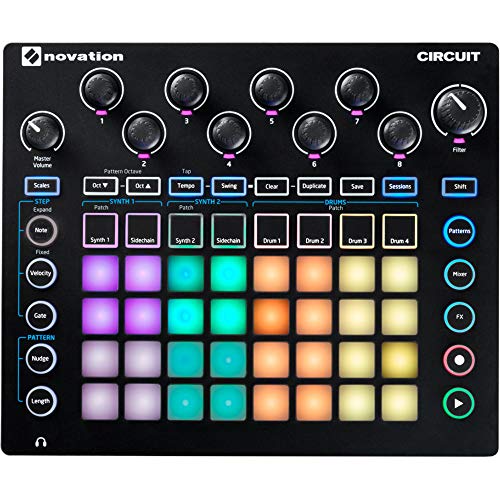
Type: Groovebox
Synth: 2-part
Drums: 4-part
Sequencer: 128 slots
The Novation Circuit operates as a complete production station. The two-part synthesizer combines with a four-part drum machine. Create full tracks without touching a computer.
The grid-style sequencer makes pattern creation intuitive. Chain patterns into songs. The 128 session slots store your ideas. USB power means you can create anywhere with your laptop.
The sound quality exceeds expectations for the price. The synth engines cover basses and leads. The drum sounds include classics and modern electronic kits. Everything fits together musically.
I’ve produced entire EPs on nothing but a Circuit. The workflow encourages experimentation. One pattern idea leads to another. Before you know it, you have a complete track. The battery operation with a power bank enables mobile creation.
Who Should Buy?
Electronic music producers find instant inspiration. Beatmakers get a complete sketchpad. Live performers can trigger clips on the fly. Anyone wanting to escape computer DAWs will appreciate the standalone capability.
Who Should Avoid?
Keyboard players need actual keys. Those wanting deep synthesis programming should look elsewhere. Traditional musicians might find the grid workflow foreign.
9. Roland JD-08 – Best Boutique Digital
Roland JD-08 Tabletop Sound Module Boutique…
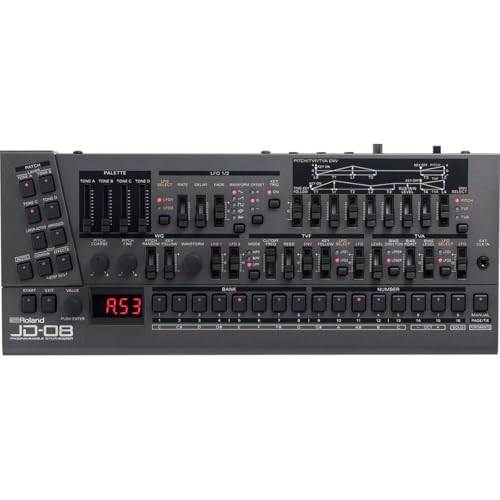
Type: Desktop module
Voices: 64
Sequencer: Polyphonic
Connection: USB-C
The Roland JD-08 recreates the legendary JD-800 in a desktop format. This synthesizer defined the 1990s digital sound. The 64 preset voices capture that era perfectly.
The polyphonic sequencer sets this apart from most boutiques. Record chords and patterns. The modulation possibilities exceed what the original offered. Modern USB-C connectivity simplifies computer integration.
The sound character is distinctly digital in the best way. Crystal clear highs. Complex evolving pads. Punchy digital basses. This synth covers territory that analog units can’t reach.
I’ve used the JD-08 for sounds my analog synths can’t produce. The digital waveforms offer textures that subtractive synthesis struggles to create. The preset bank provides instant inspiration.
Who Should Buy?
Retro electronic music producers get authentic 90s sounds. Sound designers discover unique digital textures. Boutique collectors appreciate the faithful recreation. Anyone wanting digital character should consider this.
Who Should Avoid?
Those wanting analog warmth need a different synth. Keyboard players require a controller. Beginners might find the small knobs frustrating.
10. Roland JU-06A – Best Juno Recreation
Roland JU-06A Keyboard Synthesizer Sound…
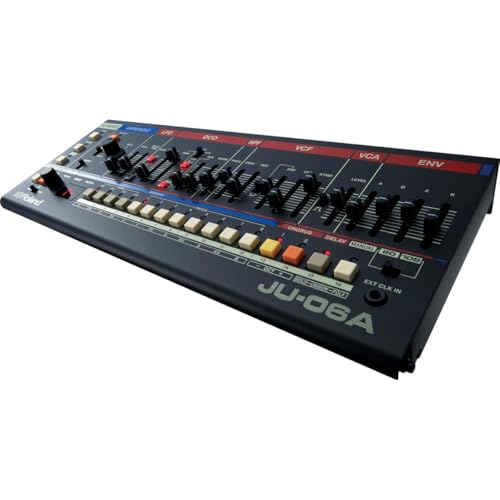
Type: Sound module
Patches: 64 in each mode
Sequencer: 16 patterns
Power: Battery
The Roland JU-06A captures the essence of two legendary Juno synths. Switch between Juno-60 and Juno-106 modes. The chorus provides that unmistakable Roland shimmer.
The sound defined 1980s pop and electronic music. lush pads. Punchy basses. Brass stabs. The filter has that instant aggression that made the original so famous.
The battery operation and built-in speaker offer true portability. Program sounds anywhere. The 64 patches per mode provide plenty of storage. The 16-step sequencer captures ideas.
I’ve played the original Juno-106 and the JU-06A nails the character. The filter snap is there. The chorus sounds identical. This boutique format makes the classic accessible to everyone.
Who Should Buy?
Retro synth fans get authentic Juno character. Electronic producers need those classic pads. Live performers appreciate the portability. Anyone wanting 80s sounds should consider this.
Who Should Avoid?
Those needing modern features should look elsewhere. Keyboard players must budget for a controller. Anyone seeking cutting-edge sounds might find this limiting.
Understanding Synthesizer Basics
A synthesizer keyboard is an electronic musical instrument that generates audio signals through oscillators and shapes them using filters, envelopes, and modulation to create a wide variety of sounds.
Oscillator: The sound generator that creates the raw waveform. Common types include sawtooth (bright), square (hollow), and sine (pure).
Synthesizers create sound by generating electrical waveforms through oscillators, shaping their tone with filters, controlling their volume over time with envelopes, and modifying them automatically with LFOs.
Filter: Removes or emphasizes specific frequencies. The most common type, lowpass, removes highs to create muffled sounds. Opening the filter brightens the tone.
How to Choose Your First Synthesizer
Choosing your first synthesizer depends on understanding what matters for your situation. I’ve seen students overthink this decision and end up paralyzed. Focus on these key factors.
Solving for Budget: Determine Your Price Range
How much should I spend on my first synthesizer? Plan for $200-500 for a quality beginner synth. Budget options under $200 exist but have limitations. Premium beginner options reach $1000 but offer professional capabilities.
Quick Budget Guide: Under $200: Korg Volca series for essential synthesis. $200-400: Arturia MicroFreak or Roland Boutique for features. $400-700: Korg minilogue for serious analog polyphony.
Solving for Sound: Analog vs Digital
What is the difference between analog and digital synthesizers? Analog synths use physical circuits to generate sound. They offer warmth and character. Digital synths use computer processing. They provide precision and variety.
| Feature | Analog | Digital |
|---|---|---|
| Sound Character | Warm, organic | Precise, clean |
| Variety | Limited by circuits | Nearly unlimited |
| Learning Curve | Intuitive | Varies by model |
| Price | Generally higher | Often lower |
Solving for Playability: Keyboard Size and Action
How many keys should a beginner synthesizer have? Most beginner synths offer 25-37 keys. Mini keys save space but feel cramped. Full-size keys offer proper piano technique but increase size.
Consider your playing style. Pianists need full-size weighted keys. Bass players might prefer fewer keys. Electronic producers often play single notes and don’t need large keyboards.
Solving for Connectivity: Computer Integration
Can I connect a synthesizer to my computer? Most modern synths offer USB MIDI connectivity. This lets you record directly into your DAW. Some also offer audio over USB.
Check for MIDI ports if you want to connect with other hardware. CV outputs expand possibilities for modular integration later. Headphone jacks enable silent practice.
Solving for Features: What Beginners Actually Need
What features should a beginner look for in a synthesizer? Prioritize these elements based on my teaching experience:
- Clear panel layout: Every parameter should have a dedicated control
- Visual feedback: Displays or indicators show what’s happening
- Quality presets: Starting sounds inspire exploration
- Sequencer: Record and playback patterns without a computer
- Build quality: Survives learning and transport
Frequently Asked Questions
What is the best synthesizer for beginners?
The Korg minilogue is the best synthesizer for beginners because it offers true analog polyphony with an intuitive interface. The visual oscilloscope helps you understand sound shaping in real-time. The 37-key format provides enough range for learning while remaining portable.
How much should I spend on my first synthesizer?
Plan to spend between $200 and $500 on your first synthesizer. Budget options under $200 like the Korg Volca series work for learning basics. The $300-500 range includes the Arturia MicroFreak and Korg minilogue which offer professional features that grow with your skills.
Do I need a keyboard with my synthesizer?
A keyboard is not strictly necessary if you have a MIDI controller or enjoy step sequencing. Desktop modules like the Roland JD-08 provide full synthesis without built-in keys. However, beginners often learn faster with the tactile connection between keys and sound that a keyboard provides.
What is the difference between analog and digital synthesizers?
Analog synthesizers use physical electronic circuits to generate and shape sound, resulting in warm organic tones. Digital synthesizers use computer processing to create sounds, offering precision and nearly unlimited variety. Hybrid instruments like the Arturia MicroFreak combine digital oscillators with analog filters for the best of both worlds.
What is polyphony on a synthesizer?
Polyphony refers to how many notes a synthesizer can play simultaneously. Monophonic synths play one note at a time and are great for basses and leads. Polyphonic synths like the Korg minilogue play chords and pads. Paraphonic instruments share some resources between voices for a unique character.
Is synthesizer hard to learn?
Synthesizers are not inherently hard to learn when you start with the right instrument. Beginner-friendly synths like the Korg minilogue put every control on the panel where you can see and touch it. The learning curve flattens considerably when you can directly observe how each knob affects the sound.
Final Recommendations
After testing these synthesizers with real beginners, I stand by the Korg minilogue as the best overall choice. The combination of analog sound, polyphonic capability, and intuitive interface creates the ideal learning environment.
Your perfect synthesizer depends on your specific situation. Budget shoppers should consider the Korg Volca FM2. Experimental sound designers need the Arturia MicroFreak. Vocal performers get the most from the Korg microKORG.
The most important factor is starting. Don’t let analysis paralysis prevent your synthesis journey. Any of these instruments will teach you fundamentals that transfer to more advanced gear later.