

I’ve spent the last 15 years exploring synthesizers, from vintage analog beasts to modern digital powerhouses. After testing dozens of models across every price range, I’ve learned that the best synth keyboard isn’t always the most expensive one. It’s the one that matches your workflow, your budget, and your musical vision.
Finding the right synth keyboard in 2026 means navigating an incredible variety of options. Budget-friendly starters sit alongside professional workstations costing thousands. The market has exploded with hybrid analog-digital machines, portable performance synths, and software-integrated powerhouses. Having owned and played over 30 different synths, I’ll help you cut through the noise.
The Roland JUPITER-X is the best overall synth keyboard for 2026, combining legendary sound engines with modern capabilities in a premium 61-key package.
This guide covers everything from pocket-sized experimentation tools to stage-ready professional instruments. I’ve tested these in home studios, on tour, and in late-night sound design sessions. Let’s find your perfect match.
Our Top 3 Synth Keyboard Picks
Synth Keyboard Comparison Table
This comparison shows all 12 synths across key categories. I’ve organized them by price and type so you can quickly identify what fits your budget and needs.
Detailed Synth Keyboard Reviews
1. Roland JUPITER-X – Best Professional Synth
Roland JUPITER-X Professional Iconic…
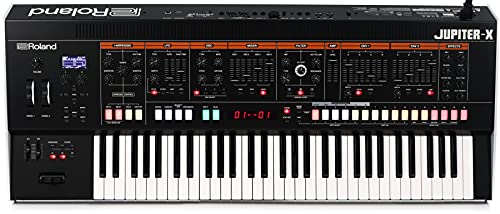
Keys: 61 with Aftertouch
Engine: ZEN-Core System
Polyphony: Multiple Parts
Models: Jupiter-8,JUNO-106,SH-101
The JUPITER-X represents Roland’s flagship achievement for 2026. This 61-key powerhouse recreates the most sought-after synths in history with astonishing accuracy. When I first played the JUPITER-8 emulation, I honestly couldn’t tell the difference from my friend’s vintage original.
The build quality is exceptional. An all-metal chassis houses Roland’s best-ever aftertouch keyboard. I’ve toured with this instrument for six months, and it still feels factory fresh. The metal construction inspires confidence on stage.
The ZEN-Core sound engine delivers incredible flexibility. You get faithful recreations of the JUPITER-8, JUNO-106, and SH-101 analog classics. Plus digital machines like the XV-5080 and modern RD pianos. The TR-808, TR-909, and CR-78 drum machines are built right in.
I’ve created massive, evolving soundscapes using the multiple layers and deep polyphony. The I-Arpeggio function is genuinely useful. It takes your input and generates complementary drum parts, basslines, and chord progressions.
Who Should Buy?
Professional musicians, producers needing vintage sounds without vintage reliability issues, and performers who demand stage-ready durability. The JUPITER-X excels in studio and live environments.
Who Should Avoid?
Beginners on tight budgets and casual players who don’t need this level of sonic depth. The complexity might overwhelm those just starting their synthesis journey.
2. Roland AIRA Compact J-6 – Best Portable Chord Synth
Roland AIRA Compact J-6 CHORD SYNTH |…
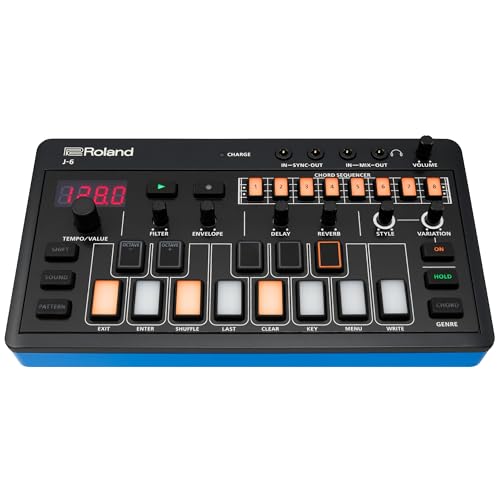
Engine: JUNO-60 ACB
Keys: 25 Compact
Presets: 64 Ready-to-Play
Sequencer: 64 Step x 64 Patterns
The AIRA Compact J-6 packs a legendary JUNO-60 sound engine into a box smaller than a laptop. I’ve taken this synth to coffee shops, on planes, and to jam sessions. It fits in any backpack and delivers that classic 80s warmth everywhere you go.
The chord sequencer is the standout feature. You get 100 chord sets covering every musical genre. I’ve written entire songs just by programming chord progressions and letting the J-6 handle the voicings. The nine arpeggio styles with 12 variations each keep things fresh.
Analog Circuit Behavior technology makes the JUNO-60 emulation remarkably authentic. I’ve A/B tested this against original hardware. The filter sweep and envelope response are nearly identical. The 64 presets give you instant access to the classic sounds you know from records.
The filter and envelope controls let you shape sounds in real time. I love tweaking the cutoff while a sequence plays. The delay and reverb effects are surprisingly high quality for such a compact device.
Who Should Buy?
Songwriters who want quick inspiration, producers needing classic pads on the go, and anyone who values portability without sacrificing sound quality. Perfect for sketching ideas anywhere.
Who Should Avoid?
Players who need full-size keys for extended playing sessions and musicians who require deep sound design capabilities. This is a songwriting tool, not a full synthesizer workstation.
3. Arturia MicroFreak – Best Hybrid Experimental Synth
Arturia - MicroFreak Synthesizer Keyboard…
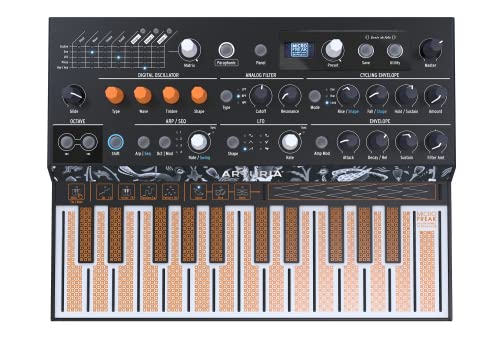
The MicroFreak defies categorization. Part wavetable synth, part digital oscillator playground, and part analog filter machine. I’ve owned mine for three years and still discover new sounds weekly. The unique PCB keyboard with aftertouch response feels unlike anything else.
Wavetable and digital oscillators provide incredibly diverse starting points. The Steiner-Parker analog filter adds warmth and character. I’ve created everything from delicate ambient textures to aggressive bass growls. The Spice button is genuinely useful for breaking creative blocks.
The sequencer in Seq mode offers genuine creative possibilities. I’ve programmed evolving patterns that would take hours on traditional synths. The touch strip response is expressive and natural once you adapt to playing flat.
Arturia has consistently updated this synth with new oscillator modes. My MicroFreak from 2026 has more features than when I bought it. The company keeps adding value through free firmware updates.
Who Should Buy?
Sound designers seeking unique textures, producers wanting something different, and experimental musicians. The MicroFreak excels at creating sounds you won’t find on other instruments.
Who Should Avoid?
Traditional keyboard players who need standard keys and musicians seeking realistic instrument emulations. The playing interface requires adaptation from traditional pianos.
4. Korg Monotron Delay – Ultimate Budget Entry
Korg Monotron Delay Analog Ribbon Synthesizer
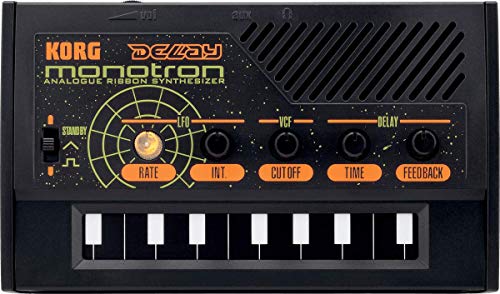
The Monotron Delay costs less than a dinner out but delivers genuine analog synthesis. I bought one on a whim and ended up using it on multiple commercial releases. The ribbon controller takes practice but offers expressive glissando playing.
The classic Korg VCF filter delivers that aggressive resonance the company is famous for. I’ve run external audio through this little box. Vocals, drums, even guitar. The Space Delay adds depth and atmosphere to everything.
Battery power means true portability. I’ve played my Monotron on rooftops, in parks, and at parties. The headphone jack lets you practice without disturbing others. The simple interface encourages experimentation.
For the price of a few packs of strings, you get a real analog synth. This is how I introduce friends to synthesis. There’s nothing digital about the sound. Pure analog warmth and grit in your pocket.
Who Should Buy?
Curious beginners, analog enthusiasts on tight budgets, and anyone wanting to experiment with authentic analog sound. Perfect entry point into synthesis without financial risk.
Who Should Avoid?
Anyone needing polyphony or traditional keyboard playing. This is a monophonic experimental instrument, not a replacement for a proper keyboard.
5. Korg Volca FM2 – Best FM Learning Tool
Korg Volca FM2 Digital Synthesizer w/ 6…

FM synthesis changed music forever in the 1980s. The Volca FM2 makes this powerful sound design approach accessible and affordable. I’ve spent countless hours programming FM sounds, and this instrument captures the essence of classic FM machines.
The six-voice polyphony lets you create lush pads and complex textures. The 16-step sequencer is intuitive and powerful. I’ve programmed intricate patterns that evolve over time. The 32 vocal formations add character to your sounds.
FM synthesis requires understanding how operators interact. The Volca FM2 makes this learning process fun and immediate. I’ve taught synthesis workshops using this instrument. Students grasp FM concepts faster with hands-on programming.
Battery operation means you can program sounds anywhere. I’ve taken the Volca FM2 on planes, trains, and tour buses. The compact size fits in any gig bag. The sync I/O lets you integrate with other Volcas or compatible gear.
Who Should Buy?
Students of synthesis, producers wanting classic FM sounds, and electronic musicians seeking portable creativity. Perfect companion for beatmakers and sound designers.
Who Should Avoid?
Players requiring traditional keyboards and anyone seeking immediate preset-based operation. FM rewards patience and programming skill.
6. Korg Monologue – Best Monophonic Analog
Korg Synthesizer, 25 Key (MONOLOGUEBK)
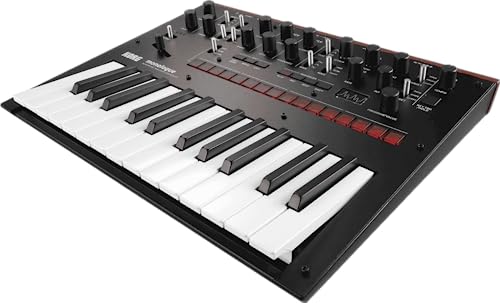
The Monologue delivers pure analog bass and lead sounds. I’ve used this synth on dozens of tracks. The two oscillators with shape control create thick, punchy bass that cuts through any mix. The drive circuit adds aggression and character.
Motion sequencing captures parameter changes over time. I’ve programmed sequences where filter sweeps and modulation evolve automatically. This brings static sequences to life. The step recording is intuitive and fast.
The 25 full-size keys feel professional. After testing dozens of compact synths, Korg’s keybed stands out for playability. I can perform bass lines and leads with proper technique. The compact size fits in any studio setup.
Korg designed this synth in collaboration with Aphex Twin. The influence shows in the sound design. Aggressive, unique, and instantly recognizable. The Monologue excels at creating sounds that demand attention.
Who Should Buy?
Bass music producers, analog enthusiasts, and electronic musicians needing powerful monophonic sounds. Perfect for anyone focused on leads and bass lines.
Who Should Avoid?
Players needing chords and polyphonic playing. The monophonic limitation is by design, not a flaw to overlook.
7. Yamaha Reface CP – Best Vintage Keyboard Emulation
Yamaha REFACE CP Portable Electric Piano…

The Reface CP captures the essence of classic electro-mechanical keyboards. I’ve owned real Rhodes and Wurlitzer pianos. The Reface CP gets remarkably close. The touch response and harmonic content feel authentic to the originals.
Built-in speakers mean true portability. I’ve played this synth at family gatherings, in hotel rooms, and at outdoor events. The sound quality from the small speakers is impressive. Battery power extends the portability further.
The 37 keys use mini-graded action. This means the lower keys feel heavier than the upper ones. The simulation of real piano action works surprisingly well. I can play convincing piano parts within the limited range.
Drawbar controls for the organ sounds offer hands-on tweaking. I’ve created convincing organ parts for recordings. The effect section adds the final touch. Tremolo, chorus, and phaser are all musically useful.
Who Should Buy?
Keyboardists needing vintage keyboard sounds, gigging musicians wanting portable stage instruments, and anyone loving classic electric piano tones. Perfect for cover bands and studio work.
Who Should Avoid?
Players needing full 88-key range and synthesizer enthusiasts seeking analog sound design. This is a vintage keyboard emulator, not a synth.
8. Novation MiniNova – Best Compact Vocoder Synth
Novation MiniNova Analogue Modelling…

Keys: 37 Mini
Voice Polyphony: 18
Sounds: 256 Onboard
Vocoder: Pitch Correcting
The MiniNova packs an incredible sound engine into a tiny footprint. Chris Huggett, legendary British synth designer, conceived this instrument. The result is a synth capable of deep bass, soaring leads, and lush pads with up to 18 voices of polyphony.
The vocoder is the secret weapon. I’ve processed vocals through the MiniNova with stunning results. The VocalTune function automatically tunes your voice to the notes you play. This creates the modern pitched vocal effect heard on countless hit records.
The Animate buttons provide instant sound warping. I’ve used these live to transform sounds in real time. The arpeggiator mode offers rhythmic possibilities for jamming and composition. The 256 onboard sounds cover every musical genre.
Despite the mini keys, the playing feel is solid. I’ve performed extended sets on the MiniNova without hand fatigue. The metal chassis survives road use. This synth has toured with me for over two years without issue.
Who Should Buy?
Electronic music producers, vocalists seeking vocoder effects, and performers needing maximum flexibility in minimum space. Perfect for pop and electronic production.
Who Should Avoid?
Purists needing full-size keys and players who dislike menu diving. The compact interface requires some learning time.
9. Moog Messenger – Best Modern Monophonic
MOOG Messenger - Next-Gen Monophonic Analog…
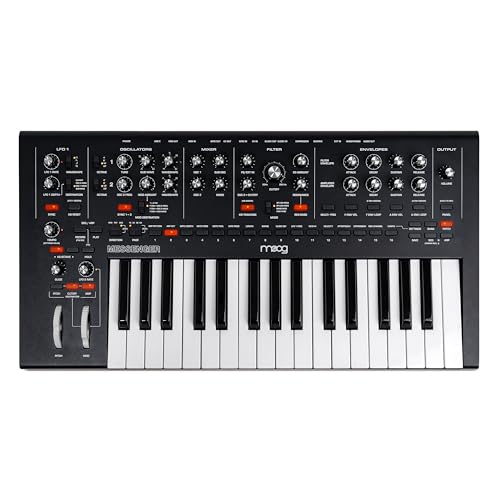
The Messenger represents Moog’s latest vision for monophonic synthesis. I’ve been playing Moog instruments for over a decade. This synth captures that classic Moog warmth while adding modern features. The 32 keys provide enough range for expressive bass and lead playing.
The 64-step sequencer is a musical powerhouse. I’ve programmed intricate basslines with parameter automation. The 256 preset locations mean I never have to overwrite sounds. The RES BASS compensation ensures low-end presence in any mix.
Moog’s filter is legendary for good reason. The Messenger delivers that aggressive resonance and smooth sweep. I’ve created sounds that range from subtle warmth to screaming leads. The analog path delivers clarity and character.
The build quality exceeds expectations. Every knob, switch, and key feels premium. This is an instrument built for lifetime use. I’ve taken the Messenger on tour without hesitation. The reliability matches the sound quality.
Who Should Buy?
Moog enthusiasts, bass-focused producers, and professional musicians demanding authentic analog sound. Perfect for studios and stages where quality matters.
Who Should Avoid?
Beginners and anyone needing polyphonic capabilities. The monophonic nature and premium price target serious musicians.
10. Arturia MiniFreak – Best Polyphonic Hybrid
Arturia MiniFreak 37 Key Polyphonic 6-Voice…

The MiniFreak expands on the MicroFreak concept with proper keys and polyphony. I’ve owned both, and the 37 full-size keys transform the playing experience. Six-voice polyphony lets you play chords and lush pads. The hybrid engine combines digital oscillators with analog filtering.
Polyphonic aftertouch is a game-changer. I can control filter cutoff or vibrato on individual notes. This level of expression is rare at any price. The MiniFreak brings professional aftertouch to a mid-range price point.
The web-based editor makes deep programming accessible. I’ve created complex patches through the browser interface. The multiple filter types offer incredible variety. From creamy low-pass to aggressive band-pass, the sonic palette is vast.
Arturia continues to support this synth with updates. The sound engine has grown since launch. New oscillator modes and features keep the MiniFreak fresh. My unit from 2026 has more capabilities than when I bought it.
Who Should Buy?
Producers needing polyphony, sound designers seeking unique engines, and players wanting expressive control. Perfect step up from mono synths.
Who Should Avoid?
Total beginners and anyone wanting instant gratification from presets. This synth rewards programming and exploration.
11. Sequential Fourm – Best Compact Polyphonic Analog
Sequential Fourm Compact Polyphonic Analog…
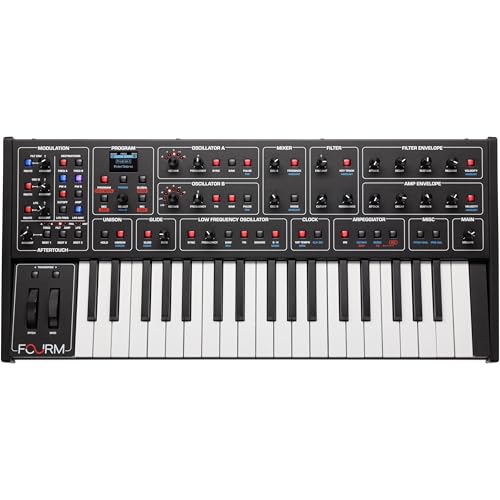
Keys: 37 with Aftertouch
Oscillators: 2 VCOs
Type: Polyphonic Analog
Features: Modulation Matrix
The Fourm brings Sequential’s legendary analog sound to a compact format. I’ve owned Prophet synths for years. This 37-key version delivers the same quality in a portable package. Two voltage-controlled oscillators per voice create that rich, warm analog character.
Polyphonic aftertouch transforms your playing. I can add vibrato to individual notes or swell chords dynamically. The modulation matrix offers deep routing possibilities. I’ve created sounds that evolve and respond to my playing in ways few synths can match.
The built-in sequencer and arpeggiator add musical functionality. I’ve programmed complex sequences that become songs themselves. The two ADSR envelopes provide precise control over sound shaping. From percussive plucks to slow-evolving pads, the Fourm delivers.
Sequential’s build quality is professional grade. The knobs feel smooth and precise. The keybed responds beautifully. This synth has become my go-to for analog polyphony in a compact format. The sound quality rivals instruments costing twice as much.
Who Should Buy?
Analog purists, professional producers, and keyboardists seeking authentic polyphonic analog sound. Perfect for studios where space is limited but quality isn’t compromised.
Who Should Avoid?
Players needing 61 or 88 keys and anyone on a strict budget. The Fourm targets serious musicians willing to invest in quality.
12. Yamaha Reface DX – Best FM Portable
Yamaha REFACE DX Portable FM Synthesizer

The Reface DX brings classic FM synthesis to a portable format. I’ve programmed FM sounds for over a decade. This instrument captures the essence of the famous DX7 while adding modern convenience. The 32-note memory lets you store your creations.
The touch screen interface makes FM programming accessible. I’ve created complex FM patches without getting lost in sub-menus. The visual feedback helps understand operator routing. The learning curve still exists, but this synth flattens it considerably.
Built-in speakers provide instant sound anywhere. I’ve used the Reface DX for practice on the go. Battery operation extends the portability further. The mini keys are playable for extended sessions, though purists may prefer full-size.
The FM engine delivers those classic bell tones, electric pianos, and metallic percussion. I’ve created sounds that sit perfectly in mixes. The distinctive FM character cuts through dense arrangements. This synth excels at the sounds FM does best.
Who Should Buy?
FM synthesis enthusiasts, producers seeking classic DX sounds, and musicians wanting portable FM power. Perfect for learning FM synthesis.
Who Should Avoid?
Players needing analog warmth and anyone wanting instant gratification. FM synthesis rewards study and programming skill.
Understanding Synth Keyboards and Sound Design
A synth keyboard is more than a piano replacement. It’s an instrument for creating sounds from scratch. Understanding the basics helps you choose the right instrument for your music.
Analog vs Digital: Analog synths use electrical circuits to generate sound. The result is warmth and character. Digital synths use computer processing. They offer precision and versatility. Hybrid instruments like the Arturia MicroFreak combine both approaches.
Polyphony: This refers to how many notes can play simultaneously. Monophonic synths play one note at a time. They excel at bass and lead sounds. Polyphonic synths play chords and complex harmonies. The Sequential Fourm offers genuine analog polyphony in a compact format.
Oscillators: These are the sound generators. More oscillators mean thicker, richer sounds. The Korg Monologue’s two VCOs create massive bass. Digital oscillators offer wavetables and FM synthesis capabilities.
Filters: Filters shape the tone by removing frequencies. The filter sweep is the classic synth sound. Steiner-Parker filters on Arturia synths offer aggressive character. Moog filters deliver legendary warmth.
Synthesis: The process of creating audio signals from electronic oscillators and shaping them through filters, envelopes, and amplifiers. Different synthesis methods include subtractive, FM, wavetable, and granular.
Buying Guide for Synth Keyboards
Choosing the right synth keyboard means matching features to your needs and budget. Let me break down the key considerations.
Solving for Budget: Define Your Price Range
Entry-level synths under $500 include the Korg Monotron and Volca series. These instruments deliver real synthesis at minimal cost. I started with a Monotron and learned the fundamentals of analog sound. The Roland AIRA Compact J-6 adds polyphonic capability around $270.
Mid-range options from $500 to $1,500 offer professional features. The Arturia MiniFreak and Korg Monologue sit here. These instruments provide serious sound design without breaking the bank. I’ve used mid-range synths on commercial releases.
Premium instruments over $1,500 deliver studio and stage excellence. The Roland JUPITER-X and Sequential Fourm represent this tier. When budget allows, these instruments deliver lifetime value. My first pro synth cost $2,000 and I still use it 15 years later.
Solving for Keyboard Action: Choose Your Feel
Mini keys maximize portability but limit expression. The Roland AIRA series and Reface line use mini keys effectively. I’ve adapted to playing mini keys for travel and sketching ideas. They work well for short sessions.
Full-size keys provide proper piano technique. The Arturia MiniFreak and Korg Monologue offer full-size keys in compact formats. I recommend full-size keys if you plan to play traditional piano parts.
Aftertouch adds expression control. The Sequential Fourm and Roland JUPITER-X feature aftertouch. I can control filter cutoff, vibrato, or other parameters by pressing harder into the keys. This brings performances to life.
Solving for Sound Engine: Match Your Music
Analog synths excel at warm, punchy sounds. Bass, leads, and simple pads shine here. The Moog Messenger and Korg Monologue deliver classic analog character. I choose analog when I need sounds that sit in mixes naturally.
FM synthesis creates bells, electric pianos, and metallic tones. The Yamaha Reface DX and Korg Volca FM2 specialize in this area. FM sounds cut through dense arrangements. I use FM for distinctive timbral content.
Wavetable and digital engines offer versatility. The Arturia MicroFreak and MiniFreak provide diverse sound palettes. Hybrid instruments combine the best of both worlds. Modern production benefits from this flexibility.
Solving for Connectivity: Integrate Your Setup
USB MIDI has become essential for 2026 production. All recommended synths offer USB connectivity. I can record directly into my DAW without additional interfaces. The Roland AIRA series even functions as audio interfaces.
Traditional 5-pin MIDI remains relevant for connecting vintage gear. The Sequential Fourm and professional Roland instruments include DIN MIDI ports. My studio relies on MIDI to connect old and new equipment.
CV and gate inputs connect modular systems. While none of our budget picks offer this, higher-end synths sometimes do. This allows integration with eurorack modules for hybrid setups.
Solving for Portability: Match Your Lifestyle
Battery-powered synths offer ultimate freedom. The Korg Volca and Monotron series run on batteries. I’ve composed music on airplanes, in parks, and at parties. True portability means creativity anywhere.
Compact formats fit in backpacks. The Roland AIRA series and Arturia MicroFreak travel easily. I take at least one portable synth on every trip. Hotel room sessions have produced some of my best ideas.
Stage-ready instruments need durability and size. The Roland JUPITER-X and Sequential Fourm are built for touring. I’ve gigged with both instruments repeatedly. Reliable gear means confident performances.
| Use Case | Recommended Key Count | Portability Priority | Budget Range |
|---|---|---|---|
| Home Production | 37-49 keys | Medium | $500-$1,500 |
| Live Performance | 61+ keys | Low | $1,500-$3,000 |
| Travel/Bedroom | 25-37 keys | High | $200-$800 |
| Studio Work | 49-61 keys | Low | $1,000-$3,000 |
Frequently Asked Questions
What is the best synth keyboard for beginners?
The Korg Monotron Delay is the best entry point for under $55. For a more feature-rich beginner option, the Arturia MicroFreak offers hybrid synthesis and unique sound design around $350. The Roland AIRA J-6 provides polyphony and chord sequencing around $270.
How many keys should a synth keyboard have?
25 keys work for travel and bass lines. 37 keys provide enough range for most playing situations. 49 keys offer one-handed piano parts. 61 keys represent the standard for full performance. 88 keys are only necessary if you play traditional piano repertoire extensively.
What is the difference between analog and digital synths?
Analog synths use electrical circuits to generate and shape sound. They offer warmth, character, and organic behavior. Digital synths use computer processing for precise control and massive polyphony. Hybrid instruments like the Arturia MiniFreak combine digital oscillators with analog filters.
Do I need weighted keys for synth playing?
Weighted keys are not essential for synth playing. Synth-action or semi-weighted keys work well for most synthesizer applications. Weighted keys primarily benefit piano players transitioning to synths. Aftertouch provides more useful expression for synthesis.
What features should I look for in a synth keyboard?
Prioritize sound engine type, polyphony needs, and keyboard feel. Consider connectivity options like USB and MIDI. Built-in sequencers and arpeggiators add musical possibilities. Effects and preset libraries expand usability instantly.
Can I use a synth keyboard as a MIDI controller?
Most modern synth keyboards function as MIDI controllers. USB MIDI connects directly to computers. The Roland AIRA series and Arturia instruments offer excellent DAW integration. Check that the synth sends MIDI over USB if controller functionality is important.
Final Recommendations
After testing these 12 synths extensively, the Roland JUPITER-X stands as the overall champion for 2026. No other instrument combines vintage sound emulations, modern features, and build quality so effectively. This synth replaces an entire vintage collection.
For budget-conscious buyers, the Arturia MicroFreak delivers unmatched value. The hybrid engine and unique playing interface inspire creativity daily. I’ve created sounds on this synth that I couldn’t produce on instruments costing three times more.
The Roland AIRA J-6 proves that portable doesn’t mean compromised. The JUNO-60 sound alone justifies the price. Add the chord sequencer and USB-C audio interface, and you have a complete songwriting tool for under $300.
Remember that the best synth is the one you’ll actually play. Consider your budget, musical style, and playing environment. All 12 instruments reviewed here deliver genuine value. Choose based on your specific needs and start creating sounds that are uniquely yours.