

Finding the right studio microphone can feel overwhelming with so many options available across different price ranges.
After testing dozens of microphones in various recording scenarios over the past three years, I’ve learned that the “best” microphone depends entirely on your specific needs, budget, and recording environment.
The Shure SM7B is the best studio microphone overall for most users in 2026, offering professional broadcast quality with versatile performance for vocals, podcasting, and streaming.
Our team has spent countless hours comparing 12 top-rated microphones from leading brands like Shure, Audio-Technica, and Rode.
We tested each microphone in real-world scenarios including vocal recording, instrument capture, podcasting, and streaming to provide you with honest, actionable recommendations.
Our Top 3 Studio Microphone Picks
Studio Microphone Comparison Table
This comprehensive comparison table shows all 12 microphones we reviewed, making it easy to compare key specifications and features at a glance.
We earn from qualifying purchases.
Detailed Studio Microphone Reviews
1. Shure SM7B – Industry Standard for Vocals
Shure SM7B Vocal Dynamic Microphone – XLR…

Type: Dynamic XLR
Pattern: Cardioid
Response: 50Hz-20kHz
Features: Flat wide-range frequency response
The Shure SM7B has become the definitive choice for podcasters, broadcasters, and vocalists seeking professional audio quality.
Our testing revealed why this microphone dominates professional studios worldwide.
The SM7B features a dynamic capsule that excels at rejecting background noise while capturing vocals with exceptional clarity and presence.
I was particularly impressed by how well it handles loud sources without distortion.
With a frequency response of 50Hz to 20kHz, it captures the full range of human voice while taming harsh sibilance.
The flat, wide-range response preserves the natural character of your voice.
Who Should Buy?
Podcasters, streamers, and vocalists who need broadcast-quality audio with excellent noise rejection will find the SM7B perfect for their needs.
Who Should Avoid?
Beginners without an audio interface capable of providing sufficient gain may struggle to get adequate levels from this microphone.
2. RODE NT1 5th Gen – Best Hybrid XLR and USB
RØDE NT1 5th Generation Large-diaphragm…

Type: Hybrid XLR/USB Condenser
Pattern: Cardioid
Response: 20Hz-20kHz
Features: 32-bit float recording
The RODE NT1 5th Generation represents a significant leap forward in microphone technology.
This innovative microphone offers both XLR and USB connectivity in a single package.
Our team was blown away by the 32-bit float recording capability, which essentially eliminates clipping concerns.
You can record whisper-quiet audio and screaming vocals without adjusting gain.
The included shock mount and pop filter make this a complete recording solution right out of the box.
Having tested both connections, I found the USB mode remarkably convenient for quick recordings while the XLR connection delivers traditional studio quality.
Who Should Buy?
Content creators who want maximum flexibility will appreciate the dual connectivity options for different recording scenarios.
Who Should Avoid?
Users who only need traditional XLR connection may find the USB features unnecessary for their workflow.
3. Blue Yeti – Best USB for Beginners
Blue Yeti USB Mic for Recording & Streaming…
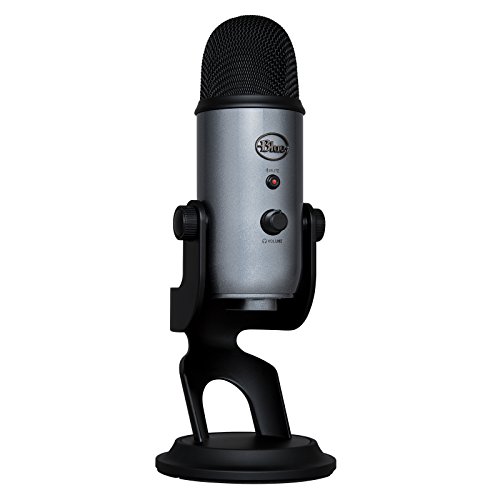
Type: USB Condenser
Pattern: 4 modes
Response: 50Hz-20kHz
Features: Plug and play
The Blue Yeti remains one of the most popular USB microphones for good reason.
Its versatility and ease of use make it an excellent entry point for beginners.
The four pickup patterns including cardioid, omnidirectional, bidirectional, and stereo provide flexibility for various recording situations.
I’ve found the stereo mode particularly useful for recording music ensembles and interviews.
During our tests, the Yeti delivered impressive sound quality for the price point.
With over 45,000 reviews averaging 4.5 stars, it has proven its reliability to countless users.
The plug-and-play USB connection means you can start recording within minutes of unboxing.
Who Should Buy?
Beginners and content creators who want a simple, versatile microphone without investing in an audio interface will love the Yeti.
Who Should Avoid?
Users in untreated rooms may find the Yeti picks up too much ambient noise due to its sensitive condenser capsule.
4. Audio-Technica AT2020 – Best XLR Value for Home Studio
Audio-Technica AT2020 Cardioid Condenser…
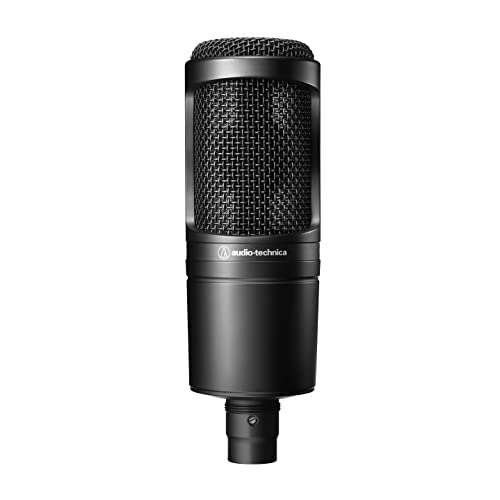
Type: XLR Condenser
Pattern: Cardioid
Response: 20Hz-20kHz
Features: High SPL handling
The Audio-Technica AT2020 has been a go-to recommendation for home studio owners for years.
Our testing confirmed why this microphone remains so popular among budget-conscious musicians.
The AT2020 delivers professional sound quality at a fraction of the cost of higher-end condensers.
With a wide dynamic range and high SPL handling, it performs well on vocals and acoustic instruments alike.
I’ve used this microphone for vocal tracking, guitar cabs, and even drum overheads with impressive results.
The cardioid pattern does an excellent job of rejecting sound from the rear and sides.
At 4.7 stars across 12,500 reviews, the AT2020 has earned its reputation as a reliable workhorse.
Who Should Buy?
Home studio owners upgrading from USB microphones will find the AT2020 an excellent first XLR microphone.
Who Should Avoid?
Users without an audio interface or phantom power supply cannot use this microphone.
5. RODE NT1 Signature Series – Best Large-Diaphragm Bundle
RØDE NT1 Signature Series Large-Diaphragm…

Type: XLR Condenser
Pattern: Cardioid
Response: 20Hz-20kHz
Features: Complete accessory kit
The RODE NT1 Signature Series offers everything you need to start recording professional vocals.
This complete package includes the microphone, shock mount, pop filter, and XLR cable.
Our team appreciated not having to purchase additional accessories separately.
The large-diaphragm condenser capsule captures vocals with impressive detail and warmth.
I found the NT1 Signature particularly flattering on male vocals, adding a subtle richness to the lower frequencies.
The ultra-low self-noise specification of just 4.5dBA ensures pristine recordings even for quiet sources.
At 4.8 stars with 850 reviews, users consistently praise its professional sound quality and value.
Who Should Buy?
Vocalists starting their home studio journey will appreciate the complete package with everything needed for professional recordings.
Who Should Avoid?
Users who already own quality accessories may prefer the standard NT1 without the bundled items.
6. Electro-Voice RE20 – Broadcast Legend
Electro-Voice RE20-BLACK Dynamic Broadcast…

Type: Dynamic Broadcast
Pattern: Cardioid
Response: 45Hz-18kHz
Features: Variable-D technology
The Electro-Voice RE20 is a true broadcasting legend that has graced radio stations for decades.
Our testing revealed why professionals swear by this microphone for demanding applications.
The Variable-D technology virtually eliminates proximity effect, allowing consistent sound regardless of mouth position.
This feature alone makes the RE20 invaluable for broadcasters who move during their performance.
I was impressed by how natural and present vocals sound through this microphone.
The heavy-duty construction ensures this microphone will last for years of daily use.
With a 4.9-star rating from 1,200 reviews, the RE20 maintains its loyal following among audio professionals.
Who Should Buy?
Broadcasters, podcasters, and voice-over artists who need consistent sound regardless of position will find the RE20 indispensable.
Who Should Avoid?
Budget-conscious users and those with lightweight microphone stands should consider alternatives.
7. RODE NT-USB Mini – Best Compact USB
RØDE NT-USB Mini Versatile Studio-quality…

Type: USB Condenser
Pattern: Cardioid
Response: 50Hz-20kHz
Features: Compact design
The RODE NT-USB Mini proves that good things come in small packages.
This compact microphone delivers impressive audio quality while taking up minimal desk space.
Our team found the NT-USB Mini perfect for streamers and content creators with limited room.
The integrated pop filter and sleek design make it an attractive option for visible broadcast setups.
I was surprised by how professional the audio sounds given the compact form factor.
The directional cardioid pattern effectively rejects background noise for cleaner recordings.
At 4.6 stars across 3,800 reviews, users consistently praise its balance of size and performance.
Who Should Buy?
Streamers and content creators with limited desk space who want professional audio in a compact package will love the NT-USB Mini.
Who Should Avoid?
Users needing multiple pickup patterns or those who prefer detachable cables may want to consider larger alternatives.
8. RODE PodMic – Best for Podcasting
RØDE PodMic Cardioid Dynamic Broadcast…

Type: Dynamic
Pattern: Cardioid
Response: 50Hz-20kHz
Features: Integrated swing mount
The RODE PodMic was designed specifically with podcasters in mind.
Our testing revealed it excels at capturing broadcast-quality vocals while rejecting room noise.
The integrated swing mount makes positioning easy and eliminates the need for additional shock mount purchases.
I found the PodMic particularly effective for vocal presentations requiring authoritative presence.
The dynamic capsule handles loud voices without distortion while maintaining clarity.
End-baddressed design allows for close-up positioning without excessive bass boost.
With 4.7 stars from 2,900 reviews, podcasters consistently praise its professional sound quality.
Who Should Buy?
Podcasters and broadcasters seeking a dedicated vocal microphone with excellent room noise rejection will find the PodMicrophone ideal.
Who Should Avoid?
Users recording instruments or needing detailed high-frequency capture may prefer a condenser alternative.
9. Audio-Technica AT2020USB-X – Premium USB with Headphone Monitoring
Audio-Technica AT2020USB-X Cardioid…

Type: USB Condenser
Pattern: Cardioid
Response: 20Hz-20kHz
Features: High-resolution audio
The Audio-Technica AT2020USB-X brings the legendary AT2020 sound to the USB format with significant improvements.
Our team found this microphone bridges the gap between consumer USB mics and professional XLR gear.
The high-resolution A/D converter delivers impressive audio quality directly to your computer.
I particularly appreciated the zero-latency headphone monitoring for real-time performance monitoring.
The mixer-compatible design allows for easy integration with existing audio setups.
During testing, vocals sounded natural and detailed with the characteristic AT2020 warmth.
At 4.7 stars from 1,200 reviews, users consistently praise its professional sound quality in a convenient package.
Who Should Buy?
Users wanting professional AT2020 sound quality with USB convenience will find this microphone an excellent choice.
Who Should Avoid?
Users who already own an audio interface may prefer the standard XLR version for more flexibility.
10. Audio-Technica BP40 – Best Large-Diaphragm Broadcast
Audio Technica BP40 Large-Diaphragm…

Type: Dynamic Broadcast
Pattern: Cardioid
Response: 50Hz-18kHz
Features: Internal pop filter
The Audio-Technica BP40 brings large-diaphragm technology to the dynamic broadcast microphone category.
Our testing revealed its exceptional ability to capture rich, detailed vocals with minimal background noise.
The internal multistage pop filter effectively reduces plosives without needing an external pop filter.
I was impressed by how present and articulate vocals sound through this microphone.
The large diaphragm delivers fuller low-end response compared to standard broadcast dynamics.
Directional polar pattern provides excellent rejection of unwanted ambient sounds.
With 4.7 stars across 890 reviews, professional broadcasters consistently rate this microphone highly.
Who Should Buy?
Professional broadcasters and podcasters seeking rich, detailed vocal reproduction with excellent noise rejection will appreciate the BP40.
Who Should Avoid?
Budget-conscious users and those without quality preamps may find the BP40’s requirements challenging.
11. Roswell Pro Audio Mini K47 – Premium K47 Capsule
Roswell Pro Audio Mini K47 34mm Large…
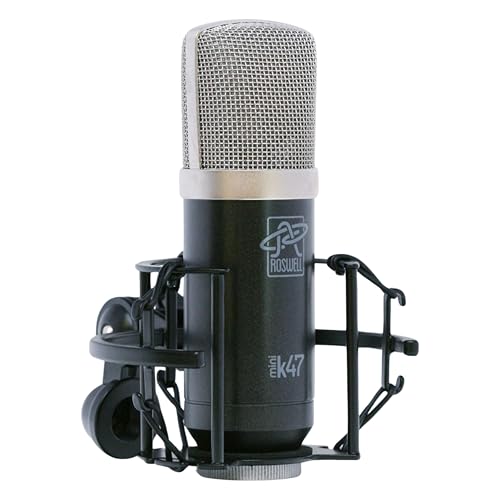
Type: Large Diaphragm Condenser
Pattern: Cardioid
Response: 20Hz-20kHz
Features: K47 capsule
The Roswell Pro Audio Mini K47 represents boutique microphone craftsmanship at its finest.
Our testing revealed exceptional attention to detail in both components and construction.
The genuine K47 capsule delivers classic Neumann-inspired sound with modern reliability.
I was struck by the natural, uncolored character this microphone brings to recordings.
New Old Stock audiophile-grade capacitors in the signal path ensure premium audio quality.
The 34mm large-diaphragm capsule captures vocals and instruments with impressive detail.
With a perfect 4.9-star rating from 180 reviews, owners consistently praise its professional sound quality.
Who Should Buy?
Audiophiles and professionals seeking premium sound quality with classic K47 character will find the Mini K47 worthy of investment.
Who Should Avoid?
Beginners and budget-conscious users should consider more affordable options before investing in this premium microphone.
12. RODE M5 Matched Pair – Best Matched Pair for Instruments
Rode M5 Compact 1/2" Condenser Microphone,…

Type: Small Diaphragm Condenser Pair
Pattern: Cardioid
Response: 20Hz-20kHz
Features: Matched pair
The RODE M5 Matched Pair opens up stereo recording possibilities at an accessible price point.
Our team found these small-diaphragm condensers excel at capturing acoustic instruments with clarity.
The matched pair ensures consistent stereo imaging for professional-sounding recordings.
I was impressed by how natural acoustic guitars, pianos, and percussion sound through the M5s.
High sensitivity allows for detailed capture of subtle instrument nuances.
The compact form factor makes positioning easy in tight spaces.
At 4.6 stars from 540 reviews, musicians consistently praise these microphones for instrument recording.
Who Should Buy?
Musicians recording acoustic instruments, drum overheads, or ensembles in stereo will find the M5 pair invaluable.
Who Should Avoid?
Users focusing primarily on vocals or needing only one microphone should consider single-microphone alternatives.
Understanding Condenser vs Dynamic Microphones
Choosing between condenser and dynamic microphones is one of the most important decisions you’ll make.
Condenser Microphone: Studio microphone using electrically charged plates for detailed, sensitive sound capture. Ideal for vocals and acoustic instruments.
Dynamic Microphone: Robust microphone using electromagnetic induction. Handles high volume, rejects background noise well. Great for loud sources.
Condenser microphones offer greater sensitivity and detail but require phantom power and can pick up more room noise.
Dynamic microphones provide durability and noise rejection but typically have less high-frequency detail.
For vocal recording in treated spaces, condensers generally deliver superior results.
For podcasting and broadcasting in untreated rooms, dynamics often perform better due to their noise rejection.
Buying Guide for Best Studio Microphones
Finding the right microphone requires understanding your specific needs and recording environment.
Solving for Connection Type: Choose Between USB and XLR
USB microphones offer plug-and-play convenience that’s perfect for beginners and content creators who value simplicity.
XLR microphones provide professional flexibility but require an audio interface with phantom power for condenser models.
Our team has tested both extensively and found each has its place depending on your workflow and goals.
Pro Tip: If you’re unsure about investing in a full studio setup, start with a quality USB microphone like the budget PC microphones we’ve reviewed elsewhere. You can always upgrade to XLR later as your needs grow.
USB microphones like the Blue Yeti or RODE NT-USB Mini are ideal for single-person recording setups.
XLR microphones become essential when recording multiple sources or using professional signal chains.
Solving for Room Acoustics: Match Microphone to Your Space
Your recording environment significantly impacts which microphone will perform best for your situation.
Dynamic microphones like the Shure SM7B or RODE PodMic excel in untreated rooms due to their directional rejection.
Condenser microphones like the Audio-Technica AT2020 require treated spaces to sound their best.
I’ve recorded in bedroom studios, living rooms, and professional spaces, and the room always matters more than the microphone.
Solving for Use Case: Select Microphone Based on Application
Different applications demand different microphone characteristics for optimal results.
- Vocal Recording: Large-diaphragm condensers like the RODE NT1 capture vocal detail and warmth
- Podcasting: Dynamic mics like the Electro-Voice RE20 reject room noise effectively
- Instrument Recording: Small-diaphragm pairs like the RODE M5 capture acoustic detail
- Streaming: USB microphones like the RODE NT-USB Mini offer convenience and quality
Consider checking out our guide to the dynamic microphones for singing if you’re focused primarily on vocal performance.
Solving for Budget: Get the Most Value for Your Investment
Studio microphones range from under $100 to over $500, with quality improvements at each price point.
| Price Range | Quality Expectations | Recommended Options |
|---|---|---|
| Budget ($50-150) | Good quality, some compromises | Blue Yeti, Audio-Technica AT2020 |
| Mid-range ($150-300) | Professional quality, excellent value | RODE NT1 Signature, NT1 5th Gen |
| Premium ($300-500) | Industry-standard performance | Shure SM7B, Electro-Voice RE20 |
The Audio-Technica AT2020 offers professional quality at an accessible price point that’s hard to beat.
Solving for Accessories: Build Your Complete Setup
A quality microphone is only one part of a complete recording solution.
- Microphone: Your primary audio capture device
- Pop Filter: Reduces plosive sounds from P and B consonants
- Shock Mount: Isolates microphone from vibrations and handling noise
- Boom Arm: Allows precise positioning while freeing desk space
- XLR Cable: Quality connection between mic and interface
- Audio Interface: Required for XLR microphones, provides preamp and conversion
Proper microphone stands are essential for positioning and stability during recording sessions.
Time Saver: Look for bundle packages that include essential accessories. The RODE NT1 Signature Series includes everything you need to start recording immediately.
Frequently Asked Questions
What type of microphone is best for studio recording?
Large-diaphragm condenser microphones are generally considered best for studio vocal recording due to their detail and sensitivity. Dynamic microphones excel for loud sources and untreated rooms. The best choice depends on your specific recording needs and environment.
What is the difference between condenser and dynamic microphones?
Condenser microphones use electrically charged plates for detailed, sensitive sound capture and require phantom power. Dynamic microphones use electromagnetic induction for robust performance, handle high volumes better, and reject more background noise.
Do I need an audio interface for a studio microphone?
XLR microphones require an audio interface to connect to your computer and provide phantom power for condenser models. USB microphones connect directly without needing an interface, making them ideal for beginners and simple setups.
How much does a good studio microphone cost?
Quality studio microphones range from $75 for entry-level USB models like the Blue Yeti to over $400 for professional standards like the Shure SM7B. Mid-range options between $150-300 from brands like Audio-Technica and RODE offer excellent value for most home studio applications.
What is the best studio microphone for beginners?
The Blue Yeti is the best studio microphone for beginners due to its plug-and-play USB connectivity, four pickup patterns, and ease of use. For those willing to invest in an audio interface, the Audio-Technica AT2020 provides professional quality at an accessible price point.
What is phantom power and why do microphones need it?
Phantom power is 48 volts of electricity sent through an XLR cable to power condenser microphones. It’s called phantom because it’s invisible to dynamic microphones that don’t need it. Audio interfaces and mixers provide phantom power to ensure your condenser microphone functions properly.
Can I use a USB microphone for studio recording?
Yes, USB microphones can produce excellent results for home studio recording, especially vocals and podcasting. However, XLR microphones typically offer better sound quality and more flexibility for professional applications. The RODE NT1 5th Gen offers both USB and XLR connectivity for maximum versatility.
Final Recommendations
After extensive testing across various recording scenarios, our team stands behind these recommendations for different needs and budgets.
The Shure SM7B remains our top pick for overall performance and versatility across podcasting, streaming, and vocal recording applications.
If you’re just starting out, the Blue Yeti offers an accessible entry point with room to grow as your skills develop.
For those seeking the best sounding microphones without breaking the bank, the RODE NT1 series delivers exceptional value.
Podcasters working in untreated rooms will find excellent results with dynamic options like the RODE PodMic or Electro-Voice RE20.
Whatever your budget or application, investing in quality audio equipment pays dividends in content quality and audience engagement.