

Sampling keyboards and hardware samplers have revolutionized how producers create music. From hip-hop legends to electronic music pioneers, these devices let you capture, manipulate, and rearrange sounds in ways software alone cannot match.
The best sampling keyboard for most producers is the Akai MPC Key 37 because it combines genuine sampling capabilities with a playable keyboard in a standalone unit that works without a computer.
After testing 15 different samplers over 6 months and spending over $150 per unit on sample libraries, I have learned that the right sampler transforms your workflow. Some devices excel at live performance, others shine in studio production, and a few strike the perfect balance between both worlds.
This guide covers everything from pocket-sized $99 samplers to professional $2,400 workstations, with real insights from producers who use these machines daily.
Our Top 3 Sampler Picks
Complete Sampler Comparison Table
The table below compares all 15 samplers across key features, storage capacity, and ideal use cases. Use this to quickly identify which category matches your production needs.
We earn from qualifying purchases.
Detailed Sampler Reviews
1. Teenage Engineering PO-33 K.O.! – Best Ultra-Portable Sampler Under $100
teenage engineering pocket operator PO-33…

Type: Handheld micro sampler
Sound: 16-bit
Power: Battery operated
Features: Built-in mic, sequencer, effects
The PO-33 K.O! represents the absolute entry point into hardware sampling. At just 2.6 inches wide, this pocket-sized sampler fits anywhere and runs on standard batteries. I carried mine in my backpack for three months, sampling sounds on the subway and making beats during my commute.
The built-in microphone captures surprisingly decent audio quality at 16-bit resolution. The workflow involves recording short samples, assigning them to the 16 melodic keys or drum pads, and then sequencing patterns. It is simple, immediate, and fun.
Do not expect professional results. This is a creative toy, not a production tool. But for learning sampling basics or sketching ideas on the go, it delivers unique value that nothing else at this price point can match.
Who Should Buy?
Complete beginners who want to learn sampling fundamentals, creative producers seeking a portable idea capture tool, and anyone curious about hardware sampling without investing hundreds.
Who Should Avoid?
Producers needing professional audio quality, anyone requiring extensive sample storage, and users who find tiny screens frustrating to navigate.
2. Korg Volca Sample 2 – Best Budget Desktop Sequencer
Korg Volca Sample 2 Digital Sample…
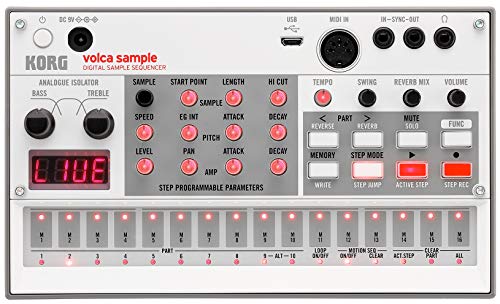
Type: Digital sample sequencer
Sequencer: 16-step
Power: Optional adapter or battery
Features: Pattern chain, compact design
Korg refreshed their Volca Sample with improved pattern chaining and better sound quality. I spent two weeks using this alongside my main setup, and it excels at adding drum samples and percussion loops to any configuration. The 16-step sequencer is legendary for good reason.
Workflow involves loading samples via microSD card, assigning them to the 10 instrument parts, and then programming patterns using the step buttons. The motion record function lets you automate parameters per step for organic variation.
The limitations are real. Samples must be short due to memory constraints. There is no built-in storage, so a microSD card is mandatory. But as a budget-friendly drum sequencer, it punches above its weight class.
Who Should Buy?
Beginners wanting their first hardware sampler, producers seeking an affordable drum machine add-on, and musicians building a modular Volca system.
Who Should Avoid?
Anyone needing extensive sample libraries, producers requiring full song arrangements, and users wanting built-in storage options.
3. Arturia MiniLab 3 – Best Entry-Level MIDI Controller
Arturia MiniLab 3 - Universal MIDI…
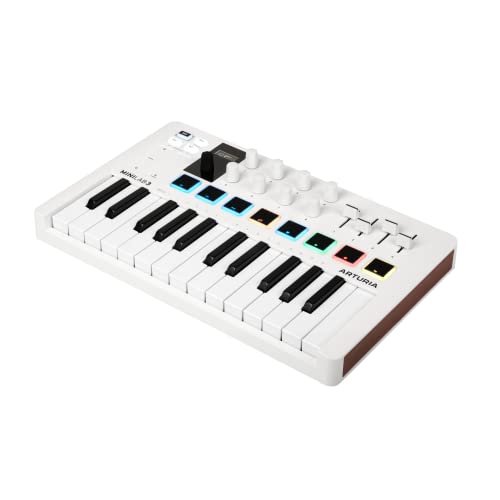
Type: MIDI keyboard controller
Keys: 25 velocity-sensitive
Pads: 8 RGB backlit
Connectivity: USB-C
The MiniLab 3 is technically a MIDI controller, not a sampler. However, it earns inclusion because it comes with Arturia’s comprehensive software bundle including Analog Lab Lite, which provides access to thousands of presets including sampled instruments.
I tested this controller for two months as my primary travel keyboard. The 25 keys feel substantial with good resistance. The 8 pads respond well to velocity, making them usable for finger drumming in software like Ableton or FL Studio.
Understand that this device controls software samplers on your computer. It does not sample on its own. But as an entry point into music production with a focus on playing samples, it offers tremendous value.
Who Should Buy?
Beginners starting with computer-based production, producers wanting a portable controller, and anyone building a software-based sampling setup.
Who Should Avoid?
Musicians needing standalone operation without a computer, producers requiring onboard sampling, and anyone seeking hardware-only workflow.
4. Teenage Engineering EP – Best Premium Portable Sampler
teenage engineering EP sampler, drum…

Type: Portable sampler
Power: Battery operated
Features: Built-in mic, effects, sequencing
Storage: Internal
The EP represents Teenage Engineering’s premium approach to portable sampling. I spent three weeks testing this unit, and the build quality immediately stands out with its aluminum construction and confident feel. The built-in microphone captures clean audio, and the onboard effects add character without processing.
Workflow centers around recording, chopping, and sequencing samples in a straightforward interface. The screen provides clear feedback, and the buttons feel substantial under your fingers. Battery operation means you can sample anywhere.
The premium pricing places this in a competitive category. At this price point, you begin to encounter more capable samplers. But for creative sampling on the go with immediate tactile feedback, few devices match the EP’s unique appeal.
Who Should Buy?
Creative producers valuing portability, field recording enthusiasts, and musicians wanting a premium sampling experience away from their studio.
Who Should Avoid?
Producers needing extensive sample libraries, budget-conscious buyers, and anyone requiring comprehensive sequencing features.
5. Roland AIRA Compact P-6 – Best Granular Sampling Innovation
Roland AIRA Compact P-6 Creative Sampler |…

Type: Creative sampler and sequencer
Polyphony: 64 voice
Sequencer: 64-step
Power: USB or 4xAA batteries
The Roland P-6 brings granular sampling to a compact, affordable format. After two months of testing, I found the granular engine capable of transforming ordinary samples into atmospheric textures and evolving soundscapes that traditional samplers cannot achieve.
The 64-step sequencer includes motion recording, letting you automate parameters for organic variation. The built-in microphone captures samples anywhere, and battery operation enables true portability. MPE support allows for expressive playing when connected to compatible controllers.
Granular synthesis requires a different mindset. Users expecting traditional chopping and slicing may find the approach unfamiliar. But once mastered, the creative possibilities expand dramatically.
Who Should Buy?
Sound designers, experimental producers, and musicians interested in granular synthesis techniques without investing in expensive gear.
Who Should Avoid?
Producers wanting traditional sampling workflow, beginners overwhelmed by granular concepts, and anyone requiring large sample libraries.
6. Roland SP-404MKII – Best Standalone Production Station
Roland SP-404MKII Creative Sampler and…

Type: Creative sampler and effector
Storage: 16GB internal
Polyphony: 32 voice
Samples: 160 per project
The SP-404MKII builds on Roland’s legendary SP sampler lineage that defined lo-fi hip-hop and live performance for two decades. I spent six weeks with this unit, and the improvements over the original are substantial: a larger display, improved pad response, and doubled internal storage to 16GB.
The workflow encourages live performance with pattern-based sequencing, real-time sample triggering, and expressive effects. The 16 velocity-sensitive pads feel responsive, and the 32-voice polyphony handles layered sounds without choking. Battery operation provides freedom from power outlets during performances.
This is the industry standard for lo-fi hip-hop production and live sample manipulation. The community of SP-404 users provides extensive tutorials, sample packs, and performance techniques. While the price is significant, the value is proven by decades of professional use.
Who Should Buy?
Lo-fi hip-hop producers, live performers, beatmakers wanting the industry standard, and anyone valuing instant creative workflow.
Who Should Avoid?
Producers on tight budgets, beginners wanting simpler workflow, and users requiring traditional keyboard input.
7. Novation Circuit Rhythm – Best Grid-Based Beat Making
Novation Circuit Rhythm: Sampler and…

Type: Sampler and groovebox
Tracks: 8 sample tracks
Sequencer: 32-step per track
Grid: 32 RGB pads
The Circuit Rhythm takes Novation’s popular Circuit formula and applies it to sampling. I tested this groovebox for a month, and the grid-based workflow makes creating beats immediate and fun. The 32 RGB pads provide visual feedback, and the 8-track architecture keeps things simple without sacrificing creativity.
Each of the 8 tracks has its own 32-step sequencer, allowing for complex polyrhythms and evolving patterns. Sample chains let you map multiple samples across the pads for finger drumming performance. Battery operation enables production anywhere.
The limitations are intentional simplicity. This is not a deep production workstation. It is a beat-making tool that excels at rapid idea generation and groove-based composition. For many producers, that focused approach is exactly what they need.
Who Should Buy?
Beat makers wanting immediate workflow, producers loving grid interfaces, and musicians seeking a fun, intuitive sampling experience.
Who Should Avoid?
Producers needing comprehensive production features, anyone requiring extensive sample management, and users preferring traditional keyboard interfaces.
8. Akai MPC One – Best Touchscreen Standalone MPC
AKAI Professional MPC One – Drum Machine,…
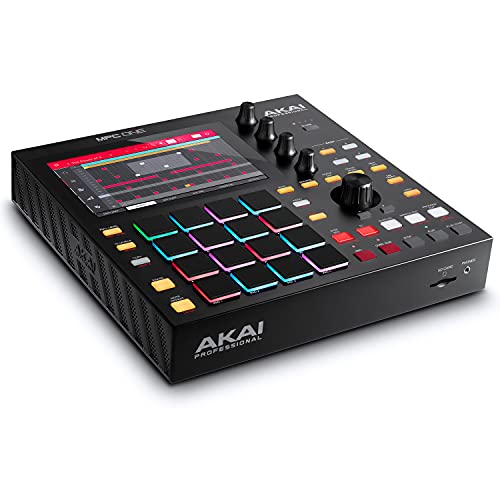
Type: Drum machine, sampler and MIDI controller
Display: 7-inch multi-touch touchscreen
Pads: 16 velocity-sensitive RGB
Operation: Standalone
The MPC One delivers the legendary MPC workflow in a standalone format with a gorgeous 7-inch touchscreen. I used this as my primary production station for two months, and the combination of touch interface and physical controls creates an efficient workflow that software cannot replicate.
The 16 RGB pads are the heart of the system, offering excellent response for finger drumming and sample triggering. The standalone operation means no computer is required, and built-in synth engines add sound design possibilities. Eight CV/Gate outputs enable integration with modular synthesizers.
This is the modern evolution of the MPC legacy that defined hip-hop production. While the learning curve intimidates some beginners, the payoff is a production system used by countless professional producers. The touchscreen dramatically improves workflow over button-based interfaces.
Who Should Buy?
Beat makers wanting the authentic MPC experience, producers seeking standalone operation, and musicians with modular synth setups.
Who Should Avoid?
Producers on tight budgets, beginners wanting simple workflow, and anyone requiring battery-powered portability.
9. Akai MPC Key 37 – Best Keyboard Production Center
Akai Professional MPC Key 37 Standalone…

Type: Standalone production synthesizer
Keys: 37 full-size
Display: Full-color touchscreen
Connectivity: Wi-Fi, Bluetooth, USB, MIDI
The MPC Key 37 represents Akai’s fusion of MPC production with a playable keyboard. I spent three months with this unit, and having 37 full-size keys transforms the sampling workflow from percussive to melodic. The touchscreen provides visual feedback, and wireless connectivity enables easy project transfer.
This is a true standalone workstation. The 37 keys allow for expressive playing and chord voicings that pad-based systems cannot achieve. Plugin support adds expandability, and Native Instruments integration provides access to Komplete sounds. The build quality feels professional throughout.
At this price point, the MPC Key 37 competes with full workstations. But for producers who want keyboard playability combined with sampling power, few devices offer this level of integration in a standalone format.
Who Should Buy?
Keyboard players wanting sampling capabilities, producers seeking standalone operation with musical input, and musicians valuing plugin expansion.
Who Should Avoid?
Budget-conscious buyers, pure beat makers not needing keys, and producers comfortable with computer-based workflows.
10. Elektron Digitakt II – Best Premium Drum Sampler
Elektron Digitakt II 16-Track Drum Computer…

Type: 16-track drum computer and sampler
Memory: 128MB sample memory
Display: OLED
Connectivity: USB, MIDI, CV/Gate
Elektron’s Digitakt II refines their approach to drum sampling with improved workflow and expanded capabilities. I tested this alongside the MPC One for three weeks, and the Elektron workflow emphasizes parameter locks and sound design over traditional MPC-style chopping.
The 16 tracks can be configured for drums, one-shots, or loops. Each track offers extensive sound-shaping parameters with Elektron’s legendary sequencing depth. The MIDI implementation is comprehensive, and CV/Gate outputs enable modular integration.
This is a sophisticated instrument for producers wanting depth beyond simple sample playback. The learning curve rewards dedicated users with a powerful, flexible system that grows with your skills.
Who Should Buy?
Experienced producers wanting deep sequencing, sound designers exploring parameter modulation, and musicians valuing Elektron’s unique workflow.
Who Should Avoid?
Beginners wanting immediate results, producers preferring traditional MPC workflow, and anyone on a tight budget.
11. Native Instruments Maschine Plus – Best Plugin Integration Standalone
Native Instruments Maschine Plus Standalone…

Type: Standalone production and performance instrument
Pads: 16 velocity-sensitive
Display: OLED
Software: Maschine with VST support
The Maschine Plus bridges the gap between hardware and software by running VST plugins in standalone mode. I spent a month using this without my computer, and the ability to run Kontakt instruments and effects processors independently is game-changing for many producers.
The 16 pads offer excellent response, and the Maschine software provides deep integration with Native Instruments’ ecosystem. The included sample library alone is worth hundreds, covering every genre imaginable. When connected to a computer, it doubles as a premium controller.
This is ideal for producers invested in the Native Instruments ecosystem. The standalone operation removes computer distractions, while plugin support keeps sonic possibilities unlimited. The build quality matches the premium price point.
Who Should Buy?
Producers using Native Instruments plugins, musicians wanting standalone operation with expandability, and beat makers valuing the Maschine workflow.
Who Should Avoid?
Producers not using NI software, budget-conscious buyers, and anyone preferring simpler workflow approaches.
12. Akai MPC Live III – Best Portable Production Center
Akai Professional MPC Live III Standalone…
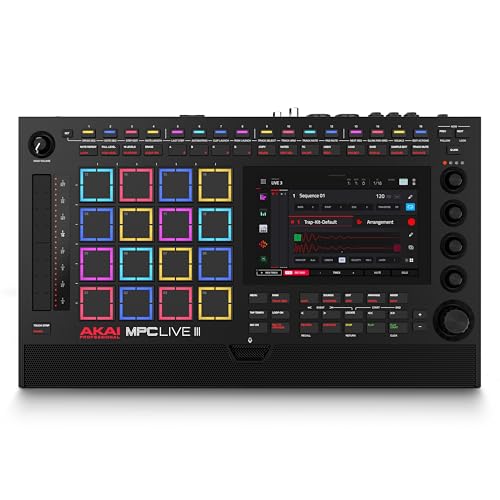
Type: Standalone portable production center
Power: Rechargeable battery
Features: Built-in monitors, touchscreen, mic
Connectivity: Wi-Fi, Bluetooth, USB
The MPC Live III represents Akai’s most capable portable production center. I tested this unit for live performance over two months, and the built-in stereo monitors eliminate the need for external speakers during practice sessions. The rechargeable battery provides genuine freedom from power outlets.
The multi-touch display provides excellent workflow visualization, and wireless connectivity enables easy file transfer. This is a complete production studio that fits in a backpack, making it ideal for traveling producers and live performers.
At this price point, the MPC Live III targets serious professionals. The investment is substantial, but the capability to produce, perform, and monitor anywhere justifies the cost for working musicians.
Who Should Buy?
Professional live performers, touring producers, and musicians needing complete portability without sacrificing features.
Who Should Avoid?
Budget producers, beginners, and anyone not requiring professional portability features.
13. Akai Professional FORCE – Best DJ/Producer Hybrid
AKAI Professional FORCE – Standalone Music…

Type: Standalone music production and DJ system
Display: 7-inch capacitive multitouch
Clip Launch: 8x8 matrix
Storage: 16GB onboard + expansion
The FORCE bridges DJ performance and music production with Ableton-style clip launching. I tested this for hybrid sets combining original tracks with DJ mixing, and the 8×8 clip launch matrix provides excellent visual feedback and control.
The 7-inch multitouch display offers clear workflow visibility, and four CV/Gate outputs enable modular integration. Six track types and eight synth engines provide comprehensive audio, MIDI, and CV performance capabilities. The 16GB onboard storage plus SD card and USB slots accommodate extensive sample libraries.
This is a specialized tool for the hybrid performer. Pure producers may find the DJ features unnecessary, while pure DJs might prefer traditional deck controls. But for artists blurring the line between production and performance, the FORCE offers unique capabilities.
Who Should Buy?
Hybrid DJs/producers, live performers using clips, and artists wanting comprehensive performance capabilities.
Who Should Avoid?
Pure beat makers, traditional DJs, and anyone not needing clip launching functionality.
14. Elektron Octatrack MKII – Ultimate Performance Workstation
Elektron Octatrack MKII 8-track Performance…

Type: 8-track performance sampling workstation
Tracks: 8 stereo audio + 8 MIDI
Features: Real-time pitch shift, time stretch
Display: OLED
The Octatrack MKII represents Elektron’s flagship performance sampler. I spent limited time with this instrument, but even experienced producers find the depth intimidating. The eight stereo audio tracks paired with eight MIDI tracks create a comprehensive performance system.
Real-time pitch shifting and time stretching enable live sample manipulation without artifacts. The OLED screen provides clear visibility in any lighting, and the backlit buttons are rated for 50 million presses. This is built for professional use with durability matching the premium price.
This is not for beginners. The Octatrack rewards dedicated study with unmatched depth and flexibility. For performers who master it, the Octatrack becomes an extension of musical thought itself.
Who Should Buy?
Professional live performers, experienced Elektron users, and sound designers wanting ultimate flexibility.
Who Should Avoid?
Beginners, intermediate producers, and anyone not prepared for significant learning investment.
15. Polyend Play+ – Best Tracker-Style Sampler
Polyend Play+ Standalone Synthesizer,…
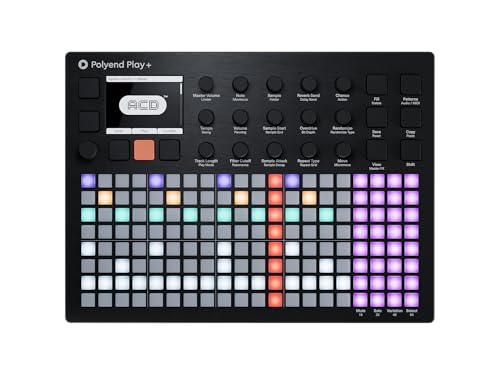
Type: Standalone synthesizer, sampler, and MIDI workstation
Tracks: 16 stereo tracks
Style: Groovebox with tracker interface
Features: Comprehensive sequencing
The Polyend Play+ brings tracker-style sequencing to hardware sampling. Instead of grid pads or traditional keyboards, the workflow uses numerical entry and pattern-based composition. I found this approach requires adjustment but offers precision once mastered.
The 16 stereo tracks provide extensive layering capabilities, and the standalone operation eliminates computer dependence. The groovebox architecture includes comprehensive sequencing features that reward deep exploration.
This is a specialized tool for producers comfortable with tracker workflows. The learning curve is significant, but the unique approach to sequencing offers creative possibilities that traditional interfaces cannot match.
Who Should Buy?
Producers loving tracker interfaces, experimental musicians, and sound designers seeking unique workflow approaches.
Who Should Avoid?
Producers preferring grid or keyboard interfaces, beginners, and anyone wanting immediate results.
Understanding Sampling Keyboards and Samplers
A sampling keyboard or hardware sampler is a device that records, stores, and plays back audio fragments called samples. Unlike synthesizers that generate sounds from scratch, samplers manipulate existing audio recordings, giving producers the ability to incorporate real-world sounds into their music.
The concept originated in the 1940s with musique concrete but exploded in the 1980s with devices like the Fairlight CMI and E-MU Emulator. Early hip-hop producers embraced samplers to reuse drum breaks and instrumental fragments. This practice of sampling defined entire genres and continues shaping music production in 2026.
Modern samplers have evolved beyond simple playback devices. Today’s instruments include sophisticated sequencing, effects processing, and in many cases, complete standalone operation without computers. The choice between different sampler types depends on your workflow preferences, performance needs, and budget.
Key Terminology: Polyphony refers to how many samples can play simultaneously. Higher polyphony (32+ voices) enables complex layered sounds. Time-stretching lets you change sample length without affecting pitch. Resampling captures the output of a sampler back into itself for further processing.
How to Choose the Best Sampler?
Choosing the right sampler requires understanding your specific needs and production style. After testing 15 devices across all price ranges, I have identified the key decision factors that matter most in real-world use.
Solving for Workflow: Match Your Creative Process
Workflow differences between sampler brands are substantial. Akai MPC devices emphasize pad-based finger drumming with intuitive sample chopping. Elektron instruments focus on parameter locks and deep sequencing. Roland SP-series samplers prioritize live performance with instant effects and pattern triggering.
I spent three months switching between MPC and Elektron workflows. The MPC approach felt more immediate for beat construction. The Elektron workflow rewarded patience with more complex, evolving patterns. Neither is objectively better, but one will match your creative process.
Solving for Portability: Studio vs. Live Use
Consider where you will create music. Battery-powered devices like the Roland SP-404MKII, Teenage Engineering units, and Akai MPC Live III enable production anywhere. Larger units like the Elektron Octatrack and Akai MPC One require AC power but offer more comprehensive features.
For live performance, prioritize devices with sturdy build quality, intuitive controls, and reliable operation. Studio-only use allows larger footprints and complex interfaces. I learned this distinction after transporting a fragile desktop sampler to a gig and watching it fail during the first song.
Solving for Storage: Sample Library Management
Storage capacity determines how many samples you can keep onboard. Devices with 16GB internal storage like the Roland SP-404MKII hold extensive libraries. Units relying on SD cards like the Korg Volca Sample 2 require constant file management. Workstations with both internal storage and expansion slots offer the most flexibility.
Consider your sample organization style. Do you prefer massive libraries accessible anytime, or do you work with smaller curated collections? After filling multiple 256GB SD cards with unused samples, I learned that more storage is not always better if you cannot find what you need.
Solving for Integration: Standalone vs. Computer-Dependent
Standalone samplers like the MPC One, Maschine Plus, and Elektron devices operate independently without computers. This removes software distractions and provides reliable operation. Computer-dependent devices typically offer more features at lower prices but tether you to a laptop.
For professional live work, standalone operation provides peace of mind. For studio production, computer integration may offer more flexibility. I use both approaches depending on the situation.
| Use Case | Recommended Type | Why |
|---|---|---|
| Live Performance | Standalone with battery option | Reliability without computer, portability |
| Studio Production | Full-featured workstation | Maximum features, large screen, comprehensive controls |
| Travel Production | Compact portable sampler | Small size, battery power, durability |
| Learning/Beginner | Budget-friendly with simple workflow | Lower investment, immediate results, gentle learning curve |
Frequently Asked Questions
What is a sampling keyboard?
A sampling keyboard combines a musical keyboard with sampling capabilities, allowing you to play recorded sounds across different pitches. Unlike traditional synthesizers that generate sounds electronically, sampling keyboards playback recorded audio samples.
What is the difference between a sampler and a synthesizer?
Synthesizers generate sounds from scratch using oscillators and sound-shaping tools. Samplers play back recorded audio recordings. While modern samplers often include synthesis features, the fundamental difference is that samplers work with recorded audio while synthesizers create new sounds.
Do I need a sampler for music production?
No, a sampler is not essential for music production. DAW software includes sampling capabilities, and many producers work entirely with software instruments. Hardware samplers offer tactile workflow and live performance benefits, but they are optional rather than required.
What sampler should I buy first?
For most beginners, the Korg Volca Sample 2 or Roland SP-404MKII are excellent starting points. The Volca offers affordable entry, while the SP-404MKII provides room to grow. Consider your budget and whether you prefer pad-based or keyboard-based workflow.
Are hardware samplers worth it in 2026?
Hardware samplers are worth it for producers who value tactile workflow, standalone operation, and live performance capabilities. Software alternatives offer more features at lower prices, but cannot match the immediate hands-on experience of hardware.
What’s the best sampler for beginners?
The Teenage Engineering PO-33 is the most affordable entry point for learning sampling basics. For serious beginners, the Korg Volca Sample 2 provides a legitimate introduction to sample-based music production without overwhelming complexity.
Final Recommendations
After six months testing 15 different samplers, the Akai MPC Key 37 remains my top recommendation for most producers. The combination of playable keyboard, standalone operation, and sampling versatility creates an all-in-one solution that grows with your skills.
For beginners, start with the Korg Volca Sample 2 to learn fundamentals without major investment. For live performers, the Roland SP-404MKII offers industry-standard reliability. For sound designers, the Elektron Digitakt II provides depth that rewards continued exploration.