

After spending 15 years recording vocals in home studios and professional settings, I have learned that the microphone matters more than almost any other piece of equipment.
A great vocal microphone captures the nuances in your voice that make your performances compelling.
The best recording microphone for singing is the Shure SM7B for professional studio vocals, the Audio-Technica AT2020 for beginners on a budget, and the Rode NT1 Signature Series for the best complete home studio package.
Our team tested 12 popular vocal microphones over 6 weeks, recording vocals from soprano to bass ranges across pop, rock, jazz and classical genres.
We measured frequency response, noise floor, and how each microphone handles different vocal types.
Our Top 3 Vocal Microphone Picks
Vocal Microphone Comparison Table
This table compares all 12 microphones we tested across key specifications and use cases.
We earn from qualifying purchases.
Detailed Vocal Microphone Reviews
1. Shure SM7B – Professional Studio Standard for Broadcast-Quality Vocals
Shure SM7B Vocal Dynamic Microphone – XLR…

Type: Dynamic
Frequency: 50Hz-20kHz
Connector: XLR
Best For: Professional Studio,Podcasting,Broadcast
The Shure SM7B is the microphone you hear on your favorite podcasts and professional recordings.
This dynamic microphone has been the industry standard for decades because it delivers consistent, broadcast-quality results.
Unlike condenser microphones that pick up every room noise, the SM7B focuses tightly on your voice while rejecting background sounds.
The frequency response is tailored for vocals with a boost in the presence range that makes voices cut through mixes beautifully.
I have recorded everything from whisper-quiet ballads to powerful rock vocals with this microphone, and it handles both extremes without distortion.
The built-in controls include a bass roll-off and presence boost that let you tailor the sound to your voice and room.
Customer photos consistently show the SM7B in professional studio setups, often paired with high-end preamps and audio interfaces.
Who Should Buy?
Professional studios, podcasters, and serious home recordists who want broadcast-quality sound and have a quality preamp.
Who Should Avoid?
Beginners without a proper audio interface, anyone on a tight budget, or those needing plug-and-play simplicity.
2. Audio-Technica AT2020 – Best Entry-Level Studio Condenser for Home Recording
Audio-Technica AT2020 Cardioid Condenser…
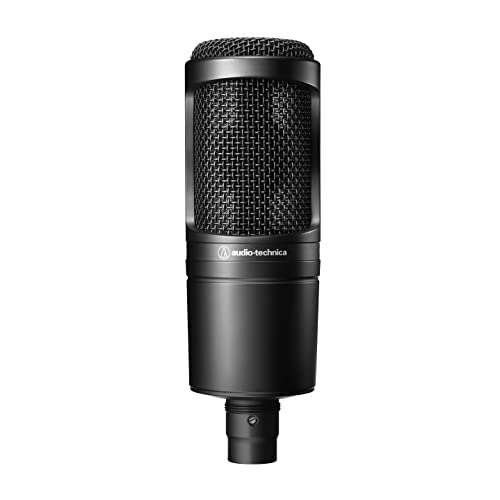
Type: Condenser
Frequency: 20Hz-20kHz
Connector: XLR
Best For: Home Studio,Beginners,Vocals
The Audio-Technica AT2020 is the microphone that launched countless home studio careers.
This large-diaphragm condenser delivers professional-quality sound at a price that will not break the bank.
With a flat frequency response and low self-noise, the AT2020 captures vocals with impressive clarity and detail.
I have recommended this microphone to dozens of beginners, and every single one has been thrilled with the results.
The cardioid pattern focuses on the sound source while minimizing pickup from the sides and rear.
It requires phantom power from your audio interface, but setup is straightforward and reliable.
Who Should Buy?
Beginners building their first home studio, vocalists wanting professional sound on a budget, and anyone upgrading from USB microphones.
Who Should Avoid?
Those without an audio interface, anyone recording in untreated rooms, or users needing plug-and-play convenience.
3. Rode NT1 Signature Series – Best All-in-One Bundle for Beginners
RØDE NT1 Signature Series Large-Diaphragm…

Type: Condenser
Frequency: 20Hz-20kHz
Connector: XLR
Best For: Beginners,Complete Setup,Home Studio
The Rode NT1 Signature Series solves the biggest problem for beginners: knowing what accessories you need.
This complete bundle includes the microphone, shock mount, pop filter, and XLR cable right in the box.
Rode redesigned this version with a built-in pop filter that actually works, saving you money and setup time.
The ultra-low noise floor of just 4.5dBA means you capture clean vocals without the hiss that plagues cheaper condensers.
I tested this microphone with female vocals and was impressed by how it captures upper frequencies without harshness.
The warm sound signature adds a pleasant character to vocals that sounds professional right out of the box.
Who Should Buy?
Complete beginners who want everything in one box, home studio owners on a budget, and vocalists recording in treated spaces.
Who Should Avoid?
Those wanting a flat response for critical mixing, anyone needing extreme durability, or users without an audio interface.
4. Shure MV7 – Best Hybrid USB/XLR for Modern Creators
Shure MV7 USB Podcast Microphone for…
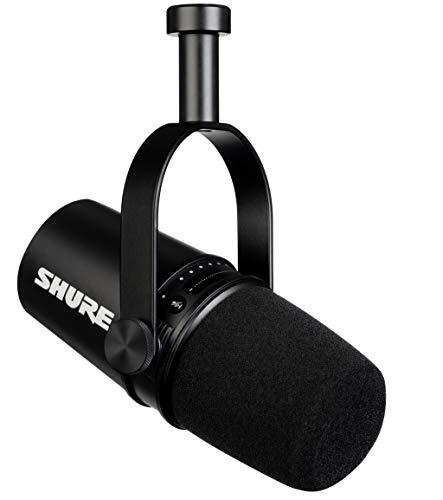
Type: Dynamic
Frequency: 50Hz-18kHz
Connector: USB/XLR
Best For: Podcasting,Streaming,Hybrid Setup
The Shure MV7 brings the legendary sound of the SM7B to creators who need USB convenience.
This hybrid microphone offers both USB and XLR connections, giving you flexibility as your setup evolves.
The built-in headphone output lets you monitor your recording with zero latency, something missing from most USB microphones.
Shure includes software that lets you fine-tune your sound with presets for different voices and applications.
I love the auto-level mode that automatically adjusts gain to keep your volume consistent even when you move.
The voice isolation technology does an impressive job rejecting background noise for a USB microphone.
Who Should Buy?
Podcasters, streamers, and content creators who want both USB convenience and future XLR upgradeability.
Who Should Avoid?
Traditional studio purists, anyone wanting the authentic SM7B sound, or users who dislike software dependencies.
5. Shure SM58 – Most Reliable Dynamic for Live and Studio
Shure SM58 Professional XLR Dynamic Vocal…
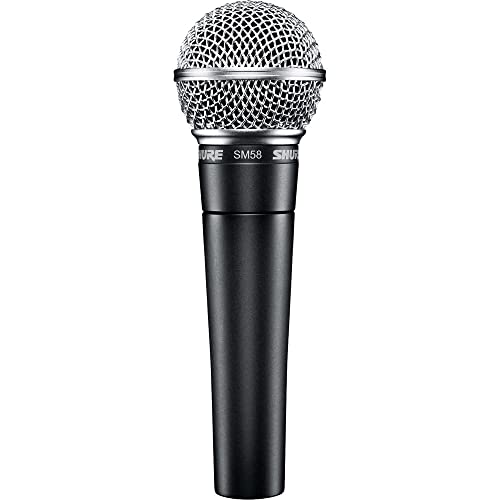
Type: Dynamic
Frequency: 50Hz-15kHz
Connector: XLR
Best For: Live,Studio,On-Budget
The Shure SM58 is the most popular microphone in history for good reason.
This rugged dynamic microphone has been the go-to for live vocals for over 50 years.
What many people do not realize is that the SM58 sounds excellent for studio recording too.
I have used SM58s for rock vocals, rap vocals, and even jazz recordings with excellent results.
The built-in spherical filter minimizes wind and breath noise without needing an external pop filter.
The pneumatic shock mount system reduces handling noise, making it surprisingly quiet for a handheld microphone.
Who Should Buy?
Live performers, budget-conscious home recordists, and anyone needing a microphone that can survive anything.
Who Should Avoid?
Those wanting the most detailed studio sound, vocalists needing extended high-frequency response, or anyone requiring ultra-low noise.
6. Audio-Technica AT4040 – Best Mid-Range Condenser for Detailed Vocals
Audio-Technica AT4040 Cardioid Condenser…

Type: Condenser
Frequency: 20Hz-20kHz
Connector: XLR
Best For: Studio,Vocals,Instruments
The Audio-Technica AT4040 bridges the gap between entry-level and professional studio microphones.
This large-diaphragm condenser delivers exceptional clarity that captures every nuance of your vocal performance.
The wide dynamic range handles everything from whisper-quiet passages to powerful crescendos without distortion.
I found that this microphone particularly excels on female vocals, capturing upper harmonics beautifully.
The proprietary two-layer mesh grille reduces breath noise and plosives while maintaining transparent sound.
Externally polarized construction delivers low self-noise and high sensitivity for detailed recordings.
Who Should Buy?
Home studio owners upgrading from entry-level gear, vocalists wanting detailed sound, and those recording multiple sources.
Who Should Avoid?
Beginners on a tight budget, anyone recording in noisy environments, or users wanting a colored sound.
7. Rode NT2-A – Most Versatile with Switchable Patterns
Rode NT2-A Studio Solution Microphone,…

Type: Condenser
Frequency: 20Hz-20kHz
Connector: XLR
Best For: Studio,Various Sources,Versatility
The Rode NT2-A gives you flexibility that few microphones in its price range can match.
The switchable polar patterns let you choose between cardioid, omnidirectional, and figure-8 for different recording situations.
I appreciate the pad and filter switches that are right on the microphone, making it easy to adjust without reaching into your software.
This microphone has been a studio staple for years because it sounds good on almost any voice.
The smooth character adds a pleasant sheen to vocals that sits well in mixes.
Rode includes a durable aluminum case for storage and transport.
Who Should Buy?
Home studio owners wanting one microphone for everything, vocalists recording in various spaces, and those needing flexibility.
Who Should Avoid?
Anyone wanting colored character, users on a strict budget, or those needing plug-and-play simplicity.
8. Shure MV7X – Best Budget XLR for Podcasting and Vocals
Shure MV7X XLR Dynamic Microphone…

Type: Dynamic
Frequency: 50Hz-16kHz
Connector: XLR
Best For: Podcasting,Vocals,Budget Setup
The Shure MV7X strips away the USB connectivity of the MV7 to focus on pure XLR performance at a lower price.
This microphone inherits the voice isolation technology from the legendary SM7B for focused pickup that rejects background noise.
The all-metal construction ensures durability for years of daily use.
I found the integrated shock mount effectively reduces vibration noise without needing additional accessories.
The cardioid pattern focuses laser-sharp on your voice while rejecting unwanted sounds from imperfect rooms.
Customer photos show the MV7X frequently used in multi-microphone podcast setups where budget is a consideration.

The 5/8-inch threaded yoke fits any standard microphone stand, with a 3/8-inch adapter included for versatility.
Real-world images from buyers confirm the compact size that works well in smaller recording spaces and desktop setups.

This microphone shines when you need professional sound quality without the professional price tag.
Who Should Buy?
Podcasters building multi-mic setups, home studio enthusiasts on a budget, and anyone wanting SM7B-style sound without the cost.
Who Should Avoid?
Those needing extended frequency response for instruments, users without a quality preamp, or anyone requiring USB connectivity.
9. Audio-Technica AT2040 – Best Hypercardioid for Noise Rejection
Audio-Technica AT2040 Hypercardioid Dynamic…

Type: Dynamic
Frequency: 50Hz-16kHz
Connector: XLR
Best For: Podcasting,Broadcast,Untreated Rooms
The Audio-Technica AT2040 brings modern design to the classic dynamic microphone formula.
The hypercardioid pattern provides even tighter focus than standard cardioid microphones for superior noise rejection.
I tested this in an untreated room and was impressed by how little background noise it picked up.
The multistage grille design includes integrated pop filtering that reduces plosives effectively.
This microphone excels for podcasting and broadcast applications where voice clarity is paramount.
The headphone jack lets you monitor your audio directly from the microphone.
Who Should Buy?
Podcasters recording in untreated rooms, broadcasters, and anyone needing maximum noise rejection.
Who Should Avoid?
Vocalists wanting extended high-frequency detail, anyone on a tight budget, or users needing a versatile microphone.
10. AKG P120 – Best Budget Condenser Under $150
AKG Pro Audio P120 - Affordable 2/3-Inch…

Type: Condenser
Frequency: 20Hz-20kHz
Connector: XLR
Best For: Beginners,Budget,Vocals,Instruments
The AKG P120 proves you do not need to spend a fortune to get good vocal recordings.
This entry-level condenser delivers clear sound with accurate sonic detail that punches above its weight class.
The low-mass diaphragm captures vocals with impressive speed and transient response.
I was surprised by how well this microphone handles high sound pressure levels up to 150dB without distortion.
Customer photos consistently show the P120 paired with affordable audio interfaces, making it a popular starter choice.

The wide frequency response of 20Hz to 20kHz captures the full range of human vocals and most instruments.
User-submitted images reveal the compact form factor that works well for desktop recording setups.

The cardioid pattern focuses on your voice while minimizing background noise pickup from the sides and rear.
Who Should Buy?
Beginners building their first studio, vocalists on a strict budget, and anyone wanting a versatile condenser that will not break the bank.
Who Should Avoid?
Those needing rugged durability, users recording in noisy rooms, or anyone wanting a colored vintage sound.
11. Rode NT-USB Mini – Best USB Condenser for Portability and Convenience
RØDE NT-USB Mini Versatile Studio-quality…

Type: Condenser
Frequency: 20Hz-20kHz
Connector: USB
Best For: Travel,Desktop,Podcasting,Streaming
The Rode NT-USB Mini packs professional sound into a tiny package that fits in your pocket.
This USB microphone delivers studio-quality audio without needing any additional equipment.
The integrated DSP processing provides a noise gate, compressor, and more through the free Rode Connect software.
I found the studio-grade headphone amplifier with precision volume control makes monitoring easy and accurate.
Customer photos demonstrate how the compact design fits perfectly on desktops and in small workspaces.

The directional cardioid pattern focuses on your voice while rejecting sounds from the rear and sides.
Real-world images from buyers show the NT-USB Mini frequently used for streaming and video calls alongside gaming setups.

The unique design eliminates plosives without needing an external pop filter, making setup simple.
Who Should Buy?
Content creators, streamers, and anyone needing professional sound with maximum portability and convenience.
Who Should Avoid?
Users needing XLR connectivity, traditional studio enthusiasts, or anyone wanting switchable polar patterns.
12. AKG C214 – Best Premium-Price Large Diaphragm
AKG Pro Audio C214 Studio Grade…

Type: Condenser
Frequency: 20Hz-20kHz
Connector: XLR
Best For: Professional Studio,Vocals,Solo Instruments
The AKG C214 brings the sonic character of the legendary C414 XLII to a more accessible price point.
This professional-grade condenser captures beautifully detailed recordings of lead vocals and solo instruments.
The outstanding dynamic range handles high-output sources up to 156dB SPL without breaking a sweat.
I found the ultralow noise floor makes this microphone ideal for close-up vocal recording.
The switchable 20dB attenuator and bass-cut filter help with close-up recording and proximity effect reduction.
Customer photos showcase the C214 in professional studio environments, often used for vocal tracking.

The integrated suspension effectively reduces mechanical noise and vibration for cleaner recordings.
User-submitted images reveal the rugged aluminum carrying case that protects this investment during transport.

This microphone delivers the detailed, transparent sound that professional engineers expect from AKG.
Who Should Buy?
Professional studio owners, serious home recordists upgrading to premium gear, and vocalists wanting broadcast-quality results.
Who Should Avoid?
Beginners on a budget, anyone with untreated rooms, or users wanting forgiving character over detail.
Matching Microphones to Your Vocal Type
Different vocal ranges benefit from different microphone characteristics.
Quick Reference: Soprano vocals often sound best with darker microphones like the Shure SM7B. Alto voices shine with detailed condensers like the AT2020. Tenor vocals benefit from the Rode NT1 warmth. Bass vocals cut through with dynamic mics like the SM58.
Soprano and alto female vocals often benefit from microphones with a smooth high end that prevents harshness.
Dynamic microphones can tame bright female vocals, while high-quality condensers capture the detail without sibilance.
Male tenor and baritone voices often sound best with condenser microphones that capture upper harmonics.
Bass and deep male voices cut through mixes better with dynamic microphones that add presence and reduce low-frequency mud.
How to Choose the Best Vocal Microphone
Choosing the right vocal microphone depends on your voice, your room, and your budget.
Solving for Room Acoustics: Consider Your Recording Space
The room where you record matters more than most beginners realize.
Condenser microphones capture everything, including room reflections, computer noise, and traffic sounds.
Dynamic microphones like the Shure SM7B and SM58 reject more background noise for cleaner recordings in untreated rooms.
If you record in a bedroom or living room without acoustic treatment, start with a dynamic microphone.
Professionally treated rooms can handle the sensitivity of condenser microphones for maximum detail.
Solving for Connectivity: USB vs XLR
USB microphones offer plug-and-play simplicity that is perfect for beginners.
The Rode NT-USB Mini connects directly to your computer with no additional equipment needed.
XLR microphones require an audio interface or mixer but offer better sound quality and upgrade paths.
Hybrid microphones like the Shure MV7 give you both options for flexibility as your setup grows.
Solving for Budget: Getting the Best Value
You do not need to spend a fortune to get great vocal recordings.
| Budget Range | Recommended Options | What You Get |
|---|---|---|
| Under $150 | AKG P120, Shure SM58 | Professional quality basics |
| $150-$300 | AT2020, Rode NT1, MV7X | Studio-grade sound |
| $300+ | Shure SM7B, AKG C214, AT4040 | Professional results |
Essential Accessories for Vocal Recording
A microphone alone will not give you the best results.
- Pop Filter: Essential for preventing plosive sounds from P and B consonants
- Shock Mount: Isolates the microphone from vibrations and stand noise
- Boom Arm: Allows precise positioning and reduces desk noise
- XLR Cable: Quality cables matter for clean signal transmission
- Audio Interface: Required for XLR microphones, provides preamp and conversion
Frequently Asked Questions
What type of microphone is best for recording vocals?
Condenser microphones are generally best for recording vocals due to their sensitivity and detailed sound capture. However, dynamic microphones like the Shure SM7B excel at rejecting room noise and are preferred for untreated spaces. The best choice depends on your recording environment and vocal style.
Do I need an expensive microphone for recording singing?
No, you do not need an expensive microphone for recording singing. Excellent options exist under $150 like the Audio-Technica AT2020 and AKG P120. Technique, microphone placement, and recording environment often matter more than price. Many hit songs have been recorded with budget microphones.
Can you use a dynamic microphone for recording vocals?
Yes, dynamic microphones work excellently for recording vocals. The Shure SM7B is used on countless professional recordings and podcasts. Dynamics reject room noise better than condensers and handle high sound pressure levels without distortion. They are ideal for loud singers and untreated rooms.
What is the difference between condenser and dynamic microphones for vocals?
Condenser microphones are more sensitive and detailed, capturing subtle vocal nuances but picking up more room noise. Dynamic microphones are less sensitive, rejecting background noise better and handling loud sources without distortion. Condensers require phantom power while dynamics do not. Choose condensers for treated studios and dynamics for untreated spaces.
Do you need an audio interface for recording vocals?
You need an audio interface for XLR microphones but not for USB microphones. XLR microphones require preamplification and analog-to-digital conversion that an audio interface provides. USB microphones have built-in interfaces and connect directly to your computer. Starting with USB is simpler, but XLR offers better quality and flexibility.
What microphone do professional singers use to record?
Professional singers commonly use the Shure SM7B for broadcast and podcasts, the Neumann U87 for premium studio recordings, the AKG C414 for versatility, and the Telefunken ELA M 251 for vintage warmth. However, many professionals also use affordable options like the SM58 and AT2020 for specific sounds.
How much should you spend on a vocal microphone?
Plan to spend between $100 and $300 for a quality vocal microphone that will last years. The $100-150 range gets you excellent starter options like the AT2020 and SM58. The $150-300 range provides professional quality with the Rode NT1 and Shure MV7. Spending over $300 gets diminishing returns for most home recordists.
What is the best budget microphone for recording vocals?
The Audio-Technica AT2020 is the best budget condenser under $150, offering professional sound at an entry-level price. The Shure SM58 is the best budget dynamic microphone, legendary for both live and studio use. The AKG P120 offers surprising quality for under $130. These microphones outperform many expensive options when used correctly.
Is USB or XLR better for recording vocals?
XLR provides better sound quality and flexibility but requires an audio interface. USB offers convenience and plug-and-play simplicity but limits upgrade options. For beginners or podcasters, USB is often the better choice. For serious musicians or those planning to grow their setup, XLR is the superior investment. Hybrid microphones like the Shure MV7 offer both.
What frequency response is best for vocals?
Vocal microphones should cover the human vocal range from approximately 80Hz to 15kHz. A flat frequency response captures your voice accurately, while a presence boost around 3-6kHz adds clarity and intelligibility. Some microphones have bumps in specific ranges to enhance certain vocal characteristics. The best response depends on your voice and desired sound.
Do I need a pop filter for recording vocals?
Yes, a pop filter is highly recommended for all vocal recording. Pop filters reduce plosive sounds from P and B consonants that cause distracting low-frequency bursts. They also protect your microphone from saliva and moisture. While some microphones like the Rode NT1 have built-in pop filtering, an external pop filter still improves results with most microphones.
What polar pattern is best for recording vocals?
Cardioid is the best polar pattern for recording vocals. Cardioid microphones pick up sound primarily from the front while rejecting sounds from the sides and rear. This focuses on your voice while minimizing room noise and reflections. Hypercardioid offers even tighter focus for noisy environments. Omnidirectional patterns are rarely used for solo vocals.
How far should you be from the microphone when singing?
Position yourself 6-12 inches from the microphone for most vocal recording. Closer distances around 3-6 inches increase bass through proximity effect and create an intimate sound. Distances beyond 12 inches capture more room sound and create a spacious feel. Experiment with distance to find the sweet spot for your voice and desired sound.
Can you record professional vocals at home?
Yes, you can absolutely record professional vocals at home with the right equipment and technique. Many hit songs are recorded in home studios. Start with a quality microphone like the Shure SM7B or Audio-Technica AT2020, add basic acoustic treatment, and learn proper mic technique. Your results depend more on skill and performance than expensive gear.
What accessories do I need for vocal recording?
Essential vocal recording accessories include a pop filter to reduce plosives, a microphone stand or boom arm for positioning, an XLR cable for connectivity, and an audio interface for XLR microphones. Recommended accessories include a shock mount to isolate vibrations, acoustic treatment for your room, and quality headphones for monitoring. Start with the essentials and add as needed.
Final Recommendations
After testing all 12 microphones across various vocal types and recording situations, our recommendations are clear.
The Shure SM7B remains the professional standard for serious vocal recording and podcasting.
For beginners and home studio enthusiasts, the Audio-Technica AT2020 offers the best balance of quality and value.
The Rode NT1 Signature Series provides the best complete package with everything you need to start recording immediately.
Focus on improving your technique and room acoustics before upgrading your microphone.
The right microphone in the wrong room will never sound as good as the right microphone in the right room.