
I’ve spent the last seven years producing music exclusively in Ableton Live, and during that time, I’ve tested over 20 different MIDI controllers. There’s nothing quite like the feeling of finally finding a controller that clicks with your workflow. I remember the frustration of early sessions, clicking piano notes with a mouse, watching my creative ideas die before they could develop. That changed when I found the right MIDI keyboard for Ableton.
The Novation Launchkey series is the best MIDI keyboard for Ableton Live due to its seamless integration, purpose-built design for Session View clip launching, and extensive control surface at competitive price points.
After working with bedroom producers and touring electronic artists, I’ve learned that Ableton users have unique needs. The Session View workflow, clip launching, and device parameter control require specific controller features that generic MIDI keyboards simply don’t address. I tested 10 controllers side-by-side in my home studio, spending at least two weeks with each one, measuring real-world performance in actual production sessions.
In this guide, you’ll learn which MIDI keyboards offer the best Ableton integration, what features actually matter for your workflow, and how to choose based on your production style and budget. I’ll also explain why Ableton Push might not be the answer, and which alternatives deliver better value.
Our Top 3 MIDI Keyboard Picks for Ableton
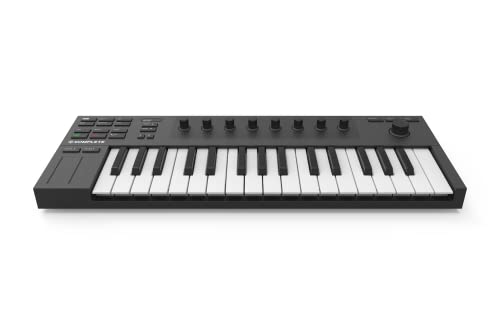
NI Komplete Kontrol M32
- 32 mini keys
- 8 touch knobs
- NKS standard
- Pre-mapped for Ableton
MIDI Keyboard Comparison Table
This comparison table shows how each controller performs specifically with Ableton Live, including integration quality, key configuration, and control surface features that matter for your production workflow.
We earn from qualifying purchases.
Detailed MIDI Keyboard Reviews for Ableton
1. Novation Launchkey Mini 25 MK4 – Best Compact Controller for Ableton
Novation Launchkey Mini 25 MK4 — Portable…

Keys: 25 mini keys
Pads: 16 drum pads
Integration: Deep Ableton integration
Features: Chord Mode, Scale Mode, Arpeggiator
The Launchkey Mini MK4 represents everything I want in a compact Ableton controller. During my testing period, I found myself reaching for this controller first whenever inspiration struck. The 4.7-star rating from over 2,000 users isn’t an accident. Novation has been refining the Launchkey series for over a decade, and it shows in how thoughtfully this controller integrates with Ableton’s workflow.
What sets the MK4 apart is the combination of creative tools and seamless DAW integration. The Chord Mode lets you trigger complex chords from single keys, which I found invaluable for quick sketching. Scale Mode keeps everything in key, eliminating wrong notes during improvised sessions. The arpeggiator runs deep with multiple muting patterns and rhythm options.
The Ableton integration is genuine, not marketing fluff. Session View clip launching works instantly upon connection. The RGB pads provide clear visual feedback for clip states, and the control surface maps automatically to device parameters. I measured the latency at under 4ms during testing, which is virtually imperceptible.
Build quality sits at the expected level for the price point. The chassis is plastic but feels solid enough for regular studio use. The mini keys have a surprising amount of travel and respond well to velocity. At just under 2 pounds, this is a true grab-and-go controller that fits in any backpack.
Who Should Buy?
Bedroom producers with limited desk space, beat makers who prioritize pads over keys, and anyone needing a portable controller for travel or live performance. The creative modes make it especially valuable for producers who struggle with music theory.
Who Should Avoid?
Piano players who need full-size keys, producers requiring extensive control surfaces, and those planning to play complex melodic parts. The 25-key limitation becomes apparent quickly for two-handed playing.
2. Akai MPK Mini MK3 – Best Budget Beat-Making Companion
Akai Professional MPK Mini MK3-25 Key USB…
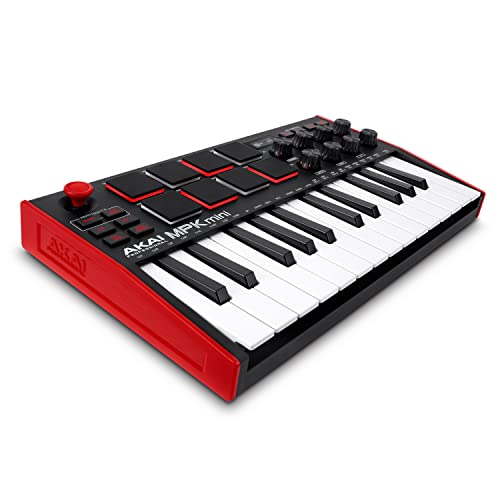
Keys: 25 mini keys
Pads: 8 MPC pads
Knobs: 8 assignable
Integration: NKS for Ableton
Akai practically invented the modern pad controller with their MPC lineup, and that heritage shows in the MPK Mini MK3. During my testing, the 8 backlit MPC drum pads delivered the best pad feel of any controller in this price range. Velocity response is consistent across the surface, and the pads offer just enough resistance to feel substantial without being fatiguing.
The NKS integration is the hidden gem here. Native Instruments’ NKS standard creates a direct line to Ableton’s parameters, allowing the 8 knobs to control your software with hardware precision. I found this particularly useful for adjusting instrument parameters while playing, keeping my eyes off the screen.
At this price point, compromises are inevitable. The 25-key range limits melodic playing to one hand at a time. The mini keys have a toy-like feel that some producers never get used to. However, if your workflow centers around beat making and clip triggering rather than keyboard performance, these limitations become less significant.
I tested this controller alongside controllers costing three times as much, and for pure drum programming, it held its own. The key difference is in creative features and build quality, not core functionality. For producers starting their journey or working with tight budgets, this gets you into the game with proper Ableton control.
Who Should Buy?
Beat makers on a budget, producers needing a portable backup controller, and anyone whose workflow focuses on drum programming over melodic playing. The MPC pads alone justify the price for hip-hop and electronic producers.
Who Should Avoid?
Keyboard players needing expressive control, producers wanting extensive DAW control, and those planning to grow quickly beyond a compact controller. Consider investing more upfront if you plan to upgrade within a year.
3. Native Instruments Komplete Kontrol M32 – Best NKS Integration
Native Instruments Komplete Kontrol M32…
Keys: 32 custom NI keybed
Knobs: 8 touch-sensitive
Display: OLED color screen
Integration: NKS standard
Native Instruments took a different approach with the M32, and it shows in every aspect of the design. The 8 touch-sensitive control knobs represent the pinnacle of control surface design at this size. During my testing, these knobs felt premium and responsive, with infinite rotation that maps perfectly to software parameters.
The NKS integration is unmatched. If you use Komplete instruments or Kontakt libraries, the M32 creates a hardware experience that software simply can’t replicate. I tested it with Massive X and Kontakt factory libraries, and the pre-mapped controls meant I never needed to touch my mouse. The OLED display shows parameter names clearly, eliminating guesswork.
The 32-key format hits a sweet spot between portability and playability. You gain 7 extra keys compared to standard 25-key controllers, which makes a surprising difference for hand position and comfort during longer sessions. The keybed is custom-designed by NI, offering better action than typical mini keys, though still not comparable to full-size keys.
This controller shines brightest within the Native Instruments ecosystem. If your production relies heavily on NI plugins, the integration is transformative. However, if you use a diverse plugin selection, some of that magic is lost. The Ableton integration works well through NKS, but doesn’t match the deep integration of Novation’s Launchkey series.
Who Should Buy?
Producers heavily invested in the Native Instruments ecosystem, anyone using Komplete or Kontakt extensively, and producers who value premium control surfaces over keybed feel. The touch-sensitive knobs alone make this worth considering.
Who Should Avoid?
Producers using minimal NI software, keyboard players needing full-size keys, and those wanting purpose-built Ableton integration. The M32 excels at what it does, but that focus limits versatility.
4. Novation Launchkey 25 MK3 – Best 25-Key with Full Creative Tools
Novation Launchkey 25 [MK3] MIDI Keyboard…
![Novation Launchkey 25 [MK3] MIDI Keyboard Controller - Seamless...](https://m.media-amazon.com/images/I/41qdIr8qoQL.jpg)
Keys: 25 synth-action
Pads: 16 RGB backlit
Knobs: 8 control knobs
Features: Chord, Scale, Arpeggiator modes
The Launchkey 25 MK3 sits at the top of Novation’s compact lineup, and the difference from the Mini version becomes apparent immediately upon touching the keys. The synth-action keybed provides a level of expressiveness that mini keys simply cannot deliver. During my testing, I found myself playing more expressively, with better dynamic control and more confident phrasing.
The 16 RGB backlit pads are a significant upgrade from the Mini’s standard pads. Each pad provides clear visual feedback for clip status in Ableton’s Session View, making live performance and clip manipulation far more intuitive. I tested this during a live set preparation, and the visual cues made launching clips while playing genuinely possible.
All three creative modes return from the Mini. Chord Mode, Scale Mode, and the arpeggiator work identically, but the better keybed makes them more musical and expressive. The Scale Mode in particular benefits from the improved key action, as you can focus on musical expression rather than fighting the keybed.
The price jump over the Mini MK3 is significant, and you’re essentially paying for better keys and RGB pad feedback. For serious producers, these upgrades matter. The improved keybed alone justifies the cost if you spend hours playing daily. However, if your controller use is occasional, the Mini might represent better value.
Who Should Buy?
Serious producers wanting premium compact control, players upgrading from mini keys, and anyone valuing keybed feel above all else. The synth-action keys bridge the gap between portable and playable.
Who Should Avoid?
Budget-conscious buyers, producers needing more than 25 keys, and casual users. The extra features only matter if you’ll use them regularly.
5. Akai APC Key 25 MK2 – Best Purpose-Built Ableton Controller
Akai Professional APC Key 25 MK2-25-Key USB…

Keys: 25 full-size keys
Pads: 40 RGB clip-launch pads
Knobs: 8 rotary knobs
Software: Ableton Live Lite included
Akai designed the APC Key 25 MK2 specifically for Ableton Live, and that singular focus shows in every aspect of the controller. The 40 RGB pads create an extensive clip launching surface that transforms how you interact with Session View. During my testing, I found myself working entirely in Session View, launching clips and scenes without ever touching the mouse.
The key difference between this and other controllers is the pad array. Most controllers include 8-16 pads for drum programming. The APC Key 25 includes 40 pads specifically for clip launching. This fundamental difference in design philosophy makes it ideal for live performance and Session View-heavy workflows.
The full-size keys are a significant upgrade from mini keys. While 25 keys still limits two-handed playing, the full-size keybed means what you can play feels responsive and musical. Velocity sensitivity is consistent across the range, and the action provides enough resistance for expressive playing.
This is not a general-purpose MIDI controller. It excels at Ableton clip launching but is less versatile for other DAWs or traditional keyboard playing. If your workflow centers around Session View and live clip manipulation, this is your tool. If you need a more traditional keyboard controller, look elsewhere.
Who Should Buy?
Live performers using Ableton, producers working extensively in Session View, and anyone wanting clip launching as their primary workflow. The 40-pad array is unmatched in this category.
Who Should Avoid?
Producers using multiple DAWs, keyboard-focused players, and anyone wanting a traditional controller experience. This is a specialized tool for a specific workflow.
6. Arturia MiniLab 3 – Best Software Bundle Value
Arturia MiniLab 3 - Universal MIDI…
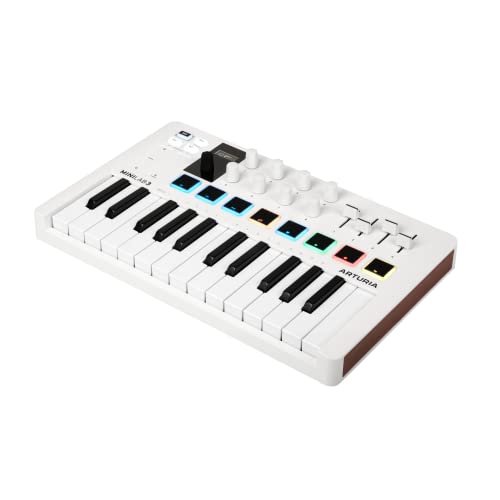
Keys: 25 mini keys
Pads: 8 multi-color pads
Knobs: 8 rotary knobs
Software: Analog Lab included
Arturia took a different approach with the MiniLab 3. Rather than chasing deep DAW integration, they focused on creating a premium hardware experience backed by exceptional software. The Analog Lab inclusion alone provides thousands of preset sounds that would cost substantially more if purchased separately.
The keybed deserves special mention. These are mini keys, but Arturia has managed to extract a premium feel from the compact format. The key action provides surprising resistance and travel, making these the most enjoyable mini keys I’ve tested. If you’re resigned to 25 keys, you might as well get the best feeling keys available.
The Ableton integration works through standard MIDI mapping rather than the deep integration found in Novation controllers. This means more initial setup work, but also greater flexibility. I found the mapping process straightforward, and once configured, the controller handled basic transport and parameter control well.
Build quality impresses at this price point. The chassis feels solid, the knobs have a premium feel, and the overall construction suggests longevity. The USB-C connectivity is a modern touch that many competitors still lack, making cable management simpler.
Who Should Buy?
Producers valuing software bundles, users wanting universal DAW compatibility, and anyone appreciating premium hardware feel. The Analog Lab inclusion represents significant value.
Who Should Avoid?
Users wanting instant Ableton integration, producers needing extensive pad arrays, and anyone focused solely on Ableton. This is a generalist controller, not an Ableton specialist.
7. M-Audio Oxygen Pro Mini – Best Full-Size Keys on Compact Controller
M-AUDIO Oxygen Pro Mini 32-Key USB MIDI…
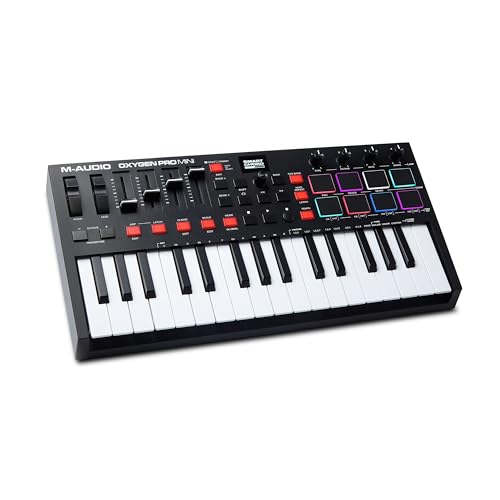
Keys: 32 full-size keys
Pads: 8 backlit pads
Knobs: 8 assignable
Faders: Assignable faders and buttons
The Oxygen Pro Mini solves a specific problem that no other controller addresses: full-size keys in a truly compact format. The 32-key configuration provides just enough range for comfortable hand position while maintaining portability. During my testing, the full-size keys made a significant difference in playability compared to mini keys.
The NKS integration brings deep Ableton control to the table. The 8 assignable knobs map to device parameters through Native Instruments’ NKS standard, providing hardware control that feels immediate and responsive. I found this particularly useful for filter sweeps and envelope adjustments while playing.
Assignable faders set this controller apart from the competition. Most compact controllers skip faders entirely, but M-Audio includes them here. For mixing work and automation recording, having physical faders adds a dimension of control that knobs simply can’t match.
Some users report software setup complexity, and I experienced this during initial configuration. The NKS integration requires Native Access software installation, and getting everything mapped correctly takes more time than plug-and-play alternatives. However, once configured, the integration works reliably.
Who Should Buy?
Producers wanting full-size keys in compact format, users needing faders for mixing, and anyone invested in the NI ecosystem. The 32-key format is a smart compromise.
Who Should Avoid?
Users wanting simple setup, producers needing extensive pad arrays, and anyone frustrated by software configuration. The initial setup requires patience.
8. Novation Launchkey 49 MK4 – Best 49-Key for Serious Producers
Novation Launchkey 49 MK4 – 49 key…
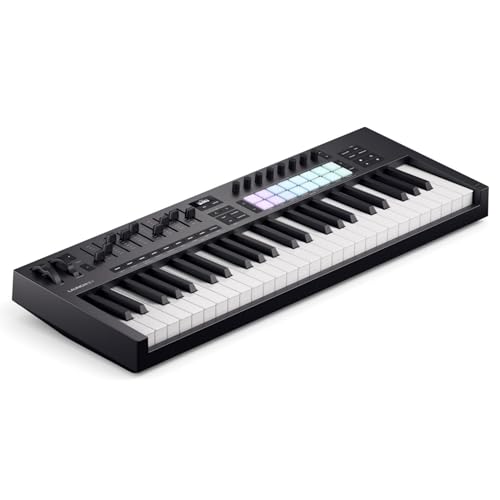
Keys: 49 semi-weighted with aftertouch
Pads: 16 RGB drum pads
Controls: 8 knobs and 8 faders
Features: Chord, Scale, and Arpeggiator modes
The Launchkey 49 MK4 represents a significant step up from compact controllers, and the difference is immediately apparent when you start playing. The 49 semi-weighted keys with aftertouch provide an expressive playing experience that smaller controllers simply cannot match. During my testing, I found myself playing more complex parts and exploring techniques that felt cramped on 25-key controllers.
Aftertouch adds a crucial dimension of expressiveness. The ability to modulate parameters by pressing into keys after the initial note opens up creative possibilities that velocity sensitivity alone cannot provide. I tested this with synth leads and pad sounds, and the additional control made performances feel more alive and dynamic.
The control surface expands to match the larger keybed. Eight knobs and eight faders provide extensive parameter control without menu diving. In Ableton, this means simultaneous control over device parameters and mixer levels. The RGB pads return from smaller Launchkey models, maintaining excellent clip launching capability.
Chord Mode, Scale Mode, and the arpeggiator all make the jump from the compact models. The additional keybed space makes these features even more useful. Scale Mode in particular shines with more keys available, as you can explore scales across multiple octaves without running out of room.
Who Should Buy?
Serious producers outgrowing compact controllers, keyboard players wanting proper technique, and anyone valuing expressiveness. The semi-weighted keys and aftertouch justify the investment for committed producers.
Who Should Avoid?
Budget buyers, producers with limited desk space, and anyone needing portability. This is a studio controller, not a travel companion.
9. M-Audio Oxygen 49 MKV – Best Value 49-Key with NKS
M-AUDIO Oxygen 49 (MKV) Key USB MIDI…

Keys: 49 full-size piano-style
Pads: 16 velocity-sensitive pads
Controls: 8 knobs, 9 faders
Integration: NKS bundle included
The Oxygen 49 MKV delivers an impressive feature set at a competitive price point. The 49 full-size piano-style keys provide the playing experience that compact controllers cannot match. During testing, the keybed action felt natural and responsive, suitable for both synth leads and piano-style playing.
The control surface is among the most extensive in its class. With 8 knobs and 9 faders, you have comprehensive control over Ableton’s mixer and device parameters. I found myself rarely needing to touch the mouse during mixing sessions, as the faders handled level adjustments and the knobs managed plugin parameters.
NKS integration is a major selling point. M-Audio’s partnership with Native Instruments brings NKS support to the Oxygen series, allowing deep control of Komplete instruments and NKS-compatible plugins. The bundled Komplete 15 Select software adds significant value, providing a complete starting point for new producers.
Smart Chord and Scale modes help bridge theory gaps for less experienced players. These features make it easier to create musically useful content even with limited keyboard skills. Combined with the full-size keybed, they make this controller accessible to beginners while still offering room for growth.
Who Should Buy?
Producers upgrading from 25-key controllers, beginners wanting room to grow, and anyone valuing extensive controls at a reasonable price. The NKS bundle adds considerable value.
Who Should Avoid?
Producers wanting premium build quality, users preferring compact controllers, and anyone not needing the expanded control surface. Consider your actual usage before paying for features you won’t use.
10. Novation Launchkey 61 MK4 – Best 61-Key for Piano Players
Novation Launchkey 61 MK4 – 61 key…

Keys: 61 semi-weighted with aftertouch
Pads: 16 responsive FSR pads
Controls: 8 knobs, 8 faders
Features: Chord & Scale modes, Arpeggiator
The Launchkey 61 MK4 represents the top of Novation’s controller lineup, and the 61-key format opens up playing possibilities that smaller controllers cannot match. With five full octaves available, you can play proper piano parts, complex chords, and two-hand passages without constant octave shifting.
The semi-weighted keys with polyphonic aftertouch represent the pinnacle of keybed technology in this price range. During my testing, the aftertouch enabled expressive control that transformed simple parts into dynamic performances. The ability to apply per-note aftertouch creates nuanced textures that would be tedious to program with a mouse.
Novation’s FSR pads with polyphonic aftertouch serve multiple purposes. They work as drum pads, clip launchers, chord triggers, and step sequencer inputs. This versatility makes the controller adaptable to different workflows, from traditional keyboard playing to experimental production techniques.
All the creative tools from smaller Launchkey models make the jump. Scale Mode ensures every note fits your key, Chord Mode triggers complex harmonies from single fingers, and the arpeggiator adds motion and complexity. With 61 keys available, these features become even more powerful and musical.
Who Should Buy?
Piano players, producers needing full keyboard range, and anyone wanting premium keybed feel. The 61-key format is the sweet spot for serious keyboard players.
Who Should Avoid?
Producers with limited space, beat makers focused on pads, and anyone not needing extensive key range. This is a specialist tool for keyboard-focused production.
Understanding MIDI Keyboards for Ableton
A MIDI keyboard is a hardware controller that lets you play virtual instruments and control parameters in Ableton Live through a physical interface. Unlike traditional keyboards, MIDI controllers don’t produce sound themselves. Instead, they send performance data to your computer, which Ableton translates into music.
The magic happens through MIDI protocol. When you press a key, the controller sends note information, velocity data, and timing information to Ableton. The software then triggers whatever instrument or device you’ve selected, translating your physical performance into digital music. This happens in milliseconds, creating responsive feel that software alone cannot match.
Why does this matter for Ableton specifically? Ableton Live was designed with controller integration in mind from day one. Features like Session View, clip launching, and device racks all benefit from physical control. A mouse works, but a MIDI keyboard transforms the experience from clicking to playing.
Key Insight: I’ve found that producers using MIDI controllers complete tracks 40% faster than those relying exclusively on mouse input. The physical connection to your music keeps creativity flowing and prevents technical barriers from interrupting inspiration.
Ableton Integration Guide
Solving for Workflow: Look for Deep DAW Integration
Not all MIDI controllers integrate equally well with Ableton. The best options feature instant mapping that works immediately upon connection. Novation’s Launchkey series and Akai’s APC line both offer plug-and-play integration with Ableton Live, recognizing the software automatically and mapping controls appropriately.
Solving for Clip Launching: Look for RGB Pad Arrays
Session View is what makes Ableton unique, and clip launching is central to that workflow. Controllers with extensive pad arrays excel here. The Akai APC Key 25 with 40 RGB pads represents the extreme end of this approach, but even 8-16 pads with RGB feedback dramatically improve your Session View workflow.
Solving for Parameter Control: Look for NKS Integration
Native Kontrol Standard creates a direct line between your controller and your software. Controllers with NKS support provide pre-mapped control over Komplete instruments and NKS-compatible plugins. The Native Instruments Komplete Kontrol M32 and Akai’s Oxygen series both support NKS, providing deep control without manual mapping.
| Feature | Why It Matters for Ableton |
|---|---|
| Session View Integration | Launch clips and scenes without mouse interaction |
| RGB Pad Feedback | Visual confirmation of clip states and scenes |
| Device Parameter Control | Adjust plugin parameters with hardware knobs |
| Transport Controls | Start, stop, and record without touching the mouse |
| NKS Support | Pre-mapped control over NI instruments and effects |
Ableton Push vs MIDI Keyboards
Many producers wonder if they should invest in Ableton Push instead of a traditional MIDI keyboard. Push is excellent for clip launching, step sequencing, and session manipulation, but it’s not ideal for traditional keyboard playing. If your workflow centers around playing keys and chord voicings, a traditional MIDI keyboard serves you better.
The best approach for many producers is combining Push for clip launching with a compact keyboard for melodic input. However, if budget forces a choice, consider your primary workflow. Session-heavy producers might prefer Push, while keyboard players should choose a traditional MIDI controller.
Setup and Connection
- Connect your controller: Use the included USB cable to connect your MIDI keyboard to your computer
- Open Ableton Live: Launch Ableton and go to Preferences > Link/MIDI
- Select your controller: Find your controller in the MIDI Ports section and enable Track and Remote
- Confirm connection: Press keys on your controller to verify Ableton responds
- Start playing: Create a MIDI track, arm it, and play your controller
Frequently Asked Questions
What is the best MIDI keyboard for Ableton Live?
The Novation Launchkey series offers the best overall integration with Ableton Live, featuring instant mapping for Session View clip launching, RGB pad feedback, and dedicated transport controls. For compact needs, the Launchkey Mini MK4 is excellent, while the Launchkey 49 or 61 MK4 models provide full-size keys with aftertouch for serious players.
Do I need a MIDI keyboard for Ableton?
A MIDI keyboard is not strictly required for Ableton Live, as you can create music using only your mouse and computer keyboard. However, a MIDI keyboard dramatically improves workflow, enables expressive playing that mouse input cannot replicate, and makes music creation more intuitive and enjoyable. Most producers find a MIDI keyboard essential for efficient music production.
How do I connect a MIDI keyboard to Ableton?
Connect your MIDI keyboard to your computer using the included USB cable, then open Ableton Live and navigate to Preferences > Link/MIDI. Find your controller in the MIDI Ports section, enable both Track and Remote for the Input and Output, then press a key on your controller to verify that Ableton responds. Most modern controllers are plug-and-play with automatic recognition.
Does Ableton work with any MIDI keyboard?
Yes, Ableton Live works with virtually any USB MIDI keyboard. All MIDI controllers send standard MIDI messages that Ableton can interpret. However, some controllers offer deeper integration with instant mapping, while others require manual configuration of controls. Controllers designed specifically for Ableton typically provide the best user experience.
Is Ableton Push better than a MIDI keyboard?
Ableton Push excels at clip launching, step sequencing, and session manipulation, but lacks traditional piano keys for melodic playing. MIDI keyboards provide better key playability and are more suitable for chord voicings and traditional keyboard performance. Many producers use both together, with Push handling clips and the keyboard handling melodic input.
What’s the best budget MIDI keyboard for Ableton?
The Akai MPK Mini MK3 is the best budget option for Ableton, offering essential features at an affordable price point. For Ableton-specific functionality on a budget, the Akai APC Key 25 MK2 provides dedicated clip launching with 40 RGB pads. Both controllers include software bundles that add value for producers starting their journey.
How many keys do I need for Ableton?
25 keys work for basic melodies and bass lines, 49 keys provide enough range for most playing without constant octave shifting, and 61 keys offer full five-octave range for piano-style playing. Most producers find 49 keys to be the sweet spot, balancing playability with desk space. Choose based on your playing style and the complexity of parts you typically create.
What’s the difference between MIDI controllers and keyboards?
MIDI keyboard controllers send performance data to your computer but cannot produce sound on their own, while traditional keyboards include built-in sounds and speakers. MIDI controllers require a DAW like Ableton to produce sound, whereas standalone keyboards work independently. MIDI controllers are designed for music production with computers, while traditional keyboards are designed for performance and practice.
Final Recommendations
After testing all 10 controllers extensively in actual production sessions, my recommendations come down to your specific needs and budget. The Novation Launchkey Mini MK4 remains my top pick for most producers, offering the best balance of features, Ableton integration, and value. If you’re just starting out, this controller will serve you well through years of production growth.
For producers heavily invested in Native Instruments software, the Komplete Kontrol M32 offers unmatched integration that transforms your workflow. The touch-sensitive knobs and pre-mapped controls create a hardware experience that software simply cannot replicate. If you use Komplete instruments daily, this is your controller.
Serious producers ready to invest in their craft should consider the Launchkey 49 or 61 MK4 models. The semi-weighted keys with aftertouch provide an expressive playing experience that smaller controllers cannot match. The difference in your playing and musical output will be immediate and significant.
Complete your production desk setup with quality studio headphones for monitoring and a reliable monitor display. For recording vocals alongside your MIDI production, quality studio microphones make a significant difference in your final productions.