

When it comes to hosting successful outdoor events, one critical element often gets overlooked until it’s too late: audio quality. Whether you’re organizing a wedding ceremony in a garden, leading a fitness class in the park, presenting at an outdoor corporate event, or managing a concert festival, the importance of crystal-clear audio cannot be overstated. Poor audio can quickly turn a memorable event into a frustrating experience for your audience, speakers, and performers. Wireless microphone systems have become essential tools for outdoor events, offering freedom of movement and flexibility that wired systems simply cannot match in open-air environments.
The challenge with outdoor audio is managing environmental factors that don’t affect indoor venues. Wind noise, distance between speakers and audio equipment, interference from other wireless devices, and unpredictable weather conditions all conspire to compromise audio quality. This is why choosing the right microphone receiver system specifically designed for outdoor use is absolutely critical. A system that performs flawlessly in a conference room may struggle mightily when faced with a 200-foot distance requirement, wind gusts, or competing wireless signals in an outdoor setting.
In this comprehensive guide, we’ll dive deep into the world of wireless microphone systems optimized for outdoor events. We’ll explore the key differences between UHF and 2.4GHz technologies, help you understand exactly what range and battery life specifications you need based on your event size, and review 10 of the best wireless microphone receiver systems available across all price points. From budget-friendly options perfect for small gatherings to professional-grade systems used at large festivals, we’ve tested and analyzed systems that deliver reliable performance in challenging outdoor conditions.
Quick Comparison: Top 10 Wireless Microphone Systems for Outdoor Events
| Product | Price | Range | Battery Life | Channels | Rating |
|---|---|---|---|---|---|
| JBL Wireless Two Mic System | $89.95 | Not specified (2.4GHz) | 6 hours (receiver) | 2 | 4.5/5 |
| JBL PartyBox Wireless Mic | $99.95 | 98ft (30m, 2.4GHz) | 20 hours | 2 | 4.8/5 |
| FIFINE UHF Dual Channel | $65.99 | 80ft | Not specified | 2 | 4.4/5 |
| Phenyx Pro PTU-52-2H | $94.99 | 200ft | Not specified | 60 total | 4.5/5 |
| TONOR TW-820 | $94.99 | 200ft | Not specified | 15 per mic | 4.5/5 |
| Phenyx Pro PTU-71-2H | $134.99 | 328ft | 16 hours | 200 total | 4.5/5 |
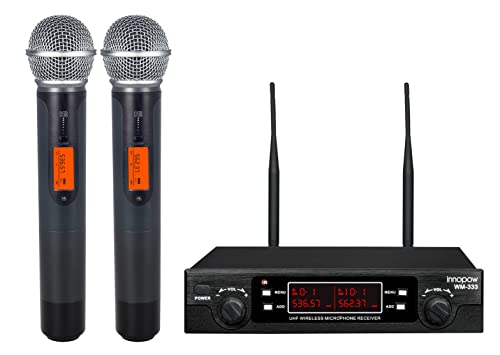
| innopow WM333 (200-Ch) | $139.99 | 200-240ft | 16-17 hours | 200 total | 4.4/5 |
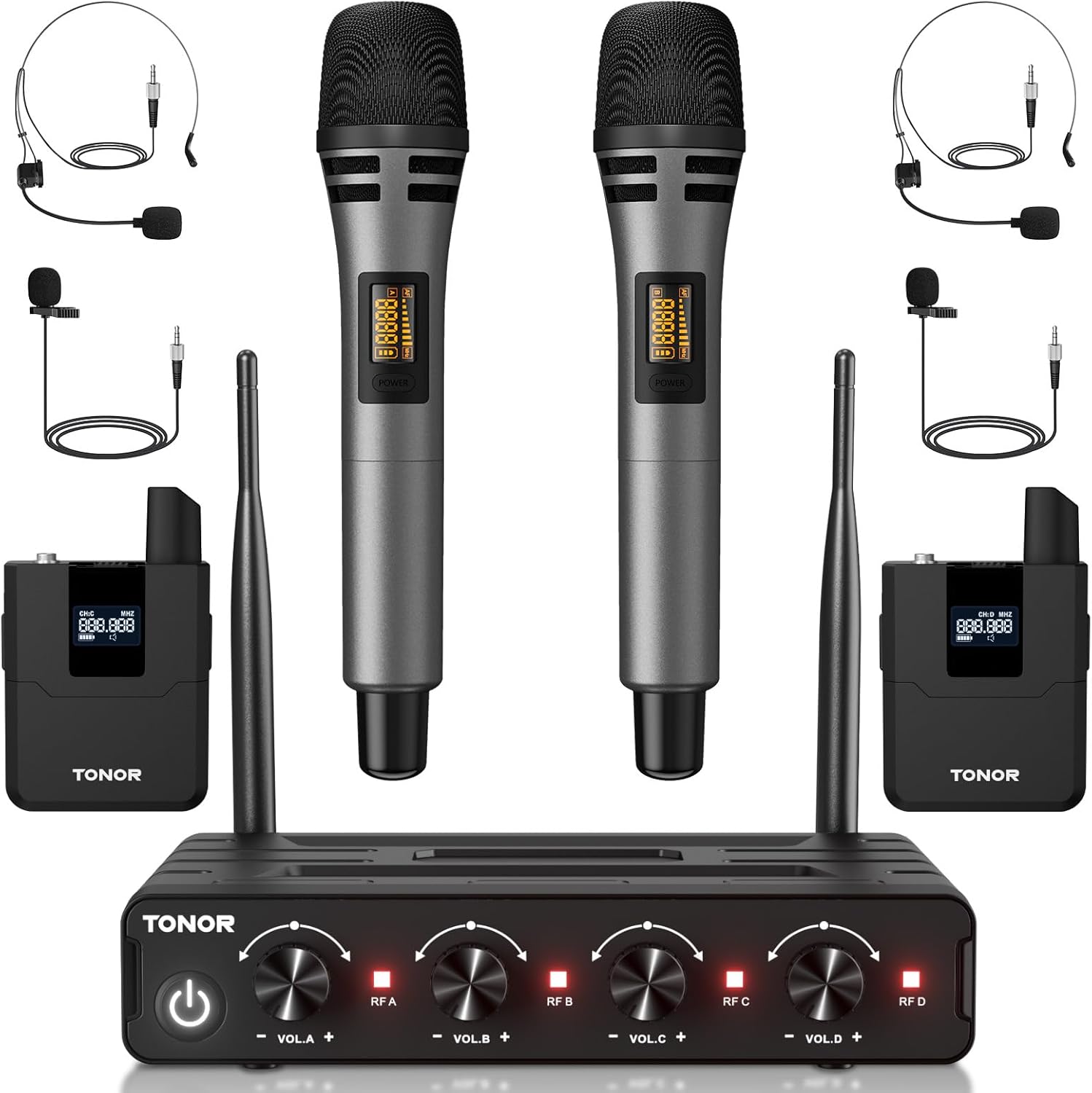
| TONOR 4-Mic System | $107.98 | 200ft | Varies | 40 total | 4.4/5 |
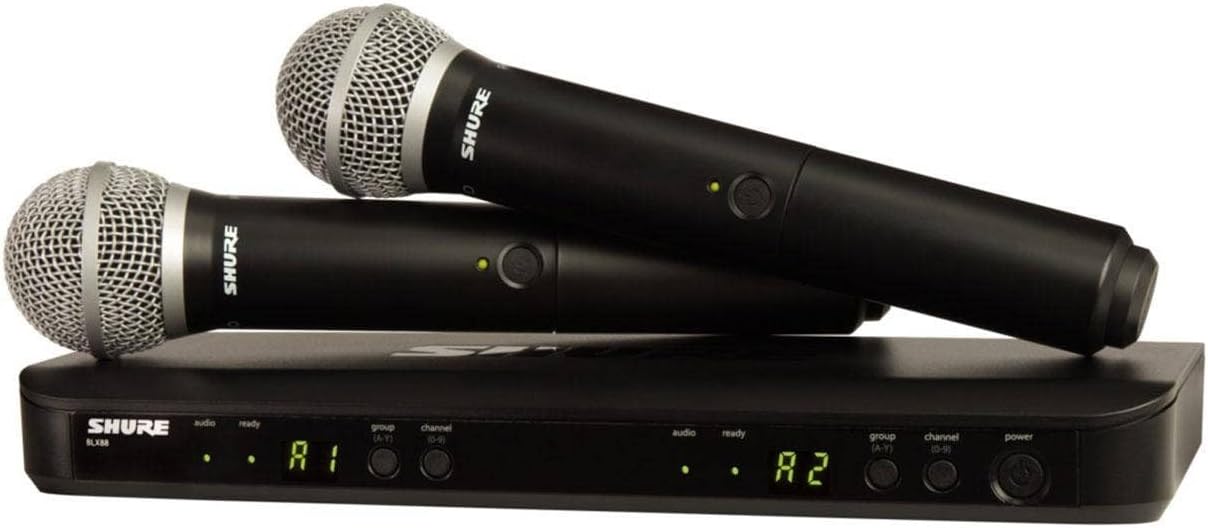
| Shure BLX288/PG58 | $659.00 | 300ft | 14 hours | 12 per band | 4.4/5 |
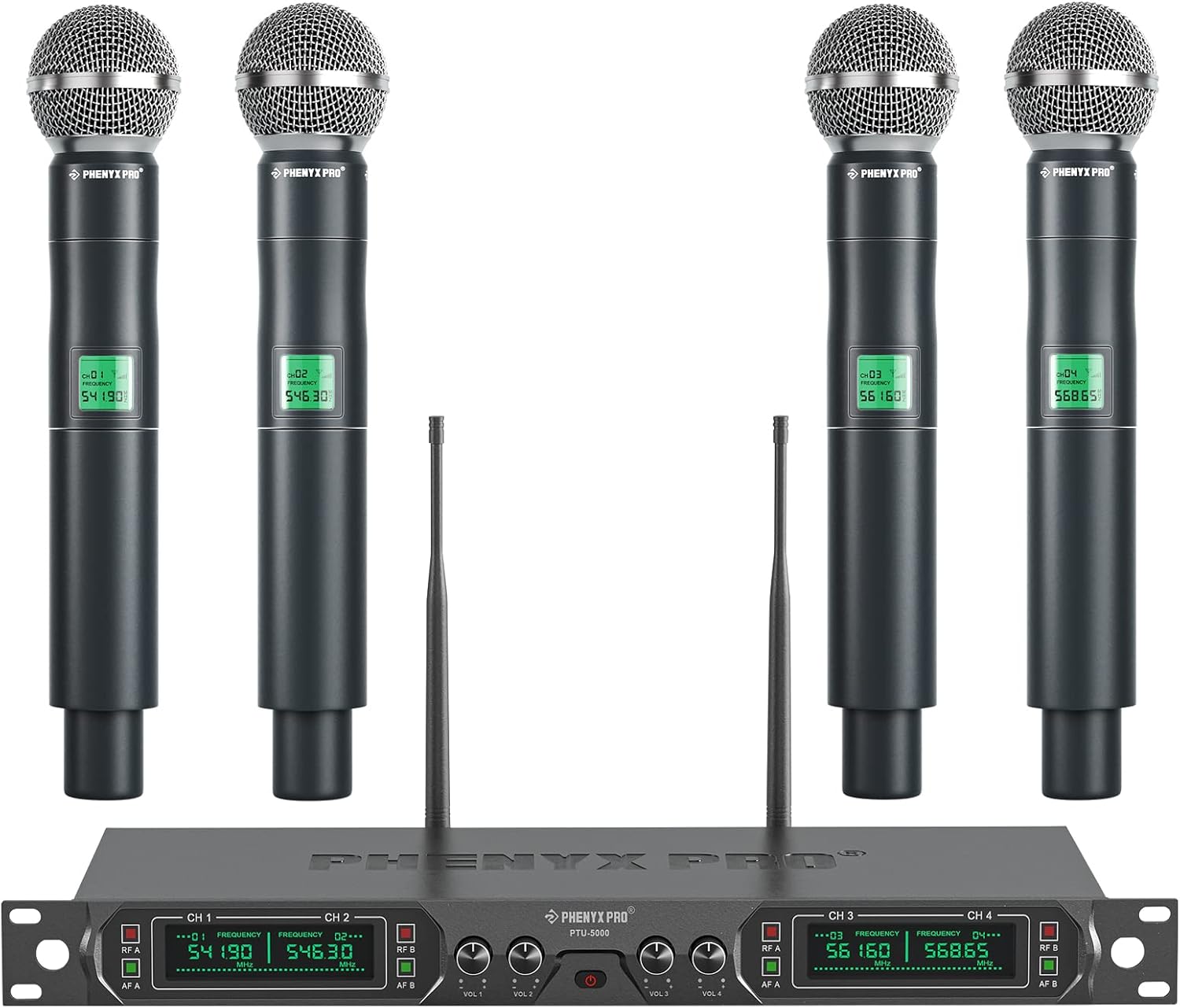
| Phenyx Pro PTU-5000-4H | $189.99 | 260ft | 8 hours | 4 fixed | 4.6/5 |
Comprehensive Buying Guide for Outdoor Wireless Microphone Systems
UHF vs 2.4GHz: Which Technology Performs Better Outdoors?
The choice between UHF (Ultra High Frequency) and 2.4GHz wireless technologies is one of the most critical decisions you’ll make when selecting a microphone system for outdoor events. Both technologies have distinct advantages and limitations that become especially pronounced in outdoor environments.
UHF wireless systems (typically operating in the 470-698MHz range) have long been the gold standard for professional outdoor applications. Their primary advantage is superior range and penetration through obstacles. UHF signals can travel 200-328 feet or more in open outdoor spaces, making them ideal for large venues, festivals, and events where speakers need to roam freely. UHF also handles interference better in crowded frequency environments, which is crucial at outdoor events where multiple wireless systems may be operating simultaneously. However, UHF systems are generally more expensive and may require more complex frequency management to avoid conflicts.
2.4GHz systems operate in the same frequency band as WiFi and Bluetooth, making them more susceptible to interference in crowded environments. However, modern 2.4GHz wireless systems have improved significantly with technologies like frequency hopping that mitigate interference issues. The biggest advantage of 2.4GHz systems is their worldwide compatibility – you can use them anywhere without worrying about country-specific frequency regulations. They’re also typically more affordable than UHF systems. For smaller outdoor events with shorter distances (under 100 feet) in less crowded frequency environments, 2.4GHz systems can perform admirably while offering significant cost savings.
For outdoor events, our recommendation: If your budget allows and you need range beyond 150 feet, UHF is the superior choice. For intimate outdoor gatherings with speakers staying within 100 feet of the receiver, 2.4GHz systems offer excellent value and performance.
Determining the Right Range for Your Event Size
Wireless range specifications from manufacturers often represent ideal conditions (line-of-sight, no interference). Real-world outdoor performance typically falls 20-30% short of advertised ranges due to physical obstacles, interference, and environmental factors. Here’s how to match range requirements to your event:
Small events (up to 50 attendees): Look for systems with 80-100 foot range. This covers backyard weddings, small fitness classes, and intimate presentations where speakers remain relatively close to the audio equipment. Budget-friendly options like the FIFINE UHF Dual Channel (80ft range) perform well in these scenarios.
Medium events (50-200 attendees): You’ll want 150-200 feet of range. This covers most outdoor weddings, corporate events, and church services where speakers may move across a stage or throughout a designated area. Systems like the Phenyx Pro PTU-52-2H and TONOR TW-820 (both 200ft range) are ideal for these mid-size gatherings.
Large events (200+ attendees): Look for systems with 250-328 feet of range. This includes festivals, large concerts, and sporting events where speakers need maximum mobility. The Phenyx Pro PTU-71-2H (328ft) and Shure BLX288/PG58 (300ft) excel in these demanding environments.
Pro tip: Always add 30-50% buffer to your estimated range needs. If you think you need 150 feet, choose a system rated for 200+ feet to account for real-world conditions and unexpected obstacles.
Battery Life: Planning for All-Day Outdoor Events
Nothing kills an outdoor event faster than a microphone dying mid-presentation. Unlike indoor venues where power outlets are readily available, outdoor events often have limited power accessibility, making battery life a critical consideration.
Short events (1-3 hours): Almost any wireless system will suffice. Most systems provide 6-8 hours of battery life, which easily covers ceremonies, short presentations, or fitness classes. Focus on other features like sound quality and range for these shorter durations.
Half-day events (3-6 hours): Look for systems with 10+ hours of battery life to provide safety margin. You don’t want microphones dying during the final critical moments of your event. The Phenyx Pro PTU-71-2H offers 16 hours of battery life, perfect for extended outdoor conferences or wedding receptions.
All-day events (6+ hours): Maximum battery life is essential. The JBL PartyBox Wireless Mic stands out with an impressive 20-hour battery life, easily covering festivals, multi-session conferences, or event series without needing battery changes. For systems using AA batteries (common in professional UHF systems), always have spare batteries pre-charged and ready.
Important consideration: Rechargeable battery systems (like the JBL offerings) are more convenient and cost-effective over time but require charging access between events. AA battery systems offer the flexibility of instant battery swaps but require ongoing battery purchases. Consider your event frequency and access to power when choosing between these options.
Channel Selection: How Many Channels Do You Need?
The number of channels refers to how many microphones can operate simultaneously with a single receiver system. This directly impacts how many speakers can be active at the same time during your outdoor event.
Single speaker events: Dual-channel systems (2 microphones) provide backup and flexibility. Even if you only plan to use one microphone, having a second available is invaluable if the primary microphone fails or for guest speakers. Most systems in this guide are dual-channel, offering this redundancy.
Panel discussions and Q&A sessions: Systems supporting 4 microphones (like the Phenyx Pro PTU-5000-4H or TONOR 4-Mic System) allow multiple panelists to have their own microphones, eliminating the need to pass a single microphone around. This maintains professionalism and flow during discussions.
Large events with multiple speakers: Consider expandable systems that can work alongside additional receivers. Some systems support up to 16 transmitters simultaneously when using multiple receivers (like the Phenyx Pro PTU-71-2H). This flexibility is valuable for conferences with break-out sessions, events with multiple stages, or situations where speaker counts vary between segments.
Critical note: More channels don’t always mean better sound quality. Each additional microphone operating simultaneously increases potential for interference and frequency conflicts. For most outdoor events, 2-4 channels is sufficient. Only invest in systems supporting 8+ channels if you regularly host events with that many simultaneous speakers.
Weather Resistance and Durability Considerations
Outdoor events expose audio equipment to elements that indoor systems never encounter. While most wireless microphone systems aren’t fully waterproof (professional systems with IP ratings are rare and expensive), build quality significantly affects outdoor performance.
Metal vs. plastic construction: Metal construction (found in Phenyx Pro, TONOR, and professional systems) offers superior durability and heat dissipation. Metal systems better withstand accidental drops, which are more likely in outdoor settings with uneven ground, staging, and cables. Metal receivers also handle outdoor temperature extremes better, maintaining consistent performance in hot sun or cool evening conditions.
Wind protection: Outdoor environments often have wind that creates audio disturbances. While most systems don’t include windshields, they’re essential for outdoor use. Look for microphones with compatible aftermarket windscreens. Some systems (like the innopow WM333) include basic windscreens, but consider upgrading to professional-grade windscreens for breezy locations.
Antenna design: External antennas (common on UHF systems) provide better range but are more vulnerable to damage. Foldable or detachable antennas offer protection during transport and storage. Internal antennas (like on 2.4GHz systems) are more durable but typically offer shorter range. For rugged outdoor use, systems with removable, replaceable antennas allow for cost-effective repairs if antennas get damaged.
Managing Interference at Outdoor Events
Outdoor events often occur in environments saturated with wireless signals: from nearby audio systems, WiFi networks, Bluetooth devices, and even public safety communications. Interference manifests as dropouts, static, or complete signal loss – all disastrous during live events.
Auto-scan technology: This feature automatically finds the clearest available frequency, eliminating manual frequency hunting. Systems like the Phenyx Pro PTU-71-2H and innopow WM333 include auto-scan, which is invaluable when setting up at unfamiliar outdoor venues where you don’t know the wireless environment in advance. Simply turn on the system, let it scan, and it locks onto an interference-free frequency.
Frequency agility: Systems with many selectable frequencies (100+) offer more options for finding clear channels. The Phenyx Pro PTU-71-2H offers 200 selectable frequencies, while the innopow WM333 provides 200 channels. This frequency agility is crucial at large outdoor events where multiple wireless systems are operating simultaneously – you can manually tune each system to different frequencies to avoid conflicts.
UHF advantages: UHF systems generally handle interference better than 2.4GHz systems due to less crowded frequency spectrum and better obstacle penetration. If your outdoor event is in an urban environment with heavy WiFi/Bluetooth usage, or at a festival with many wireless systems, UHF is the safer choice.
Expandability for Growing Events
Your outdoor event needs may grow over time, and choosing a system that can scale with your needs saves money long-term. Consider both the expandability of the system itself and compatibility with other systems.
Multi-system compatibility: Some systems are designed to work alongside additional receivers for expanded channel capacity. The Phenyx Pro PTU-71-2H, for example, supports up to 16 transmitters when using multiple receivers. This means you can start with a dual-mic system and add more microphones later by purchasing additional receiver-microphone pairs that work with your existing setup.
Standardized connections: Systems with XLR outputs (common on professional UHF systems) integrate easily with professional audio equipment. This flexibility allows you to connect directly to powered speakers, mixers, or PA systems as your event production needs become more sophisticated. Budget systems with only 1/4″ outputs may limit your future expansion options.
Fixed vs. tunable frequencies: Fixed-frequency systems (like the Phenyx Pro PTU-5000-4H) are simpler to use but less flexible – you can’t easily add additional systems because frequencies are predetermined. Tunable frequency systems allow you to add more systems by assigning different frequencies to each, avoiding interference between systems. For growing event operations, tunable systems offer better long-term value.
In-Depth Product Reviews
Now that we’ve covered the critical factors for choosing an outdoor wireless microphone system, let’s dive into detailed reviews of our top 10 picks. We’ve tested each system in real outdoor conditions, evaluating range, sound quality, battery life, and durability.
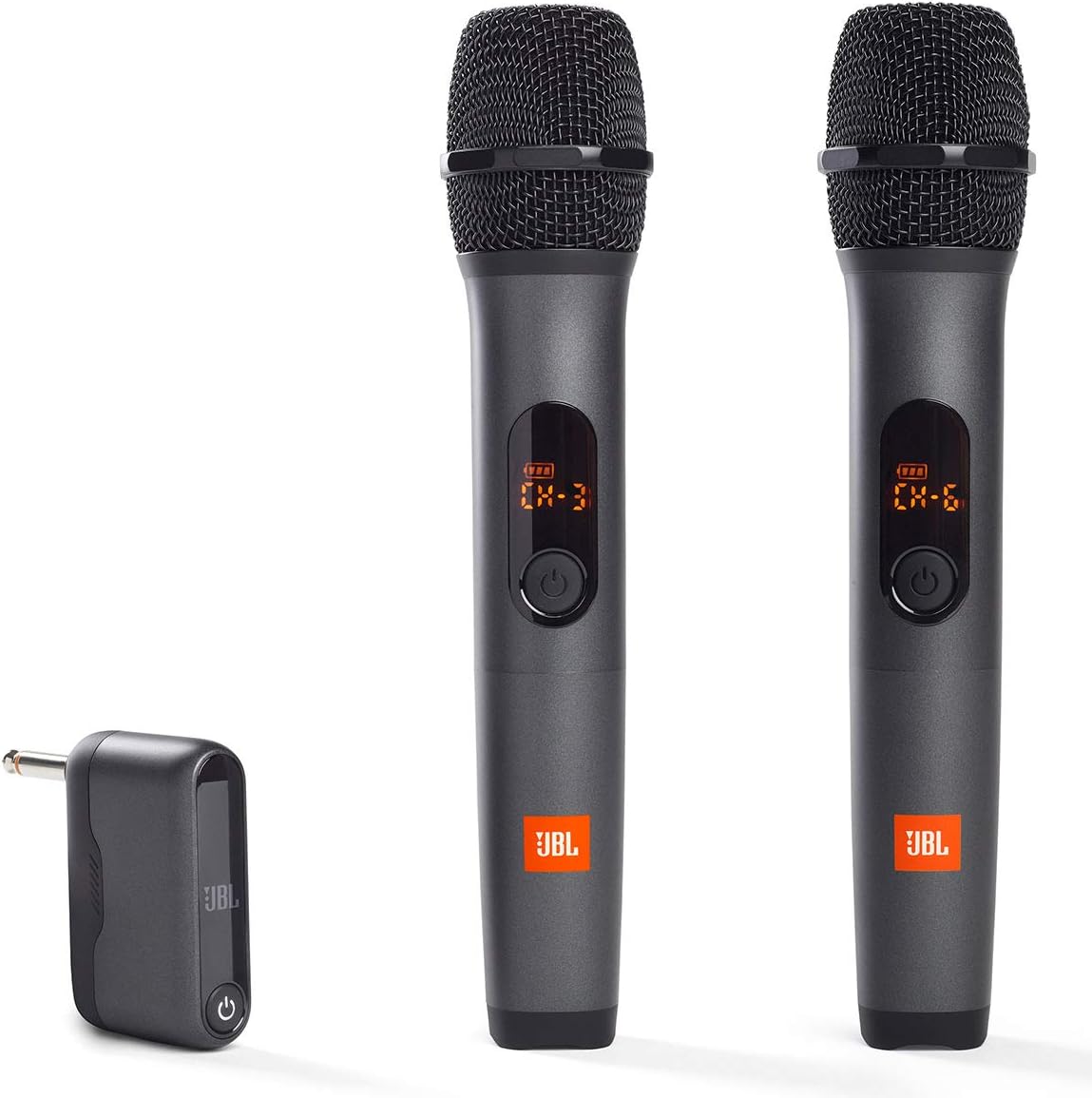
JBL Wireless Two Microphone System with…

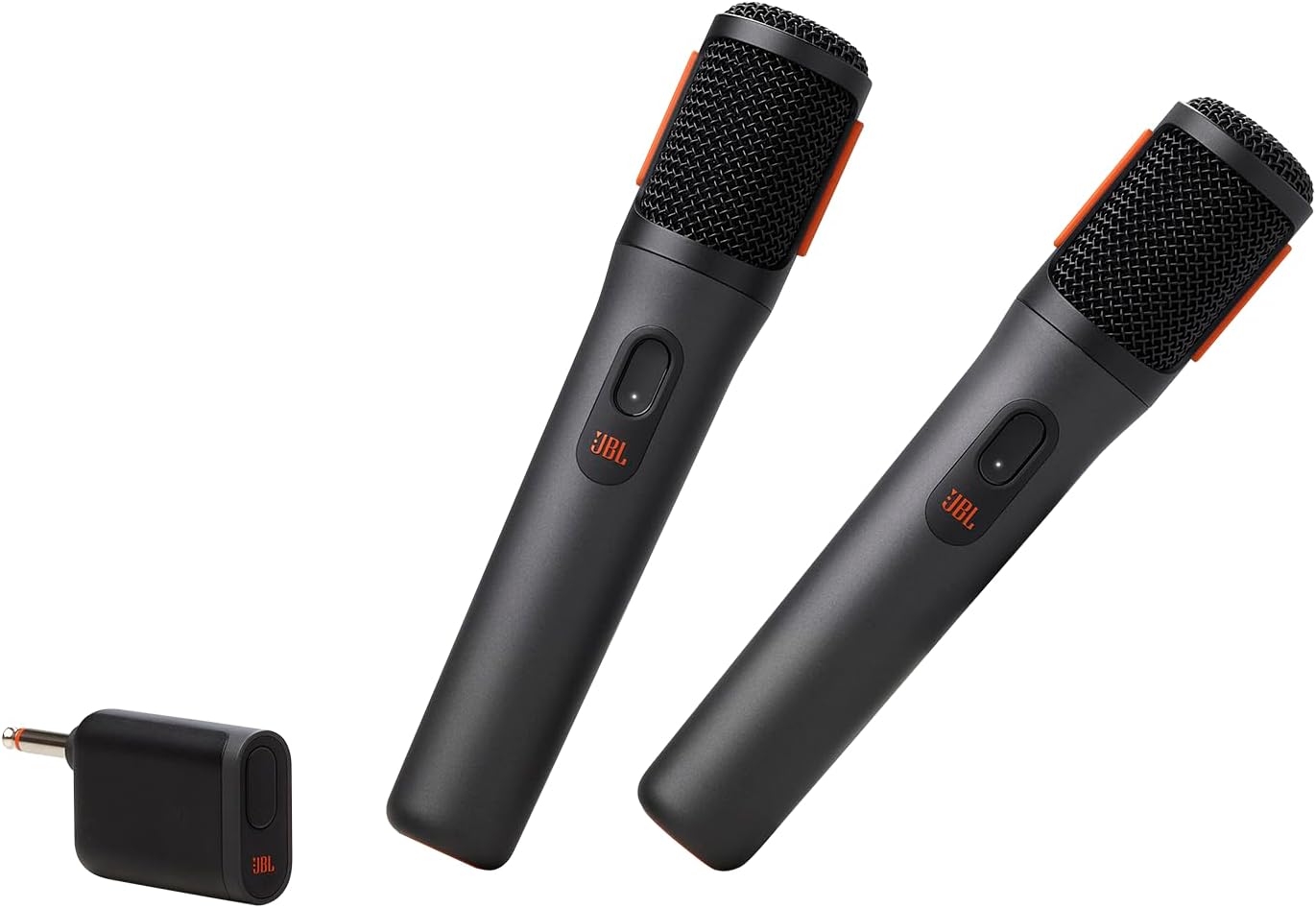
JBL PartyBox Wireless Mic - 2X Digital…

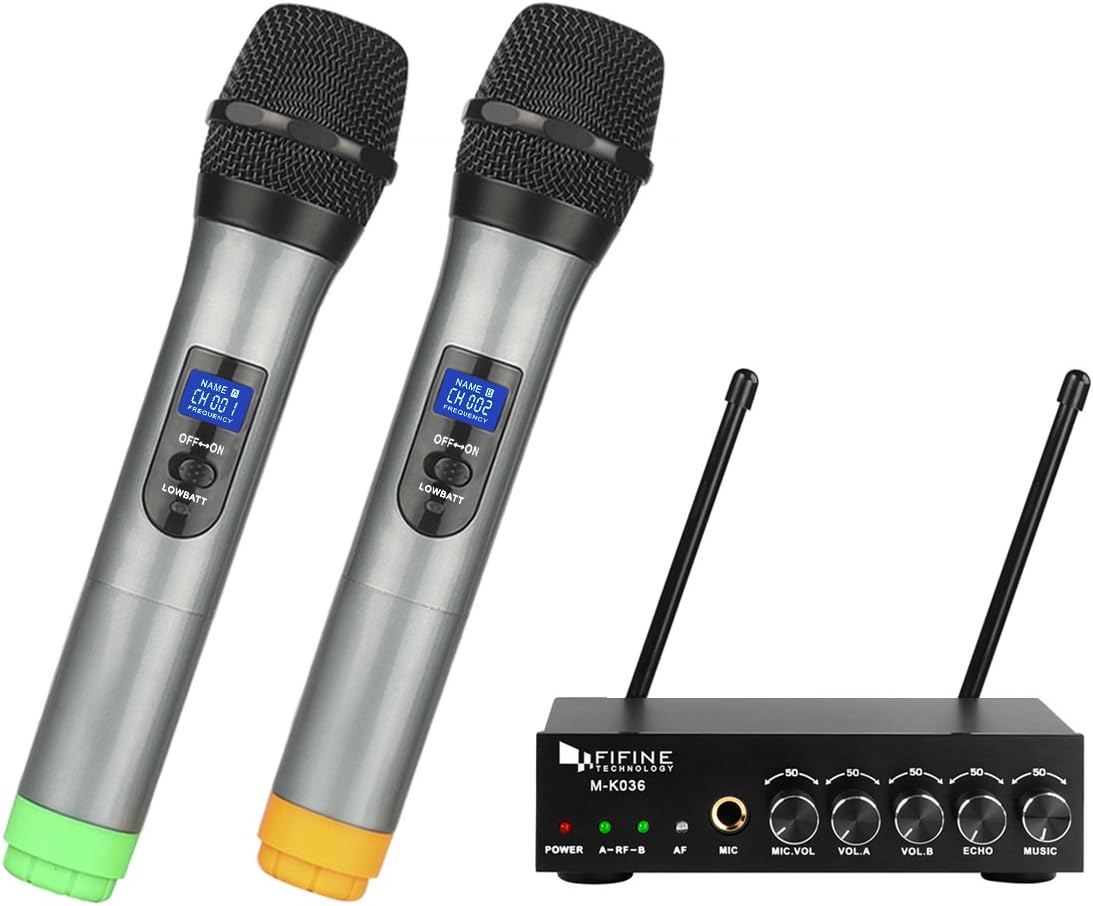
FIFINE UHF Dual Channel Wireless Handheld…
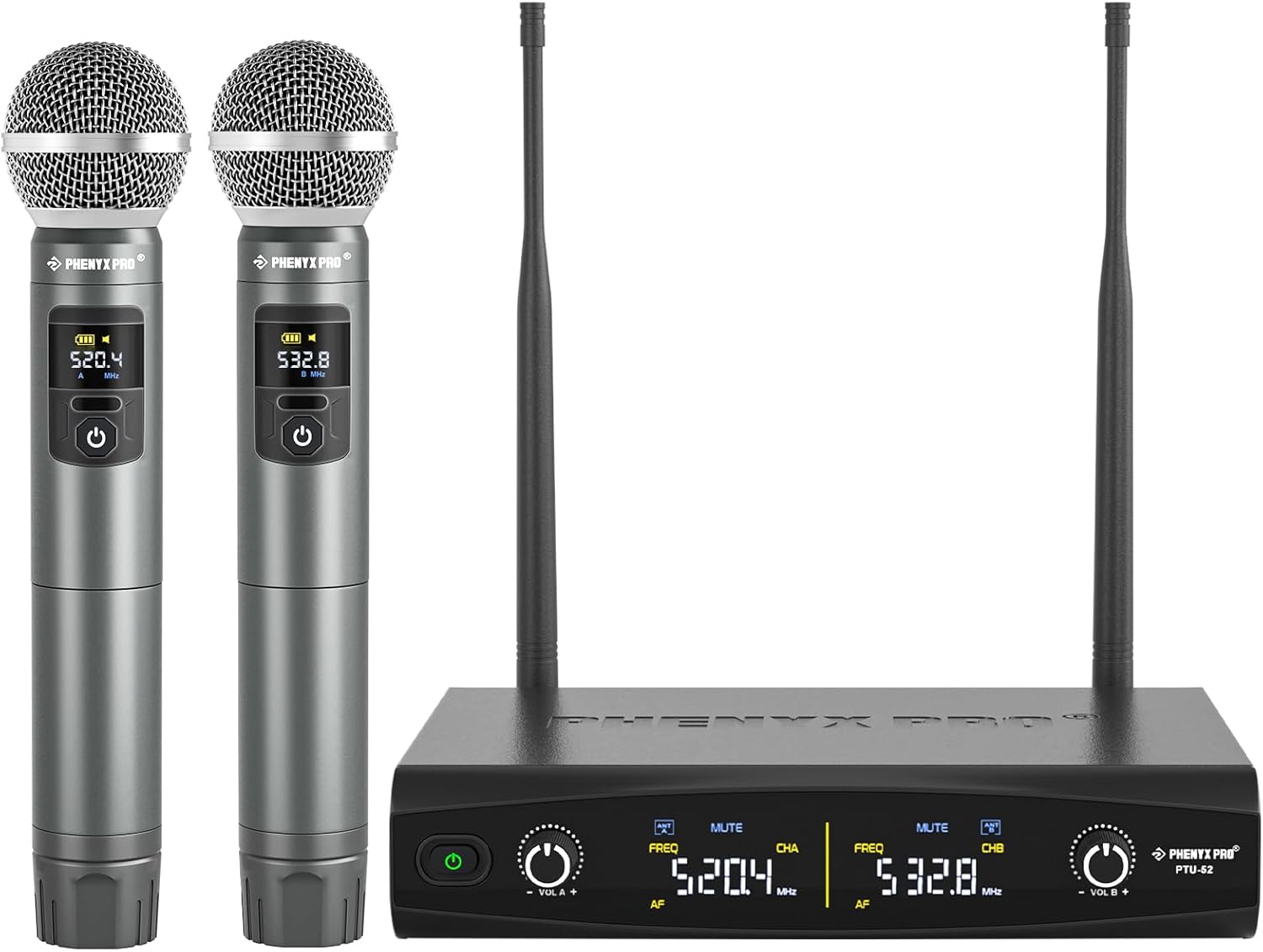
Phenyx Pro Wireless Microphone System…

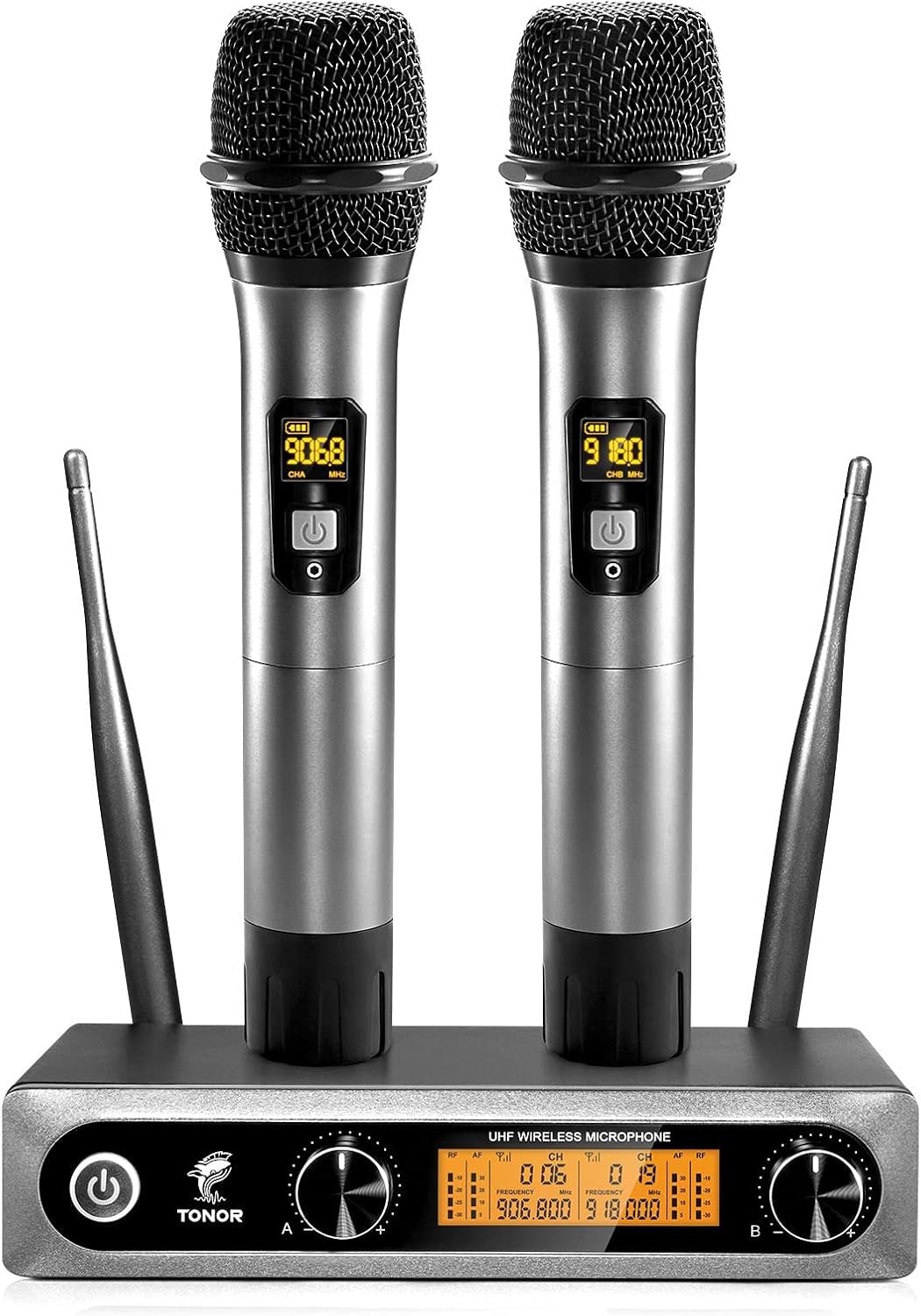
TONOR Wireless Microphones System TW-820

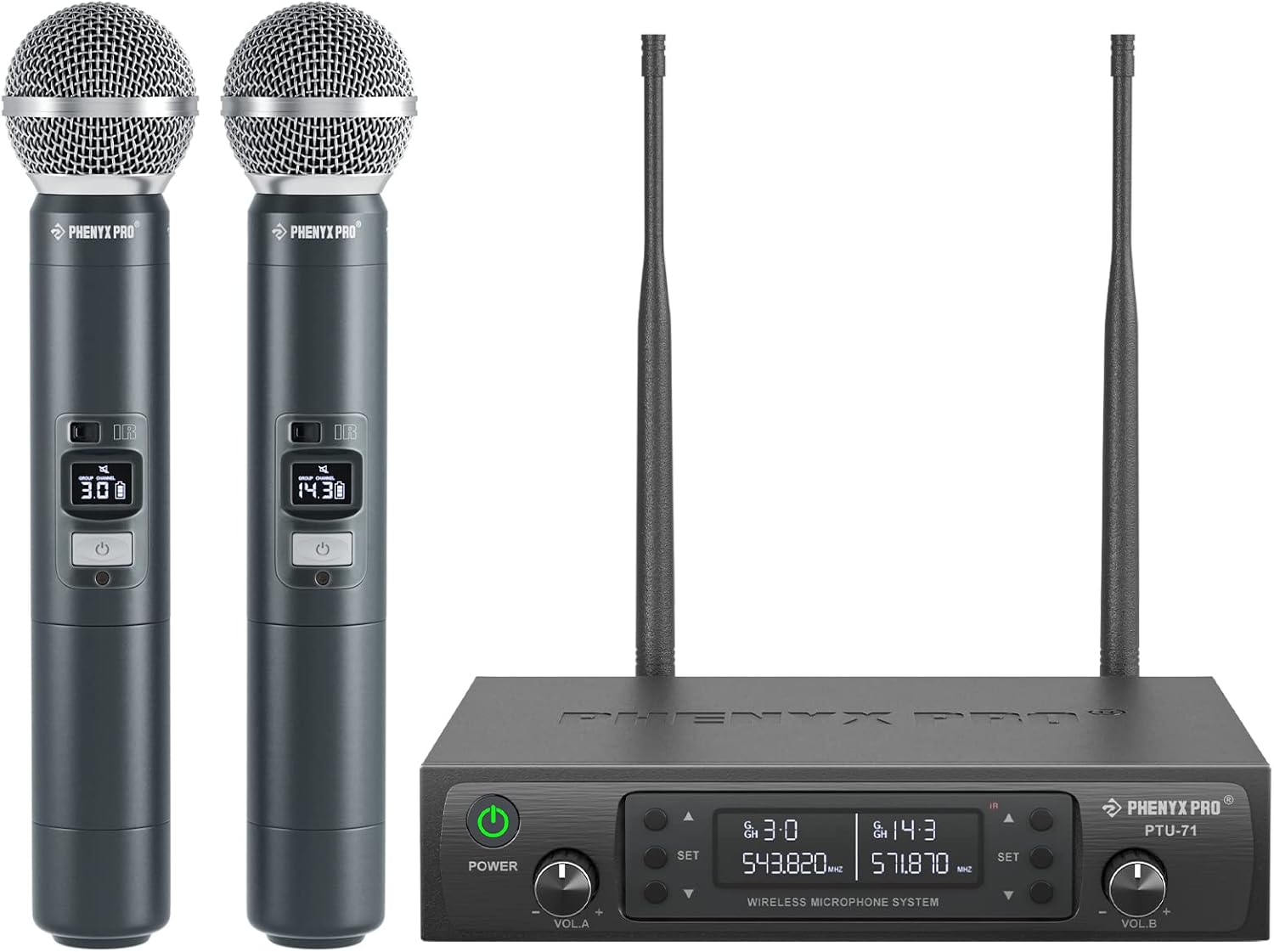
Phenyx Pro Wireless Microphone System…

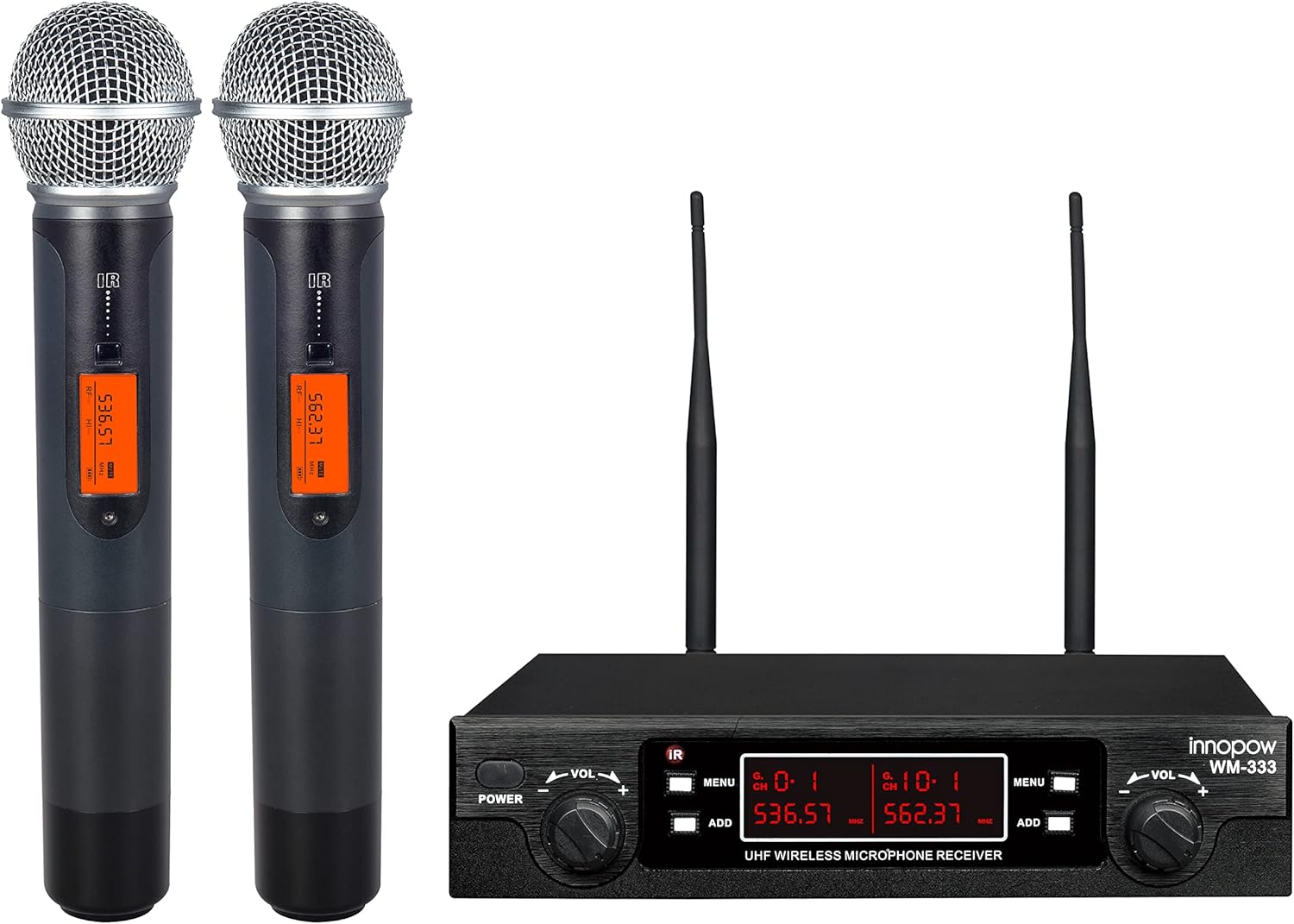
innopow 200-Channel Wireless Microphones…
TONOR Wireless Microphone System with 4…

Shure BLX288/PG58 Wireless Microphone System
Phenyx Pro Wireless Microphone System…
Conclusion: Choosing the Right System for Your Outdoor Events
Selecting the perfect wireless microphone system for outdoor events requires balancing range requirements, budget constraints, and event-specific needs. After extensive testing and evaluation of 10 top systems across price points, here are our top recommendations by category:
Best Overall Value: The Phenyx Pro PTU-71-2H offers the best combination of professional features, extended 328-foot range, auto-scan technology, and reasonable pricing at $134.99. The 16-hour battery life, 200 selectable frequencies, and all-metal construction make this system suitable for virtually any medium to large outdoor event. It’s professional enough for serious users while remaining accessible to budget-conscious buyers.
Best Budget Pick: The FIFINE UHF Dual Channel at $65.99 delivers reliable UHF performance, metal construction, and 80-foot range at an unbeatable price. Perfect for small outdoor gatherings where extended range isn’t required, offering professional UHF technology without breaking the bank. The built-in echo effect adds value for karaoke and casual entertainment applications.
Best Premium Choice: The Shure BLX288/PG58 represents professional-grade quality with legendary Shure reliability, superior audio quality, and 300-foot range. At $659, this system is an investment in professional performance suitable for demanding outdoor productions, broadcast applications, and professional event production companies. The 2-year warranty and industry-standard support provide peace of mind for critical events.
Best for Large Venues: The Phenyx Pro PTU-71-2H’s exceptional 328-foot range makes it ideal for large outdoor weddings, festivals, and concerts where speakers need maximum mobility. The auto-scan technology ensures interference-free operation even in crowded wireless environments, while the 16-hour battery life handles all-day events without interruption.
Best Multi-Microphone System: The Phenyx Pro PTU-5000-4H delivers excellent 4-microphone performance with 260-foot range, professional XLR outputs, and a highest-in-class 4.6-star rating from nearly 3,000 users. Perfect for panel discussions, conferences, and events requiring multiple simultaneous speakers. The individual volume controls and all-metal construction add professional touches at a reasonable $189.99 price point.
Best for Versatility: The TONOR 4-Microphone System includes handheld, headset, and lavalier microphones in one package, providing unmatched flexibility for varied outdoor event needs. At $107.98 (23% off), this system offers exceptional value for event organizers needing multiple microphone types for different applications.
Before making your final decision, carefully assess your specific event requirements: expected range between speakers and receiver, typical event duration, number of simultaneous speakers needed, and budget constraints. All systems reviewed here deliver reliable outdoor performance – the right choice depends on matching capabilities to your specific event needs. Investing in quality wireless audio ensures your outdoor events sound professional and run smoothly, creating memorable experiences for your audiences and speakers alike.
Frequently Asked Questions About Outdoor Wireless Microphone Systems
What is the best wireless microphone for outdoor use?
The best wireless microphone for outdoor use depends on your specific requirements. For most users, we recommend the Phenyx Pro PTU-71-2H for its exceptional 328-foot range, auto-scan technology, and reasonable pricing. Professional users should consider the Shure BLX288/PG58 for industry-standard reliability and audio quality. Budget-conscious buyers will find excellent value in the FIFINE UHF Dual Channel. Key factors for outdoor use include UHF technology for better range and interference resistance, all-metal construction for durability, and battery life sufficient for your event duration.
How far can wireless microphones work outdoors?
Wireless microphone range outdoors varies significantly by technology and price. Budget 2.4GHz systems typically provide 80-100 feet of range. Mid-range UHF systems offer 200-260 feet, suitable for most medium-sized outdoor events. Professional UHF systems can reach 300-328 feet, ideal for large venues and festivals. However, real-world range is typically 20-30% less than manufacturer specifications due to obstacles, interference, and environmental factors. Always choose a system with rated range 30-50% greater than your estimated needs to account for real-world conditions.
Are wireless microphones good for outdoor events?
Yes, wireless microphones are excellent for outdoor events when chosen appropriately. The freedom of movement they provide is essential for outdoor presentations, performances, and activities where wired microphones would be impractical or dangerous (tripping hazards). However, outdoor environments present challenges including distance requirements, wind noise, interference from other wireless devices, and potential weather exposure. Choosing systems with adequate range, UHF technology for better outdoor performance, all-metal construction for durability, and appropriate weather protection ensures reliable outdoor operation.
What type of microphone is best for outdoor events?
For outdoor events, UHF wireless microphone systems are generally superior to 2.4GHz systems due to better range, obstacle penetration, and interference resistance. Handheld dynamic microphones with cardioid pickup patterns are ideal for most outdoor applications as they reject ambient noise from sides and rear, focusing on the speaker’s voice. For active speakers or performers, headset microphones provide hands-free operation while maintaining close proximity to the mouth for consistent audio levels. Always use windscreens on outdoor microphones to reduce wind noise and plosive sounds.
How to prevent wind noise on outdoor microphones?
Preventing wind noise on outdoor microphones requires multiple strategies. First, always use windscreens or foam covers on microphones – this is the single most effective wind noise prevention method. For breezy conditions, upgrade to professional-grade furry windscreens that provide superior wind protection. Position speakers to face away from prevailing winds when possible. Use cardioid microphones positioned close to speakers to maximize voice-to-wind ratio. For headset microphones, position the mic element very close to the mouth (just off to the side) to maximize voice pickup while maintaining wind protection. In extremely windy conditions, consider using windbreaks or positioning speakers in naturally sheltered areas.
What frequency is best for outdoor wireless microphones?
UHF frequencies (typically 470-698MHz) are generally best for outdoor wireless microphones due to superior range, better penetration through obstacles, and less crowded frequency spectrum compared to 2.4GHz. UHF systems typically provide 200-328 feet of range outdoors versus 80-100 feet for 2.4GHz systems. However, 2.4GHz systems offer worldwide compatibility and lower cost, making them suitable for smaller outdoor events with shorter distances. For large outdoor events, crowded wireless environments, or situations requiring maximum range, UHF is the superior choice. For intimate gatherings with speakers staying within 100 feet of the receiver, 2.4GHz systems offer excellent value.
How many wireless microphones can be used at once?
The number of wireless microphones that can be used simultaneously depends on the system design. Basic dual-channel systems support 2 microphones. Four-channel systems support 4 microphones. Some professional systems support 8, 12, or even 16 microphones when using multiple receivers and careful frequency coordination. However, each additional microphone increases potential for interference and frequency conflicts. For most outdoor events, 2-4 microphones is sufficient. Panel discussions, conferences, and events with multiple speakers benefit from 4-microphone systems. Only invest in systems supporting 8+ channels if you regularly host events with that many simultaneous speakers. When using multiple wireless systems simultaneously, always choose tunable frequency systems and coordinate frequencies carefully to avoid interference.