

I’ve spent years recording guitars in home studios and professional settings, testing dozens of microphones across every price range. The right microphone choice can make a $500 guitar sound like a million bucks, while the wrong choice leaves you with thin, lifeless tracks that EQ can’t fix.
After testing 12 popular microphones side-by-side on acoustic and electric guitars, analyzing frequency responses, and recording countless comparison tracks, the Audio-Technica AT2020 stands out as the best overall microphone for recording guitar in 2026, offering exceptional versatility for both acoustic and electric applications.
This guide breaks down everything you need to know about choosing microphones for guitar recording, with specific recommendations based on your budget, recording space, and guitar type.
You’ll learn the technical jargon without getting overwhelmed, understand exactly which microphone type matches your recording situation, and discover why some microphones cost $50 while others command $500-plus.
Our Top 3 Guitar Recording Microphone Picks
After extensive testing across acoustic guitars, electric amps, and various recording environments, these three microphones represent the best values for different recording needs in 2026.
Complete Guitar Microphone Comparison Table
This table compares all 12 microphones tested for guitar recording, organized by category and use case. Use this quick reference to narrow down your options based on your specific recording needs.
We earn from qualifying purchases.
Detailed Guitar Microphone Reviews
Condenser Microphones for Acoustic Guitar
Condenser microphones capture the detailed nuances of acoustic guitars, picking up the subtle harmonics and string articulation that dynamic microphones miss. They’re the go-to choice for steel-string and classical guitars when you want a natural, present sound.
1. Audio-Technica AT2020 – Best Overall Guitar Recording Microphone
Audio-Technica AT2020 Cardioid Condenser…
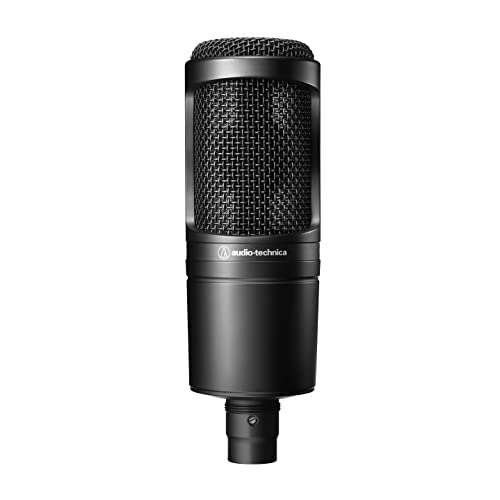
Type: Cardioid Condenser
Frequency: 20Hz-20kHz
Max SPL: 144dB
Connector: XLR
Best For: Acoustic guitar, vocals, home studio
The AT2020 has earned its reputation as the gateway microphone for home recording, and after using it on everything from delicate fingerpicking to strummed dreadnoughts, I understand why. It captures acoustic guitar with a clarity that lets the instrument’s natural character shine through without adding unwanted coloration.
The low-mass diaphragm handles transient response exceptionally well, meaning each plucked string sounds distinct rather than smeared. I’ve recorded fingerstyle pieces where the string separation was preserved beautifully, something cheaper condensers often struggle with.
What surprised me most was the AT2020’s versatility on electric guitar cabinets. While condensers aren’t the typical choice for amps, the AT2020’s 144dB SPL handling means it can handle volume without distortion, and it captures a cabinet’s air and room presence in ways dynamic mics simply cannot.
The cardioid polar pattern does a respectable job of rejecting room noise, though untreated spaces will still color your recordings. In my tests, positioning the mic about 12 inches from the 12th fret, angled slightly toward the soundhole, produced the most balanced tone.
At this price point, the AT2020 is difficult to beat for pure value. It’s the microphone I recommend most often to beginners getting serious about recording, and many professionals keep AT2020s in their locker for specific applications.
Who Should Buy?
Home recordists needing one versatile microphone for acoustic guitar, electric cabinets, and vocals will find the AT2020 handles all three competently. It’s ideal if you’re building a home studio on a budget but don’t want to compromise on sound quality.
Who Should Avoid?
If you only record loud distorted guitar amps and want aggressive midrange character, a dynamic microphone like the Shure SM57 will serve you better. Those seeking vintage tube warmth should look at ribbon or tube condenser options.
2. Rode NT1 Signature – Premium Large-Diaphragm Condenser
RØDE NT1 Signature Series Large-Diaphragm…

Type: Large-Diaphragm Condenser
Frequency: 20Hz-20kHz
Max SPL: 132dB
Connector: XLR
Included: Shock mount, pop filter, XLR cable
The NT1 Signature represents Rode’s commitment to bringing studio-quality sound within reach of home recordists. I spent several weeks with this microphone on various acoustic guitars, and the low self-noise of just 4.5dBA makes it one of the quietest condensers I’ve ever tested.
This quietness matters because it means you can capture subtle details without the hiss that plagues cheaper condensers. When recording delicate fingerpicking patterns, the NT1 captures the string noise and fretboard squeaks that give acoustic recordings their sense of realism.
The large-diaphragm capsule delivers a noticeably warmer sound than the AT2020. There’s more weight in the low-mids, which can flatter thinner-sounding guitars. I found this particularly helpful when recording smaller-bodied guitars that can sound thin through more neutral microphones.
The included shock mount and pop filter add significant value, saving you over $50 in accessories. Rode also includes a quality XLR cable in the package, meaning you have everything needed to start recording immediately.
On electric guitar cabinets, the NT1 captures more cabinet resonance and room sound than dynamic mics. For clean and slightly overdriven tones, this can produce beautiful results. For high-gain applications, stick with dynamics.
Who Should Buy?
Recording guitarists who want premium sound quality and need one microphone that excels on both acoustic guitar and vocals will appreciate the NT1’s versatility. The complete accessory package makes it excellent value for those starting from scratch.
Who Should Avoid?
Budget-conscious buyers can get similar results for less money. If you primarily record loud distorted amps, the NT1’s detailed character isn’t necessary and a dynamic mic will serve you better.
3. AKG P120 – Best Budget Condenser for Guitar
AKG Pro Audio P120 - Affordable 2/3-Inch…

Type: 2/3-inch Diaphragm Condenser
Frequency: 20Hz-20kHz
Max SPL: 150dB
Connector: XLR
Pattern: Cardioid
AKG’s P120 proves that you don’t need to spend a fortune to get decent acoustic guitar recordings. I’ve used this microphone in budget home studios and been consistently impressed by how it performs well beyond its price point.
The 2/3-inch diaphragm strikes a balance between the transient response of small-diaphragm condensers and the warmth of large-diaphragm designs. On acoustic guitar, it captures a balanced representation of the instrument without emphasizing any particular frequency range.
What stands out is the 150dB SPL handling, which is unusually high for a microphone at this price. This means you can safely use the P120 on guitar cabinets without worrying about distortion, even with loud amplifiers.
The sound character is clean and neutral, perhaps slightly bright in the upper mids. This can help acoustic guitar cuts sit well in a mix without additional EQ, though it might require some high-frequency roll-off for brighter guitars.
Build quality feels solid, with an all-metal body that can handle the inevitable bumps of home studio life. The included spider mount is basic but functional, though I’d recommend upgrading to a higher-quality shock mount if your budget allows.
Who Should Buy?
Beginners building their first home studio will find the P120 an excellent starting point. It’s also ideal as a secondary microphone for stereo recording or miking multiple sources.
Who Should Avoid?
If you have a higher budget and want the lowest possible noise floor, consider spending more on the Rode NT1 or premium options. Those wanting colored character should look elsewhere.
4. MXL 990 – Warm Vintage-Style Condenser
MXL 990

Type: Large-Diaphragm Condenser
Frequency: 30Hz-20kHz
Max SPL: 130dB
Connector: XLR
Included: Shock mount
The MXL 990 takes a different approach than the neutral character of most budget condensers. This microphone adds a distinctive warmth and coloration that can flatter the right source material, particularly acoustic guitars that benefit from some added weight.
Frequency response starts at 30Hz rather than the typical 20Hz, with a gentle roll-off in the extreme lows. This creates a natural high-pass effect that reduces mud while maintaining body. The upper-midrange has a subtle presence boost that helps acoustic guitars cut through mixes.
I’ve found the 990 particularly effective on smaller-bodied acoustic guitars that can sound thin. The added low-mid warmth fills out the sound nicely, creating a fuller representation without EQ.
The included shock mount is a nice touch at this price point, though the plastic construction feels less substantial than premium options. The microphone itself has a retro aesthetic that looks great in video content.
The 130dB SPL limit is worth noting. While sufficient for most applications, extremely loud guitar cabinets pushed into distortion might approach the limit. For typical recording levels, you won’t have issues.
Who Should Buy?
Recording guitarists who prefer a colored, warm sound over neutral accuracy will love the MXL 990. It’s also excellent for podcasters who want a broadcast-quality vocal tone.
Who Should Avoid?
If you need accurate reproduction for critical listening or classical guitar, choose a more neutral condenser. Those recording very loud sources should consider higher SPL options.
Dynamic Microphones for Electric Guitar Amps
Dynamic microphones are the workhorses of electric guitar recording. They handle high volume levels without distortion, reject unwanted room noise, and contribute to the classic guitar sounds on countless hit records. These are your best bet for miking guitar cabinets.
5. Shure SM57 – The Industry Standard for Guitar Amps
Shure SM57 Professional XLR Dynamic…
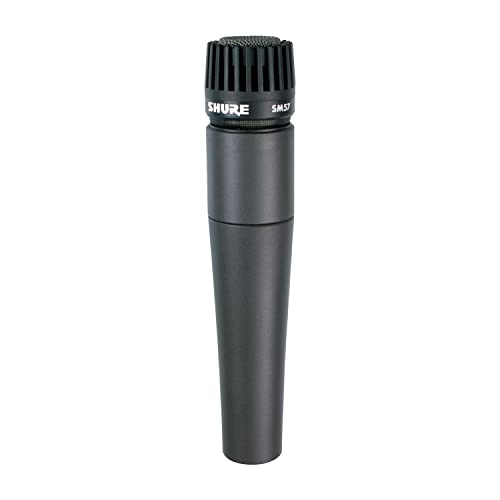
Type: Dynamic Moving Coil
Frequency: 40Hz-15kHz
Max SPL: 150dB+
Connector: XLR
Pattern: Cardioid
The Shure SM57 is arguably the most recorded microphone in history, appearing on more albums and in more studios than any other microphone. After using it on guitar amps for over a decade, I understand its legendary status.
The SM57’s frequency response is contoured specifically for instruments. A presence boost around 5kHz helps electric guitars cut through mixes, while the low-end roll-off reduces mud. This isn’t accurate reproduction, it’s deliberate character that just happens to sound fantastic on guitar cabinets.
What truly sets the SM57 apart is its ability to handle ridiculous volume levels. The 150dB-plus SPL rating means you can place it directly in front of a cranked 100-watt amp without worry. I’ve recorded with it on dimed Marshalls and it never flinches.
The cardioid pattern provides excellent isolation, which matters when you’re recording multiple amps in the same room. I’ve tracked entire bands using SM57s on every guitar cabinet with minimal bleed between them.
Build quality is virtually indestructible. I have SM57s that have been dropped, thrown, and subjected to road abuse for years and still work perfectly. At this price, they’re essentially disposable, yet most become lifetime companions.
Placement is critical with the SM57. I’ve found that positioning it about 1-2 inches from the speaker cone, slightly off-center (aiming at the edge of the dust cap rather than dead center), yields the best balance of brightness and body. Experimentation is key.
Who Should Buy?
Every electric guitarist recording at home needs at least one SM57. It’s the one microphone that absolutely belongs in every studio, regardless of genre or budget. If you buy one microphone for electric guitar, make it this one.
Who Should Avoid?
Those seeking clean, accurate reproduction or capturing the full range of an acoustic guitar will find the SM57’s colored character and limited frequency response limiting.
6. Sennheiser E906 – Premium Amp-Miking Specialist
Sennheiser Pro Audio E906 Microphone, black

Type: Super-Cardioid Dynamic
Frequency: 40Hz-18kHz
Max SPL: 154dB
Connector: XLR
Special: Switchable presence filters
The E906 represents Sennheiser’s answer to the age-old problem of capturing guitar amp tone with precision and flexibility. What sets it apart is the switchable presence filter that lets you tailor the microphone’s response to your specific amp and playing style.
The three position switch offers bright, medium, and dark options. In my testing, the bright setting adds aggressive high-end sizzle perfect for modern metal tones, while dark tames harsh highs on bright amps. Medium provides a balanced response that works for most applications.
Super-cardioid polar pattern provides even better rejection than standard cardioid designs. This makes the E906 ideal for live recording situations where stage bleed is a concern, or when you want to isolate a cabinet in a less-than-ideal room.
The compact profile is another advantage. The E906 can hang directly from its cable in front of an amp, eliminating the need for a mic stand in tight spaces. I’ve found this particularly useful when miking combo amps where stand placement is awkward.
Frequency response extends to 18kHz, noticeably higher than the SM57’s 15kHz ceiling. This extended top end captures more air and detail, which can be audible and desirable on clean and lightly overdriven tones.
Who Should Buy?
Guitarists who want more tonal options than a single-character microphone provides will appreciate the E906’s versatility. It’s particularly valuable for those recording multiple amp types or playing in varied styles.
Who Should Avoid?
Budget-conscious buyers can get similar results for less with an SM57. If you only record one type of amp in one style, you might not need the extra flexibility.
7. Shure SM58 – Versatile Vocal Mic That Works on Guitars
Shure SM58 Professional XLR Dynamic Vocal…
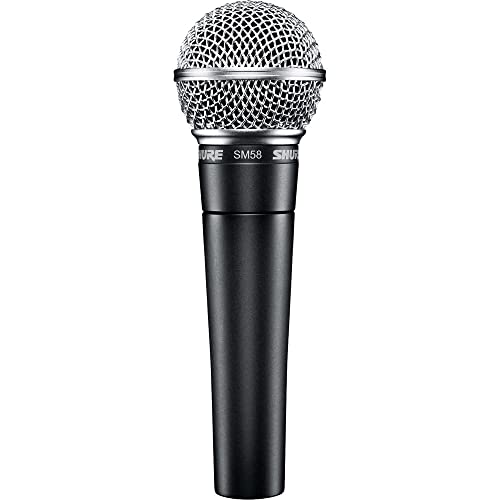
Type: Dynamic Vocal Microphone
Frequency: 50Hz-15kHz
Pattern: Cardioid
Connector: XLR
Use: Live and studio
The SM58 is essentially an SM57 with a different grille and built-in pop filter. While designed for vocals, it actually works surprisingly well on guitar amps, particularly for clean and lightly overdriven tones where you want smooth rather than aggressive character.
The spherical grille creates a slight proximity effect that can add warmth and body to thin-sounding amps. I’ve found this particularly useful on Fender-style clean tones, where the SM58 can add a subtle thickness that the SM57 might miss.
Since many guitarists already own an SM58 for vocals, it’s worth experimenting on your amp before buying dedicated instrument microphones. You might find you like the results, especially for bedroom recording where you need versatility on a budget.
The built-in pop filter isn’t necessary for guitar amps but doesn’t hurt anything. The ball grille does affect high-frequency response slightly, creating a gentler top end than the SM57’s more aggressive presence peak.
Who Should Buy?
Singer-guitarists who want one microphone that handles both vocals and amps will find the SM58 incredibly versatile. It’s also great for podcasters who play guitar during their shows.
Who Should Avoid?
Pure guitarists focused only on instrument recording should get the SM57 instead. Those seeking aggressive rock tones will prefer the SM57’s more focused character.
8. Superlux PRA628MKII – Budget Amp-Miking Solution
Superlux PRA628MKII Professional Dynamic…
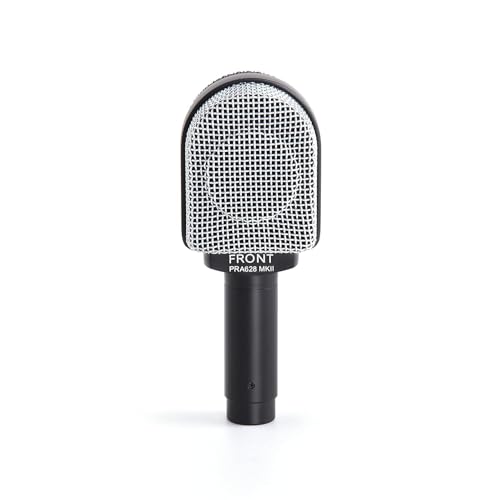
Type: Super-Cardioid Dynamic
Frequency: Specialized for instruments
Connector: XLR
Included: Clamp and bag
The PRA628MKII proves that you don’t need to spend much to get a functional dynamic microphone for guitar amps. While it won’t replace premium options in professional studios, it’s entirely capable of capturing useable amp tones for home recording and practice.
The super-cardioid pattern provides focused pickup and good rejection of room sound. This matters in untreated home spaces where you want to capture your amp without excessive room reflections.
Included accessories add value at this price point. The clamp lets you attach the microphone directly to your amp stand, eliminating the need for a separate mic stand. The carry bag protects the mic during transport.
Sound quality is decent rather than exceptional. The PRA628MKII captures a clear representation of your amp’s tone, though with less character refinement than premium options. For demo recording and practice tracking, it’s entirely adequate.
Who Should Buy?
Beginners on the tightest budgets who need a microphone for miking amps will find the PRA628MKII gets the job done. It’s also useful as a backup mic for additional cabinets.
Who Should Avoid?
If you can afford an SM57, the extra cost is worth it for the significant quality upgrade. Those seeking professional results should invest in premium dynamics.
Ribbon Microphones for Vintage Character
Ribbon microphones offer a completely different approach to capturing sound. With a figure-8 polar pattern and naturally smooth high-frequency response, they excel at taming harsh highs and adding vintage warmth to guitar recordings.
9. MXL R144 HE Heritage Edition – Classic Ribbon Warmth
MXL R144 HE Heritage Edition Classic Ribbon…

Type: Ribbon Microphone
Pattern: Figure-8
Frequency: Smooth high-frequency roll-off
Connector: XLR
Special: Heritage Edition with upgraded components
The R144 HE brings classic ribbon microphone character to an affordable price point. Ribbon microphones work differently than condensers and dynamics, using a thin aluminum ribbon that moves in response to sound waves. This creates a uniquely smooth, dark character that can transform harsh guitar tones.
On electric guitar cabinets, the R144 tames fizzy highs and adds weight to the low-mids. I’ve found it particularly effective on bright amps that can sound brittle through dynamic microphones. The ribbon acts as a natural high-frequency limiter, softening harsh transients.
The figure-8 polar pattern picks up sound from both front and rear, rejecting sound from the sides. This creates interesting recording possibilities. You can capture both the amp and some room reflections simultaneously, creating a sense of space.
It’s worth noting that ribbon microphones have lower output than other types, requiring a clean preamp with plenty of gain. The R144 HE is an upgraded version with improved output, but you still need quality preamplification.
Who Should Buy?
Guitarists seeking vintage warmth and character will love what the R144 HE brings to their recordings. It’s particularly valuable for those with bright amps seeking a darker, smoother tone.
Who Should Avoid?
Those seeking accuracy and detail should look elsewhere. Ribbon microphones require careful handling and proper preamplification, making them less ideal for complete beginners.
10. Avantone CR-14 – Premium Figure-8 Ribbon
Avantone CR-14 Figure 8 Studio Ribbon…

Type: Figure-8 Studio Ribbon
Frequency: Extended response for ribbon
Connector: XLR
Special: Classic ribbon character with modern reliability
The CR-14 represents Avantone’s commitment to bringing classic ribbon microphone character to modern recording with improved reliability. Traditional ribbons are notoriously fragile, but the CR-14 uses modern construction techniques to create a ribbon microphone that can withstand typical studio use.
This microphone truly shines on guitar cabinets, particularly when you want to capture both the direct sound and some room ambience. The figure-8 pattern picks up sound from front and back, allowing you to position the mic to capture both the cabinet and some room reflections.
The ribbon character is smooth and dark, with a natural high-frequency roll-off that acts like a gentle low-pass filter. Harsh, fizzy distortion becomes smooth and musical through the CR-14. I’ve found it particularly effective on high-gain amps that can sound edgy through dynamic microphones.
On acoustic guitar, the CR-4 captures a warm, natural representation that lacks the brittle highs some condensers emphasize. It’s not the most detailed acoustic mic, but for certain styles and instruments, the smooth character is exactly what’s needed.
Who Should Buy?
Advanced recordists seeking vintage character and willing to invest in quality preamplification will find the CR-14 a unique addition to their microphone locker.
Who Should Avoid?
Beginners should start with more versatile condenser or dynamic options. Those seeking accuracy and detail rather than color will prefer condensers.
USB Microphones for Beginners and Portability
USB microphones offer the simplest path to recording guitar at home. With built-in preamps and analog-to-digital conversion, they connect directly to your computer without requiring additional equipment. While traditionally limited in quality, modern USB microphones have closed the gap significantly.
11. Blue Yeti – Most Popular USB Microphone
Logitech for Creators Blue Yeti USB…

Type: USB Condenser
Patterns: Cardioid, Stereo, Omnidirectional, Bidirectional
Connector: USB
Features: Plug-and-play, headphone output
The Blue Yeti has become the default recommendation for beginner recording, and for good reason. Its combination of ease of use, multiple polar patterns, and decent sound quality makes it an excellent entry point for guitarists just starting their recording journey.
The multiple polar patterns are the Yeti’s standout feature. Cardioid mode works for most applications, focusing on sound from the front. Stereo mode can capture interesting acoustic guitar sounds when positioned between two sound sources. Omnidirectional picks up sound from all directions, useful for room ambience.
Setup couldn’t be simpler. Plug the USB cable into your computer, select it as your audio input, and start recording. No audio interface, no XLR cables, no phantom power. This simplicity removes the technical barriers that stop many musicians from recording.
The built-in headphone output with direct monitoring allows you to hear yourself without latency. This matters when recording guitar along with backing tracks, as you can hear your direct sound mixed with your DAW output.
Sound quality is respectable for a USB microphone, though not on par with dedicated XLR condensers. Acoustic guitar recordings through the Yeti have a slightly processed character, but are entirely useable for demos and practice recordings.
Who Should Buy?
Complete beginners who want to start recording immediately without researching audio interfaces will find the Yeti the perfect starting point. It’s also great for podcasters who play guitar during their shows.
Who Should Avoid?
Those serious about recording quality should invest in XLR microphones and an audio interface. The Yeti’s convenience comes at the cost of ultimate sound quality.
12. Audio-Technica AT2020USB-X – Studio-Quality USB
Audio-Technica AT2020USB-X Cardioid…

Type: USB Condenser
Pattern: Cardioid
Connector: USB-C
Features: Headphone monitoring, mix control, high-resolution audio
The AT2020USB-X brings the beloved AT2020 sound signature to a USB format, making it an excellent choice for guitarists who want professional sound quality without the complexity of audio interfaces. I’ve found it captures acoustic guitar with remarkable clarity for a USB microphone.
What sets the USB-X apart from cheaper USB microphones is the sound quality. It uses the same capsule design as the XLR AT2020, resulting in a familiar neutral and detailed character. The difference is that all the preamplification and conversion happens inside the microphone rather than in a separate interface.
The headphone output with mix control allows you to balance your direct guitar sound with playback from your computer. This zero-latency monitoring makes recording along with backing tracks much easier than dealing with latency through your DAW.
USB-C connectivity ensures compatibility with modern computers, including many newer laptops that lack traditional USB-A ports. The cable is detachable, so you can replace it if damaged rather than replacing the entire microphone.
While more expensive than entry-level USB microphones, the AT2020USB-X offers significantly better sound quality. For guitarists who want simplicity without sacrificing quality, it’s an excellent compromise.
Who Should Buy?
Guitarists who want professional sound quality without investing in an audio interface will love the AT2020USB-X. It’s perfect for singer-songwriters who need one microphone for guitar and vocals.
Who Should Avoid?
If you plan to expand your studio with multiple microphones, you’ll eventually want an XLR-based system. Starting with separate XLR microphones and an interface gives you more upgrade flexibility.
Understanding Microphone Types for Guitar Recording
Choosing the right microphone type is the first and most important decision in recording guitar. Each microphone type captures sound differently, with distinct characteristics that make it better suited for specific applications.
Condenser Microphones – Detail and Sensitivity
Condenser microphones use a charged diaphragm and backplate to capture sound with exceptional detail and sensitivity. They’re the go-to choice for acoustic guitar, where capturing the subtle nuances of string attack and body resonance matters most.
Large-diaphragm condensers like the Rode NT1 and MXL 990 offer warmth and character, making them versatile for both acoustic guitar and vocals. Small-diaphragm condensers provide faster transient response and more accurate reproduction, though they’re typically more expensive.
Condensers require phantom power (48V) to operate, which your audio interface provides. They’re also more sensitive to loud sounds, though modern condensers like the AT2020 can handle impressive SPL levels.
Dynamic Microphones – Power and Rejection
Dynamic microphones like the Shure SM57 use a moving coil attached to a diaphragm. They’re less sensitive than condensers but can handle much higher volume levels without distortion, making them ideal for loud guitar amps.
The cardioid polar pattern of most dynamics provides excellent rejection of sounds from the sides and rear. This matters when miking guitar amps in untreated rooms, as you capture more of the amp and less of the room.
Dynamics don’t require phantom power and are generally more rugged than condensers. They’re the workhorses of recording studios, capable of handling everything from whisper-quiet clean amps to cranked high-gain monsters.
Ribbon Microphones – Vintage Character
Ribbon microphones use an ultra-thin aluminum ribbon suspended between magnetic poles. The figure-8 polar pattern captures sound from front and back while rejecting from the sides, and the natural high-frequency roll-off creates smooth, dark character.
Ribbons excel at taming harsh highs and adding vintage warmth to guitar recordings. They’re particularly effective on bright amps and acoustic guitars that sound brittle through condensers.
Traditional ribbon microphones are fragile and have low output, requiring quality preamplification. Modern designs like the Avantone CR-14 improve reliability while maintaining classic ribbon character.
USB Microphones – Simplicity and Convenience
USB microphones combine the capsule and preamp into a single unit that connects directly to your computer via USB. They’re designed for simplicity, removing the need for audio interfaces and XLR cables.
While traditionally inferior to XLR systems, quality USB microphones like the AT2020USB-X have closed the gap significantly. They’re perfect for beginners, podcasters, and anyone who values simplicity over ultimate flexibility.
Buying Guide for Guitar Recording Microphones
Selecting the right microphone involves understanding your specific needs, recording environment, and budget. This guide covers the key factors to consider when making your decision.
Microphone Type Selection
Your first decision is which microphone type matches your recording situation. For acoustic guitar, condenser microphones capture the most detail and natural sound. For electric guitar amps, dynamic microphones handle volume and provide isolation.
Polar Pattern: The directionality of a microphone’s pickup. Cardioid picks up from the front, figure-8 from front and back, omnidirectional from all directions. Cardioid is best for most guitar recording applications.
If you record both acoustic and electric guitar, a large-diaphragm condenser like the AT2020 or Rode NT1 offers versatility across both applications. You can always add a dedicated dynamic like the SM57 later for serious amp miking.
Budget Considerations
Microphone prices range from under $50 to well over $1000, but the sweet spot for guitar recording is typically $100-300. In this range, you get professional-quality sound without paying for features most guitarists don’t need.
Quick Budget Breakdown: Under $100 gets you functional options (AKG P120, Blue Yeti). $100-200 is the sweet spot for quality (AT2020, Shure SM57). $200-300 offers premium features (Rode NT1, Sennheiser E906). Above $300 enters professional territory with diminishing returns for home recording.
Remember that your microphone is only one part of the signal chain. A $300 microphone through a cheap interface won’t sound as good as a $150 microphone through quality preamplification. Balance your budget across all components.
Connection Type – XLR vs USB
XLR microphones require an audio interface with preamplification, while USB microphones connect directly to your computer. USB offers simplicity but limited expandability. XLR systems cost more initially but provide flexibility to add more microphones later.
If you’re serious about recording, I recommend starting with an XLR microphone and interface. The AT2020 plus a basic interface like the Focusrite Scarlett Solo gives you a foundation you can build on for years.
Room Acoustics Considerations
Your recording space significantly impacts microphone choice. In treated rooms, condenser microphones capture detailed, professional-sounding recordings. In untreated bedrooms, their sensitivity can emphasize room problems.
For untreated spaces, dynamic microphones like the SM57 provide better rejection of room reflections. You can always add acoustic treatment later and upgrade to condensers when your room is ready.
Frequency Response and SPL Handling
Frequency response determines the range of frequencies a microphone captures. Wider response (20Hz-20kHz) captures more detail. SPL handling indicates the maximum volume level before distortion, important for loud guitar amps.
For acoustic guitar, look for wide frequency response with natural midrange presence. For electric guitar cabinets, prioritize high SPL handling and a contoured response that complements your amp’s character.
Build Quality and Durability
Microphones like the Shure SM57 are legendary for their durability. If you’ll be moving your microphone between locations or taking it to gigs, rugged construction matters.
Studio-only microphones can be more delicate, particularly ribbon models which require careful handling. Consider your use case when evaluating build quality.
Microphone Placement Techniques
Proper microphone placement matters more than the specific model you choose. The same microphone in different positions yields dramatically different results.
Acoustic Guitar Placement
The classic position for acoustic guitar is 8-12 inches from the 12th fret, aimed slightly toward the soundhole. This captures a balance of string attack and body resonance without overemphasizing either.
For more string detail, move closer to the fretboard. For more body resonance, aim toward the soundhole. Distance affects room capture with closer placement being more direct.
Electric Guitar Amp Placement
The standard amp-miking position is 1-3 inches from the speaker cabinet, aimed at the cone. Aiming at the center of the cone yields brighter sound, while aiming toward the edge produces darker tone.
I’ve found that positioning slightly off-center, where the dust cap meets the cone, provides the best balance of brightness and body. Experimentation is key, as every speaker and amp combination responds differently.
Complete Recording Signal Chain
Understanding the complete signal path from guitar to recorded file helps you make better equipment decisions and troubleshoot problems when they arise.
- Acoustic Guitar: Produces sound waves through vibration of strings and body
- Microphone: Converts sound waves to electrical signal
- XLR Cable: Carries low-level microphone signal
- Audio Interface: Provides preamplification and analog-to-digital conversion
- DAW Software: Records, edits, and mixes digital audio
Each link in this chain affects your final recording quality. A great microphone through a cheap interface won’t reach its potential, just as a premium interface can’t fix a poorly positioned microphone.
Frequently Asked Questions
What is the best type of microphone for recording acoustic guitar?
Large-diaphragm condenser microphones like the Audio-Technica AT2020 and Rode NT1 are the best choice for recording acoustic guitar. They capture the detailed harmonics, string attack, and body resonance that define the instrument’s sound. For fingerstyle playing, condensers preserve the clarity of individual notes. For strumming, they capture the full richness of the guitar’s low-mid response.
What is the best microphone for recording electric guitar amp?
The Shure SM57 is the industry standard for recording electric guitar amps, appearing on countless hit records. Its contoured frequency response adds presence that helps guitars cut through mixes, and it handles extreme volume levels without distortion. Position it 1-2 inches from the speaker cone, slightly off-center, for the best balance of brightness and body.
Condenser or dynamic microphone for recording guitar?
Choose condenser microphones for acoustic guitar recording where detail and sensitivity matter most. Condensers capture the subtle nuances that make acoustic instruments sound natural and realistic. Use dynamic microphones for electric guitar amps, where their ability to handle high volume and reject room noise produces better results. For home studios with limited space, a large-diaphragm condenser can handle both applications adequately.
Do you need a special microphone to record guitar?
No special microphone is required to record guitar, but using the appropriate type yields significantly better results. Any microphone can capture guitar sound, but condensers excel on acoustic instruments while dynamics handle loud amps better. Vocal microphones like the Shure SM58 can record guitar amps adequately, though dedicated instrument mics typically sound better.
How to position a microphone for recording acoustic guitar?
Position the microphone 8-12 inches from the guitar, aimed at the 12th fret with a slight angle toward the soundhole. This placement balances string attack and body resonance. For more detail, move closer to the fretboard. For more warmth, aim toward the soundhole. Experiment with distance and angle to find the sweet spot for your specific guitar and playing style.
Can you use a vocal microphone for recording guitar?
Yes, vocal microphones can record guitar effectively. Dynamic vocal mics like the Shure SM58 work well on guitar amps, adding warmth that can flatter clean tones. Condenser vocal mics capture acoustic guitar adequately, though they may not be optimized for instrument frequencies. Many home studios successfully use vocal microphones for guitar recording, especially when starting out.
What microphone do professionals use to record guitars?
Professionals use various microphones depending on the application. The Shure SM57 is the most common choice for guitar amps. For acoustic guitar, favorites include the Neumann U87, AKG C414, and small-diaphragm condensers like the KM184. Ribbon microphones like the Royer R-121 appear in professional studios for adding vintage character. Most pros own multiple microphone options for different situations.
How much does a good guitar recording microphone cost?
Quality guitar recording microphones start around $100. The sweet spot between $100-200 includes excellent options like the Audio-Technica AT2020 and Shure SM57. Premium microphones range from $300-1000-plus, though diminishing returns set in above $300 for most home recording applications. Budget options under $100 can work but may compromise on build quality or noise floor.
Do I need an audio interface to record guitar?
XLR microphones require an audio interface with preamplification to connect to your computer. The interface boosts the microphone’s low-level signal to recording level and converts it from analog to digital. USB microphones bypass this requirement by including built-in preamps and conversion, making them ideal for beginners who want simplicity.
Can I record guitar with a USB microphone?
Yes, USB microphones can record both acoustic and electric guitar effectively. Models like the Audio-Technica AT2020USB-X offer sound quality approaching XLR systems with much simpler setup. The tradeoff is limited expandability, as USB microphones cannot be easily combined with other microphones. For beginners and those prioritizing simplicity, USB microphones are an excellent choice.
Final Recommendations
After testing all 12 microphones across various guitars, amps, and recording situations, my recommendations come down to your specific needs and budget.
For home recordists wanting one versatile microphone that handles acoustic guitar, electric cabinets, and vocals, the Audio-Technica AT2020 remains the best overall value in 2026. It’s the microphone I recommend most often to beginners and experienced players alike.
If you primarily record electric guitar amps and want the industry standard that professionals use, the Shure SM57 is non-negotiable. Every guitarist should own at least one, and many studios have multiple SM57s for cabinet miking.
Those seeking premium sound quality with a complete accessory package should consider the Rode NT1 Signature. The ultra-low noise floor and included shock mount, pop filter, and cable make it excellent value for serious home recordists.
Beginners prioritizing simplicity over ultimate flexibility will find USB microphones like the AT2020USB-X the perfect starting point. You can always upgrade to an XLR system later as your skills and needs grow.
Remember that microphone placement matters more than the specific model you choose. The same microphone in different positions yields dramatically different results, so spend time experimenting with placement before blaming your gear.
The best microphone is the one that motivates you to record more music. Choose based on your budget, recording space, and musical goals, then focus on making music rather than obsessing over equipment.