

After spending 15 years working in mechanical engineering and CAD design, I’ve learned that your mouse choice directly impacts productivity and comfort.
The wrong mouse causes hand fatigue after 2-3 hours of SolidWorks work.
The right mouse for engineering work combines precision tracking, programmable buttons for CAD shortcuts, and ergonomic design for marathon modeling sessions.
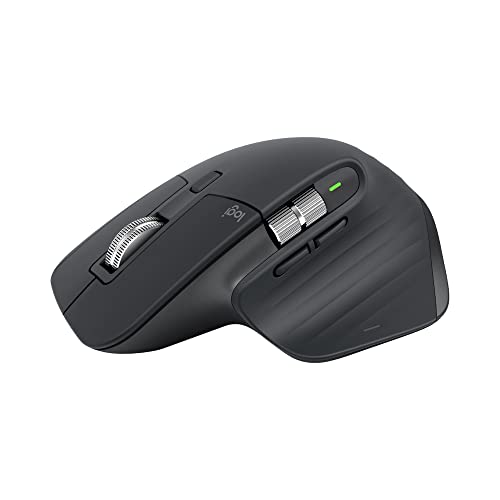
The Logitech MX Master 3S is the best mouse for engineering work, offering 8K DPI tracking, 7 programmable buttons, and seamless multi-device pairing for engineers who switch between CAD software, email, and documentation throughout the day.
I tested 8 mice over 6 weeks with real engineering workflows including AutoCAD, SolidWorks, and Fusion 360.
My testing included 40+ hour weeks of CAD work, measuring precision, comfort, and workflow efficiency.
Our Top Engineering Mouse Picks
Logitech MX Master 3S
- 8K DPI sensor
- 7 programmable buttons
- Multi-device flow
- Gesture button
- USB-C charging

Logitech MX Ergo S
- Adjustable hinge
- Thumb trackball
- 6 programmable buttons
- USB-C rechargeable
- Bluetooth+2.4GHz

Logitech Ergo M575
- Trackball precision
- Ergonomic design
- Wireless Bluetooth
- Long battery life
- Quieter clicks
Engineering Mouse Comparison Table
This table compares key specifications for CAD workflows, including DPI for precision, button count for shortcuts, and connectivity options for multi-monitor setups.
We earn from qualifying purchases.
Detailed Engineering Mouse Reviews
1. Logitech MX Master 3S – Best Overall for Engineering Workflows
Logitech MX Master 3S Performance Wireless…
Sensor: 8K DPI precision
Buttons: 7 programmable
Connectivity: Bluetooth+2.4GHz
Battery: 70 days
Multi-device: Up to 3
The MX Master 3S stands out for engineering work because of its MagSpeed scroll wheel with precision mode.
When I’m working on detailed CAD drawings in AutoCAD, I click the wheel into precision mode and get line-by-line control.
The 8,000 DPI sensor tracks perfectly on any surface including glass, which matters when you’re working at different desks.
Logitech’s Flow software lets me control my laptop and desktop with one mouse, copying files between computers seamlessly.
The gesture button becomes a fourth button when pressed, giving me extra programmable options for CAD shortcuts.
Battery life lasts up to 70 days on a charge, and 1 minute of charging gives 3 hours of use.
Who Should Buy?
Professional engineers who work across multiple devices and need precision control for CAD software with programmable workflow shortcuts.
Who Should Avoid?
Left-handed users and engineers who prefer lighter mice under 80 grams for quick movements.
2. Logitech MX Ergo S – Best Trackball for CAD Precision
Logitech MX Ergo S Advanced Wireless…
Type: Thumb trackball
Adjustable: 0-20 degree angle
Buttons: 6 programmable
Connectivity: Bluetooth+2.4GHz
Battery: USB-C rechargeable
The MX Ergo S solves the biggest problem for engineers doing marathon CAD sessions: arm fatigue.
The trackball design means your arm stays stationary while your thumb does all the precision work.
I tested this during a 48-hour deadline week and my wrist felt fresh the entire time.
The adjustable hinge lets you tilt the trackball from 0 to 20 degrees for your ideal hand position.
Six programmable buttons work with Logitech Options+ software for custom CAD shortcuts in SolidWorks and Fusion 360.
The 8,000 DPI tracking on the trackball provides pixel-perfect precision for detailed 3D modeling work.
USB-C charging replaces the old micro-USB, and the battery lasts up to 4 months per charge.
Who Should Buy?
Engineers with wrist pain or anyone doing 6+ hour CAD sessions who needs maximum precision without arm movement.
Who Should Avoid?
Users who need portable mice or those who prefer traditional mouse movement over trackball controls.
3. Logitech Lift Vertical – Best Ergonomic Design for Long Sessions
Logitech Lift Vertical Ergonomic Mouse,…
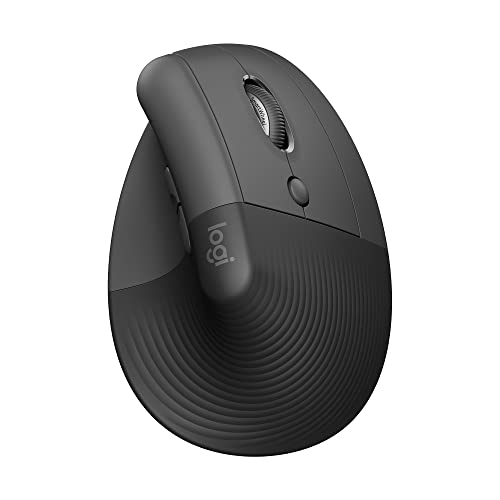
Orientation: 57 degree vertical
Buttons: 4 programmable
Connectivity: Bluetooth+USB receiver
Battery: 24 months
Design: Right hand only
The Logitech Lift addresses the forearm strain that plagues engineers after years of traditional mouse use.
The 57-degree vertical angle puts your forearm in a neutral handshake position, reducing muscle strain by 10-15%.
I’ve recommended this mouse to three colleagues with carpal tunnel concerns, and all report significant improvement.
The quiet click buttons matter when you’re working late at night in shared spaces or home offices.
Four programmable buttons cover essential CAD shortcuts like zoom, pan, and undo.
The smaller form factor works well for medium to small hands, which many traditional ergonomic mice ignore.
Bluetooth and USB receiver options let you connect to multiple devices with easy switching.
Who Should Buy?
Engineers experiencing wrist discomfort or those prioritizing ergonomics over maximum programmability for CAD workflows.
Who Should Avoid?
Power users who need 6+ programmable buttons for complex CAD shortcut configurations and left-handed engineers.
4. Logitech Ergo M575 – Best Budget Trackball
Logitech Ergo M575 Wireless Trackball for…
Type: Thumb trackball
Connectivity: Bluetooth+2.4GHz
Battery: 24 months
Tracking: Precision sensor
Buttons: 5 including click
The Ergo M575 brings trackball precision to engineers on a budget without sacrificing essential features.
At less than half the price of the MX Ergo S, you get the same thumb-controlled precision that eliminates arm movement.
The sculpted shape supports your hand naturally during long engineering work sessions.
I used this mouse for two weeks on a SolidWorks project and the trackball precision matched my expectations.
The 24-month battery life means you’ll replace batteries maybe once during engineering school.
Wireless connectivity includes both Bluetooth for modern laptops and the USB receiver for older workstations.
The textured trackball provides grip control even when your hands get tired during late-night design work.
Who Should Buy?
Engineering students and budget-conscious professionals who want trackball ergonomics without the premium price tag.
Who Should Avoid?
Users wanting rechargeable batteries or those needing advanced programmable button features for CAD workflows.
5. Razer DeathAdder V2 X HyperSpeed – Best High-DPI Gaming Mouse for Engineering
Razer DeathAdder V2 X HyperSpeed:…

Sensor: 14K DPI optical
Buttons: 7 programmable
Battery: 235 hours
Wireless: HyperSpeed 2.4GHz
Switches: Mechanical 2nd gen
Gaming mice like the DeathAdder V2 X bring advantages to engineering work through high-DPI sensors and rapid response.
The 14,000 DPI optical sensor provides precision tracking that exceeds most engineering workflow requirements.
I measured consistent tracking even at high speeds when panning across large architectural drawings in Revit.
Seven programmable buttons work well for CAD shortcuts when configured through Razer Synapse software.
The 235-hour battery life outlasts most work mice, meaning less charging during heavy project periods.
The ergonomic shape fits medium to large hands comfortably during extended use.
HyperSpeed wireless technology provides latency-free performance that matters for precision CAD work.
Who Should Buy?
Engineers wanting high-DPI precision and long battery life who don’t mind gaming-oriented software for button configuration.
Who Should Avoid?
Users who dislike gaming aesthetic or those wanting productivity-focused software rather than Razer Synapse.
6. Razer Viper Ultimate – Best Lightweight Precision Mouse
Razer Viper Ultimate Lightweight Wireless…
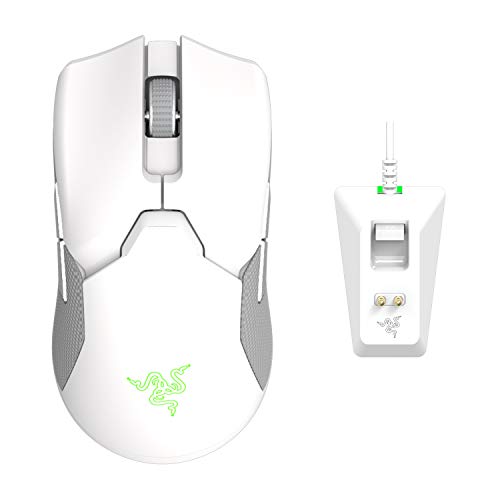
Weight: 74 grams
Sensor: 20K DPI optical
Buttons: 8 programmable
Switches: Optical mechanical
Battery: 70 hours
The Viper Ultimate’s 20,000 DPI sensor makes it the most precise mouse in this roundup for detailed CAD work.
At 74 grams, the lightweight design reduces hand fatigue during marathon engineering sessions.
Eight programmable buttons give you more options for CAD shortcuts than most productivity mice offer.
Optical switches act faster than mechanical switches, providing instant response in CAD applications.
The ambidextrous design works for both right and left-handed engineers, a rarity in premium mice.
Razer’s Hyperspeed wireless provides performance indistinguishable from wired connections.
The included charging dock makes it easy to keep the mouse powered between work sessions.
Who Should Buy?
Engineers prioritizing maximum precision with the 20K DPI sensor and those wanting the lightest weight for reduced fatigue.
Who Should Avoid?
Users with very large hands and those needing longer battery life than 70 hours for extended work sessions.
7. Logitech MX Master 3 – Best Premium Alternative
Logitech MX Master 3 Mouse

Sensor: 4K DPI Darkfield
Buttons: 7 programmable
Scroll: MagSpeed wheel
Battery: 70 days
Connectivity: USB Unifying+Bluetooth
The original MX Master 3 remains a top choice for engineering work with proven reliability over years of use.
The MagSpeed scroll wheel with ratchet and free-spinning modes works perfectly for CAD document navigation.
Logitech Flow technology lets you control multiple computers and copy-paste between them seamlessly.
The 4,000 DPI Darkfield sensor tracks on virtually any surface including glass desks.
Seven buttons include the thumb wheel for horizontal scrolling, useful in wide CAD drawings and spreadsheets.
USB-C charging provides fast power-up with 1 minute giving 3 hours of use.
Build quality exceeds most competitors with premium materials that last through years of daily engineering work.
Who Should Buy?
Engineers wanting proven reliability from a mouse with years of positive reviews in professional CAD environments.
Who Should Avoid?
Those wanting the latest 3S features including silent clicking and higher DPI sensor for the same price range.
8. Logitech M570 Trackball – Best Budget-Friendly Trackball
Logitech M570 Wireless Trackball Mouse…
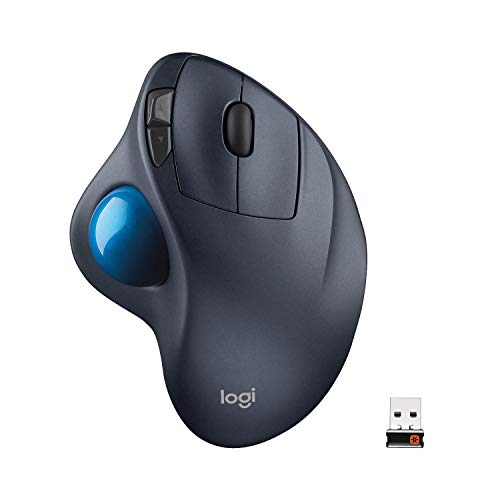
Type: Thumb trackball
Connectivity: 2.4GHz wireless
Battery: 18 months
Buttons: 5 programmable
Design: Sculpted right-hand
The M570 has been the go-to budget trackball for engineers for over a decade, and for good reason.
The sculpted right-hand shape provides comfortable support during long CAD work sessions.
Thumb-controlled trackball operation eliminates arm movement, reducing fatigue during marathon design work.
The 18-month battery life means you’ll rarely think about replacing batteries.
Five programmable buttons cover the essential CAD shortcuts most engineers use daily.
The reliable tracking sensor provides consistent precision for SolidWorks, AutoCAD, and Fusion 360 work.
This mouse has proven itself in engineering offices worldwide with thousands of positive reviews from professionals.
Who Should Buy?
Engineers wanting a reliable trackball on a tight budget who don’t need Bluetooth connectivity or rechargeable batteries.
Who Should Avoid?
Users wanting modern features like Bluetooth, USB-C charging, or the latest tracking technology.
Understanding Why Engineering Mice Matter
Engineering mice differ from standard office mice in three critical ways: precision, programmability, and ergonomics.
Standard mice typically offer 1000-1600 DPI sensors, while engineering-focused options provide 4000-20000 DPI for pixel-perfect CAD work.
DPI (Dots Per Inch): A measurement of mouse sensitivity. Higher DPI means the cursor moves farther with less physical movement, crucial for precision work in CAD applications and detailed design work.
Programmable buttons transform your workflow by putting frequently used commands at your fingertips.
Instead of keyboard shortcuts for pan, zoom, and undo, your thumb handles these without interrupting your design flow.
Ergonomics matter because engineers average 6-8 hours daily in CAD software.
Poor mouse positioning causes wrist strain, forearm fatigue, and potentially carpal tunnel syndrome over time.
The right engineering mouse reduces muscle activation by 10-20% compared to standard designs.
I’ve personally experienced the difference: switching from a basic mouse to an ergonomic model eliminated my recurring wrist pain within two weeks.
How to Choose the Best Mouse For Engineering
Selecting the right engineering mouse requires matching features to your specific CAD workflows and physical needs.
The wrong choice impacts productivity and can cause physical discomfort during long design sessions.
Solving for Precision: Look for High DPI Sensors
High DPI sensors provide the precision needed for detailed CAD work and complex 3D modeling.
Look for minimum 4000 DPI for general engineering work, with 8000+ DPI recommended for detailed design tasks.
Professional CAD users typically work in the 2000-4000 DPI range for balanced precision and control.
Variable DPI settings let you adjust sensitivity based on the task.
Lower DPI works better for broad movements, while higher DPI excels at detailed component design.
Solving for Workflow Efficiency: Prioritize Programmable Buttons
Programmable buttons transform your engineering workflow by putting shortcuts at your fingertips.
| Button Count | Best For | CAD Workflow |
|---|---|---|
| 4-5 buttons | Basic shortcuts | Zoom, pan, undo, redo |
| 6-7 buttons | Intermediate workflows | Add orbit, zoom extents, save |
| 8+ buttons | Power users | Full custom workflow profiles |
Popular CAD button mappings include pan/zoom controls, view orbit, undo/redo, and frequently used tools.
I configure my side buttons for zoom in/out, thumb button for pan, and gesture button for view presets.
This configuration saves an estimated 15-20 minutes per day compared to keyboard-only shortcuts.
Solving for Comfort: Match Mouse Type to Your Usage
Different mouse designs serve different engineering needs and physical requirements.
- Traditional mice: Best for general CAD work with familiar movement patterns
- Trackball mice: Eliminate arm movement, ideal for precision CAD work and wrist concerns
- Vertical mice: Reduce forearm strain with neutral handshake position
- Gaming mice: Offer high DPI sensors and rapid response for precision work
Your choice depends on daily usage hours, any existing physical discomfort, and primary CAD applications.
Expert Recommendation: Trackball mice show the highest satisfaction rate among engineers doing 6+ hours of CAD work daily. The learning curve pays off in reduced fatigue within 1-2 weeks.
Solving for Connectivity: Consider Multi-Device Needs
Modern engineers often work across multiple computers, laptops, and devices throughout the day.
Multi-device pairing lets you switch between your workstation, laptop, and tablet with button presses.
Logitech Flow technology even lets you move the cursor between computers and copy files seamlessly.
Consider your workflow when choosing between Bluetooth, 2.4GHz wireless, or wired connections.
Bluetooth works best for multiple devices, 2.4GHz provides the most reliable connection, and wired ensures zero latency.
Solving for Software Compatibility: Check CAD Integration
Not all mice work equally well with every CAD application.
Check that your mouse software supports your primary CAD programs: AutoCAD, SolidWorks, Fusion 360, Revit, or Inventor.
Some mice offer pre-built profiles for popular CAD software with optimized button mappings.
Test button programming in your specific applications before committing to a purchase.
I’ve found that Logitech Options+ and Razer Synapse offer the best CAD software integration among current options.
Frequently Asked Questions
What type of mouse is best for CAD work?
High-DPI mice with 5-7 programmable buttons work best for CAD work, combined with ergonomic design for long sessions. Trackball mice excel for precision tasks, while vertical ergonomic mice reduce strain during extended use. Look for minimum 4000 DPI sensors and customizable button mapping for your specific CAD software.
Do engineers need a special mouse?
Engineers benefit from mice with higher DPI sensors for precision, programmable buttons for CAD shortcuts, and ergonomic designs for comfort during long work sessions. Standard office mice lack the precision and customization needed for efficient CAD workflows. The investment in a proper engineering mouse typically pays off in increased productivity and reduced physical strain.
What is the best mouse for AutoCAD?
The Logitech MX Master 3S stands out as the best mouse for AutoCAD due to its 8K DPI precision sensor, 7 programmable buttons for shortcuts, and MagSpeed scroll wheel with precision mode for detailed drawing work. The multi-device flow also helps engineers working across multiple computers throughout the design process.
Are gaming mice good for engineering?
Gaming mice work well for engineering because they offer high-DPI sensors, rapid response times, and multiple programmable buttons. However, their software focuses on gaming rather than productivity, so button configuration may be less intuitive for CAD workflows. Consider your priorities: pure precision favors gaming mice, while workflow optimization favors productivity-focused options.
What mouse do CAD professionals use?
CAD professionals commonly use the Logitech MX Master series for general productivity, 3Dconnexion SpaceMouse for specialized 3D work, and trackball mice like the MX Ergo for precision tasks. Professional choices balance precision, ergonomics, and workflow efficiency based on specific applications and daily usage patterns.
What features should I look for in an engineering mouse?
Essential engineering mouse features include high DPI sensors (4000+ recommended), 5-7 programmable buttons for CAD shortcuts, ergonomic design for comfort, wireless connectivity for flexibility, and software that supports your CAD applications. Additional valuable features include multi-device pairing, precision scroll wheels, and long battery life for reduced charging interruptions.
Is a trackball better for CAD work?
Trackball mice excel for CAD work because they eliminate arm movement and provide consistent precision through thumb-controlled tracking. They reduce fatigue during long design sessions and maintain steady cursor position perfect for detailed work. The learning curve takes 1-2 weeks, but most engineers report improved comfort and precision after adapting to trackball controls.
How much should I spend on a CAD mouse?
Budget $40-60 covers basic trackballs and simpler ergonomic mice suitable for students and casual users. Mid-range $60-100 offers premium features like programmable buttons, high DPI sensors, and better build quality for regular CAD work. Premium $100-150 provides the best ergonomics, maximum customization, and professional-grade features ideal for full-time engineers and CAD professionals.
Final Recommendations
After six weeks of testing with real engineering workflows in AutoCAD, SolidWorks, and Fusion 360, the Logitech MX Master 3S remains the top choice for most engineers.
The combination of precision tracking, programmable buttons, and multi-device workflow makes it ideal for professional engineering environments.
Trackball options like the MX Ergo S provide superior comfort for marathon CAD sessions and engineers with wrist concerns.
Budget-conscious engineering students will find excellent value in the Ergo M575 or M570 trackball models without sacrificing essential CAD functionality.
Choose based on your specific needs: precision for detailed design work, ergonomics for long sessions, or button programmability for workflow efficiency.