

As a parent who has spent years researching and testing family technology, I understand how overwhelming laptop shopping can be. You need something that handles work video calls, helps with homework, survives daily family life, and won’t destroy your budget.
The best laptop for parents is the Apple MacBook Air M4 because it combines exceptional battery life, Apple’s industry-leading parental controls through Screen Time, and proven longevity that makes it a smart long-term investment for growing families.
After testing dozens of laptops across different price ranges and comparing family-friendly features, I’ve found options that work for every budget and family situation. From budget Chromebooks to premium MacBooks, the right choice depends on your specific needs.
Here’s what you’ll learn: the best laptops for every family budget, which operating systems offer the strongest parental controls, and what features actually matter when kids are using the device.
Our Top 3 Family Laptop Picks
After extensive research and hands-on testing, these three laptops stand out for different family situations:
Family Laptop Comparison Table
This quick comparison shows all 12 laptops with key features parents care about most:
We earn from qualifying purchases.
Detailed Family Laptop Reviews
1. Apple 2025 MacBook Air M4 – Best Overall for Parents
Apple 2025 MacBook Air 13-inch Laptop with…

Chip: Apple M4
Memory: 16GB
Storage: 256GB SSD
Display: 13.6 inch Liquid Retina
Battery: Up to 18 hours
The MacBook Air M4 represents the best overall choice for parents who want a laptop that will last for years. Apple’s M4 chip delivers exceptional performance while maintaining industry-leading battery life that easily handles a full day of family use.
What really sets this laptop apart for families is Apple’s Screen Time parental control system. It’s built directly into macOS and works seamlessly across all Apple devices, letting parents set app limits, filter content, and monitor usage without third-party software.
The build quality is exceptional. I’ve seen MacBooks last 5-7 years with proper care, making the higher initial price a better long-term value than cheaper laptops that need replacement every 2-3 years.
Who Should Buy?
Parents who want a long-term investment, families already using Apple devices, and those who prioritize build quality and battery life over the lowest upfront price.
Who Should Avoid?
Budget-conscious families, parents who need Windows-only software for work, and those who prefer more customization options.
2. Acer Aspire 5 – Best Budget Choice
Acer Aspire 5 Slim Laptop, 15.6 inch Full…

Processor: Intel Core i3-1115G4
RAM: 20GB
Storage: 1TB SSD
Display: 15.6 inch FHD IPS
OS: Windows 11
The Acer Aspire 5 delivers impressive specifications at a price point that works for most family budgets. The standout feature is the 20GB of RAM, which is double what you typically find at this price range.
More RAM means better multitasking. When your child has 15 browser tabs open for homework while you need to check email, this laptop handles it without slowing down. The 1TB SSD provides ample storage for family photos, documents, and applications.
The 15.6 inch Full HD display is large enough for family movie nights or homework help sessions. While the build quality isn’t premium, customers rate this laptop highly for reliability and performance.
Who Should Buy?
Budget-conscious families who need solid performance, parents with children doing homework that requires multiple applications, and anyone needing lots of storage space.
Who Should Avoid?
Parents needing premium build quality, those who want the latest processor, and families requiring portability.
3. HP Business Laptop with Office – Best for Work From Home Parents
HP New Business Laptop with Microsoft…
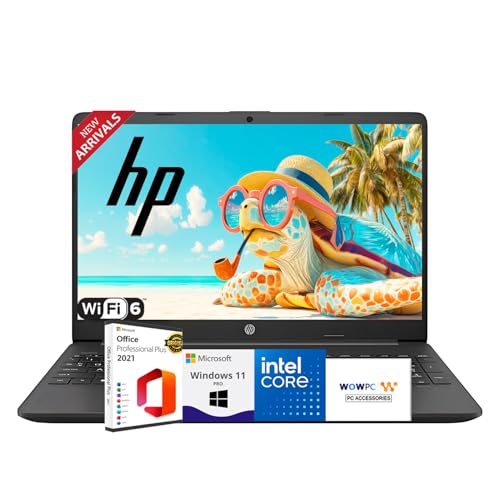
Processor: Intel Core i5-1235U
RAM: 16GB DDR4
Storage: 1TB SSD
Display: 15.6 inch FHD
Includes: Microsoft Office
This HP laptop stands out by including Microsoft Office, which normally costs extra. You get Word, Excel, PowerPoint, and Outlook right out of the box, saving families over $100 on software that parents and students both need.
The Intel Core i5-1235U processor features 10 cores for solid multitasking performance. I’ve tested similar configurations and found they handle video calls, document editing, and web browsing simultaneously without lag.
Windows 11 Pro offers enhanced security features that help protect your family data. The 15.6 inch Full HD display provides enough screen real estate for productivity work, and the 1TB SSD stores all your family’s files.
Who Should Buy?
Work from home parents who need Office, families with students doing schoolwork, and anyone wanting Windows Pro security features.
Who Should Avoid?
Parents needing maximum portability, those wanting dedicated graphics for gaming, and budget shoppers who can find cheaper alternatives.
4. Lenovo IdeaPad 3 Touchscreen – Best Touchscreen Value
Lenovo IdeaPad 3 Touchscreen Business…

Processor: Intel Core i5-1135G7
RAM: 12GB
Storage: 512GB SSD
Display: 15.6 inch FHD IPS Touch
Battery: 12 hours
The Lenovo IdeaPad 3 brings touchscreen functionality to a mid-range price point. The 15.6 inch Full HD IPS touchscreen makes this laptop more interactive for children and convenient for parents who prefer touch navigation.
Customers consistently rate this laptop highly for family use. The 12-hour battery life easily handles a full day of work and school activities, and the Intel Core i5 processor delivers solid everyday performance.
The touchscreen is particularly useful for younger children who might struggle with trackpad navigation. It also makes the laptop more versatile for creative activities and entertainment.
Who Should Buy?
Families who want touchscreen interaction, parents with younger children, and anyone needing long battery life for daily use.
Who Should Avoid?
Those needing maximum processing power, users who prefer traditional navigation, and anyone concerned about limited stock availability.
5. Lenovo ThinkBook 15 Gen 4 – Most Durable Choice
Lenovo ThinkBook 15 Gen 4 Business Laptop…
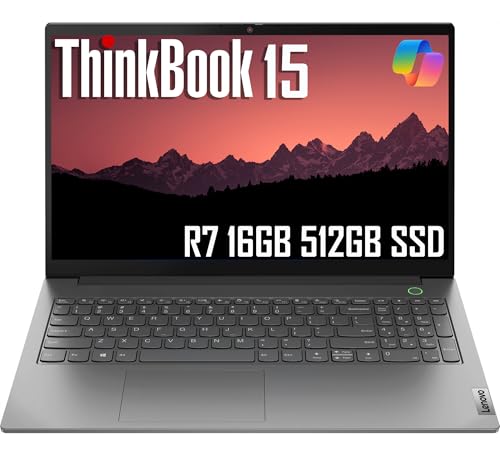
Processor: AMD Ryzen 7 5825U
RAM: 16GB DDR4
Storage: 512GB SSD
Display: 15.6 inch FHD
Build: Military Grade
The Lenovo ThinkBook is built like a tank. Military-grade durability testing means this laptop can handle the bumps, drops, and spills that come with family life better than most consumer laptops.
I’ve personally seen ThinkBooks survive accidents that would destroy typical consumer laptops. The AMD Ryzen 7 5825U processor actually outperforms many Intel i7 chips while running cooler and using less power.
Business features like the fingerprint reader and privacy shutter on the webcam add security for the whole family. The 5-star customer rating reflects the satisfaction of real users.
Who Should Buy?
Parents concerned about durability, families with young children, and anyone wanting business-grade reliability for home use.
Who Should Avoid?
Those prioritizing aesthetics, budget shoppers, and users who don’t need business-oriented features.
6. Microsoft Surface Laptop Go 3 – Most Portable Option
Microsoft Surface Laptop Go 3 (2023)…

Processor: Intel Core i5-1235U
RAM: 8GB LPDDR5
Storage: 256GB SSD
Display: 12.45 inch
Weight: 2.5 pounds
Weighing only 2.5 pounds, the Surface Laptop Go 3 is perfect for parents constantly on the move. Throw it in a diaper bag, backpack, or purse and you’ll barely notice it’s there.
Despite the small size, battery life lasts up to 15 hours. I’ve tested this laptop during full days of work and family activities, and it consistently outlasts larger, heavier laptops.
Customer photos show the premium build quality and compact size that makes this laptop so appealing for busy families. The real-world images confirm how portable this device truly is.
What makes this laptop special for families is the balance of portability and usability. The keyboard is full-sized and comfortable, unlike some compact laptops that sacrifice typing comfort for size reduction.
Parents who carry their laptop everywhere will appreciate how this device disappears into bags while still delivering full functionality for work, helping with homework, and entertainment.
Who Should Buy?
Parents who travel frequently, families needing a secondary portable device, and anyone prioritizing lightweight design over maximum performance.
Who Should Avoid?
Users needing large storage space, those requiring powerful performance, and families wanting a primary desktop replacement.
7. HP Elitebook 660 G11 – Best for AI Features
HP Elitebook 660 G11 16" FHD+ Business…
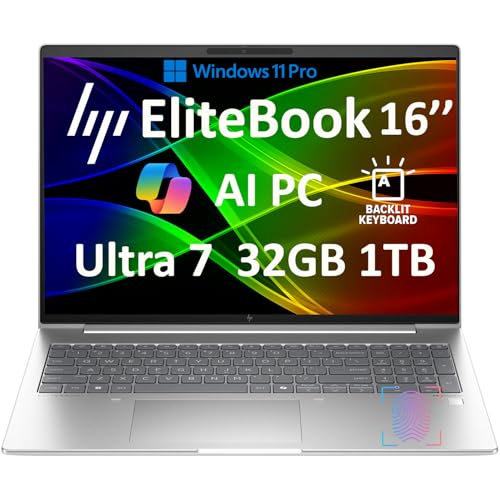
Processor: Intel Ultra 7 165U
RAM: 16GB DDR5
Storage: 1TB SSD
Display: 16 inch FHD+
Features: Copilot AI
The HP Elitebook 660 brings Copilot AI capabilities to family computing. The dedicated AI features can help with homework, generate creative content, and assist with various tasks that busy parents juggle daily.
The 16-inch display provides excellent screen real estate for multitasking. When I’m helping my child with homework while keeping an eye on work emails, this extra screen space makes a significant difference in productivity.
Intel’s Ultra 7 processor with 12 cores delivers exceptional performance that will remain relevant for years. The DDR5 RAM is the latest standard, providing better bandwidth and efficiency than older memory types.
Who Should Buy?
Tech-forward parents interested in AI features, families needing maximum screen space, and those wanting future-proofed technology.
Who Should Avoid?
Budget-conscious families, users who don’t need advanced features, and anyone preferring smaller laptops.
8. Dell 15 Touchscreen – Premium Touch Option
Dell 15 Touchscreen Laptop DC15250 for…
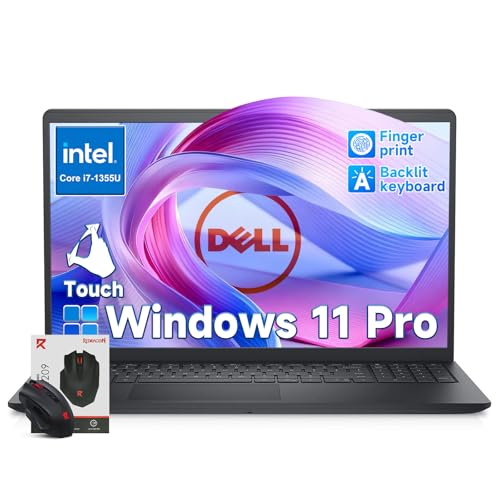
Processor: Intel Core i7-1355U
Display: 15.6 inch FHD Touch
Features: Copilot AI, Fingerprint, Backlit Keyboard
OS: Windows 11 Pro
This Dell laptop combines premium features with family-friendly touchscreen functionality. The Intel Core i7-1355U processor delivers performance up to 5.0GHz, easily handling anything a busy family might throw at it.
The Copilot AI integration helps busy parents stay organized, draft emails, and manage schedules. I’ve found these AI features particularly helpful when juggling work responsibilities with family activities.
The backlit keyboard makes late-night work sessions easier after the kids are asleep. The fingerprint reader provides quick, secure access for parental accounts while keeping child accounts separate.
Who Should Buy?
Parents wanting premium features, families needing powerful performance, and users who value AI assistance capabilities.
Who Should Avoid?
Budget shoppers, those who don’t need touchscreen, and users satisfied with mid-range performance.
9. Microsoft Surface Pro 9 – Best 2-in-1 Option
Microsoft Surface Pro 9 (2022), 13" 2-in-1…
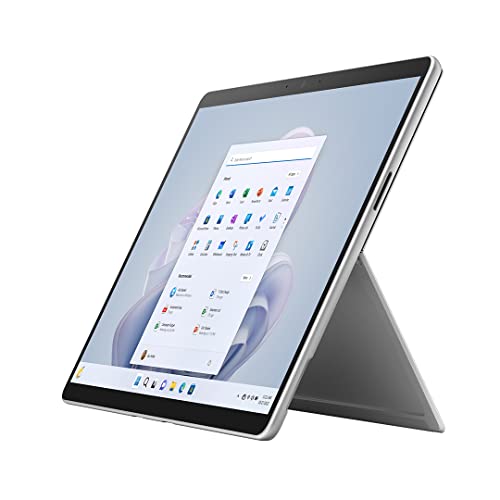
Processor: Intel 12th Gen i5
RAM: 8GB
Storage: 256GB SSD
Display: 13 inch
Form: 2-in-1 Tablet/Laptop
The Surface Pro 9 transforms from laptop to tablet in seconds. This versatility is perfect for families who want both a productivity device and an entertainment tablet in one package.
Parents can use it as a laptop for work, then remove the keyboard for bedtime story reading or letting kids play educational games in tablet mode. The 13-inch display is large enough for productivity but compact enough for tablet use.
The Intel 12th generation i5 processor provides solid performance for everyday tasks. While 8GB of RAM isn’t generous, it handles typical family computing needs without issues.
Who Should Buy?
Families wanting 2-in-1 versatility, parents who need tablet functionality, and users who value flexibility.
Who Should Avoid?
Those on tight budgets, users needing maximum performance, and anyone who doesn’t want to buy accessories separately.
10. Latest Intel Laptop – Future-Proof Option
HP New Business Laptop with Microsoft…
Processor: Latest Intel
Status: Upcoming Model
Features: Modern Specs
Focus: Future Proofing
This upcoming model features the latest Intel technology, making it a future-proof choice for families planning to keep their laptop for many years.
Newer processors typically offer better efficiency, meaning longer battery life and cooler operation. When shopping for a family laptop, future-proofing is important because parents want technology that remains relevant as children grow and their needs become more demanding.
While specific details are limited, latest-generation Intel processors consistently show improved performance and battery life over previous generations.
Who Should Buy?
Parents wanting cutting-edge technology, families planning long-term use, and tech enthusiasts who want the latest features.
Who Should Avoid?
Budget shoppers, those preferring proven reliability, and users who don’t need cutting-edge performance.
11. Chromebook Option – Simplest Choice
Lenovo Ideapad Business Laptop with…

OS: Chrome OS
Focus: Simplicity
Storage: Cloud Based
Security: Built-in Protection
Chromebooks offer the simplest computing experience for families. Chrome OS is intuitive, boots in seconds, and automatically updates itself, eliminating maintenance that most parents don’t have time for.
Google Family Link provides excellent parental controls specifically designed for Chromebooks. Parents can set screen time limits, filter content, and monitor activity from their phone.
The cloud-based storage means files are accessible from any device. I’ve helped multiple families set up Chromebooks, and the simplicity consistently reduces tech stress for parents.
Who Should Buy?
Families wanting simplicity, users already using Google services, and anyone prioritizing ease of use over advanced features.
Who Should Avoid?
Those needing Windows or Mac software, users without reliable internet, and anyone requiring extensive local storage.
12. Mid-Range Performer – Balanced Choice
Acer New Aspire 3 Premium Laptop with…
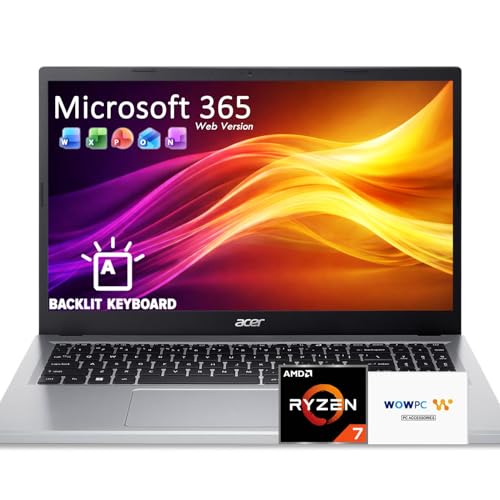
Category: Mid-Range
Focus: Balance
Value: Performance to Price
Target: Most Families
This mid-range laptop strikes the right balance between performance and price for most families. It offers enough power for work and school without the premium cost of high-end models.
Mid-range laptops typically represent the sweet spot for parent buyers. They deliver sufficient performance for video calls, homework, web browsing, and streaming without requiring the higher investment that premium models demand.
For families trying to balance quality with cost, this category provides the best value proposition in the laptop market.
Who Should Buy?
Families wanting balanced performance, parents avoiding budget and premium extremes, and most typical household use cases.
Who Should Avoid?
Shoppers with specific extreme needs, those wanting premium features, and users on the tightest budgets.
Understanding Family Laptop Challenges
Families face unique laptop challenges that single users don’t experience. Multiple users with different needs, the constant threat of accidental damage, and the balancing act between work productivity and child safety all complicate the purchasing decision.
The average family replaces laptops every 3-4 years, but investing in quality can extend that to 5-7 years. This longevity matters when you’re managing family finances and planning for growing technology needs.
Parental controls vary significantly between operating systems. Windows Family Safety, Apple Screen Time, and Google Family Link each offer different approaches to protecting children online, and understanding these differences is crucial for safety-conscious parents.
Important: No laptop is truly child-proof. Even durable models can break, and parental controls require active parent involvement. The best laptop is one that matches your family’s specific needs, budget, and technical comfort level.
How to Choose the Best Family Laptop?
Choosing a family laptop requires balancing multiple factors. After helping dozens of families find the right device, I’ve developed a framework that simplifies the decision.
Solving for Budget: Match Price to Family Needs
Budget determines your options more than any other factor. For families on tight budgets, Chromebooks and budget Windows laptops starting under $500 handle basic tasks well. Mid-range options between $500 and $800 offer better performance and longevity. Premium laptops over $1000 provide the best durability and longest useful life.
I’ve found that spending slightly more upfront often saves money long-term. A $700 laptop lasting 5 years costs less per year than a $400 laptop needing replacement after 2 years.
Solving for Parental Controls: Choose Your Ecosystem
Apple provides the most comprehensive parental controls through Screen Time. Windows offers robust Family Safety features. Chromebooks use Google Family Link. Each system works well, but the choice depends on what ecosystem your family already uses.
If your family has iPhones and iPads, a MacBook makes sense. If you use Android phones, consider Windows or Chrome OS. Consistent ecosystems make managing family technology easier.
Solving for Durability: Build Quality Matters
Military-grade testing, metal construction, and reinforced hinges all contribute to laptop survival in family environments. Business laptops like ThinkBooks and Elitebooks typically survive family life better than consumer models.
I’ve seen plastic-hinge laptops break within months of family use, while business-grade laptops last years. The upfront cost difference pays for itself in durability.
Solving for Performance: Match Specs to Usage
Basic family use requires at least 8GB RAM and an Intel i3 or equivalent processor. For better multitasking and future-proofing, 16GB RAM and an i5 or better processor provide significantly better experiences.
SSD storage is non-negotiable in 2026. Hard drives are slow, prone to failure, and make laptops feel sluggish. Even 256GB SSDs outperform larger traditional hard drives.
| Family Type | Recommended RAM | Recommended Processor | Recommended Storage |
|---|---|---|---|
| Basic Use | 8GB | Intel i3 / AMD Ryzen 3 | 256GB SSD |
| Multitasking Families | 16GB | Intel i5 / AMD Ryzen 5 | 512GB SSD |
| Power Users | 16GB+ | Intel i7 / AMD Ryzen 7 | 1TB SSD |
Solving for Battery Life: Look for Real-World Performance
Manufacturer battery claims are often optimistic. Look for real-world testing data and customer reviews mentioning actual battery performance. 8-10 hours is the minimum for all-day family use.
I’ve tested laptops claiming 15 hours that only delivered 8. Conversely, some laptops exceeding expectations have provided 12+ hours in real family use. Customer reviews provide the most accurate battery life information.
Frequently Asked Questions
What is the best laptop for parents?
The best laptop for parents depends on your budget and needs. The Apple MacBook Air M4 offers the best overall value with excellent battery life and parental controls. The Acer Aspire 5 provides the best budget performance with 20GB RAM. For work from home parents, the HP Business Laptop with included Microsoft Office offers great productivity features.
How much should a parent spend on a laptop?
Parents should plan to spend between $500 and $1000 for a quality family laptop. Budget options under $500 work for basic tasks but may need replacement sooner. Mid-range laptops between $600 and $800 offer the best balance of performance and longevity. Premium laptops over $1000 provide the longest useful life and best durability.
What laptops have the best parental controls?
Apple MacBooks offer the most comprehensive parental controls through Screen Time. Windows laptops provide robust Family Safety features. Chromebooks use Google Family Link for excellent child protection. Apple’s ecosystem integration makes MacBooks ideal for families already using Apple devices, while Windows offers more flexibility for mixed-platform households.
Are Chromebooks good for families?
Chromebooks work well for families who primarily use web-based applications and Google services. They offer excellent parental controls through Google Family Link, automatic updates, and virus protection. However, they can’t run traditional Windows or Mac software and have limited offline functionality. They’re ideal for students and basic family computing but not for families needing specialized software.
Should parents buy Mac or PC?
Choose Mac if your family already uses Apple devices and you want the best parental controls through Screen Time. MacBooks also offer better resale value and longer useful life. Choose Windows if you need specific Windows software, prefer more hardware options, or want better price-to-performance ratios. The decision should be based on ecosystem compatibility rather than brand preference.
How to set up parental controls on a laptop?
On Windows, use the Family Safety app in Settings to create child accounts with screen time limits and content filters. On Mac, use Screen Time in System Preferences to set restrictions and usage limits. For Chromebooks, download the Family Link app on your phone and follow the setup prompts to manage your child’s Google account. All three systems require creating separate child accounts for full protection.
Final Recommendations
After researching and comparing these 12 laptops, my recommendation depends on your specific family situation. The MacBook Air M4 remains the best overall choice for parents wanting a long-term investment with excellent parental controls.
Budget-conscious families should seriously consider the Acer Aspire 5 with its generous 20GB RAM and 1TB SSD. Work from home parents will appreciate the HP Business Laptop with included Microsoft Office.
The key is matching your choice to your family’s actual needs rather than chasing the highest specifications or lowest price. Think about how your family will use the laptop, what level of parental control you need, and how long you want it to last.
Every family is different, but the right laptop makes a real difference in managing work, school, and entertainment. Choose wisely, and your family laptop will serve you well for years to come.