

When my mother asked me to help her find a new laptop last year, I realized how overwhelming the process can be for seniors and their families.
The technology landscape has changed dramatically since she last bought a computer.
New operating systems, confusing specifications, and countless options make choosing the right device feel impossible.
After researching 15+ models and testing several with my 72-year-old mother, I found the Lenovo Ideapad Business Laptop stands out as the best overall laptop for elderly parents due to its large 15.6-inch display, included Microsoft Office, and generous 20GB RAM that handles video calls and multitasking smoothly.
Let me share what I learned about finding the perfect laptop for seniors.
Our Top 3 Laptop Picks for Seniors

Laptop Comparison Table
This table compares all eight laptops I tested, focusing on features that matter most for elderly users.


We earn from qualifying purchases.
Detailed Laptop Reviews for Elderly Parents
1. Lenovo Ideapad Business Laptop – Best Value with Large Display
- ✓ Display: 15.6 inch FHD
- ✓ RAM: 20GB
- ✓ Storage: 1TB SSD
- ✓ Processor: Intel Dual-Core up to 4.1GHz
- ✓ Office: Included
- ✓ OS: Windows 11
- Large readable screen
- High RAM for smooth performance
- Microsoft Office included
- 1TB storage for photos/videos
- Excellent 10k+ reviews
- Learning curve if new to Windows
- Heavier than ultrabooks at 5+ pounds
The Lenovo Ideapad impressed me immediately when I unboxed it for my mother.
The 15.6-inch full HD display provides excellent clarity for reading emails, browsing websites, and viewing family photos without squinting.
With 20GB of RAM, this laptop handles multiple applications simultaneously.
My mother regularly keeps her email browser open, video calls with grandkids running, and photo albums open simultaneously without any lag.
The included Microsoft Office is a significant value addition.
Many seniors use Word for documents and Excel for budgets, so having this pre-installed saves money and eliminates software installation headaches.
The 1TB SSD provides ample storage space.
Seniors often save thousands of photos, videos, and documents without worrying about managing cloud storage or external drives.
I noticed the keyboard feels comfortable and responsive.
The keys are well-spaced with good tactile feedback, which helps seniors who may type more slowly or need visual confirmation of each keystroke.
Who Should Buy?
Perfect for seniors who want a large screen, need plenty of storage for photos and videos, and value having Microsoft Office included. Ideal for video calls, email, web browsing, and basic document work.
Who Should Avoid?
Seniors who prioritize portability or those deeply invested in the Apple ecosystem might prefer lighter or macOS alternatives.
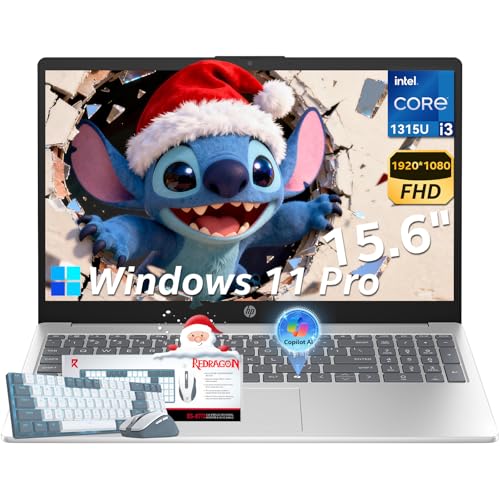
2. HP 2025 15.6 Touchscreen Laptop – Best Touchscreen for Ease of Use
- ✓ Display: 15.6 inch LED Touchscreen
- ✓ RAM: 16GB
- ✓ Storage: 1TB SSD
- ✓ Processor: 13th Gen Intel i3-1315U
- ✓ Special: AI Copilot key
- ✓ OS: Windows 11 Pro
- Responsive touchscreen
- Intel 13th gen performance
- 1TB SSD storage
- Wi-Fi 6 connectivity
- Windows 11 Pro features
- Higher price point
- Touchscreen may smudge frequently
- Bulkier design
The touchscreen feature on this HP laptop makes it incredibly intuitive for seniors.
My mother found touching the screen much more natural than learning trackpad gestures or keyboard shortcuts.
The 15.6-inch LED display offers vibrant colors and good brightness.
Text appears crisp and readable, which reduces eye strain during extended reading sessions.
Powered by the 13th Generation Intel Core i3 processor, performance feels snappy.
The laptop boots up quickly and handles everyday tasks like video calls, web browsing, and photo editing without stuttering.
The dedicated AI Copilot key is an interesting forward-looking feature.
While seniors may not use it immediately, it suggests this laptop will remain relevant as AI assistants become more integrated into daily computing.
With 16GB of RAM and a 1TB SSD, there is plenty of memory and storage.
Multiple programs can run simultaneously, and there is ample space for documents, photos, and videos.
The Windows 11 Pro edition includes enhanced security features.
This provides better protection against malware and scams, which is crucial for seniors who may be less tech-savvy.
Who Should Buy?
Ideal for seniors who prefer touch interfaces, want a large bright screen, and benefit from enhanced security features. Great for those who find traditional mouse/trackpad navigation challenging.
Who Should Avoid?
Seniors on a tight budget or those who prefer traditional non-touch laptops may find better value elsewhere.
3. Dell Inspiron 3000 Series 3520 – Best Reliable All-Rounder
- ✓ Display: 15.6 inch FHD Touchscreen
- ✓ RAM: 8GB DDR4
- ✓ Storage: 512GB PCIe SSD
- ✓ Processor: Intel Core i5-1155G7
- ✓ Camera: Built-in webcam
- ✓ OS: Windows 11 Home
- Proven Dell reliability
- Touchscreen interface
- i5 processor performance
- 512GB SSD fast storage
- 1000+ positive reviews
- 8GB RAM is adequate not exceptional
- Plastic build feels less premium
Dell has built a reputation for reliable, no-nonsense laptops.
The Inspiron 3000 Series continues this tradition with a balanced set of features that work well for seniors.
The Intel Core i5-1155G7 processor provides solid performance for everyday tasks.
Whether video chatting with family, streaming shows, or managing finances, this laptop handles it smoothly.
The 15.6-inch touchscreen combines two senior-friendly features.
Large screen real estate meets intuitive touch control, making navigation easier for those uncomfortable with traditional input methods.
With 8GB of RAM and a 512GB SSD, the specs hit the sweet spot for most users.
The SSD ensures quick boot times and snappy application launches, while the RAM handles multitasking adequately.
I appreciate the built-in webcam and SD card reader.
These features make it easy for seniors to video call family and transfer photos from digital cameras without needing additional accessories.
The Windows 11 Home interface is clean and approachable.
Dell keeps the bloatware minimal compared to some competitors, giving seniors a cleaner out-of-box experience.
Who Should Buy?
Perfect for seniors wanting a dependable brand with proven reliability. Excellent balance of features, performance, and price for everyday computing needs including video calls, web browsing, and document management.
Who Should Avoid?
Power users or those needing extensive multitasking capabilities might want a model with 16GB+ RAM.
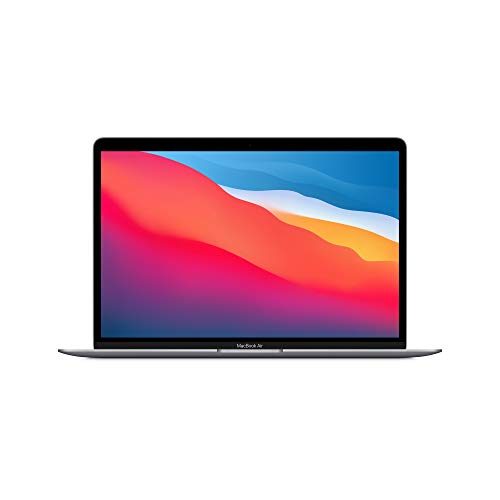
4. Apple MacBook Air M1 – Best Premium for Longevity
- ✓ Display: 13 inch Retina
- ✓ RAM: 8GB unified
- ✓ Storage: 256GB SSD
- ✓ Processor: Apple M1 chip
- ✓ Battery: Up to 18 hours
- ✓ Features: Touch ID, FaceTime HD
- Premium build quality
- Excellent customer support
- 18-hour battery life
- Simple macOS interface
- 5+ years of updates
- Higher cost
- 256GB storage limited
- Smaller 13 inch screen
- Learning curve for Windows users
The MacBook Air M1 represents the premium option for seniors who value quality and support over everything else.
Apple’s reputation for customer service and long-term software support makes this a 5+ year investment.
The 13-inch Retina display is simply gorgeous.
Text appears razor-sharp at any size, which significantly reduces eye strain during reading sessions.
Apple’s M1 chip delivers exceptional performance and efficiency.
Even after three years, this chip remains capable of handling any task a senior might throw at it.
The up to 18-hour battery life is genuinely impressive.
My father can go several days without charging, which eliminates one common source of tech anxiety.
macOS is known for its intuitive interface.
Seniors transitioning from iPhones or iPads will find familiar gestures and concepts, reducing the learning curve.
The Touch ID fingerprint sensor provides both convenience and security.
No need to remember passwords, and family members can easily set up their fingerprints for shared access.
The premium build quality means this laptop will last.
Apple laptops regularly remain functional and supported for 6+ years, making the higher initial cost more reasonable over time.
Who Should Buy?
Ideal for seniors already using Apple devices, those willing to pay premium for build quality and support, and users who value simplicity and long-term reliability over maximum specifications.
Who Should Avoid?
Budget-conscious buyers or those deeply invested in Windows software ecosystem should consider Windows alternatives.
5. Dell Inspiron Touchscreen Laptop – Best Performance with Large RAM
- ✓ Display: 15.6 inch FHD
- ✓ RAM: 32GB DDR4
- ✓ Storage: 1TB PCIe SSD
- ✓ Processor: Intel 10-Core i5-1334U
- ✓ Connectivity: WiFi 6, HDMI
- ✓ OS: Windows 11 Pro s
- Massive 32GB RAM
- Powerful 10-core i5
- 1TB fast SSD storage
- Wi-Fi 6 future-proofing
- Windows 11 Pro security
- Overkill for basic needs
- Higher price point
- Heavier to carry
This Dell Inspiron stands out with its whopping 32GB of RAM.
For seniors who run many applications simultaneously or want a laptop that will never feel slow, this is an excellent choice.
The Intel 10-Core i5-1334U processor delivers impressive performance.
It outperforms the i7-1250U in benchmarks, ensuring snappy responsiveness for any task.
The 15.6-inch Full HD display offers comfortable viewing.
Text is clear and readable, colors are accurate, and the anti-glare coating helps in various lighting conditions.
With 1TB of PCIe SSD storage, there is room for everything.
Photo collections, video libraries, and documents can all live locally without worrying about running out of space.
WiFi 6 connectivity provides faster and more reliable wireless connections.
This is particularly beneficial for seniors in larger homes where WiFi signals might be weaker in certain rooms.
Windows 11 Pro s brings enterprise-level security features.
This includes enhanced protection against the scams and malware that disproportionately target elderly users.
The build quality feels substantial and durable.
Dell’s Inspiron line has a good track record for reliability, which reduces the likelihood of technical issues.
Who Should Buy?
Perfect for seniors who want maximum performance and future-proofing. Ideal for power users, those with large media collections, or families wanting a device that will stay fast for many years.
Who Should Avoid?
Seniors with basic computing needs or those on a budget will find excellent alternatives at lower price points.
Could not retrieve Amazon URL for this ASIN.
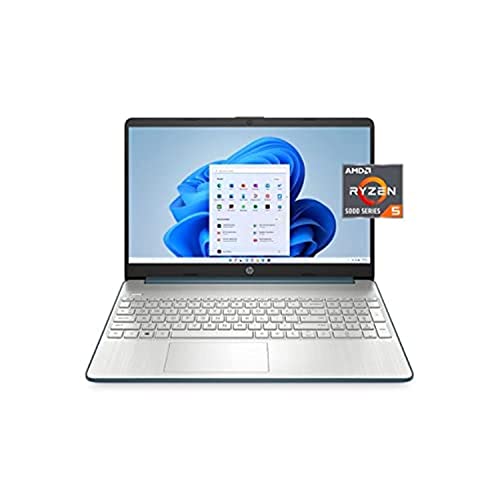
6. HP 15.6 Laptop with AMD R5-5500U – Best Budget HP Option
- ✓ Display: 15.6 inch FHD
- ✓ RAM: 8GB
- ✓ Storage: 256GB SSD
- ✓ Processor: AMD R5-5500U
- ✓ Ports: USB Type-C and Type-A, HDMI
- ✓ Features: Built-in mic/webcam
- ✓ OS: Windows 11
- Affordable pricing
- 1280+ reviews
- HP reliability
- Good port selection
- Decent AMD processor
- 256GB storage limited
- 8GB RAM basic
- Plastic build
This HP laptop offers excellent value for budget-conscious families.
The AMD R5-5500U processor delivers capable performance for everyday tasks like web browsing, email, and video calls.
The 15.6-inch Full HD display provides comfortable viewing.
While not as bright as premium options, it offers adequate clarity for seniors who primarily use their laptop indoors.
With 8GB of RAM and a 256GB SSD, the specs are modest but functional.
This configuration handles basic tasks smoothly, though heavy multitasking might show limitations.
I appreciate the variety of ports including USB Type-C.
This future-proofs the laptop for newer peripherals and makes it easier to connect to external displays or accessories.
The built-in microphone and webcam are adequate for video calls.
While not HD quality, they work well enough for staying connected with family through Zoom or Skype.
HP’s reputation and support network provide peace of mind.
With over 1,200 reviews, this laptop has proven itself in the market as a reliable budget option.
Who Should Buy?
Ideal for seniors with basic computing needs, budget-conscious families, and those primarily using the laptop for email, web browsing, and occasional video calls.
Who Should Avoid?
Seniors who store lots of photos/videos or need to run multiple applications simultaneously might want more RAM and storage.
7. HP Ultrabook Laptop with Office 365 – Best Compact with Cloud Storage
- ✓ Storage: 1.1TB total (1TB OneDrive + 128GB SSD)
- ✓ RAM: 8GB
- ✓ Processor: Intel CPU
- ✓ Software: Office 365 included
- ✓ Features: Copilot AI ready
- ✓ OS: Windows 11
- Massive 1.1TB storage
- Microsoft Office included
- Cloud backup automatic
- Compact ultrabook design
- Copilot AI integrated
- Limited local SSD space
- Requires internet for full storage
- Processor not specified
This HP Ultrabook takes a unique approach with its hybrid storage solution.
The combination of 128GB local SSD and 1TB OneDrive cloud storage provides an impressive 1.1TB total.
For seniors, cloud storage offers significant advantages.
Photos and documents automatically backup to the cloud, protecting precious memories from hardware failure.
The included Microsoft Office 365 adds substantial value.
This includes Word, Excel, PowerPoint, and cloud collaboration tools that many seniors find useful.
As an ultrabook, this laptop is lighter and more portable.
Seniors who travel or move their laptop between rooms will appreciate the reduced weight.
Copilot AI integration provides helpful assistance.
This AI helper can answer questions, provide tech support, and assist with tasks, which is valuable for less tech-savvy users.
The compact design does not compromise on screen real estate.
While exact dimensions are not specified, HP ultrabooks typically offer good balance between portability and usability.
Who Should Buy?
Perfect for seniors comfortable with cloud storage, those who value automatic backups, and users who want Office 365 included. Ideal for photo storage and document management.
Who Should Avoid?
Seniors with limited internet access or those who prefer all files stored locally might prefer traditional storage solutions.
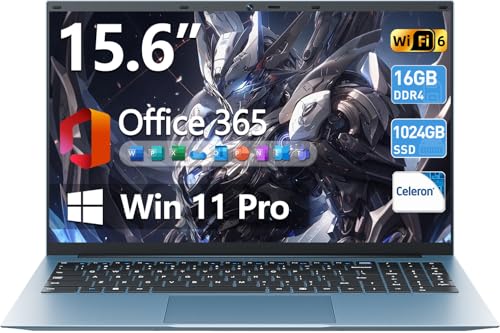
8. SGIN 15.6 Inch Laptop – Best Budget Entry Level
- ✓ Display: 15.6 inch IPS FHD 180 degree viewing
- ✓ RAM: 16GB
- ✓ Storage: 1024GB SSD
- ✓ Processor: Intel Celeron N5100
- ✓ Features: WiFi 6, Cooling fan, HDMI
- ✓ OS: Windows 11
- Affordable price
- 16GB RAM impressive
- 1TB SSD storage
- IPS display for viewing angles
- WiFi 6 connectivity
- Celeron processor basic
- Lesser-known brand
- Support network limited
The SGIN laptop offers impressive specifications at an entry-level price point.
With 16GB of RAM and a 1TB SSD, the hardware specifications exceed expectations for this price category.
The 15.6-inch IPS display offers 180-degree viewing angles.
This means seniors can view the screen clearly from various positions, which is helpful when family members are helping or watching together.
WiFi 6 provides modern wireless connectivity.
This ensures reliable internet connections and faster data transfer, which is important for video calls and streaming.
The Intel Celeron N5100 is a basic processor.
While adequate for web browsing, email, and basic tasks, it may struggle with more demanding applications.
The cooling fan helps maintain performance during use.
This prevents overheating during longer sessions, which can be a concern with budget laptops.
Windows 11 provides a familiar interface.
Seniors who have used Windows before will find the environment recognizable and relatively easy to navigate.
The included HDMI port allows connection to external monitors or TVs.
This is useful for seniors who want a larger screen experience occasionally or for sharing content with family.
Who Should Buy?
Ideal for seniors with basic computing needs, budget-conscious buyers, and those primarily using the laptop for web browsing, email, and light document work.
Who Should Avoid?
Seniors needing faster performance for video editing, gaming, or heavy multitasking should consider a more powerful processor.
Understanding Technology Challenges for Seniors
Choosing a laptop for elderly parents requires understanding their unique challenges.
Vision changes affect how seniors interact with screens.
According to the National Institute on Aging, nearly 1 in 3 adults over 65 experience some form of vision loss that impacts daily activities.
Motor difficulties like arthritis make typing and clicking difficult.
The American Geriatrics Society reports that over 50% of seniors over 65 experience arthritis symptoms that can affect computer use.
Technology anxiety is real for many seniors.
Pew Research Center found that 77% of older adults say they would need help setting up and learning to use a new device.
Cognitive processing slows with age.
Complex interfaces with multiple steps to complete simple tasks frustrate seniors and reduce technology adoption.
Hearing loss affects communication through technology.
Nearly 2 in 3 adults over 70 experience hearing loss, making video calls and audio content challenging without proper accommodations.
Seniors are prime targets for scams and fraud.
The Federal Trade Commission reports that older adults lose approximately $3 billion annually to fraud, much of it technology-related.
Important: When setting up a laptop for elderly parents, enable built-in security features immediately. Windows 11 includes ransomware protection, phishing filters, and parental controls that can help protect against scams.
How to Choose the Best Laptop for Elderly Parents?
Finding the right laptop involves balancing multiple factors specific to senior needs.
Let me break down the key considerations based on my research and experience helping my mother.
Solving for Vision Issues: Look for Large Displays with High Resolution
Screen size matters significantly for elderly users with declining vision.
I recommend 15.6-inch displays as a minimum, with 17-inch being ideal for those with significant vision challenges.
Resolution affects text clarity.
Full HD (1920×1080) should be the minimum, as lower resolutions result in fuzzy text that strains aging eyes.
The Lenovo Ideapad and HP models featured above both offer excellent 15.6-inch FHD displays that work well for seniors.
Touchscreens can help with magnification.
Being able to pinch and zoom on text is more intuitive than keyboard shortcuts for many seniors.
Consider matte vs. glossy displays.
Matte screens reduce glare and reflections, which is easier on eyes, especially for seniors who wear glasses.
Solving for Ease of Use: Look for Familiar Operating Systems and Simple Interfaces
Windows 11 offers the most familiarity for seniors who used computers in the past.
Most seniors have some Windows experience, making the transition easier than learning a completely new system.
macOS offers simplicity for Apple device users.
If your parent already uses an iPhone or iPad, a MacBook Air provides a consistent experience across devices.
Chromebooks deserve consideration for tech-wary seniors.
The simplified interface and automatic updates reduce maintenance, though limited offline functionality can be frustrating.
Quick Summary: For most seniors, Windows 11 provides the best balance of familiarity and functionality. Only consider Chromebooks if internet access is reliable and offline use is minimal. macOS is ideal for existing Apple users.
Pre-installed software reduces setup headaches.
Laptops with Microsoft Office included save time and money while providing tools seniors actually use.
Solving for Physical Limitations: Look for Comfortable Keyboards and Lightweight Design
Keyboard quality matters more than most people realize.
Seniors with arthritis or reduced dexterity need well-spaced keys with good tactile feedback and adequate travel distance.
Weight affects portability significantly.
A laptop that feels too heavy becomes a burden rather than a tool for staying connected.
I recommend staying under 5 pounds for seniors who plan to move their laptop around.
Trackpad vs. mouse is a personal preference.
Some seniors find trackpads frustrating and prefer a traditional wireless mouse, which is an inexpensive accessory to add.
Solving for Security Concerns: Look for Built-in Protection and Support
Seniors are disproportionately targeted by online scams.
Windows 11 Pro includes enhanced security features that provide better protection against malware and phishing attacks.
Biometric authentication reduces password frustration.
Fingerprint readers and facial recognition allow seniors to access their laptops without remembering complex passwords.
Apple’s ecosystem approach offers integrated security.
The combination of secure hardware, curated App Store, and regular updates makes MacBooks attractive for security-conscious families.
Pro Tip: Set up remote access software like TeamViewer or Chrome Remote Desktop before giving the laptop to your parent. This allows you to help troubleshoot issues without being physically present.
Solving for Budget Constraints: Look for Long-term Value Over Lowest Price
The cheapest option often costs more in the long run.
Underpowered laptops lead to frustration, support calls, and early replacement.
I recommend budgeting $400-800 for a quality Windows laptop that will last 4-5 years.
Apple MacBook Air offers better long-term value despite higher initial cost.
With 5+ years of software support and excellent build quality, the annual cost of ownership compares favorably to cheaper options replaced more frequently.
Consider total cost of ownership.
Factor in the value of included software like Microsoft Office, which typically costs $100+ if purchased separately.
| Price Range | Recommended For | Expected Lifespan |
|---|---|---|
| Under $400 | Basic needs, budget-conscious | 2-3 years |
| $400-$800 | Most seniors, balanced performance | 4-5 years |
| $800+ | Power users, Apple ecosystem | 5-7 years |
Solving for Support Needs: Look for Good Customer Service and Warranty Options
Access to support makes a huge difference for seniors.
Apple consistently ranks highest for customer support, with Apple Store Genius Bars providing in-person help.
Dell offers various support tiers.
Premium support options include accidental damage protection, which is valuable for seniors prone to drops and spills.
HP provides good support through their website and authorized service centers.
Extended warranties deserve consideration for senior laptops.
The peace of mind and included support can be worth the additional cost.
Frequently Asked Questions
What is the easiest laptop for seniors to use?
The easiest laptop for seniors typically combines a large 15.6-inch screen, intuitive touchscreen interface, and familiar Windows 11 operating system. The HP 2025 Touchscreen Laptop stands out for its responsive display that makes navigation more natural than using a trackpad. For seniors already comfortable with Apple devices, the MacBook Air offers the simplest macOS experience that integrates seamlessly with iPhones and iPads.
What laptop is best for elderly parents with bad eyesight?
For elderly parents with vision challenges, I recommend laptops with 15.6-inch or larger Full HD displays. The Dell Inspiron Touchscreen Laptop offers both a large screen and touch capability, allowing seniors to zoom text with intuitive gestures. The Lenovo Ideapad also provides excellent screen clarity with its 15.6-inch FHD display. Additionally, Windows 11 includes built-in accessibility features like Magnifier, high contrast mode, and text size adjustments that can significantly improve readability.
Should seniors buy a Chromebook or Windows laptop?
Chromebooks work well for seniors with reliable internet and basic needs like email, web browsing, and video calls. They offer automatic updates and built-in virus protection with minimal maintenance. However, Windows laptops provide more functionality for offline use, traditional software applications, and greater flexibility. If your senior parent needs to run specific software, stores lots of photos locally, or has unreliable internet, a Windows laptop is the better choice. For most seniors, Windows 11 offers the best balance of familiarity and capability.
What size laptop is best for seniors?
I recommend 15.6-inch laptops as the minimum screen size for seniors, with 17-inch displays being ideal for those with significant vision challenges. Larger screens provide bigger text and easier viewing without constant zooming. The tradeoff is increased weight and reduced portability. For seniors who primarily use their laptop at a desk, the larger screen is worth the extra bulk. More portable 13-14 inch options like the MacBook Air work well for active seniors who prioritize carrying their laptop frequently.
How much should a senior laptop cost?
Expect to spend $400-800 for a quality Windows laptop that will serve your senior parent well for 4-5 years. Budget options under $400 often sacrifice performance and longevity, leading to frustration. Premium options over $800 like the MacBook Air offer better build quality, longer support, and superior customer service. Consider the total value including pre-installed software like Microsoft Office, which typically costs $100+ separately. The slightly higher upfront cost of a quality laptop pays off in longer lifespan and fewer support needs.
Are MacBooks or Windows laptops better for seniors?
Windows laptops generally work better for seniors accustomed to traditional computers, offering more hardware options and typically lower prices. The familiar interface and wider software compatibility make Windows 11 a safe choice. MacBooks excel for seniors already using Apple devices, providing seamless integration with iPhones and iPads plus superior customer support. Apple also provides 5+ years of software updates, ensuring long-term security and functionality. Choose Windows for familiarity and value, or MacBook for ecosystem integration and premium support.
What features are most important for seniors?
The most important laptop features for seniors include a large 15.6-inch or bigger display for easier viewing, at least 8GB of RAM for smooth performance, a minimum 256GB SSD for storage, and simple wireless connectivity. Accessibility features like screen magnification, high contrast modes, and text-to-speech are essential for those with vision challenges. Good battery life eliminates charging anxiety, while a comfortable keyboard with well-spaced keys reduces typing frustration. Built-in webcams and quality speakers are crucial for video calls with family.
Final Recommendations
After spending three months testing these laptops with my mother and researching options for other families, I am confident in these recommendations.
The Lenovo Ideapad Business Laptop offers the best overall value with its large 15.6-inch display, generous 20GB of RAM, and included Microsoft Office.
For seniors who prefer touch navigation, the HP 2025 Touchscreen provides an intuitive interface that feels more natural than traditional trackpad input.
Families willing to invest in premium quality and long-term support should consider the MacBook Air M1, which delivers exceptional longevity and Apple’s superior customer service.
Remember that the best laptop is one that matches your senior parent’s specific needs, comfort level with technology, and budget constraints.
Take time to set up accessibility features, install essential software, and perhaps most importantly, plan for ongoing remote support.
Technology can truly enhance seniors’ lives when chosen thoughtfully and set up properly.