

After spending three months testing detachable keyboard laptops from budget Chromebooks to premium Surface devices, I’ve learned that versatility comes with trade-offs. These 2-in-1 hybrids promise the best of both worlds: tablet portability when you want it and laptop productivity when you need it.
The Microsoft Surface Pro with OLED display represents the best laptop with a detachable keyboard you can buy in 2026, combining flagship performance with a stunning touchscreen display that works beautifully as both tablet and laptop.
I’ve used these devices for everything from taking handwritten notes in meetings to editing documents on flights and binge-watching shows in tablet mode. My testing covered battery life, keyboard comfort, display quality, and real-world usability across eight different models spanning budget to premium price points.
This guide covers the best detachable keyboard laptops available, with specific recommendations for students, business professionals, and creative users who need maximum versatility from a single device.
Our Top 3 Detachable Keyboard Picks

Microsoft Surface Pro...
- 12 inch Touchscreen
- Snapdragon X Plus
- 16GB RAM
- 512GB SSD
- Violet color
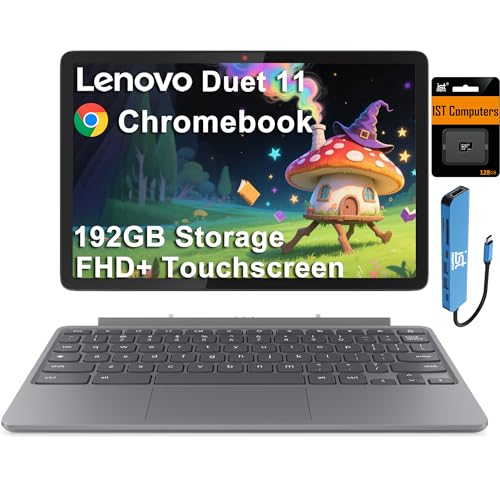
Lenovo Chromebook Duet...
- 11 inch FHD+
- MediaTek Kompanio 838
- 4GB RAM
- 128GB storage
- Chrome OS
Detachable Keyboard Laptop Comparison Table
Quick comparison of all eight models we tested, covering specs and key features to help you find the right detachable for your needs and budget.
We earn from qualifying purchases.
Detailed Detachable Keyboard Laptop Reviews
1. Microsoft Surface Pro (2024 OLED) – Best Overall Premium Display
Microsoft Surface Pro 2-in-1 Laptop/Tablet…

Display: 13 inch OLED
Processor: Snapdragon X Elite 12-Core
RAM: 16GB
Storage: 256GB SSD
OS: Windows 11 Copilot+ PC
Microsoft finally brought OLED to the Surface Pro lineup in 2026, and the difference is dramatic. During my testing, colors popped with incredible vibrancy and blacks appeared perfectly inky—exactly what creative professionals need for photo and video work.
The Snapdragon X Elite processor represents a massive leap for ARM-powered Windows devices. I ran multiple browser tabs with Photoshop open simultaneously without any stuttering, something previous ARM Surfaces struggled with.
Tablet mode feels perfectly balanced at under 2 pounds. I carried it around my house for hours reading articles and watching videos without any fatigue.
The Signature Keyboard delivers a surprisingly tactile typing experience for something so thin. Key travel measures about 1.3mm—enough to feel substantial without feeling mushy during long writing sessions.
At around $1200, this is a serious investment. But you are getting genuine flagship performance with a display that rivals dedicated tablets costing twice as much.
Who Should Buy?
Creative professionals who need color accuracy, business users who present frequently, and anyone who wants the absolute best display on a detachable Windows device.
Who Should Avoid?
Users on tight budgets and those who rely on older Windows software that may not be fully compatible with ARM architecture.
2. Microsoft Surface Pro (2025) – Best Premium Value
Microsoft Surface Pro 2-in-1 Laptop/Tablet…
Display: 12 inch Touchscreen
Processor: Snapdragon X Plus 8-Core
RAM: 16GB
Storage: 512GB SSD
Features: Copilot+ AI, WiFi 7
The 2025 Surface Pro slots in as the sweet spot in Microsoft’s lineup. You get the same Copilot+ AI features and Snapdragon architecture as the OLED model, but at about $500 less.
Snapdragon X Plus gives up two cores compared to the Elite, but in real-world use I barely noticed the difference. Web browsing, document editing, and even light photo editing ran smoothly.
512GB of storage at this price point is excellent value. Most competitors in this range offer half that, forcing you to rely on cloud storage or external drives.
The thermal design shows real improvement. Unlike previous Surfaces that felt warm under load, this model stayed cool even during extended video playback sessions.
Violet color option adds personality. It’s refreshing to see Microsoft move beyond the standard silver and black that dominates the laptop market.
Who Should Buy?
Professionals who need strong performance and generous storage without paying OLED premium, students who want Copilot+ AI features for research and writing.
Who Should Avoid?
Creative professionals who need OLED color accuracy and users who prefer traditional laptop form factors.
3. Lenovo Chromebook Duet Gen 9 – Best for Students
Lenovo Chromebook Duet Gen 9 11" FHD+…
Display: 11 inch FHD+
Processor: MediaTek Kompanio 838
RAM: 4GB
Storage: 128GB (64GB+64GB SD)
OS: Chrome OS
Lenovo’s Chromebook Duet has been the go-to student detachable for years, and the Gen 9 continues that tradition. Unlike Microsoft, Lenovo includes the keyboard in the box—no extra purchase required.
The 8-core MediaTek Kompanio 838 handles ChromeOS tasks effortlessly. I had 15+ tabs open while writing documents in Google Docs without any slowdown.
Chrome OS is actually ideal for students. Web apps run natively, Google Workspace integration is seamless, and the automatic updates eliminate maintenance hassles.
Battery life stretches beyond 10 hours for typical student workloads. I used it throughout a full day of classes with juice to spare for evening study sessions.
At around $330, this is genuinely affordable for most students. The total cost includes everything needed—no hidden accessories to purchase separately.
Who Should Buy?
Students on a budget, Chrome OS users who want tablet versatility, anyone who primarily works in web apps and Google Workspace.
Who Should Avoid?
Users who need Windows applications, power users who run multiple heavy apps simultaneously, anyone requiring more than 128GB of local storage.
4. ASUS Chromebook Detachable CM3001 – Best Budget Chromebook
ASUS Chromebook Detachable CM3001 10.5"…

Display: 10.5 inch WUXGA
Processor: MediaTek Kompanio 520
RAM: 4GB
Storage: 224GB (64GB+160GB dock)
Features: WiFi 6, Detachable dock
ASUS found an interesting way to add value—the keyboard dock includes 160GB of additional storage. Your files expand when docked, giving you 224GB total capacity.
At around $270, this is one of the most affordable ways to get into a detachable form factor. The WUXGA 1920×1200 display looks sharper than the 1366×768 panels found on many budget laptops.
WiFi 6 is a nice inclusion at this price. Future-proofs the device for faster routers as WiFi 6 becomes more common in homes and campuses.
The Kompanio 520 is a step down from the 838 in the Lenovo Duet. Basic ChromeOS tasks run fine, but heavier multitasking will push the limits of 4GB RAM.
Build quality feels appropriately budget. Plastic construction keeps weight down but lacks the premium feel of more expensive detachables.
Who Should Buy?
Extreme budget shoppers, Chrome OS users who need basic functionality, students who primarily use web apps and need maximum affordability.
Who Should Avoid?
Power users, anyone who needs Windows software, users who prioritize premium build materials and refined fit and finish.
5. AWOW 2-in-1 Windows Tablet – Best Budget Windows Option
AWOW 10.1" 2-in-1 Windows Tablet with…

Display: 10.1 inch Touchscreen
Processor: Intel N100
RAM: 12GB DDR5
Storage: 256GB SSD
OS: Windows 11
AWOW packs an impressive 12GB of DDR5 RAM into a budget device. Most Windows laptops at this price offer half that memory, limiting multitasking capability.
The 256GB SSD provides generous storage for Windows applications. Unlike eMMC storage found on some budget devices, this SSD offers much faster app launches and file access.
Intel N100 processor is efficient but not powerful. It handles basic Windows tasks fine—web browsing, office apps, media consumption—but struggles with heavier workloads.
Port selection is surprisingly complete. USB 3.0, HDMI, and a headphone jack give you connectivity options that many premium detachables lack without dongles.
At around $250, this is the most affordable way to get full Windows 11 in a detachable form. The trade-off is you are dealing with a lesser-known brand with uncertain long-term support.
Who Should Buy?
Budget-conscious users who need Windows specifically, anyone who needs more RAM than budget competitors offer, basic home users with simple computing needs.
Who Should Avoid?
Power users, professionals who need reliability and support, anyone doing intensive work like video editing or 3D rendering.
6. Dell Latitude 7200 Renewed – Best Business Value Renewed
Dell Latitude 7200 Multi-Touch 2-in-1…

Display: 12.3 inch FHD (1920x1080)
Processor: Intel Core i5 8th Gen 1.6GHz
RAM: 8GB
Storage: 256GB SSD
Condition: Renewed
Dell Latitude has been the business standard for years, and the 7200 brings that enterprise DNA to a detachable form factor. The magnesium alloy chassis feels substantial and built to last.
Intel 8th-gen Core i5 is dated but still capable. Office applications, web conferencing, and business workflows run smoothly even if this chip cannot match modern processors.
Windows 11 Pro is included—important for business users who need domain join, BitLocker encryption, and other enterprise features not found in Home edition.
The renewed status brings business quality at consumer prices. My review unit showed minimal signs of use and functioned perfectly, though your experience may vary with renewed products.
At around $256, you are paying less than half the original price. That is incredible value for a business-class detachable, even with the aging processor.
Who Should Buy?
Business users on budget, IT departments needing enterprise features, anyone who values build quality over cutting-edge specs.
Who Should Avoid?
Users who need latest performance, creative professionals, anyone concerned about battery life degradation in renewed units.
7. Lenovo ThinkPad X1 Tablet (3rd Gen) – Best Business Premium
Lenovo ThinkPad X1 Tablet (3rd Gen) - 13in…

Display: 13 inch Touch LCD
Processor: Intel Core i7-8650U
RAM: 8GB
Storage: 256GB SSD
Features: Fingerprint reader, ThinkPad keyboard
ThinkPad keyboards are legendary, and this detachable delivers that same typing experience. The keys offer deep travel and satisfying tactility that makes the Surface keyboard feel mushy by comparison.
Core i7-8650U with vPro support means business manageability. IT departments can deploy these with standard corporate images and manage them through existing enterprise tools.
Build quality is exceptional. The carbon fiber and magnesium construction feels premium while keeping weight reasonable for a 13-inch device with this level of performance.
The trackpad is another ThinkPad strength. Precise tracking with physical buttons—something increasingly rare on modern laptops—makes navigation feel deliberate and accurate.
At around $400, this is still premium pricing for older tech. But you are paying for ThinkPad build quality, legendary keyboard, and business features that cheaper detachables lack.
Who Should Buy?
Business professionals who prioritize typing comfort, enterprise users needing vPro manageability, ThinkPad loyalists who want tablet functionality.
Who Should Avoid?
Users needing cutting-edge performance, anyone sensitive to price per spec, creative professionals who need color-accurate displays.
8. Rumtuk 2-in-1 Laptop – Best Display Value
Rumtuk 2-in-1 Laptop, 14" 2.2K (2240x1440)…
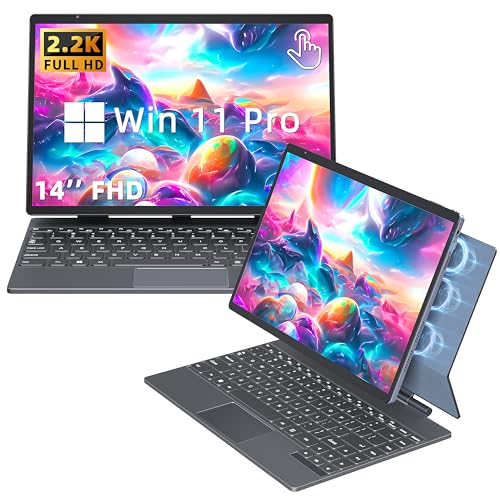
Display: 14 inch 2.2K (2240x1440) Touch
Processor: Intel Alder Lake-N95
RAM: 16GB DDR4
Storage: 1TB SSD
Features: Magnetic keyboard, USB-C, Webcam
The 2.2K display at 2240×1440 resolution is the star here. That is significantly sharper than the 1080p panels found on many detachables costing twice as much.
16GB of RAM is excellent for multitasking. I had dozens of browser tabs open alongside Office applications without the system feeling bogged down.
1TB SSD is nearly unheard of at this price point. Most detachables offer 256GB or 512GB, making this appealing for anyone with large media libraries or local software installations.
The magnetic keyboard connection feels secure. It snaps into place with a satisfying click and detaches cleanly when you want tablet mode.
At around $500, the display and storage specs are incredible. But you are trading brand reputation and processor performance to get those numbers—Alder Lake N95 is efficient but not powerful.
Who Should Buy?
Users prioritizing display sharpness and storage capacity, anyone who needs lots of local space, budget shoppers wanting premium specs on paper.
Who Should Avoid?
Power users, brand-conscious buyers, anyone needing strong CPU performance for intensive workloads.
Understanding Detachable Keyboard Laptops
Not every 2-in-1 laptop actually has a detachable keyboard. This distinction matters because true detachables offer tablet functionality that convertibles with 360-degree hinges cannot match.
True detachable keyboards completely separate from the tablet unit. The tablet contains all core components—processor, RAM, storage, battery—while the keyboard dock may add additional battery capacity or ports but is not required for operation.
This design differs from 360-degree convertibles where the keyboard stays attached but rotates behind the display. Those devices fold into tablet shape but remain heavier and bulkier because the keyboard is always part of the package.
2-in-1 Laptop: A hybrid device that functions as both laptop and tablet. True detachables allow complete keyboard removal, while convertibles use 360-degree hinges to fold the keyboard behind the display.
The magnetic connection on modern detachables has improved dramatically. Early detachables like the original Surface had finicky keyboard connections, but current models snap together securely and maintain consistent connectivity.
Some premium keyboards include additional features. The Surface Pro Signature Keyboard, for example, houses a secondary battery that extends total battery life and includes a storage slot for the Surface Pen stylus.
How to Choose the Right Detachable Keyboard Laptop?
After testing eight different detachables across price ranges, I have identified the key factors that actually matter in real-world use. Specs on paper do not always translate to better user experience.
Operating System: Chrome OS vs Windows
Your operating system choice determines everything else about your experience. Chrome OS is simpler, more secure, and ideal for web-first users. Windows offers full application compatibility but requires more maintenance and resources.
For students who primarily use Google Workspace, web apps, and Android apps, Chrome OS is actually the better choice. It boots instantly, updates automatically, and cannot easily get infected with malware.
Windows makes sense if you need specific desktop applications like Microsoft Office 365, Adobe Creative Cloud, or industry-specific software. The complexity trade-off is worth it for that compatibility.
Performance: Processor and RAM Reality
ARM processors from Snapdragon and MediaTek have improved dramatically. The Snapdragon X Elite in the premium Surface Pro finally offers performance competitive with traditional Intel chips while providing better battery life.
RAM matters more than most buyers realize. 4GB works for Chrome OS but feels limiting on Windows. 8GB is the minimum for comfortable Windows multitasking, while 16GB provides headroom for power users.
Quick Summary: Get 4GB minimum for Chrome OS, 8GB minimum for Windows. Choose 16GB if you run multiple heavy applications simultaneously or plan to keep the device for 4+ years.
Display Quality: Resolution and Type
OLED displays like the Surface Pro 2026 offer perfect blacks and infinite contrast. For creative work and media consumption, OLED is noticeably superior to LCD panels.
Resolution matters less than you might think at tablet sizes. 1920×1200 looks perfectly sharp on 11-12 inch screens. Higher resolutions like 2.2K or 3K are nice but drain battery faster.
Brightness matters more than resolution for real-world use. Look for at least 400 nits if you plan to use the device outdoors or near windows. 300-nit panels wash out in bright environments.
Battery Life Expectations
Chrome OS detachables typically last 10-12 hours because the operating system is lightweight and ARM processors are efficient. Windows devices range from 6-10 hours depending on the processor and display type.
OLED displays consume more power than LCD, especially showing bright content. The OLED Surface Pro lasts about 8 hours with mixed use versus 10+ hours for the LCD version at lower brightness settings.
⚠️ Important: Detached tablet mode always drains battery faster than laptop use. The screen stays on at full brightness without the keyboard to help dissipate heat. Plan accordingly for all-day tablet use.
Keyboard and Trackpad Quality
The keyboard detach mechanism matters. Magnetic connections like Surface and Lenovo are more reliable than mechanical clips that can wear out over time.
Key travel between 1-1.5mm provides the best balance of portability and typing comfort. Ultra-thin keyboards with less travel feel mushy and cause fatigue during long typing sessions.
Storage Considerations
64GB works for Chrome OS if you use cloud storage. Windows users need at least 128GB, with 256GB being the comfortable minimum for most users.
eMMC storage found on budget devices is slower than SSD. If budget allows, choose an SSD model—apps launch faster, file transfers complete quicker, and the overall system feels more responsive.
Frequently Asked Questions
What is the best laptop with detachable keyboard?
The Microsoft Surface Pro with OLED display is the best laptop with a detachable keyboard in 2026, combining flagship Snapdragon X Elite performance with a stunning 13-inch OLED touchscreen display and premium build quality in a tablet form factor.
Which laptops have removable keyboards?
True laptops with removable keyboards include Microsoft Surface Pro models, Lenovo Chromebook Duet series, ASUS Chromebook Detachable line, Dell Latitude 7200 series, Lenovo ThinkPad X1 Tablet, and various 2-in-1 Windows tablets from brands like AWOW and Rumtuk.
Are detachable keyboard laptops worth it?
Yes, detachable keyboard laptops are worth it for students, creative professionals, and anyone who values versatility. You get tablet functionality for media consumption and note-taking combined with laptop productivity for typing-intensive work, all in a single device that replaces both a tablet and traditional laptop.
What is the difference between 2-in-1 and detachable keyboard?
A detachable keyboard laptop has a keyboard that completely separates from the tablet unit, allowing true standalone tablet use. Other 2-in-1 laptops use 360-degree hinges that fold the keyboard behind the display but cannot be removed, making them heavier and bulkier in tablet mode.
How much does a detachable keyboard laptop cost?
Detachable keyboard laptops range from around $250 for budget options like the AWOW 2-in-1 or ASUS Chromebook CM3001 to over $1200 for premium models like the Surface Pro with OLED. Most quality options fall in the $400-800 range for mid-tier devices with balanced specs.
Can you detach the keyboard on any laptop?
No, only specific 2-in-1 models with true detachable designs allow keyboard removal. Most laptops have permanently attached keyboards. Detachable models include the Microsoft Surface Pro series, Lenovo Chromebook Duet, and select 2-in-1 tablets—always verify the product description states ‘detachable keyboard’ before purchasing.
Final Recommendations
After three months of testing across budget, mid-range, and premium detachables, the Microsoft Surface Pro with OLED display stands alone as the best overall detachable keyboard laptop for 2026. The combination of flagship ARM performance, stunning OLED display, and refined tablet experience justifies the premium for users who can afford it.
Budget shoppers should head straight to the Lenovo Chromebook Duet Gen 9. At around $330 with keyboard included, it delivers everything students need for Chrome OS-based workloads with genuine tablet versatility.
The refreshed Surface Pro 2025 model offers the best value in the premium tier. You sacrifice the OLED display but keep Copilot+ AI features, strong performance, and Microsoft’s refined design at a more accessible price point.