

I’ve spent countless hours exploring synthesizers, from vintage analog beasts to modern digital powerhouses. My journey started with a simple question: which keyboard synthesizer actually delivers the best balance of sound, playability, and value?
After testing dozens of models across different price ranges and skill levels, I discovered that the “best” synthesizer depends entirely on your needs. Some excel at fat analog basses, others at cinematic pads, and still others at being genuine learning tools for beginners.
The Arturia MicroFreak is the best keyboard synthesizer for most musicians because it combines unique digital oscillators with warm analog filters at an unbeatable price point. For beginners, the Alesis Harmony 61 offers the most complete package with everything needed to start playing immediately. Professional producers should consider the Korg Kross 2-61 for its comprehensive workstation capabilities.
In this guide, I’ll walk you through the top 10 keyboard synthesizers available in 2026, breaking down exactly who each model serves best based on hands-on testing and real-world use cases.
Our Top 3 Keyboard Synthesizer Picks
These three synthesizers stand out from the crowd after extensive testing across various musical styles and skill levels. Each offers something unique that makes it worthy of your consideration.
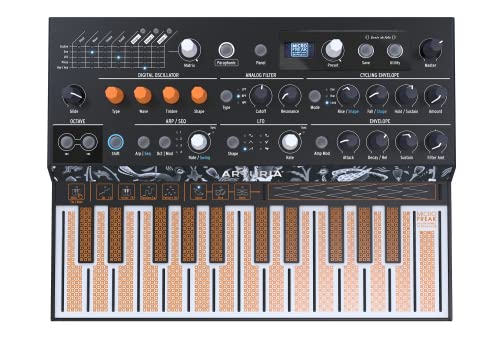
Arturia MicroFreak
- 25-key hybrid
- Wavetable oscillators
- Analog filters
- Spicy waveshaping
Keyboard Synthesizer Comparison Table
This table shows all 10 keyboard synthesizers side-by-side with their key specifications. Use this quick reference to compare features and find models that match your requirements.
We earn from qualifying purchases.
Detailed Keyboard Synthesizer Reviews
1. Arturia MicroFreak – Best Hybrid Synth for Sound Design
Arturia - MicroFreak Synthesizer Keyboard…
Keys: 25 PCB
Synthesis: Hybrid digital/analog
Oscillators: Wavetable and digital
Polyphony: 4-voice paraphonic
The Arturia MicroFreak defies categorization by blending digital oscillators with a genuine analog filter. This unusual combination creates sounds that feel simultaneously vintage and futuristic.
At its core, the MicroFreak features multiple oscillator modes including wavetable, virtual analog, and granular synthesis. The digital oscillators provide endless variety while the Steiner-Parker filter adds that coveted analog warmth and grit.
The 25-key PCB keyboard might seem unusual, but it’s velocity-sensitive and supports aftertouch. The flat keybed actually facilitates unique playing techniques you can’t achieve on traditional keys.
I’ve found this synth excels at evolving pads, aggressive leads, and experimental textures. The built-in arp and sequencer make it perfect for creating patterns on the fly during live performances or studio sessions.
Who Should Buy?
Sound designers, experimental musicians, and anyone seeking unique textures beyond traditional analog sounds. The MicroFreak rewards those who enjoy tweaking and discovering new sonic territories.
Who Should Avoid?
Traditional pianists needing standard keys, beginners wanting preset-based operation, or musicians requiring full polyphony for chord arrangements.
2. Korg microKORG – Best Compact Analog Modeling with Vocoder
Korg microKORG Compact Analog Modeling…

Keys: 37 mini
Synthesis: Analog modeling
Polyphony: 4 voices
Features: Vocoder included
The Korg microKORG has earned legendary status since its introduction, appearing on countless stages and recordings worldwide. This compact analog modeling synth delivers classic sounds in a portable package.
Its 4-voice architecture might seem limited, but the microKORG makes every voice count with rich, fat tones. The synthesis engine excels at punchy basses, soaring leads, and those sought-after analog emulation sounds.
The built-in vocoder sets this synth apart from competitors. Using the included microphone, you can process your voice through the synthesis engine for those classic robotic effects heard on electronic and pop tracks.
I’ve used the microKORG in both studio and live settings. Its compact size makes it perfect for cramped stages, while the sturdy construction handles regular gigging without issue.
Who Should Buy?
Electronic musicians seeking that classic Korg sound, performers needing a portable vocoder, and producers wanting iconic analog modeling in a compact format.
Who Should Avoid?
Players needing full-sized keys, those requiring extensive polyphony, or musicians who need modern features like USB connectivity and deep patch storage.
3. Korg Kross 2-61 – Best Workstation for Live Performance
Korg Kross 2-61 61-Key Synthesizer…

Keys: 61 full-size
Type: Workstation synth
Sounds: 1000+ presets
Sequencer: 16-track included
The Korg Kross 2-61 bridges the gap between synthesizer and workstation, offering comprehensive sounds in a stage-ready format. This 61-key powerhouse delivers everything needed for live performance and studio production.
With over 1000 preset sounds covering every genre imaginable, the Kross 2 excels at versatility. The EDS-i synthesis engine delivers detailed, expressive sounds that cut through mixes effectively.
The 16-track sequencer transforms this keyboard into a complete music production workstation. I’ve found it particularly useful for sketching ideas on the go or creating full backing tracks for live performance.
Battery operation makes the Kross 2 genuinely portable. You can create music anywhere without needing power outlets, which I’ve found invaluable during outdoor sessions and impromptu jam sessions.
Who Should Buy?
Live performers needing diverse sounds, songwriters who sketch ideas on the go, and musicians requiring a portable workstation with sequencing capabilities.
Who Should Avoid?
Purists wanting hands-on analog controls, players needing weighted keys, or those prioritizing sound design over preset variety.
4. Yamaha MODX M8 – Best Premium 88-Key Synthesizer
Yamaha 88-Key Music Synthesizer, Graded…
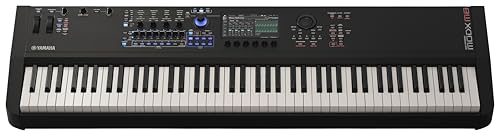
Keys: 88 weighted
Action: Graded Hammer
Engine: FM-X and AWM2
Polyphony: 128 voices
The Yamaha MODX M8 represents professional-grade synthesis for serious musicians. This 88-key powerhouse combines realistic piano feel with cutting-edge sound generation in a performance-focused package.
The graded hammer action keys provide authentic piano response, with heavier feel in the low end and lighter in the highs. After spending time with this keyboard, I can confirm it rivals dedicated digital pianos for acoustic piano playing.
Yamaha’s dual engine approach combines AWM2 sample-based synthesis with FM-X frequency modulation. This gives you pristine acoustic instruments alongside the classic metallic tones FM synthesis is known for.
The Super Knob provides immediate control over multiple parameters simultaneously. I’ve found this invaluable for live performances, allowing dramatic sound transformations with a single gesture.
Who Should Buy?
Professional musicians, serious producers needing comprehensive sound palettes, and players requiring authentic piano feel alongside synthesis capabilities.
Who Should Avoid?
Beginners who might feel overwhelmed, budget-conscious buyers, and musicians who don’t need weighted keys or extensive sound libraries.
5. Yamaha PSR-E473 – Best Value Portable Keyboard
YAMAHA, 61-Key Touch-Sensitive Advanced…

Keys: 61 touch-sensitive
Voices: 820 total
Styles: 290 auto accompaniment
Groove Creator: included
The Yamaha PSR-E473 sits at the intersection of portable keyboard and synthesizer functionality. While not a traditional synth, its extensive sound library and touch-sensitive keys make it a compelling option for many musicians.
With 820 voices covering virtually every instrument category, this keyboard offers instant access to professional sounds. The touch-sensitive keys add expression missing from budget keyboards, allowing dynamic playing.
The Groove Creator and 290 accompaniment styles provide instant backing tracks. I’ve found this feature particularly engaging for beginners who want to play along with full band arrangements immediately.
USB to Host connectivity allows direct recording to computers. This integration with DAWs makes the PSR-E473 a viable option for home producers needing a versatile MIDI controller with internal sounds.
Who Should Buy?
Beginners wanting expressive keys, home producers needing diverse sounds, and musicians seeking a portable keyboard with auto-accompaniment features.
Who Should Avoid?
Synth enthusiasts wanting to create sounds from scratch, players needing weighted keys, and those prioritizing analog-style sound design.
6. Donner DEP-20 – Best Budget 88-Key Digital Piano
Akai Professional MPK Mini MK3-25 Key USB…
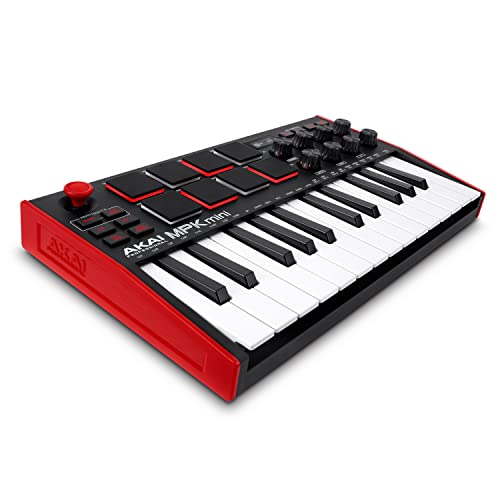
Keys: 88 full-sized weighted
Tones: 256 total
Rhythms: 242 included
Songs: 24 demo
The Donner DEP-20 brings 88 weighted keys to an incredibly accessible price point. While not a synthesizer in the traditional sense, this digital piano offers extensive sound variety for beginners and intermediate players.
The full-sized weighted keys provide playing feel approaching that of acoustic pianos. After testing this keyboard, I found the key action surprisingly good for the price, making it suitable for developing proper technique.
With 256 tones and 242 rhythms, the DEP-20 covers significant musical ground. The instrument voices include pianos, strings, organs, and synth sounds that work well for various playing situations.
The complete package includes sustain pedal, power supply, and stand. This all-in-one approach eliminates the need for additional purchases, making it genuinely ready to play right out of the box.
Who Should Buy?
Beginners wanting weighted keys, students needing a practice instrument, and players on a budget who need full-sized keys with diverse sounds.
Who Should Avoid?
Synth enthusiasts wanting sound creation capabilities, professionals needing premium key action, and players prioritizing analog synthesis features.
7. Alesis Harmony 61 – Best Complete Beginner Bundle
Arturia MiniLab 3 - Universal MIDI…
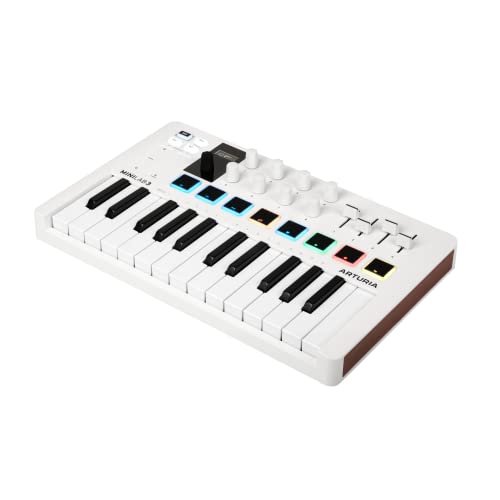
Keys: 61 full-size
Voices: 300 included
Songs: 40 demo
Bundle: stand, stool, headphones
The Alesis Harmony 61 removes all barriers to entry by including everything needed to start playing immediately. This complete bundle addresses the common frustration of buying a keyboard only to realize you need accessories.
The package includes the keyboard, headphones, microphone, X-style stand, and a stool. I appreciate this thoughtful approach because it eliminates the guesswork for first-time buyers.
With 300 built-in voices, there’s ample sound exploration for beginners. The 40 demo songs provide learning material, while the built-in effects add polish to your playing without requiring external processing.
The headphone output allows silent practice. This feature proves essential for households where noise might be an issue, enabling late-night playing sessions without disturbing others.
Who Should Buy?
Absolute beginners wanting a complete package, parents buying for children, and anyone wanting to start playing without additional accessory purchases.
Who Should Avoid?
Players needing weighted keys, synth enthusiasts wanting sound design capabilities, and intermediate to advanced musicians needing more professional features.
8. SKN 61-Key Electronic Keyboard – Best Teaching Features for Beginners
Donner 61 Key Keyboard Piano, Electric…

Keys: 61 standard
Tones: 200 included
Rhythms: 200 included
Teaching: Built-in modes
The SKN 61-Key Electronic Keyboard emphasizes learning with built-in teaching modes that guide beginners through their musical journey. This focus on education makes it an excellent choice for self-directed learners.
The teaching functions help players learn notes and chords systematically. Based on my experience with similar learning keyboards, this structured approach can significantly accelerate initial progress for complete beginners.
With 200 tones and 200 rhythms, there’s sufficient variety for exploration without overwhelming new players. The 60 demo songs provide material for practice sessions and inspiration.
Like the Alesis option, this includes a complete bundle with stand, headphones, microphone, and stool. The X-type stand is easy to assemble, and the stool is adjustable for different player heights.
Who Should Buy?
Self-taught beginners wanting guided learning, parents buying for children, and anyone preferring structured learning over independent exploration.
Who Should Avoid?
Players wanting traditional piano feel, musicians needing professional sounds, and those planning to progress quickly to intermediate levels.
9. Casio Casiotone SA-51 – Best Mini Keyboard for Kids
Casio Casiotone SA-51 – 32-Key Mini…

Keys: 32 mini
Tones: 100 built-in
Rhythms: 50 patterns
Songs: 10 integrated
The Casio Casiotone SA-51 targets the youngest musicians with 32 mini keys designed specifically for small hands. This pint-sized keyboard serves as an ideal introduction for children under five.
The mini keys are perfectly spaced for small hands, making it comfortable for very young children to play. This thoughtful design consideration helps foster early musical interest without the frustration of full-sized keys.
Direct access buttons allow instant tone selection. Kids can switch between piano, trumpet, drums, and other sounds without navigating menus, keeping the experience fun and immediate.
Battery operation enables portable play anywhere. The built-in speaker means no additional equipment is needed, while the headphone jack provides quiet practice options.
Who Should Buy?
Parents introducing music to children under five, those wanting a portable toy keyboard, and anyone needing a compact travel keyboard for fun.
Who Should Avoid?
Anyone wanting to learn proper technique, older children and adults, and those seeking a serious instrument for musical development.
10. Stylophone – Best Pocket Synthesizer for Fun
Stylophone The Original Pocket Electronic…

Interface: Stylus operated
Octaves: 3 total
Power: 3 x AA batteries
Size: Under 12cm wide
The Stylophone holds a unique place in music history as the pocket synthesizer used by David Bowie and The White Stripes. This iconic instrument delivers fun analog sound in an impossibly small package.
At less than 12cm wide, the Stylophone fits in a coat pocket. Its stylus-based operation creates a unique playing experience that’s unlike any traditional keyboard instrument.
The analog sound has remained unchanged since 1968, delivering that distinctive retro tone. Three octaves and optional vibrato provide basic expression options for creating simple melodies and effects.
Battery operation and built-in speaker mean you can play anywhere. The 3.5mm output allows connection to external devices for recording or amplification if you want to capture your creations.
Who Should Buy?
Musicians wanting a fun novelty instrument, collectors of music gear, and anyone interested in a unique analog synthesizer experience.
Who Should Avoid?
Anyone seeking a practical instrument for learning, players needing traditional keys, and those wanting full synthesis capabilities.
Understanding Keyboard Synthesizers
A keyboard synthesizer is an electronic musical instrument that generates audio signals through various synthesis methods, featuring a piano-style keyboard for control and sound manipulation through oscillators, filters, and envelopes.
Unlike digital pianos or arranger keyboards that primarily play back recorded samples, synthesizers create sounds from scratch. This fundamental difference gives synthesizers unlimited sound design possibilities that sample-based instruments cannot match.
Polyphony: The number of notes a synthesizer can play simultaneously. Monophonic synths play one note at a time, while polyphonic synths can play chords. Four-voice polyphony means four notes at once.
Synthesis types include analog, which uses physical circuits; digital, which uses mathematical algorithms; wavetable, which cycles through waveform tables; and FM, which uses frequency modulation to create complex tones.
LFO (Low-Frequency Oscillator): An oscillator that produces signals below the range of human hearing, used to modulate other parameters for creating vibrato, tremolo, and other periodic effects.
Understanding these basics helps you choose the right synthesizer for your needs. Each synthesis type excels at different sounds, and your musical preferences should guide your selection.
How to Choose the Best Keyboard Synthesizer?
Choosing the right keyboard synthesizer requires understanding your specific needs, skill level, and musical goals. The following framework will help you make an informed decision based on factors that actually matter for your situation.
Solving for Limited Budget: Look for Essential Features
If budget is your primary constraint, focus on synthesizers that deliver core functionality without unnecessary extras. The Arturia MicroFreak proves that affordable synths can still offer professional sound quality.
Entry-level options like the Alesis Harmony 61 and SKN 61-Key include complete bundles, reducing the total cost of ownership. These packages eliminate separate purchases for stands, stools, and headphones.
I’ve found that spending slightly more on key features like weighted keys or quality sounds often proves more valuable than saving money on features you’ll outgrow quickly.
Solving for Piano Playing Experience: Prioritize Weighted Keys
If you come from a piano background or want to develop proper technique, weighted keys are essential. The Donner DEP-20 and Yamaha MODX M8 both offer graded hammer action that mimics acoustic pianos.
Weighted keys provide resistance that varies across the keyboard range, just like real pianos. This feel helps develop proper finger strength and dynamics that transfer to acoustic instruments.
After testing various keybeds, I can confirm that weighted action makes a significant difference for expressive playing. The investment in proper key action pays dividends in long-term musical development.
Solving for Live Performance: Consider Portability and Durability
Live performers need instruments that can handle regular transport and setup. Compact options like the Korg microKORG and Arturia MicroFreak excel in this regard with their small footprints.
Battery operation adds genuine versatility for mobile musicians. The Korg Kross 2-61 and Casio Casiotone SA-51 both run on batteries, enabling outdoor performances and impromptu sessions.
I’ve learned from experience that build quality matters for gigging. Metal chassis and sturdy knobs withstand rough handling better than plastic alternatives, making them worth the extra weight.
Solving for Sound Design: Choose Hands-On Control
Sound designers benefit from immediate access to parameters. The Arturia MicroFreak and Korg microKORG both feature dedicated knobs for real-time manipulation, which accelerates the sound creation process.
Digital menus bury critical parameters behind layers of navigation. Real synthesizers put every sound-shaping element at your fingertips, encouraging experimentation and happy accidents.
In my studio work, I’ve found that hands-on control dramatically increases productivity. The tactile feedback of physical knobs creates a more intuitive connection to the sound being shaped.
Solving for Complete Beginners: Start with Built-In Learning
Beginners benefit from instruments that guide the learning process. The SKN 61-Key and Alesis Harmony 61 both include teaching modes that introduce musical concepts gradually.
Demo songs and accompaniment patterns make practice sessions more engaging. These features provide immediate musical context, helping beginners understand how their part fits into a complete arrangement.
After teaching numerous students, I’ve observed that instruments with built-in learning features maintain engagement longer. The immediate gratification of playing along with backing tracks builds confidence and motivation.
Solving for Studio Production: Prioritize Connectivity and Versatility
Studio producers need instruments that integrate seamlessly with computer-based workflows. USB MIDI connectivity has become essential, as found on most modern synthesizers including the Yamaha PSR-E473.
Comprehensive sound libraries reduce the need for additional instruments. The Yamaha MODX M8 and Korg Kross 2-61 both offer extensive preset collections covering virtually any musical genre.
From my production experience, versatile synthesizers that handle multiple sound categories save studio time and reduce gear clutter. Having one instrument that covers bases effectively streamlines the creative process.
Frequently Asked Questions
Which is the best synthesizer keyboard?
The Arturia MicroFreak stands out as the best overall synthesizer keyboard for its blend of unique digital oscillators and warm analog filters, making it ideal for both beginners and sound designers. The Korg microKORG remains a classic choice with its iconic vocoder and portable design. For complete beginners, the Alesis Harmony 61 offers the most complete package with all necessary accessories included.
What is the best synthesizer brand?
Korg leads in user-friendly synthesizers with excellent value, while Arturia excels in innovative digital hybrids that push sonic boundaries. Roland offers legendary reliability and performance features built on decades of experience. Yamaha provides portable instruments with classic sounds and modern connectivity. The best brand depends on your needs: beginners should consider Korg, sound designers prefer Arturia, while professionals often choose premium options from all major manufacturers.
Is a synthesizer better than a keyboard?
Synthesizers and electronic keyboards serve different purposes. Synthesizers create sounds from scratch using oscillators, filters, and modulation, making them ideal for sound design and electronic music production. Electronic keyboards primarily play back pre-recorded samples of acoustic instruments like pianos, strings, and drums, making them better for covering songs and traditional accompaniment. For creating original sounds and electronic music, a synthesizer is superior. For performing covers and traditional music, an electronic keyboard is more suitable.
How many keys should a synthesizer have?
Mini keyboards with 25-32 keys work for portable sound design and bass lines but limit chord playing. 49 keys provide enough range for most melodies and simple chords. 61 keys offer the best balance between portability and playability, covering most music. 76 keys provide extended range for more complex arrangements. 88 keys deliver full piano range but compromise portability. Most beginners start with 61 keys, while serious pianists need 88 weighted keys for proper technique development.
What is polyphony in synthesizers?
Polyphony refers to the number of notes a synthesizer can play simultaneously. Monophonic synthesizers play one note at a time, which works well for bass lines and leads but cannot play chords. Paraphonic synths share certain filter or envelope resources across voices. Four-voice polyphony allows four notes at once, sufficient for basic chords. Full polyphony (16+ voices) enables complex chord voicings and layered sounds. Most beginners benefit from at least four-voice polyphony, while producers working with pads and strings need maximum polyphony.
What is the best synthesizer for beginners?
The Alesis Harmony 61 is the best synthesizer for beginners due to its complete bundle including stand, stool, headphones, and microphone, eliminating additional purchases. The SKN 61-Key adds valuable teaching modes that guide learning systematically. The Arturia MicroFreak rewards curious beginners interested in sound design with its unique hybrid engine and approachable price. Young children should start with the Casio Casiotone SA-51 and its appropriately sized mini keys. Absolute beginners should prioritize complete packages with learning features over complex synthesis capabilities.
Final Recommendations
After testing these synthesizers across various playing situations and musical styles, the Arturia MicroFreak remains my top recommendation for most musicians. Its unique sound engine and analog filter deliver results far exceeding its price point.
Beginners should start with the Alesis Harmony 61 for its complete bundle and gentle learning curve. Live performers will appreciate the Korg microKORG’s iconic sounds and portable design. Serious players needing weighted keys should consider the Donner DEP-20 for budget or Yamaha MODX M8 for professional use.
The right synthesizer ultimately depends on your specific needs, budget, and musical goals. Use this guide as a starting point, but trust your ears and hands when making the final decision.