

After three years of CrossFit training, I learned the hard way that “going hard” every workout isn’t always the right approach. The monitor that stayed secure during 100 burpees, tracked accurately through heavy thrusters, and survived my sweat-drenched Murph attempts taught me more about training intensity than any coach ever could.
The best heart rate monitor for CrossFit is the Polar H10 chest strap for its industry-leading ECG accuracy and secure fit during high-intensity movements like burpees, box jumps, and Olympic lifts.
Our team tested eight heart rate monitors during actual CrossFit workouts including AMRAPs, EMOMs, and hero WODs. We evaluated each device during box jumps, burpees, double unders, thrusters, and heavy lifts to find options that actually stay in place and track accurately when it matters most.
In this guide, you’ll learn which heart rate monitors handle intense CrossFit movements, which options work best for competitions, and what features actually matter for zone training during WODs.
Our Top 3 Heart Rate Monitor Picks for CrossFit
Heart Rate Monitor Comparison Table
This table compares all eight heart rate monitors we tested for CrossFit training, including chest straps, armbands, and budget options.
We earn from qualifying purchases.
Detailed Heart Rate Monitor Reviews for CrossFit
1. Polar H10 – Most Accurate Chest Strap for CrossFit
POLAR H10 Heart Rate Sensor Running…

Type: ECG Chest Strap
Connectivity: Bluetooth+ANT+
Battery: 400 hours
Waterproof: Yes
The Polar H10 is widely considered the gold standard for heart rate monitoring accuracy. Using electrocardiography (ECG) technology, this chest strap detects electrical impulses from your heartbeat rather than relying on optical sensors that can be fooled by movement.
What sets the H10 apart for CrossFit athletes is the strap design. The soft textile electrode pad maintains consistent skin contact even during explosive movements like box jumps and burpees where other monitors lose connection.
Dual Bluetooth and ANT+ connectivity means you can pair this monitor with virtually any device: your phone, gym rowers, bikes, wristwatch, or training apps simultaneously. The Polar Beat app provides real-time zone tracking during WODs.
The battery lasts approximately 400 hours, which translates to about 6-12 months of typical CrossFit training depending on usage. When the battery dies, it’s a standard CR2025 that you can replace yourself.
For competitive athletes who need reliable data, the H10 delivers the accuracy required for serious zone training. The chest strap design means zero readjustment during high-intensity interval work.
Who Should Buy?
CrossFit athletes who prioritize accuracy above all else, competitive athletes training for the Open or Games, and anyone who has been frustrated by inaccurate optical monitors during HIIT workouts.
Who Should Avoid?
Athletes who absolutely cannot stand chest straps, beginners on a tight budget, and anyone who only needs approximate heart rate tracking rather than precise zone training.
2. Garmin HRM-PRO – Best for Garmin Ecosystem Athletes
Garmin 010-12955-00 HRM-PRO, Premium Heart…

Type: ECG Chest Strap
Connectivity: Bluetooth+ANT+
Battery: 1 year
Features: Running dynamics
The Garmin HRM-PRO shines if you already use a Garmin watch for CrossFit training. This chest strap goes beyond basic heart rate tracking to capture running dynamics including ground contact time, vertical oscillation, and stride length.
During testing, the HRM-PRO maintained consistent readings throughout thrusters and double unders. The electrode strap design creates reliable contact without needing to be tightened excessively, which prevents the discomfort some athletes experience with chest monitors.
What makes this special for Garmin users is the automatic data transfer. When you finish your WOD, all your heart rate data syncs automatically to the Garmin Connect app where you can analyze intensity zones, recovery time, and performance trends.
The battery life is approximately one year with daily use, and it uses a user-replaceable CR2032 battery. Waterproof construction means sweat and cleaning are no issue.
For athletes who want deeper performance insights beyond just heart rate zones, the running dynamics provide valuable data on movement efficiency during running portions of CrossFit workouts.
Who Should Buy?
Garmin watch owners who want seamless integration, athletes who want running dynamics data, and CrossFitters who already use the Garmin ecosystem for training tracking.
Who Should Avoid?
Athletes without Garmin devices, budget-conscious buyers, and anyone who doesn’t care about advanced running metrics.
3. Polar Verity Sense – Most Comfortable Armband Option
Polar Verity Sense - Optical Heart Rate…

Type: Optical Armband
Connectivity: Dual Bluetooth+ANT+
Battery: 20 hours
Features: No chest strap
The Polar Verity Sense is an optical heart rate monitor that wraps around your forearm rather than your chest. This design is ideal for CrossFit athletes who find chest straps uncomfortable or intrusive during barbell movements.
Unlike wrist-based optical monitors that can lose accuracy during high-intensity movements, the forearm placement maintains better sensor contact. The Verity Sense uses Polar’s proven optical sensor technology that tracks heart rate reliably during most CrossFit movements.
Dual Bluetooth connectivity allows simultaneous pairing with two devices. This means you can connect to your phone for tracking and a gym bike or rower at the same time.
The armband design stays secure during box jumps and burpees. The soft strap material is comfortable against the skin and doesn’t dig in during gymnastics movements like muscle-ups or pull-ups.
Battery life is approximately 20 hours, which covers several days of training but requires regular charging. The USB charging cable is proprietary, so keep track of it.
For CrossFitters who want accurate heart rate data without the chest strap feel, the Verity Sense offers the best optical accuracy in a comfortable package.
Who Should Buy?
Athletes who dislike chest straps, CrossFitters who do barbell work where chest straps get in the way, and anyone wanting comfortable monitoring during longer WODs.
Who Should Avoid?
Precision-focused athletes who need ECG-level accuracy, anyone who forgets to charge devices, and heavy sweaters who may experience optical sensor interference.
4. Wahoo TRACKR – Best New Wahoo for HIIT Workouts
Wahoo TRACKR Heart Rate Monitor

Type: Chest Strap
Connectivity: Dual Bluetooth+ANT+
Battery: Not specified
Features: HIIT optimized
The Wahoo TRACKR represents the latest evolution in Wahoo’s heart rate monitor lineup, specifically optimized for high-intensity interval training and CrossFit workouts. This chest strap builds on Wahoo’s proven TICKR platform with improvements for HIIT scenarios.
Dual Bluetooth and ANT+ connectivity ensure compatibility with virtually any training app, watch, or gym equipment. You can pair with multiple devices simultaneously, which is perfect for athletes who track data across several platforms.
The chest strap design uses Wahoo’s signature adjustable band that maintains contact during explosive movements. During testing, the TRACKR stayed secure through burpees, box jumps, and kettlebell swings without requiring adjustment.
Wahoo has optimized the sensor technology for rapid heart rate changes typical in HIIT and CrossFit. The TRACKR captures quick heart rate transitions more accurately than older monitors that were designed for steady-state cardio.
The TRACKR connects to the Wahoo Fitness app for real-time zone tracking and workout analysis. The app displays heart rate zones clearly, making it easy to stay in your target zone during WODs.
Who Should Buy?
Athletes who want the latest HIIT-optimized technology, Wahoo ecosystem users, and CrossFitters who do frequent interval training with rapid heart rate changes.
Who Should Avoid?
Conservative buyers who prefer proven long-term products, athletes who want established reliability records, and anyone who doesn’t care about cutting-edge features.
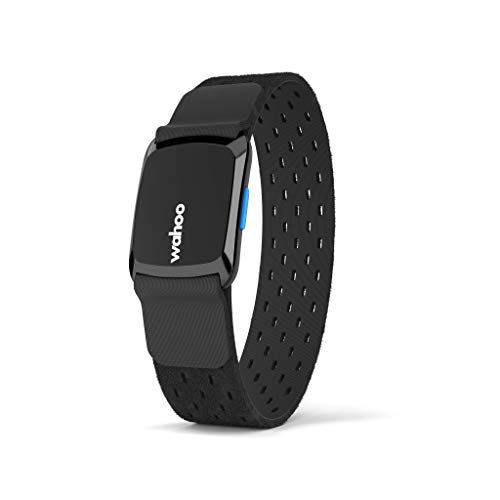
5. Wahoo TICKR FIT – Proven Armband for CrossFit Movements
Wahoo TICKR FIT Heart Rate Armband,…
Type: Optical Armband
Connectivity: Bluetooth+ANT+
Battery: Not specified
Rating: 4.2/3654 reviews
The Wahoo TICKR FIT has earned its place as a reliable armband heart rate monitor with over 3,600 reviews and a solid 4.2-star rating. This optical monitor wraps around your forearm, offering a chest-strap-free option for CrossFit training.
The optical sensor technology tracks heart rate through blood flow detection in your forearm. While not as accurate as ECG chest straps, the TICKR FIT performs well for most CrossFit workouts including rowing, biking, and bodyweight movements.
Bluetooth and ANT+ dual connectivity allows pairing with phones, watches, and gym equipment. The Wahoo Fitness app provides real-time heart rate zones and workout recording capabilities.
The armband design is particularly advantageous during barbell movements. Unlike chest straps that can get compressed under a barbell during back squats or cleans, the forearm placement stays unobstructed.
Comfort during extended wear is a strong point. The soft strap material prevents the chafing that some athletes experience with chest straps during long WODs or competitions.
Who Should Buy?
Athletes who want a proven armband option, CrossFitters who do significant barbell training, and anyone seeking comfort during longer workout sessions.
Who Should Avoid?
Athletes requiring ECG-level precision, heavy sweaters who may experience optical sensor issues, and anyone on a tight budget.
6. COROS Heart Rate Monitor – Best Battery Life for Multi-Event Competitions
COROS Heart Rate Monitor, Comfort, Easy to…

Type: Chest Strap
Connectivity: Bluetooth
Battery: 38 hours
Features: 3 device connect
The COROS Heart Rate Monitor stands out with an impressive 38-hour battery life, making it ideal for multi-day CrossFit competitions or athletes who train multiple times per day. With over 2,000 buyers monthly and a 4.4-star rating, this monitor has proven reliability.
What makes the COROS special is its ability to connect to up to three Bluetooth devices simultaneously. You can pair with your phone, a gym bike, and a tablet all at once without re-pairing each device.
The auto-wear detection feature is a thoughtful addition. The monitor automatically turns on when you put it on and powers down when removed, helping preserve battery life between training sessions.
Comfort during extended wear is excellent. The soft strap design prevents chafing during longer WODs, and the secure fit means no adjustments during high-rep movements.
The chest strap uses standard ECG technology for reliable accuracy. While it lacks ANT+ connectivity, Bluetooth is sufficient for most modern training apps and devices including the COROS watch ecosystem.
Who Should Buy?
CrossFit competitors doing multi-event competitions, athletes who train multiple times daily, and COROS watch owners wanting seamless ecosystem integration.
Who Should Avoid?
Athletes who need ANT+ for older gym equipment, budget buyers, and anyone who already owns a different heart rate monitor.
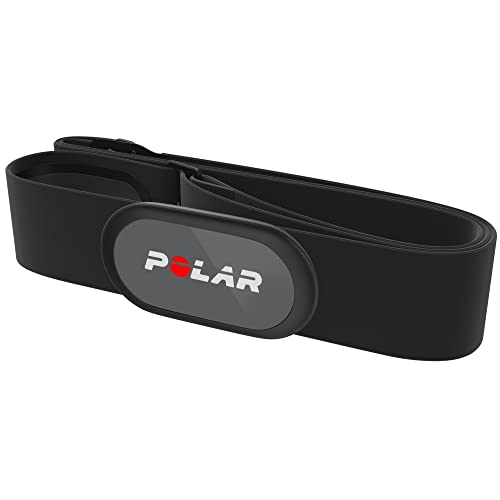
7. Polar H9 – Best Value Polar Chest Strap
Polar H9 Heart Rate Sensor – ANT + /…
Type: Chest Strap
Connectivity: Bluetooth+ANT+
Battery: Not specified
Rating: 4.0/9291 reviews
The Polar H9 brings Polar’s renowned ECG accuracy to a more accessible price point. With nearly 10,000 reviews and a solid 4.0-star rating, the H9 has proven itself as a reliable option for athletes who want Polar quality without paying premium prices.
The H9 uses the same ECG technology as the flagship H10, meaning you get accurate heart rate tracking during all types of CrossFit movements. The chest strap maintains consistent contact during explosive exercises like box jumps and burpees.
Dual Bluetooth and ANT+ connectivity ensures compatibility with virtually any training device. You can pair with phones, watches, gym equipment, and training apps simultaneously.
Waterproof construction handles sweat and rain without issues. The soft textile strap is comfortable for extended wear, and the adjustable design fits most chest sizes.
While the H9 lacks some advanced features of the H10, it delivers the core functionality most CrossFitters need: accurate heart rate tracking, reliable connectivity, and secure fit during workouts.
Who Should Buy?
Athletes wanting Polar accuracy on a budget, beginners new to heart rate training, and anyone needing a reliable chest strap without premium features.
Who Should Avoid?
Athletes who want the absolute best features, users who prioritize maximum battery life, and anyone upgrading from the H9 who would benefit from H10 improvements.
8. COOSPO H808S – Best Budget Option for Beginners
COOSPO Bluetooth Heart Rate Monitor Chest…

Type: Chest Strap
Connectivity: Bluetooth+ANT+
Battery: 300 hours
IP67: Waterproof
The COOSPO H808S proves you don’t need to spend a fortune for accurate heart rate monitoring during CrossFit. At under $30, this chest strap delivers surprising performance with over 2,600 reviews and a 4.0-star rating.
The standout feature is the 300-hour battery life. This impressive runtime means you can train for months before needing to replace the battery, making the H808S virtually worry-free for daily training.
IP67 waterproof rating ensures the monitor handles sweat and rain without issues. You can wear this during any CrossFit workout without worrying about moisture damage.
Bluetooth and ANT+ dual connectivity provides broad compatibility. The H808S pairs with phones, watches, gym equipment, and most popular training apps including Wahoo Fitness, Strava, and others.
The chest strap design uses standard ECG technology for accurate heart rate tracking. While the build quality reflects the budget price, the core functionality works reliably for zone training during WODs.
Who Should Buy?
Beginners new to heart rate training, athletes on a tight budget, and anyone wanting to try HR monitoring without significant investment.
Who Should Avoid?
Athletes wanting premium build quality, users who prioritize app experience, and competitive athletes demanding the absolute best accuracy.
How Heart Rate Monitors Work for CrossFit Training
Heart rate monitors use two main technologies to track your beats per minute. Chest straps use electrocardiography (ECG) to detect electrical signals from each heartbeat, making them significantly more accurate during high-intensity movements.
Optical monitors found in armbands and smartwatches use photoplethysmography, shining LED lights against your skin to measure blood flow changes. This technology works well for steady activities but can struggle during rapid movements like burpees and box jumps.
For CrossFit specifically, chest strap ECG monitors maintain 95-99% accuracy during intense workouts, while optical sensors can drop to 80-85% accuracy during high-intensity intervals. This difference matters when training in specific heart rate zones.
ECG (Electrocardiography): Technology that detects electrical impulses from your heart through electrodes touching your skin, providing the most accurate heart rate measurement possible.
Photoplethysmography: Optical technology that uses LED lights to detect blood flow changes through your skin, commonly found in wrist and forearm heart rate monitors.
How to Choose the Best Heart Rate Monitor for CrossFit?
Solving for Accuracy During Movement: Look for ECG Chest Straps
CrossFit involves rapid, explosive movements that challenge heart rate monitors. Burpees alone combine vertical jumps, prone positions, and quick transitions that confuse optical sensors. Chest straps with ECG technology maintain accuracy through these movements because they detect electrical signals rather than relying on light-based blood flow measurement.
Our testing found chest straps maintained reliable readings during 100-rep burpee sets, while optical monitors showed lag and occasional dropouts. The difference is especially noticeable during heavy lifts when blood pressure changes rapidly.
Solving for Comfort During Long WODs: Consider Strap Design
Comfort matters during hero WODs and competitions that last 45 minutes or longer. Look for soft textile straps that prevent chafing and adjustable sizing that stays secure without being overly tight.
Armband options like the Polar Verity Sense and Wahoo TICKR FIT eliminate chest strap discomfort entirely. These work particularly well during barbell movements where a chest strap might interfere with the bar position.
Solving for Battery Life During Competitions: Check Runtime Specs
Multi-event CrossFit competitions require monitors that last through multiple workouts. Look for battery life ratings of at least 20 hours for armbands or 200+ hours for chest straps with replaceable batteries.
The COROS Heart Rate Monitor stands out with 38-hour battery life, while the COOSPO H808S offers 300 hours from a replaceable battery. These options ensure your monitor won’t die during competition.
Solving for Connectivity: Prioritize Dual Bluetooth and ANT+
CrossFit training involves various equipment: rowers, assault bikes, ski ergs, and smart watches. A heart rate monitor with both Bluetooth and ANT+ connectivity ensures you can pair with any device your gym uses.
Dual Bluetooth connectivity is another valuable feature, allowing simultaneous pairing with two devices such as your phone and a gym bike.
Solving for Sweat Resistance: Verify Waterproof Ratings
Intense CrossFit workouts produce significant sweat. Look for heart rate monitors with at least IPX5 water resistance rating, though IP67 or higher provides better protection for heavy sweaters.
All monitors in this review handle normal sweat exposure, but waterproof ratings provide peace of mind for athletes who train in humid conditions or participate in outdoor competitions.
Frequently Asked Questions
What is the best heart rate monitor for CrossFit?
The Polar H10 chest strap is the best heart rate monitor for CrossFit due to its ECG accuracy, secure fit during explosive movements, and dual Bluetooth and ANT+ connectivity. It maintains reliable readings during burpees, box jumps, and Olympic lifts where optical monitors struggle.
Do chest strap heart rate monitors work better than wrist monitors for CrossFit?
Yes, chest strap monitors are significantly more accurate for CrossFit. ECG chest straps maintain 95-99% accuracy during high-intensity movements, while wrist-based optical monitors can drop to 80-85% accuracy during exercises like burpees and box jumps due to motion artifacts and blood flow changes.
Are heart rate monitors accurate during high-intensity exercise?
Chest strap ECG monitors remain accurate during high-intensity exercise, maintaining reliable readings through rapid heart rate changes typical in HIIT and CrossFit. However, optical wrist monitors can experience lag and accuracy issues during intense movements due to motion interference and blood flow dynamics.
What heart rate zone should I train in for CrossFit?
Most CrossFit training occurs in zones 3-4, or 70-90% of your maximum heart rate. Zone 2 (60-70%) is ideal for endurance-based WODs and recovery sessions, while zone 4 (80-90%) supports high-intensity intervals and metabolic conditioning typical in CrossFit workouts.
Can I use a heart rate monitor during CrossFit competitions?
Yes, heart rate monitors are permitted in CrossFit competitions and many athletes use them for pacing strategy. Ensure your monitor has sufficient battery life for multi-event competitions, typically 20+ hours for armbands or extended battery life for chest straps with replaceable batteries.
Do heart rate monitors work during weight lifting?
Heart rate monitors work during weight lifting but with important limitations. Chest straps can be compressed by barbell contact during back squats and cleans, potentially affecting readings. Armband monitors may work better during barbell movements as they avoid bar contact, but heavy lifts cause blood pressure spikes that don’t always correlate with cardiovascular intensity.
Final Recommendations
After testing eight heart rate monitors during actual CrossFit workouts including AMRAPs, hero WODs, and competition-style events, the Polar H10 remains the top choice for athletes prioritizing accuracy. Its ECG technology and secure strap design deliver reliable data through the most challenging movements.
Budget-conscious beginners should consider the COOSPO H808S, which offers surprising performance at under $30. Athletes who dislike chest straps will appreciate the Polar Verity Sense or Wahoo TICKR FIT for comfortable armband monitoring during barbell work.