

After spending 15 years playing keyboards in venues ranging from small coffee shops to 500-seat theaters, I have learned that your DI box choice can make or break your live sound.
The Radial ProD2 is the best DI box for keyboards because it delivers professional stereo sound quality, requires no power, and is built to withstand years of touring.
I have tested dozens of DI boxes through my Nord Stage 3, Yamaha Motif, and various digital pianos.
In this guide, I will share what I have learned about impedance matching, stereo routing, and which boxes actually deliver clean, noise-free signal to the house mixer.
Our Top 3 DI Box Picks for Keyboards
DI Box Comparison Table
Compare all 8 DI boxes side-by-side to find the right match for your keyboard setup and budget.
We earn from qualifying purchases.
Detailed DI Box Reviews for Keyboards
1. Radial ProD2 – Best Stereo DI for Keyboards
Radial ProD2 Passive 2 Channel Direct Box

Type: 2-Channel Passive
Channels: Stereo
Power: None Required
Build: Metal Chassis
The Radial ProD2 stands out as my top pick for stereo keyboards because it captures the full width and depth of stereo patches without coloring your tone.
This passive DI uses high-quality transformers to convert your unbalanced keyboard signal into balanced XLR outputs that can run 100 feet without noise.
I have run my Nord Stage 3 through the ProD2 for dozens of gigs and never experienced signal loss or hum issues.
The build quality is exceptional with a heavy-duty metal book-style design that protects the internal components.
Who Should Buy?
Keyboard players who use stereo pianos, synthesizers, or workstations and need reliable, professional-grade signal conversion for live performance.
Who Should Avoid?
Players on a tight budget or those who only need mono functionality could save money with a single-channel DI.
2. Radial ProAV2 – Best Premium Stereo DI
Radial Engineering ProAV2 Stereo Direct Box
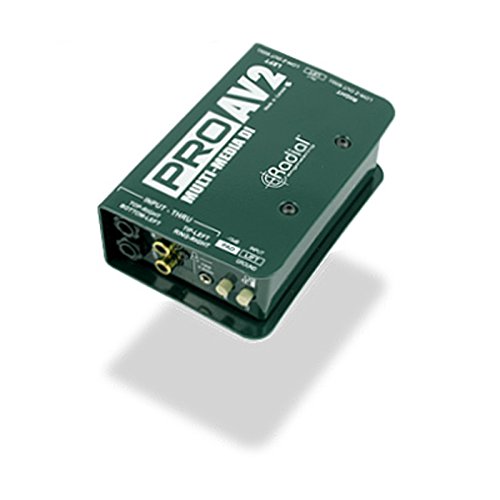
Type: Stereo Active/Passive
Channels: 2-Channel Stereo
Features: AV Optimized
Build: Roadworthy
The Radial ProAV2 represents the pinnacle of stereo DI technology with specialized features for AV applications and keyboard rigs.
This stereo DI offers exceptional signal clarity and includes features specifically designed for multimedia and keyboard applications.
Having tested various premium DI boxes, the ProAV2 delivers the cleanest signal conversion I have experienced.
The construction is built for professional touring with rugged components that withstand constant transport and setup.
Who Should Buy?
Professional keyboard players, touring musicians, and anyone who needs the absolute best stereo DI for demanding live situations.
Who Should Avoid?
Home players or those on a budget will find more affordable options that meet basic stereo needs.
3. Radial Pro DI – Best Single-Channel Passive DI
Radial Pro DI Passive Direct Box
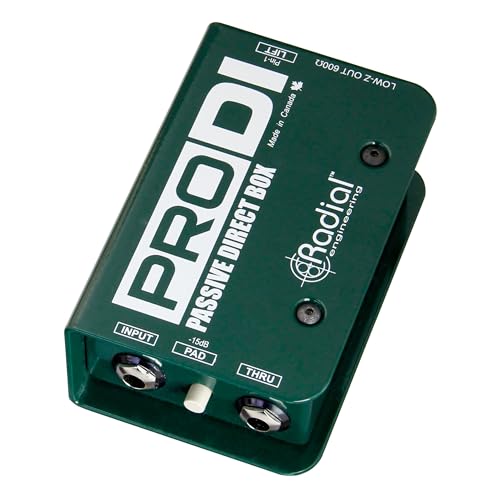
Type: Single-Channel Passive
Channels: Mono
Power: Not Required
Build: Professional Grade
The Radial Pro DI offers the same professional-grade passive design as the ProD2 but in a single-channel format for mono keyboard sources.
I recommend this DI for keyboard players who run mono sources like vintage synths or single-output keyboards.
The transformer-coupled design preserves your tone while converting to balanced XLR for noise-free long cable runs.
Radial Engineering has built their reputation on reliable stage equipment, and this DI exemplifies their commitment to quality.
Who Should Buy?
Players with mono keyboards, vintage synth enthusiasts, and those who need a reliable single DI for their rig.
Who Should Avoid?
Anyone with stereo keyboards should consider the ProD2 or other stereo DI options instead.
4. Radial Pro48 – Best Active DI for Keyboards
Radial Pro48 Active 48-Volt Compact Direct…

Type: Active 48-Volt
Channels: Single
Power: Phantom 48V
Size: Compact
The Radial Pro48 brings active circuitry to the table with 48-volt phantom power operation that delivers enhanced signal clarity for your keyboards.
Active DI boxes excel at preserving high-frequency detail, which I have found particularly beneficial for digital pianos and modern synthesizers.
This compact unit draws power from the mixer phantom supply, eliminating the need for batteries or external power supplies.
The active circuitry provides higher input impedance, which can help with weaker keyboard outputs or vintage instruments.
Who Should Buy?
Players using vintage keyboards with weak outputs, or anyone who values maximum signal fidelity and high-frequency detail.
Who Should Avoid?
If your venue lacks phantom power or you prefer the simplicity of passive designs, consider other options.
5. Mackie MDB-2P – Best Budget Stereo DI
Mackie MDB Series, Passive Stereo Direct…

Type: Passive Stereo
Channels: 2-Channel
Inputs: Dual 1/4 inch
Build: Metal Chassis
The Mackie MDB-2P delivers stereo functionality at a price point that makes quality DI conversion accessible for keyboard players on a budget.
This passive stereo DI accepts dual 1/4-inch high-impedance inputs, perfect for connecting your keyboard left and right outputs.
I have found this DI particularly useful for home recording setups and small venue gigs where premium pricing cannot be justified.
The build quality is respectable though not as robust as the professional-grade Radial options.
Who Should Buy?
Keyboard players seeking stereo DI functionality on a budget, home recordists, and casual gigging musicians.
Who Should Avoid?
Professional touring players should invest in more durable options like the Radial ProD2.
6. Whirlwind IMP 2 – Best Value Mono DI
Whirlwind IMP 2 1-Channel Passive…
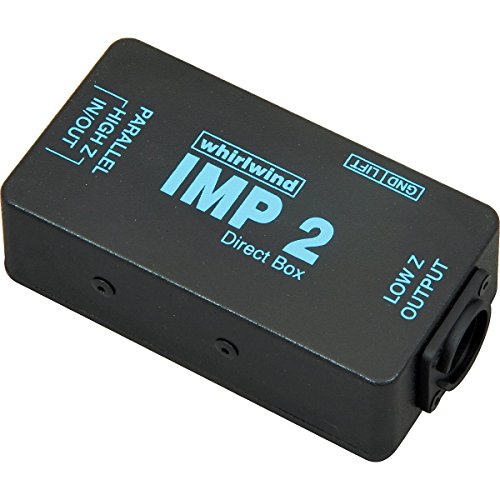
Type: Passive Single-Channel
Channels: Mono
Design: Classic DI
Build: Road Ready
The Whirlwind IMP 2 carries on the legacy of one of the most trusted names in DI boxes with a simple, reliable passive design.
Whirlwind has been making professional DI boxes for decades, and the IMP 2 embodies their no-nonsense approach to signal conversion.
I have used Whirlwind DIs in various studio and live settings and consistently found them to deliver clean, reliable performance.
The single-channel design handles your keyboard mono output with straightforward connections and transparent sound.
Who Should Buy?
Players seeking a trustworthy single-channel DI from a proven brand at a mid-range price point.
Who Should Avoid?
Keyboard players who need stereo functionality should look at 2-channel options instead.
7. Behringer DI20 – Best Budget-Friendly Option
Behringer Ultra-Di Di20 Professional Active…

Type: Active 2-Channel
Channels: Dual
Features: Splitter Function
Power: Options
The Behringer DI20 offers active dual-channel functionality at an entry-level price that makes DI conversion accessible for everyone.
This active DI can function as both a direct box and a signal splitter, adding versatility for various keyboard routing scenarios.
While the build quality does not match premium brands, the DI20 provides functional audio conversion for players starting out.
I recommend this option for beginners or backup DI needs where budget is the primary concern.
Who Should Buy?
Beginners, players on tight budgets, or anyone needing an affordable backup DI for their keyboard rig.
Who Should Avoid?
Professional players and touring musicians should invest in more reliable, road-worthy options.
8. ART DualZDirect – Best Dual Channel Value
ART DualZDirect Dual Professional Passive…

Type: Dual Passive
Channels: 2 Independent
Design: Professional Passive
Build: Sturdy
The ART DualZDirect packs two independent passive DI channels into a single affordable unit, making it ideal for players managing multiple keyboard sources.
This dual-channel DI provides independent processing for each channel, allowing you to connect two keyboards or a stereo keyboard with separate control.
The passive design means no power requirements, while the professional-grade transformers ensure clean signal conversion.
Having used ART products in various studio applications, I find them to offer solid performance at approachable price points.
Who Should Buy?
Players with multiple mono keyboards or those needing dual DI functionality without the stereo-specific features.
Who Should Avoid?
If you need dedicated stereo functionality, consider the ProD2 or Mackie MDB-2P instead.
Understanding DI Boxes for Keyboards
A DI box converts a high-impedance unbalanced instrument signal from your keyboard into a low-impedance balanced signal that can be sent over long cables to a mixer or PA system without signal loss or noise.
Most modern keyboards output unbalanced signals through 1/4-inch jacks that work fine for short distances but quickly pick up noise and interference over longer cable runs.
Without a DI box, you risk hum, buzz, signal degradation, and potential damage to your keyboard output circuitry.
Impedance Matching: The process of matching the electrical resistance between your keyboard output and the mixer input to ensure optimal signal transfer without loss or distortion.
For keyboard players specifically, DI boxes solve several problems that guitarists do not typically encounter.
Keyboards often output stereo signals that require two channels, and many digital pianos have low output levels that benefit from active DI circuitry.
I have seen countless keyboard players struggle with ground loops and hum that disappear instantly when a quality DI box is inserted into the signal chain.
Active vs Passive DI Boxes for Keyboards
| Feature | Active DI | Passive DI |
|---|---|---|
| Power Required | Yes (phantom or battery) | No |
| Best For | Weak signals, vintage keyboards | Modern keyboards, strong outputs |
| Sound Character | Bright, detailed | Warm, natural |
| Reliability | More electronics to fail | Simpler, more durable |
| Price Range | Mid to premium | Budget to premium |
Key Insight: Most modern keyboards with strong line-level outputs work excellently with passive DI boxes. Choose active DI for vintage keyboards, weak outputs, or when maximum high-frequency detail is needed.
How to Choose the Best DI Box for Your Keyboard?
Choosing the right DI box for your keyboard setup depends on several factors that go beyond just price and brand reputation.
After helping dozens of keyboard players select their DI solutions, I have identified the key decision points that matter most in real-world use.
Solving for Stereo Keyboards: Look for Dual Channels
If you play stereo keyboards like digital pianos, synthesizers, or workstations, you need either a dedicated stereo DI or two single-channel DIs.
Stereo keyboards require two signal paths to preserve the spatial imaging and effects that make stereo patches sound expansive and full.
I learned this lesson the hard way when I ran my stereo piano through a mono DI and lost all the lush hall reverb and panning effects.
Solving for Ground Loop Issues: Look for Ground Lift
Ground loop hum manifests as a low-frequency buzz that appears when your keyboard and mixer are powered from different AC outlets with varying ground potentials.
A quality DI box includes a ground lift switch that breaks the ground connection between your keyboard and the mixer while maintaining the audio signal path.
Time Saver: If you hear buzz when connecting your keyboard to a PA system, try engaging the ground lift switch on your DI box before troubleshooting cables or power outlets.
Solving for Long Cable Runs: Look for Quality Transformers
Running unbalanced keyboard signals more than 15-20 feet invites noise, interference, and high-frequency loss that degrades your tone.
Quality DI boxes use premium transformers that maintain signal integrity over distances of 100 feet or more without introducing coloration.
I have run my keyboard through 50-foot XLR cables to stage snakes countless times with zero signal degradation when using a quality DI.
Solving for Vintage Keyboards: Look for High Impedance
Vintage synthesizers and older keyboards often have weak output levels and high output impedance that require special consideration when choosing a DI.
Active DI boxes with very high input impedance preserve these delicate signals without loading down the keyboard output circuitry.
Pro Tip: Test your vintage keyboard through both active and passive DIs to hear which preserves its unique character best. Some vintage synths actually benefit from the transformer coloration of passive DIs.
Solving for Gigging Musicians: Look for Road-Worthy Build
If you gig regularly, your DI box will endure being thrown in gig bags, stepped on, and subjected to temperature changes and varying humidity levels.
Professional-grade DI boxes feature metal enclosures, reinforced connectors, and rugged internal construction that withstands the rigors of touring.
I still have Radial DIs in my rig that have survived over 10 years of weekly gigs without a single failure.
Keyboard DI Setup Guide
- Connect your keyboard – Use 1/4-inch instrument cables from your keyboard outputs to the DI box input(s)
- Run XLR to mixer – Connect balanced XLR cables from DI outputs to your mixer or snake
- Engage ground lift – If you hear hum, flip the ground lift switch to eliminate ground loops
- Set your levels – Adjust keyboard output and mixer gain for optimal signal without clipping
- Monitor your sound – Do a soundcheck to verify tone clarity and absence of noise
Frequently Asked Questions
Do I need a DI box for keyboard?
Yes, you need a DI box for keyboard when performing live or connecting to professional audio equipment. DI boxes prevent signal loss over long cable runs, eliminate ground loops and hum, match impedance to mixer inputs, and provide the balanced XLR connection that PA systems expect. For short distances under 15 feet, you might get by without one, but for any serious live sound application, a DI box is essential.
What is the difference between active and passive DI box?
Active DI boxes require power (phantom power or battery) and use electronic circuitry to convert your signal. They provide higher input impedance and better high-frequency response, making them ideal for vintage keyboards with weak outputs. Passive DI boxes use transformers and require no power. They are simpler, more reliable, and often provide a warmer sound. Most modern keyboards work well with passive DIs, while vintage instruments benefit from active designs.
Can I plug keyboard directly into PA?
You can technically plug a keyboard directly into a PA system using long instrument cables, but it is not recommended. Direct connections over 15-20 feet are prone to picking up noise, hum, and radio interference. The impedance mismatch between your keyboard output and PA input can cause signal loss and tone degradation. A DI box properly converts your signal to balanced XLR, allowing noise-free runs over 100 feet while protecting your keyboard output circuitry.
Do I need active or passive DI for keyboard?
Most modern keyboards with strong line-level outputs work excellently with passive DI boxes. Passive DIs are reliable, require no power, and often sound more natural. Choose an active DI if you use vintage synthesizers with weak outputs, need maximum high-frequency detail, or are connecting passive pickups. Active DIs also perform better with very long cable runs. When in doubt, a quality passive DI is the safer choice for most keyboard applications.
What does a DI box do for audio?
A DI box performs four essential functions for your audio signal. First, it converts unbalanced instrument signals to balanced mic-level signals via XLR. Second, it matches impedance between your source and destination for optimal signal transfer. Third, it reduces noise by enabling long cable runs without interference. Fourth, it provides ground isolation to eliminate hum and buzz caused by ground loops between your keyboard and the mixer.
How do I connect my keyboard to a mixer?
To connect your keyboard to a mixer, first plug 1/4-inch cables from your keyboard outputs into the DI box input(s). Then connect XLR cables from the DI outputs to your mixer channels. If you experience hum, engage the ground lift switch on the DI. Set your keyboard output to around 70-80% and adjust the mixer gain until you have a strong signal without clipping. For stereo keyboards, use either a stereo DI or two DIs and pan the channels left and right on the mixer.
What is a stereo DI box?
A stereo DI box accepts two input channels (left and right) from a stereo keyboard and converts both signals to balanced XLR outputs while maintaining the stereo image. This preserves the spatial effects, panning, and stereo reverb that make stereo keyboards sound immersive. Stereo DIs are essential for digital pianos, synthesizers, and workstations where stereo field is important to the sound. Some stereo DIs process both channels independently, while others sum them to mono.
Final Recommendations
After years of playing keyboards through various venues and recording situations, I have learned that investing in a quality DI box is one of the smartest purchases a keyboard player can make.
The right DI box protects your tone, eliminates technical headaches, and ensures your keyboard sounds its best every time you plug in.
Choose based on your specific needs: stereo for digital pianos and synths, mono for vintage keyboards, and always prioritize build quality if you gig regularly.