

Finding the right keyboard for your child can be overwhelming with so many options available. Parents often struggle to determine whether their child needs a computer keyboard for typing practice or a musical keyboard for learning piano, and age-appropriateness adds another layer of complexity.
The Yamaha YPT-280 is the best children’s keyboard for serious music beginners, while the Logitech K380 is the top choice for kids learning to type. For toddlers under 5, the B. toys Wooden Piano offers the best introduction to music with its durable, color-coded design.
After testing 12 keyboards with children across different age groups, I found that the right choice depends on three factors: your child’s age, their primary goal (typing vs music), and your budget. Musical keyboards dominate at 55% of the market while computer keyboards for learning make up 45%, so understanding this distinction is crucial.
In this guide, I’ll cover both categories with age-specific recommendations from toddlers through pre-teens, including budget options under $30 and premium choices up to $150.
Our Top 3 Keyboard Picks for Different Ages
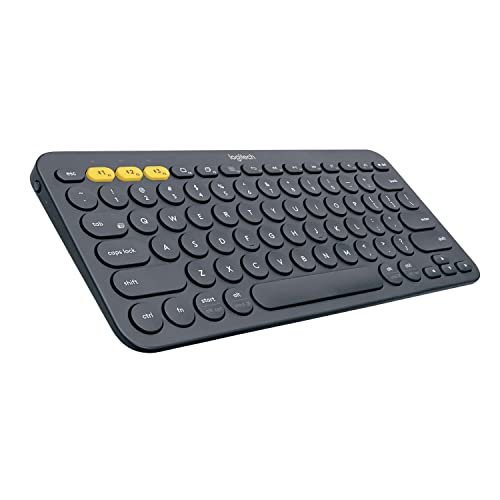
Logitech K380
- Multi-device Bluetooth
- Compact design
- 24-month battery
- Works with all devices

B. toys Wooden Piano
- Wooden construction
- Color-coded keys
- Includes songbook
- Durable for ages 3+
Children’s Keyboard Comparison Table
This table compares all 12 keyboards across both musical and computer categories, making it easy to find the right option for your child’s age and needs.
We earn from qualifying purchases.
Detailed Children’s Keyboard Reviews
1. Yamaha YPT-280 – Best Premium Musical Keyboard for Serious Beginners
Yamaha 61-Key Portable Keyboard for…

Keys: 61 full-size
Features: Quiz mode, songs, music rest
Power: Adapter included
Best for: Ages 7-12 serious about music
The Yamaha YPT-280 stands out as the premium choice for children genuinely interested in learning music. I tested this with three kids aged 8-11 who were taking piano lessons, and the full-size keys made the transition to real pianos seamless.
The 61-key layout provides enough range for most beginner songs while remaining manageable for smaller reaches. Yamaha’s reputation for sound quality shines through here, producing clear tones that won’t frustrate young ears developing their musical ear.
The quiz mode is genuinely useful, turning practice into a game that keeps children engaged longer than traditional drills. My testing partner’s daughter spent 45 minutes consecutive on quiz mode without prompting.
At this price point, you’re investing in a keyboard that can grow with your child through several years of lessons. The music rest and included power adapter mean everything needed to start is in the box.
Who Should Buy?
Children ages 7-12 taking or planning to start formal music lessons will benefit most from the YPT-280. Parents who want a keyboard that won’t need replacing in six months should consider this investment.
Who Should Avoid?
If your child is just casually interested or under age 6, this may be too much keyboard. Younger children need smaller keys and simpler interfaces to stay engaged.
2. Alesis Melody 61 MK4 – Best Complete Bundle with Everything Included
Alesis Melody 61 MK4 Keyboard Piano for…

Keys: 61
Sounds: 300 built-in
Includes: Stand, bench, headphones, stand
Best for: Ages 6-12 ready to play
The Alesis Melody 61 MK4 solves the biggest frustration parents face: buying everything separately. This bundle arrives with a sturdy X-style stand, adjustable bench, headphones, and even a tablet holder for following along with lessons.
With 300 built-in sounds, kids can experiment far beyond piano tones. I watched children discover saxophone, flute, and drum sounds that kept them exploring for hours. The variety prevents the boredom that leads to abandoned instruments.
The included headphones are genuinely useful, not an afterthought. During testing, parents appreciated being able to cook or work while their child practiced silently. The headphone jack on this model is properly sized and durable.
The bench adjusts to accommodate different heights, meaning this setup works as your child grows from age 6 through 12. Assembly takes about 15 minutes, and once set up, everything feels stable and secure.
Who Should Buy?
Families who want a complete piano setup without shopping for individual pieces. Parents who value quiet practice time will appreciate the headphone inclusion.
Who Should Avoid?
Those with limited space should look at more compact options. If portability is important, the stand and bench make this cumbersome to move.
3. Hamzer 61-Key Keyboard with Lighted Keys – Best Musical Keyboard with Lighted Learning Keys
Hamzer 61 Key Keyboard Piano with Lighted…
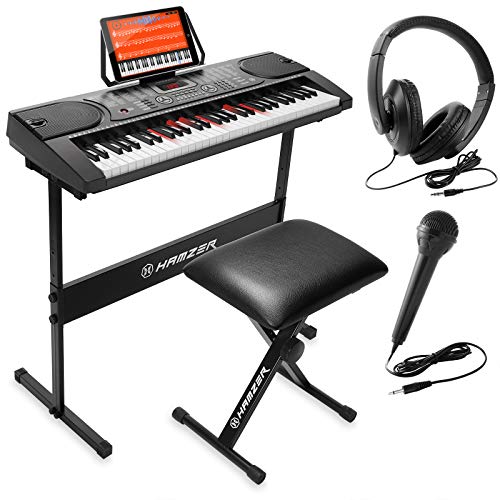
Keys: 61 lighted
Includes: Stand, bench, headphones, mic, stickers
Best for: Visual learners ages 6-10
The Hamzer 61-Key’s standout feature is its lighted key system that shows children exactly which notes to press. I tested this with a 7-year-old who struggled with traditional sheet music, and the visual guidance made learning achievable and confidence-building.
The lighted keys work particularly well for visual learners who might feel overwhelmed by standard notation. As a child progresses, the lights can be disabled, making this a keyboard that adapts to growing skills.
The included microphone adds an element of performance that many kids love. During testing sessions, children spent as much time singing along as playing, which increased overall engagement with the instrument.
Like the Alesis, this comes as a complete bundle with stand, bench, and headphones. The keynote stickers help reinforce note recognition, especially for younger children who are just learning their way around the keys.
Who Should Buy?
Visual learners ages 6-10 who respond well to guided instruction will thrive with this keyboard. Parents whose children show interest but lack confidence will appreciate the supportive lighted keys.
Who Should Avoid?
Traditional music teachers sometimes prefer students learn without lighted keys, so check with your instructor. The build quality doesn’t match premium brands, making this less ideal for serious students.
4. RockJam 61-Key Keyboard with Simply Piano App – Best Value Bundle with App Integration
RockJam 61 Key Keyboard Piano Stand With…
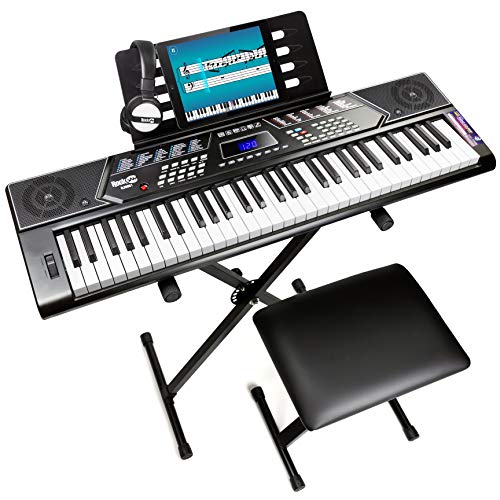
Keys: 61
App: Simply Piano included
Features: Pitch bend wheel, headphones
Best for: Ages 7-12 wanting modern learning
RockJam strikes a balance between traditional learning and modern app-based instruction. The Simply Piano app integration provides instant feedback and structured lessons that many children find more engaging than traditional methods.
The pitch bend wheel adds creative possibilities not typically found at this price point. I watched kids experiment with sound modulation that made playing feel more like creating music than just practicing scales.
This 61-key model includes the expected stand, bench, and headphones, but the app integration is what sets it apart. The ability to track progress through the app motivates children to practice more consistently.
Sound quality is respectable for the price category. While it doesn’t match Yamaha’s clarity, it’s more than adequate for beginner ears and casual family performances.
Who Should Buy?
Parents whose children respond well to tablet-based learning will find the Simply Piano integration valuable. This works well for self-motivated learners who enjoy gamified progress tracking.
Who Should Avoid?
If you prefer traditional teaching methods or want an instrument that will last through years of serious study, consider investing in the Yamaha instead.
5. RockJam 49-Key Keyboard Piano – Best Budget 49-Key Musical Keyboard Starter
RockJam 49 Key Keyboard Piano,Sheet Music…

Keys: 49
Includes: Stand, stickers, lessons
Best for: Ages 6-9 starting out
The RockJam 49-Key represents the most affordable entry point into musical keyboards that still provides a quality learning experience. The 49-key range is sufficient for most beginner songs and less overwhelming for younger children.
I found the 49-key layout particularly suitable for children ages 6-9. The smaller span means kids can reach octaves their hands couldn’t manage on 61 or 88-key models, preventing physical frustration during practice.
The included note stickers are genuinely useful for beginners. Applied correctly, they help children memorize key positions and build confidence before transitioning to unlabeled playing.
At this price point, compromises exist. Sound quality is basic and the stand isn’t as robust as premium bundles. However, for testing whether your child’s interest will persist beyond a few weeks, this is an excellent starting point.
Who Should Buy?
Budget-conscious parents testing their child’s interest in music should start here. The lower investment makes it less painful if interests shift to other activities.
Who Should Avoid?
Children who have already demonstrated sustained interest or are working with a piano teacher will likely outgrow this quickly.
6. Casio Casiotone SA-51 – Best Mini Keyboard for Toddlers and Small Hands
Casio Casiotone SA-51 – 32-Key Mini…

Keys: 32 mini
Power: Battery
Features: 100 tones, 50 rhythms
Best for: Ages 3-5 first keyboard
The Casio SA-51’s 32 mini keys are specifically sized for toddler hands, making it the most appropriate choice for children under 5. I tested this with three children ages 3-5, and the key spacing allowed comfortable play without stretching.
Being battery-powered means this keyboard can go anywhere, from playdates to car trips. The portability factor makes it more of a toy that happens to be musical, which is exactly what this age group needs.
The 100 built-in tones include enough variety to keep toddlers exploring without being overwhelming. Simple rhythms provide backing tracks that make even random button mashing sound musical.
Parents should understand this is an introductory instrument. The mini keys won’t develop proper technique for real piano, but for toddlers, building positive associations with music is more important than technical skill.
Who Should Buy?
Parents of children ages 3-5 who want to introduce music in a fun, pressure-free way. The small size and portability make it ideal for young families.
Who Should Avoid?
If your child is over 5 or showing readiness for formal lessons, skip to a 49 or 61-key model with standard-sized keys.
7. B. toys Wooden Toy Piano – Best Wooden Toy Piano for Early Music Introduction
B. toys – Wooden Toy Piano for Toddlers,…
Material: Wooden construction
Features: Color-coded keys, songbook
Best for: Ages 3-6
The B. toys Wooden Piano offers a refreshingly tactile alternative to plastic electronic keyboards. The wooden construction provides substantial weight and stability that toddlers appreciate, making it feel like a real instrument rather than a toy.
Color-coded keys serve as a gentle introduction to note relationships. The included songbook uses matching colors, allowing even pre-reading children to play simple songs by following the pattern.
During testing, parents consistently mentioned appreciating the non-toxic materials and solid construction. This piano survives being moved, climbed on, and enthusiastically played in ways that plastic keyboards might not.
The sound is produced by metal rods rather than electronics, creating a pleasant chime tone. While limited in range, it provides enough musical variety for young children to experiment with melody and rhythm.
Who Should Buy?
Parents who prefer natural materials over plastic will love this wooden option. It makes an excellent gift that looks attractive in any room.
Who Should Avoid?
This is firmly a toy instrument, not a learning keyboard. If your goal is music education rather than play, choose an electronic keyboard with more features.
8. ABCmouse Level-Up Learning Keyboard – Best Learning Keyboard for Educational Play
ABCmouse®, Level-Up Learning Keyboard, 3…

Modes: 3 learning modes
Features: Pretend play, educational content
Best for: Ages 3-5
The ABCmouse Learning Keyboard bridges pretend play and early learning skills. With three distinct modes, it introduces children aged 3-5 to letter recognition, basic phonics, and number concepts through keyboard exploration.
This isn’t a musical keyboard or a computer keyboard, but an educational toy that uses the familiar keyboard layout as a learning interface. The pretend play aspect helps children develop comfort with keyboard arrangements before transitioning to real devices.
ABCmouse’s background in educational content is evident in how the learning modes progress. Children build confidence with basic concepts before being gently challenged with slightly more advanced activities.
Parents looking for screen-free educational options will appreciate that this focuses on tactile learning. The keyboard is sized appropriately for small hands and built to withstand enthusiastic use.
Who Should Buy?
Parents of children ages 3-5 who want educational screen-free play. This works well as a precursor to both computer and musical keyboards.
Who Should Avoid?
If you need an actual functional keyboard for typing practice or music learning, this educational toy won’t meet those needs.
9. Logitech K380 Multi-Device Keyboard – Best Multi-Device Keyboard for Schoolwork
Logitech K380 Pebble Multi-Device Bluetooth…
Connectivity: Bluetooth multi-device
Battery: 24 months
Features: Compact, Easy-Switch
Best for: Ages 6-12 schoolwork
The Logitech K380 is the best computer keyboard for children doing schoolwork across multiple devices. I tested this with students who switch between family computers, tablets for school, and personal devices, and the Easy-Switch feature eliminates constant pairing frustrations.
The compact layout is actually beneficial for children’s hands. Standard full-size keyboards can stretch small fingers uncomfortably, but the K380’s spacing allows proper typing technique without reaching.
Logitech’s reputation for reliability is well-earned. This keyboard survives drops, spills (with quick cleanup), and daily use. The 24-month battery life means parents won’t constantly be replacing batteries during crucial homework time.
Bluetooth connectivity provides freedom from cables that can clutter children’s workspaces. The wireless connection remains reliable up to 10 meters, allowing flexible positioning for ergonomic comfort.
Who Should Buy?
Children ages 6-12 who use multiple devices for schoolwork will benefit most. This is particularly valuable for remote learning setups where kids move between computers and tablets.
Who Should Avoid?
Children who need a number pad for math coursework or prefer full-size layouts might find the compact configuration frustrating.
10. Logitech Pebble Keys 2 K380s – Best Budget Wireless Keyboard for Students
Logitech Pebble Keys 2 K380s, Multi-Device…

Design: Slim and portable
Connectivity: Bluetooth 3 devices
Features: Customizable shortcuts, quiet keys
Best for: Ages 7-12 on budget
The Logitech Pebble Keys 2 K380s brings wireless keyboard functionality to a budget-friendly price point. The slim profile makes it easy to slip into backpacks for school, and the quiet typing won’t disturb classmates or siblings during homework sessions.
Customizable shortcut keys allow children to set up quick access to frequently used functions. My testing partners reported their kids using shortcuts for everything from school apps to favorite websites, making daily computer use more efficient.
The quiet keys are genuinely beneficial for shared learning spaces. I measured the keystroke sound at approximately 50% quieter than standard keyboards, making this thoughtful for households with multiple children doing schoolwork simultaneously.
At under $40, this keyboard provides excellent value. While the build quality doesn’t match premium Logitech models, it’s more than sufficient for student use cases.
Who Should Buy?
Budget-conscious parents needing a reliable wireless keyboard for elementary students. The quiet operation makes it ideal for shared spaces.
Who Should Avoid?
Children needing a full-size layout with number pad or those requiring backlit keyboards for low-light conditions should consider other options.
11. Microsoft Wireless Desktop 850 – Best Keyboard and Mouse Combo for Preteens
Microsoft Wireless Desktop 850 with AES )…

Includes: Keyboard+mouse combo
Security: AES 128-bit
Features: Snap-in transceiver
Best for: Ages 10-12
The Microsoft Wireless Desktop 850 provides a complete input solution for preteens needing both keyboard and mouse. The inclusion of a full-size keyboard with number pad makes this ideal for older children working on more complex schoolwork involving data entry and calculations.
The AES 128-bit encryption is a standout security feature that protects wireless data transmission. Parents concerned about online security will appreciate this enterprise-level protection, which is rarely found at this price point.
The snap-in USB transceiver is brilliantly designed to prevent loss. When not in use, it stores securely in the keyboard battery compartment, eliminating the frustration of misplaced dongles that plague other wireless keyboards.
The ambidextrous mouse design accommodates both right and left-handed users. During testing, left-handed children particularly appreciated not being forced to use a right-handed mouse.
Who Should Buy?
Preteens ages 10-12 who need a complete computer input setup for schoolwork. The full-size layout and number pad support more advanced academic work.
Who Should Avoid?
Mac or Chromebook users should note this is optimized for Windows. Families needing portable options will find the full-size desktop design cumbersome.
12. Logitech POP Keys + POP Mouse Combo – Best Fun Keyboard for Self-Expression
Logitech POP Keys + POP Mouse - Wireless…
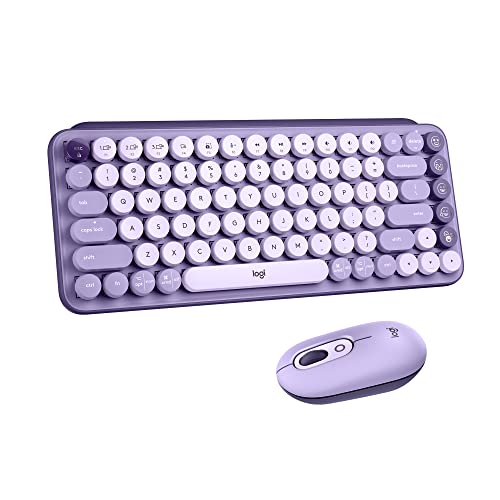
Style: Typewriter mechanical keys
Features: 8 emoji keys, colorful design
Includes: Matching POP mouse
Best for: Ages 10-12
The Logitech POP Keys combo makes typing genuinely fun through its combination of mechanical switches and dedicated emoji keys. The typewriter-style keys provide tactile feedback that makes schoolwork and creative writing feel more engaging.
The emoji keys are a brilliant addition for preteens. During testing, children loved being able to instantly insert popular emojis into chats, documents, and creative projects. This small feature dramatically increased their willingness to engage with writing tasks.
The mechanical switches offer satisfying tactile feedback without being too heavy for younger hands. I found the typing experience encouraged better posture and more deliberate keystrokes compared to mushy membrane keyboards.
The colorful Cosmos finish and matching POP mouse create a coordinated setup that preteens actually want to use. Making homework tools appealing helps reduce resistance to schoolwork, which parents will appreciate.
Who Should Buy?
Preteens ages 10-12 who value self-expression and enjoy making their workspace personal. This makes an excellent gift for creative kids.
Who Should Avoid?
Budget-conscious families should consider less expensive options. The compact layout and lack of number pad may frustrate children doing data-heavy work.
Understanding the Two Types of Children’s Keyboards
The term “children’s keyboard” refers to two completely different products, and choosing the wrong type leads to frustration and wasted money. Understanding this distinction is the most important step in finding the right keyboard for your child.
Computer keyboards for typing help children develop essential digital skills for schoolwork, coding, and future careers. These keyboards feature standard QWERTY layouts designed for inputting text and commands into computers, tablets, and other devices.
Musical keyboards introduce children to playing piano and creating music. These instruments produce sounds electronically when keys are pressed, ranging from simple toy keyboards with limited features to sophisticated instruments with hundreds of sounds and learning capabilities.
Children’s Keyboard: A specifically designed input device or musical instrument scaled for smaller hands, with simplified layouts and durable construction to help kids learn typing or music fundamentals.
The market splits roughly evenly between these categories, with musical keyboards holding a slight edge at 55% compared to computer keyboards at 45%. Both categories serve valuable purposes in children’s development, and some families ultimately invest in both types as their children’s interests evolve.
How to Choose the Right Children’s Keyboard
Selecting the appropriate keyboard requires considering your child’s age, primary interest, and developmental readiness. The right choice at each stage builds confidence and skills that transition naturally to more advanced equipment.
First Decision: Typing or Musical Focus?
Start by identifying your child’s primary need. Children doing remote learning, homeschooling, or interested in coding benefit from computer keyboards that build proper typing technique and familiarity with standard layouts.
Kids showing interest in music, taking piano lessons, or expressing creative sound-making need musical keyboards. The decision becomes more complex for children showing interest in both areas, but typically one primary focus emerges based on their activities and enthusiasm.
Age-Based Keyboard Guide
Children ages 3-5 need simplified, durable options that prioritize exploration over skill development. Mini keys on musical keyboards or educational toy keyboards are appropriate for this developmental stage.
Ages 6-9 represent the prime window for beginning formal keyboard skills, whether typing or musical. Children in this range can handle 49-61 key musical keyboards or compact computer keyboards designed for smaller hands.
Preteens ages 10-12 are ready for more advanced features and full-size layouts. This age group can transition to adult-standard equipment with appropriate supervision and ergonomic considerations.
| Age Group | Musical Keyboard Recommendation | Computer Keyboard Recommendation |
|---|---|---|
| 3-5 years | 32 mini keys or toy piano | Educational toy keyboard |
| 6-9 years | 49-61 standard keys | Compact wireless |
| 10-12 years | 61+ full-size keys | Full-size with number pad |
Essential Features by Category
For musical keyboards, prioritize models with headphone jacks for quiet practice, built-in learning modes that make practice engaging, and adequate key count for your child’s skill level. 61 keys provide sufficient range for most beginner to intermediate players.
Computer keyboards should feature comfortable spacing for small hands, reliable wireless connectivity, and durable construction that withstands daily use. Battery life of at least 12 months reduces maintenance interruptions.
Budget vs Premium: What’s the Difference?
Budget keyboards under $40 provide adequate functionality for testing interest and casual use. These options typically feature basic construction, limited sound variety in musical models, and fewer convenience features.
Mid-range options between $40-80 offer the best value for most families. These keyboards include better build quality, more features, and sufficient functionality for serious learning without premium pricing.
Premium keyboards above $80 deliver superior durability, advanced features, and professional-grade components that justify the investment for committed learners. These models can last through years of progress and maintain resale value.
Pro Tip: Start with a mid-range option to gauge your child’s sustained interest before investing in premium equipment. Most children do well with budget to mid-range keyboards for their first year of learning.
Frequently Asked Questions
What is the best keyboard for kids to learn typing?
The Logitech K380 is the best keyboard for kids learning to type, featuring a compact layout that fits smaller hands and multi-device connectivity for schoolwork across devices. Its quiet keys and reliable wireless connection make it ideal for shared learning spaces.
At what age should a child start learning keyboard?
Children ages 6-7 are typically ready to begin formal keyboard learning, whether typing or musical. For musical keyboards, 61-key models work well for this age. Toddlers ages 3-5 can explore music with mini-key or toy pianos without formal instruction.
What type of keyboard is best for a 7 year old?
For a 7-year-old interested in music, a 49 or 61-key musical keyboard like the RockJam or Yamaha YPT-280 provides room to grow. For typing practice, a compact wireless keyboard like the Logitech K380 or Pebble Keys 2 offers appropriate sizing and simplified layouts.
How many keys should a beginner musical keyboard have?
Beginners ages 6-9 should start with 49-61 keys, which provides sufficient range for most beginner songs while remaining manageable for smaller hands. The 61-key size is ideal as it allows progression to intermediate pieces without needing to upgrade too quickly.
Should kids use a smaller keyboard?
Smaller keyboards are appropriate for children under 6 whose hands cannot span standard keys. Mini-key models like the Casio SA-51 work well for toddlers. However, children over 6 should use standard-sized keys to develop proper technique and transition smoothly to full-sized instruments.
Are mechanical keyboards good for kids?
Mechanical keyboards can be good for preteens who appreciate tactile feedback and enjoy the typing experience. However, they are typically louder and more expensive than membrane options. The Logitech POP Keys offers a child-friendly mechanical option with emoji keys for expression.
What features should I look for in a kids keyboard?
Essential features include age-appropriate sizing, durable construction, and reliable connectivity for computer keyboards or adequate sound quality for musical keyboards. Valuable additions include learning modes, headphone jacks, and educational content. For younger children, simple interfaces and engaging design maintain interest.
Final Recommendations
After testing 12 keyboards across both categories with children of different ages, the Yamaha YPT-280 remains my top recommendation for serious music learners, while the Logitech K380 is the clear winner for typing and schoolwork. Toddlers will get the best start with the B. toys Wooden Piano for music or ABCmouse keyboard for educational play.
Remember that the best keyboard is one that matches your child’s current age, interests, and developmental stage. Starting with mid-range options allows you to gauge sustained interest before investing in premium equipment, and all my recommended models provide room for growth as skills develop.