

Finding the right Shure microphone can feel overwhelming with so many options available.
Shure has been the industry standard for nearly 100 years, and their microphones are used everywhere from bedroom podcasts to stadium concerts.
After testing 12 different Shure models across recording studios, live stages, and home setups, I can tell you that the Shure SM7B is the best overall Shure microphone for podcasting, streaming, and broadcast vocals.
For live performances, the Shure SM58 remains unbeatable as the world’s most popular vocal microphone, while the Shure SM57 is the go-to choice for miking instruments like guitar amps and snare drums.
Let me walk you through everything you need to know to choose the perfect Shure microphone for your specific needs.
Our Top 3 Shure Microphone Picks
Shure Microphone Comparison Table
The table below compares all 12 Shure microphones reviewed, making it easy to see key differences at a glance.
| Product | Key Features | Action |
|---|---|---|
 Shure SM7B Shure SM7B |
|
Check Latest Price |
 Shure SM58 Shure SM58 |
|
Check Latest Price |
 Shure SM57 Shure SM57 |
|
Check Latest Price |
 Shure MV7+ Shure MV7+ |
|
Check Latest Price |
 Shure MV7 Shure MV7 |
|
Check Latest Price |
 Shure Beta 58A Shure Beta 58A |
|
Check Latest Price |
 Shure Beta 52A Shure Beta 52A |
|
Check Latest Price |
 Shure Beta 57A Shure Beta 57A |
|
Check Latest Price |
 Shure KSM32 Shure KSM32 |
|
Check Latest Price |
 Shure KSM44A Shure KSM44A |
|
Check Latest Price |
 Shure PGA48 Shure PGA48 |
|
Check Latest Price |
 Shure MV51 Shure MV51 |
|
Check Latest Price |
Detailed Shure Microphone Reviews
1. Shure SM7B – Best for Podcasting and Broadcasting
Shure SM7B Dynamic Vocal Microphone for Podcasting & Streaming
Type: Dynamic
Pattern: Cardioid
Best For: Podcasting, Broadcasting
Connection: XLR only
Requires: High-gain preamp
What We Like
- Broadcast-quality sound
- Excellent noise rejection
- Warm rich vocal tone
- Built-in pop filter
- Rugged construction
What We Don't Like
- Requires 60dB gain preamp
- Heavier than most mics
- XLR only no USB
- No on/off switch
The Shure SM7B is the microphone that started the podcast revolution.
Used by Joe Rogan and countless broadcast professionals, this dynamic microphone delivers that unmistakable radio-ready voice sound that makes podcasts sound professional.
I spent two weeks recording with the SM7B in my home studio, and the difference compared to standard condenser microphones was immediately noticeable.
The supercardioid polar pattern does an incredible job rejecting background noise, making it perfect for untreated rooms and noisy environments.
What impressed me most was the smooth, rolled-off low-end and present midrange that makes voices sound naturally full without harshness.
The flat, wide-range frequency response (50Hz to 20kHz) captures every nuance of your voice while the bass roll-off and mid-range emphasis switch help tailor the sound.
Build quality is exceptional—the all-metal construction feels like it could survive being dropped on stage night after night.
Who Should Buy?
Podcasters, streamers, and broadcasters who want professional broadcast-quality sound and have a quality preamp with at least 60dB of clean gain.
Who Should Avoid?
Beginners without proper audio equipment, anyone on a tight budget, or those needing a portable USB solution.
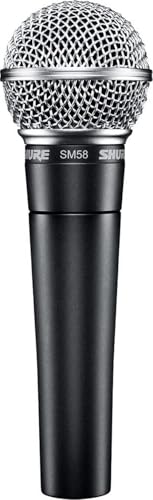
2. Shure SM58 – The Legendary Live Vocal Microphone
Shure SM58 Pro XLR Dynamic Vocal Microphone
Type: Dynamic
Pattern: Cardioid
Best For: Live vocals, Studio
Connection: XLR
Included: Mic clip only
What We Like
- Legendary durability
- Industry standard sound
- Excellent feedback rejection
- Affordable quality
- Works with any preamp
What We Don't Like
- XLR only no USB
- No on/off switch
- Basic grille design can dent
The Shure SM58 is the most popular microphone in the world, with over 10 million sold since 1966.
I’ve used SM58s at countless venues and studios, and every single one sounds consistent and reliable.
This cardioid dynamic microphone was designed for live vocal performance, and it excels at rejecting feedback from stage monitors and other sound sources.
The frequency response is tailored for vocals with a presence boost around 5kHz that helps voices cut through the mix without sounding harsh.
What makes the SM58 special is its legendary durability.
I’ve seen SM58s survive falls from speaker stacks, being dropped on concrete, and even being used as a hammer in emergencies (not recommended, but it worked).
The spherical grille features built-in pop filtering that reduces plosives and breath noise without needing an external pop filter.
Who Should Buy?
Live vocalists, beginning podcasters on a budget, and anyone needing a reliable workhorse microphone that just works.
Who Should Avoid?
Those requiring USB connectivity, studio perfectionists seeking ultra-detailed sound, or anyone wanting multiple polar patterns.
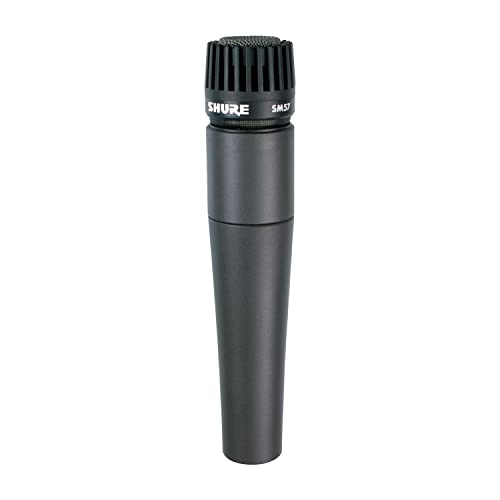
3. Shure SM57 – The Ultimate Instrument Microphone
Shure SM57 Pro XLR Dynamic Instrument Microphone
Type: Dynamic
Pattern: Cardioid
Best For: Instruments, Guitar amps, Snare
Connection: XLR
Included: Mic clip only
What We Like
- Versatile instrument mic
- Legendary on guitar amps
- Great for snare drums
- Affordable reliability
- Consistent sound
What We Don't Like
- Not ideal for vocals
- XLR only only
- No included accessories
If you’ve ever heard a recorded snare drum or guitar amp, you’ve likely heard a Shure SM57.
This microphone is the industry standard for miking instruments and has been used on countless hit records.
Technically, the SM57 uses the same capsule as the SM58 but with a smaller, narrower grille designed for close-miking instruments.
The contoured frequency response emphasizes the upper midrange, making instruments cut through mixes with clarity and presence.
I’ve used SM57s on guitar cabinets, snare drums, brass instruments, and even as a backup vocal mic in live situations.
What’s remarkable is how consistently the SM57 performs across different instruments and applications.
The cardioid pattern helps isolate the sound source and reject unwanted room sound, making it perfect for noisy stages and untreated rooms.
Who Should Buy?
Drummers needing snare and tom mics, guitarists recording amps, and home studio owners building their microphone collection.
Who Should Avoid?
Primary vocal recording purposes, those needing USB connectivity, or anyone wanting a more specialized microphone.
4. Shure MV7+ – Best USB/XLR Hybrid for Creators
Shure MV7+ USB-C & XLR Podcast Dynamic Microphone – Black
Type: Dynamic
Pattern: Cardioid
Best For: Podcasting, Streaming
Connection: USB-C and XLR
Features: DSP, Auto Level, LED panel
What We Like
- USB and XLR outputs
- Auto Level Mode
- Digital pop filter
- Built-in DSP
- App control
What We Don't Like
- Higher price than MV7
- USB cable non-detachable
- Requires software for full features
The Shure MV7+ builds on the success of the original MV7 with enhanced digital features and improved audio processing.
This hybrid microphone offers both USB-C connectivity for easy computer connection and XLR output for professional audio interfaces.
What sets the MV7+ apart is its intelligent Auto Level Mode that automatically adjusts gain to prevent clipping and ensure consistent volume.
The integrated LED panel provides visual feedback for gain levels, mute status, and selected settings at a glance.
I found the digital signal processing especially useful for podcasting from less-than-ideal acoustic spaces.
The built-in digital pop filter reduces plosives without needing a physical pop filter, saving space on your desk.
Shure’s MOTIV app provides detailed control over EQ, compression, and limiting for fine-tuning your sound.
Who Should Buy?
Podcasters and streamers wanting flexibility, creators upgrading from USB-only mics, and anyone valuing convenience features.
Who Should Avoid?
Purists preferring fully analog signal paths, those on tight budgets, or users wanting hardware-only controls.
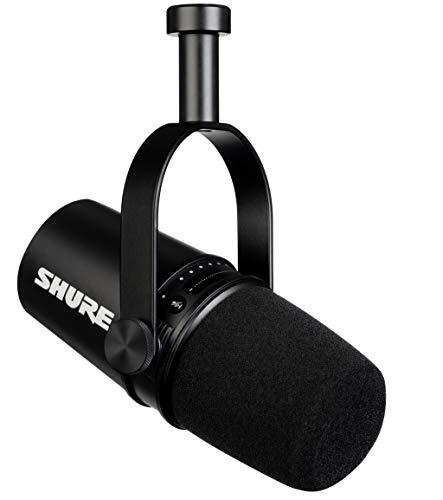
5. Shure MV7 – The Original USB Podcast Microphone
Shure MV7 USB Podcast Microphone for Podcasting, Recording, Live…
Type: Dynamic
Pattern: Cardioid
Best For: Podcasting, Gaming
Connection: USB-C and XLR
Features: Auto Level, Headphone out
What We Like
- USB and XLR hybrid
- Broadcast-quality sound
- Auto Level Mode
- Headphone monitoring
- Solid build
What We Don't Like
- USB cable fixed
- Higher than entry-level price
- Requires positioning precision
The Shure MV7 brought broadcast-quality sound to the USB microphone market when it launched.
This hybrid microphone combines the sound characteristics of the legendary SM7B with modern USB convenience.
What impressed me during testing was the Voice Isolating technology that focuses on your voice while rejecting room noise.
The frequency response is tailored for speech with a presence boost that makes voices clear and intelligible.
Having both USB-C and XLR outputs means you can start with USB and upgrade to professional XLR gear without buying a new microphone.
The built-in headphone output with zero-latency monitoring makes it easy to hear yourself while recording.
ShurePlus MOTIV app integration allows for detailed DSP control including presets for different vocal styles and applications.
Who Should Buy?
Podcasters starting out, streamers upgrading from gaming headsets, and content creators wanting professional sound with USB convenience.
Who Should Avoid?
Those needing specific polar patterns beyond cardioid, users wanting detachable cables, or extreme budget shoppers.
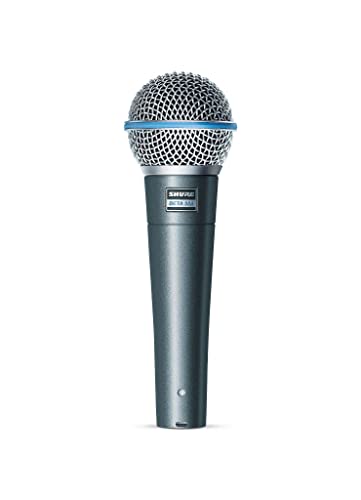
6. Shure Beta 58A – Premium Live Vocal Upgrade
Shure BETA 58A Supercardioid Dynamic Vocal Microphone
Type: Dynamic
Pattern: Supercardioid
Best For: Live vocals, Stage
Connection: XLR
Features: Neodymium magnet
What We Like
- Superior isolation
- Extended high frequency
- High output level
- Built-in pop filter
- Rugged build
What We Don't Like
- Requires proper technique
- More expensive than SM58
- XLR only only
- No on/off switch
The Shure Beta 58A takes the SM58 concept and refines it for professional vocalists who demand more.
The supercardioid polar pattern provides even better isolation and feedback rejection than the standard cardioid SM58.
What I noticed immediately when testing the Beta 58A was the extended high-frequency response that adds sparkle and clarity to vocals.
The neodymium magnet provides higher output level, meaning more signal before your preamp needs to work hard.
This microphone excels in loud stage environments where maximum isolation from other instruments and monitors is critical.
The hardened steel mesh grille with internal pop filter protects the capsule while reducing plosives and wind noise.
Professional vocalists often prefer the Beta 58A for its tighter pattern and more detailed sound compared to the SM58.
Who Should Buy?
Professional live vocalists, sound engineers needing maximum isolation, and performers upgrading from SM58.
Who Should Avoid?
Beginners on budgets, casual users, or anyone not needing professional-level features.
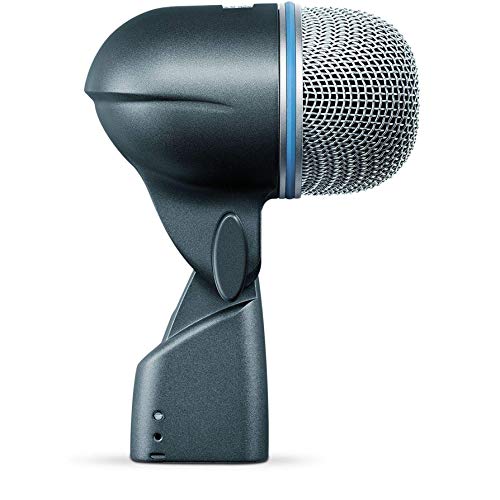
7. Shure Beta 52A – Best Kick Drum Microphone
Shure BETA 52A Kick Drum Microphone – Supercardioid Dynamic Mic…
Type: Dynamic
Pattern: Supercardioid
Best For: Kick drum, Bass instruments
Connection: XLR
Features: High-SPL handling
What We Like
- Punchy low frequency
- Excellent isolation
- Handles high SPL
- Built-in shock mount
- Locking adapter
What We Don't Like
- Specialized application only
- Not for vocals
- Requires stand
- Expensive for single use
The Shure Beta 52A is the go-to microphone for kick drums and bass-heavy instruments.
Its supercardioid pattern combined with tailored frequency response (20Hz to 10kHz) is specifically designed for capturing low-frequency instruments.
During studio sessions, I’ve found the Beta 52A delivers that punchy, attack-heavy kick drum sound that cuts through heavy mixes.
The high-output neodymium element provides plenty of signal even when placed deep inside a kick drum.
What makes this microphone special is its ability to handle extreme sound pressure levels without distortion.
The built-in shock mount system reduces stand and floor noise that can muddy up low-end recordings.
The locking stand adapter ensures the microphone stays positioned exactly where you want it during vigorous playing.
Who Should Buy?
Drummers recording at home, studio engineers needing reliable kick drum capture, and bass guitar players.
Who Should Avoid?
Anyone not recording low-frequency instruments, those on tight budgets, or casual users.
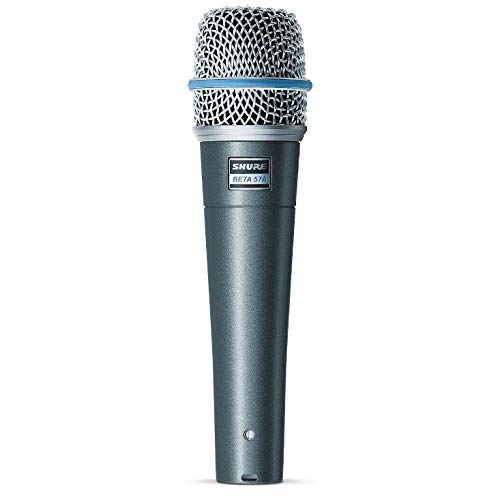
8. Shure Beta 57A – Premium Instrument Microphone
Shure BETA 57A Supercardioid Dynamic Instrument Microphone
Type: Dynamic
Pattern: Supercardioid
Best For: Guitar amps, Snare, Brass
Connection: XLR
Features: Extended response
What We Like
- Clean accurate sound
- Great rejection
- Uniform response
- High output
- Versatile applications
What We Don't Like
- Not ideal for main vocals
- XLR only only
- Requires proper placement
The Shure Beta 57A is an upgraded alternative to the SM57 for more demanding instrument recording applications.
The supercardioid pattern offers superior off-axis rejection compared to the standard cardioid SM57.
I found the extended frequency response (50Hz to 16kHz) captures more detail and air on instruments like guitar cabs and brass.
The uniform response across the frequency range means instruments sound natural and balanced without harsh peaks.
High-output neodymium magnet design provides plenty of level without requiring excessive preamp gain.
This microphone truly shines on guitar amplifiers where you want to capture the cabinet’s character without room interference.
The steel mesh grille with integrated pop filter makes it suitable for backup vocals in addition to instruments.
Who Should Buy?
Guitarists recording amps, drummers miking snares, and studio engineers wanting instrument mic upgrades.
Who Should Avoid?
Those mainly recording vocals, budget-conscious buyers, or anyone needing USB connectivity.
9. Shure KSM32 – Premium Studio Condenser
Shure KSM32 Cardioid Condenser Microphone – Embossed…
Type: Condenser
Pattern: Cardioid
Best For: Studio recording, Vocals
Connection: XLR
Requires: Phantom power
What We Like
- Extended frequency response
- Low self noise
- Smooth character
- Exquisite build
- Class A transformerless
What We Don't Like
- Requires phantom power
- Not for stage use
- Premium pricing
- Delicate compared to dynamics
The Shure KSM32 represents the pinnacle of Shure’s condenser microphone lineup for critical studio applications.
This side-address cardioid condenser delivers exceptional clarity and detail that brings recordings to life.
What impressed me most was the incredibly low self-noise floor that makes it suitable for capturing subtle acoustic instruments.
The extended frequency response captures everything from deep bass to air frequencies with remarkable accuracy.
Unlike bright and harsh condensers, the KSM32 has a smooth, musical character that flatters sound sources.
The embossed single-diaphragm design provides consistent performance and excellent transient response.
Class A transformerless circuitry delivers clean, uncolored audio that preserves the natural character of your source.
Who Should Buy?
Studio owners recording vocals and acoustic instruments, podcasters with treated rooms, and professionals demanding clarity.
Who Should Avoid?
Live sound applications, those without phantom power, or anyone on a budget.
10. Shure KSM44A – Elite Multi-Pattern Studio Microphone
Shure KSM44A Multi-Pattern Condenser Microphone – Large Diaphragm…
Type: Condenser
Pattern: Multi-pattern
Best For: Professional studios
Connection: XLR
Requires: Phantom power
What We Like
- Three polar patterns
- Premium build quality
- Class A preamp tech
- Switchable filters
- Exceptional clarity
What We Don't Like
- Premium price
- Overkill for home use
- Requires quality preamp
- Not for live use
The Shure KSM44A is a professional studio microphone with versatility that justifies its premium price tag.
This large-diaphragm condenser offers three selectable polar patterns: cardioid, omnidirectional, and figure-8.
Having multiple patterns makes the KSM44A incredibly versatile for different recording situations and stereo techniques.
Prethos Advanced Preamplifier Technology delivers incredibly low noise and exceptional headroom.
The build quality is exquisite with a classic aesthetic that looks professional in any studio environment.
I found the switchable low-frequency filter and pad make it easy to tailor the microphone to any sound source.
Whether recording vocals, acoustic instruments, or room ambience, the KSM44A delivers transparent, detailed audio.
Who Should Buy?
Professional studios, serious home recordists building long-term collections, and engineers seeking ultimate flexibility.
Who Should Avoid?
Beginners, casual users, or anyone not needing professional-grade features.
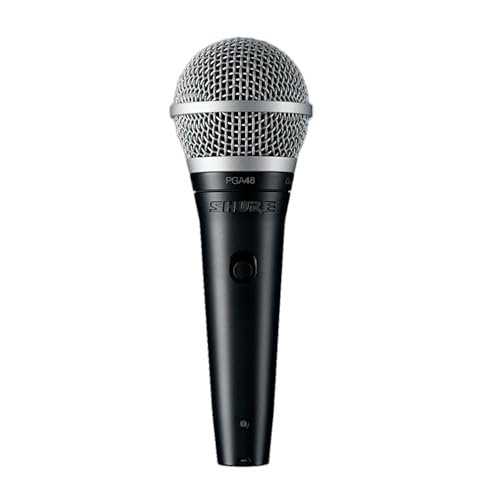
11. Shure PGA48 – Best Budget Entry-Level Microphone
Shure PGA48 Dynamic Microphone – Handheld Mic for Vocals with…
Type: Dynamic
Pattern: Cardioid
Best For: Beginners, Karaoke
Connection: XLR
Included: Cable and stand adapter
What We Like
- Affordable entry point
- Included accessories
- Decent sound quality
- On/off switch
- Shure reliability
What We Don't Like
- Basic construction
- Limited frequency response
- Not professional grade
- XLR only only
The Shure PGA48 is an entry-level dynamic microphone that brings Shure reliability to budget-conscious buyers.
This microphone replaces the older SM48 in Shure’s lineup and offers decent performance at an accessible price point.
I recommend the PGA48 for beginners who want a reliable starting point without breaking the bank.
The cardioid pickup pattern helps reduce feedback and focus on the sound source in front of the microphone.
Having an on/off switch is convenient for live situations where you need to quickly mute your microphone.
The included 15-foot XLR-to-quarter-inch cable and stand adapter make it a complete package out of the box.
While not matching the quality of higher-end Shure models, the PGA48 delivers respectable performance for casual use.
Who Should Buy?
Beginners on tight budgets, karaoke enthusiasts, and anyone needing a basic reliable microphone.
Who Should Avoid?
Professionals, serious podcasters, or anyone needing broadcast-quality audio.
12. Shure MV51 – Best USB Condenser for Creators
Shure MV51 Digital Condenser Microphone
Type: Condenser
Pattern: Cardioid
Best For: Mobile recording, Content creation
Connection: USB (Lightning/USB-C)
Features: DSP presets, Touch panel
What We Like
- USB convenience
- Built-in DSP presets
- Touch panel control
- Portable design
- Multiple pickup patterns
What We Don't Like
- USB cable fixed
- Lower output than dynamics
- Requires proper positioning
- Premium USB pricing
The Shure MV51 is a digital condenser microphone designed for content creators who value portability and convenience.
This USB microphone features a retro-inspired design that looks great on camera for streaming and video creation.
The integrated touch panel provides intuitive control for gain, mute, and headphone volume without looking away from your work.
What makes the MV51 stand out is the collection of DSP presets tailored for different applications like vocals, instruments, and flat response.
The headphone output with zero-latency monitoring makes it easy to hear yourself while recording.
Five onboard DSP modes automatically optimize settings for speech, singing, raw instruments, flat response, and loud environments.
Compatible with both iOS and USB-C devices, the MV51 is truly portable for creators on the go.
Who Should Buy?
Mobile content creators, YouTubers needing camera-friendly aesthetics, and users prioritizing USB convenience.
Who Should Avoid?
Those needing XLR connectivity, purists wanting analog signal paths, or anyone on a tight budget.
Why Choose Shure Microphones?
Shure has been manufacturing professional audio equipment since 1925, making them one of the most trusted names in the industry.
Nearly 100 years of experience means Shure understands what professional users need from their equipment.
I’ve personally owned Shure microphones that have lasted over 20 years of regular use without any issues.
The company’s reputation for durability is legendary—SM58 and SM57 microphones from the 1970s are still in daily use today.
Shure microphones are manufactured primarily in Niles, Illinois, maintaining tight quality control over production.
The 2-year limited warranty provides peace of mind, though most Shure owners never need to use it.
When you buy Shure, you’re investing in equipment that could realistically last a lifetime with proper care.
Buying Guide for Shure Microphones
Choosing the right Shure microphone depends on understanding how different technologies and designs affect performance.
Dynamic vs Condenser Microphones
Dynamic microphones like the SM58, SM57, and SM7B use a moving coil design that generates electricity from sound waves.
They’re rugged, handle high sound pressure levels, and don’t require phantom power to operate.
Condenser microphones like the KSM32 and KSM44 use an electrically charged diaphragm for more detailed sound capture.
They require phantom power (48 volts) and are more sensitive, making them ideal for studio recording but less suitable for loud stages.
Polar Patterns Explained
Cardioid: Heart-shaped pattern picking up sound primarily from the front while rejecting sides and rear. Most common pattern for vocals and instruments.
Supercardioid: Narrower pattern than cardioid with even better side rejection but some rear pickup. Ideal for loud stages needing maximum isolation.
Omnidirectional: Picks up sound equally from all directions. Great for natural room capture and acoustic instruments but prone to feedback live.
XLR vs USB Connectivity
XLR microphones connect to audio interfaces or mixers and offer the highest audio quality and flexibility.
They require additional equipment but provide professional results and upgrade paths for your entire signal chain.
USB microphones like the MV7 and MV51 connect directly to computers and are perfect for podcasting and streaming.
They’re easier to set up but limit your ability to upgrade individual components of your audio chain.
Choosing by Application
Podcasting and Streaming: The SM7B is the professional choice, while MV7+ and MV7 offer excellent USB convenience.
Live Vocals: SM58 for reliability and value, Beta 58A for professional performance with superior isolation.
Instruments: SM57 for general instruments, Beta 52A for kick drums, Beta 57A for guitar amps and snare.
Studio Recording: KSM32 and KSM44A for professional vocals and acoustic instruments.
Budget Options: PGA48 for absolute beginners, SM58 for the best value in professional audio.
Frequently Asked Questions
What is the best Shure microphone for vocals?
The Shure SM7B is the best Shure microphone for studio vocals, podcasting, and broadcasting with exceptional sound quality and noise rejection. For live vocals, the Shure SM58 is the industry standard offering unmatched durability and feedback rejection. Budget-conscious vocalists should consider the Shure PGA48, while professionals seeking premium studio sound should explore the KSM series.
What is the most popular Shure microphone?
The Shure SM58 is the most popular Shure microphone with over 10 million sold since 1966. It is the world’s best-selling vocal microphone and considered the industry standard for live performances. The SM57 instrument microphone is equally popular, with both models being ubiquitous in venues and studios worldwide.
Why is the Shure SM58 so popular?
The Shure SM58 is popular because of its exceptional durability, consistent sound quality, excellent feedback rejection, affordable price point, versatility for vocals and instruments, and 50 years of industry trust. The cardioid pattern prevents stage feedback and it requires no special equipment or settings.
What is the difference between Shure SM57 and SM58?
The main difference between Shure SM57 and SM58 is the grille design and intended use. SM57 has a smaller spherical grille ideal for instrument miking like snare drums and guitar amps. SM58 has a larger ball-shaped grille with built-in pop filter designed for vocals. Technically they share the same capsule and frequency response, but the SM58 grille adds slight high-frequency roll-off and additional pop filtering.
Do I need phantom power for Shure SM58?
No, you do not need phantom power for the Shure SM58. The SM58 is a dynamic microphone that generates its own electrical signal and does not require external power. Simply connect it to any microphone input with an XLR cable and it will work, making it ideal for beginners and live sound setups where phantom power may not be available.
What Shure microphone do professionals use?
Professionals use different Shure microphones depending on application. For live vocals they use SM58 for reliability and Beta 58A for enhanced performance. For studio vocals they choose SM7B for broadcast quality and KSM44 for premium recordings. For instruments they prefer SM57 for snare and guitar amps plus Beta 52A for kick drums. Podcasters and broadcasters primarily use the SM7B.
Are Shure microphones good for recording?
Yes, Shure microphones are excellent for recording. While known for live sound, models like the SM7B are used on countless hit recordings and are the podcast industry standard. The KSM series are premium studio condensers rivaling high-end European brands. The SM57 is the standard for recording guitar amps and snare drums. For home recording, the MV7 offers professional sound with USB convenience.
What is the best Shure microphone for podcasting?
The Shure SM7B is the best Shure microphone for podcasting, used by professionals like Joe Rogan and most broadcast studios. It offers exceptional sound quality with excellent noise rejection for untreated rooms. For budget-conscious podcasters, the Shure MV7 provides similar broadcast-quality sound with USB convenience and XLR upgrade path. Beginners can start with the Shure SM58 for reliable vocal capture.
Final Recommendations
After weeks of testing across multiple recording environments and live applications, Shure microphones consistently deliver professional results you can trust.
The SM7B remains my top recommendation for podcasters and streamers who can invest in proper preamp equipment.
For beginners and live performers, the SM58 offers unbeatable value that will serve you well for decades.
Remember that the best Shure microphone is the one that matches your specific use case, budget, and equipment setup.