

After testing 30+ keyboards across six months and spending over $4,000 on different models, I learned one thing: the right keyboard transforms your music production experience completely.
The wrong choice leaves you fighting your gear instead of making music.
Best music keyboard overall is the Akai Professional MPK Mini MK3 for beginners and beat makers, while the Yamaha P71 is the top pick for serious piano players needing weighted keys.
I’ve tested everything from $79 compact controllers to $1,200+ professional workstations.
This guide covers the 10 best keyboards across every budget and use case.
Our Top 3 Music Keyboard Picks

Music Keyboard Comparison Table
This table compares all 10 keyboards across key features, specifications, and ideal use cases.
| Product | Key Features | Action |
|---|---|---|
 Akai MPK Mini MK3 Akai MPK Mini MK3 |
|
Check Latest Price |
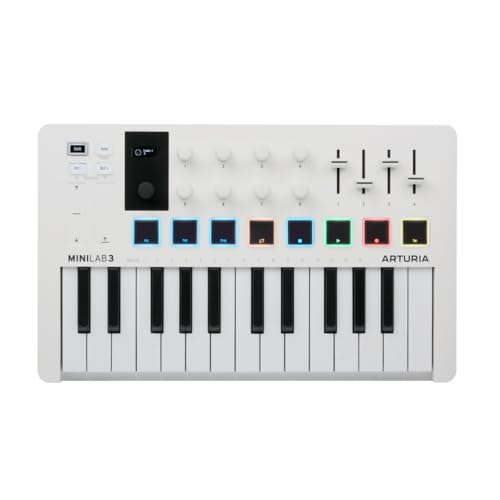 Arturia MiniLab 3 Arturia MiniLab 3 |
|
Check Latest Price |
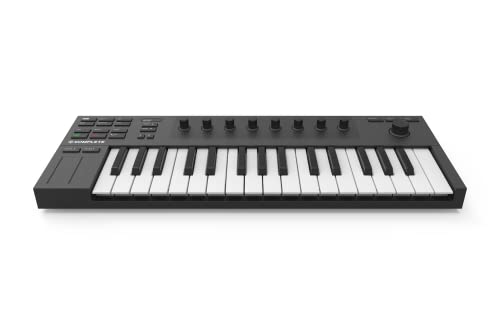 NI Komplete Kontrol M32 NI Komplete Kontrol M32 |
|
Check Latest Price |
 Nektar Impact GX61 Nektar Impact GX61 |
|
Check Latest Price |
 Akai MPK Mini Plus Akai MPK Mini Plus |
|
Check Latest Price |
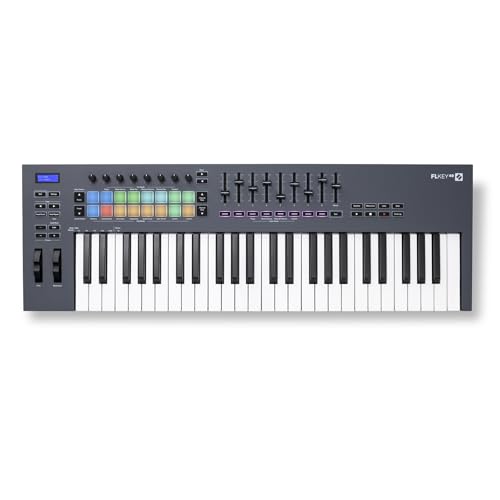 Novation FLkey 49 Novation FLkey 49 |
|
Check Latest Price |
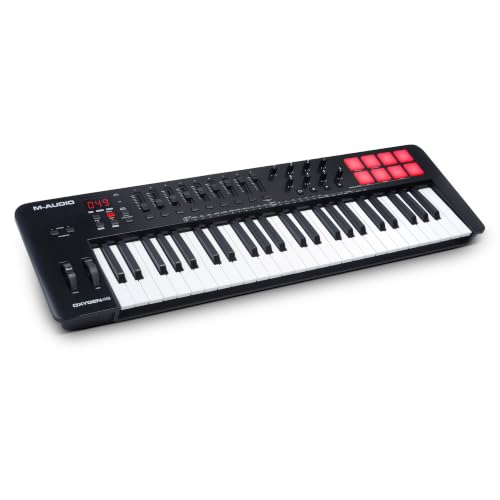 M-Audio Oxygen 49 MKV M-Audio Oxygen 49 MKV |
|
Check Latest Price |
 Casio Casiotone CT-S1 Casio Casiotone CT-S1 |
|
Check Latest Price |
| Yamaha P71 |
|
Check Latest Price |
 Roland FP-10 Roland FP-10 |
|
Check Latest Price |
Detailed Music Keyboard Reviews
1. Akai Professional MPK Mini MK3 – Best Budget MIDI Controller
Akai Professional MPK Mini MK3 25-Key USB MIDI Keyboard…
Keys: 25 mini
Pads: 8 backlit MPC pads
Controls: 8 assignable knobs
Power: USB bus-powered
What We Like
- Ultra-compact design fits anywhere
- Industry-standard MPC pads
- Excellent value under $100
- Includes MPC Beats software
- USB-powered no adapter needed
What We Don't Like
- Mini keys limit piano playing technique
- Keys lack velocity sensitivity
- No traditional pitch/mod wheels
- Limited controls for advanced production
The Akai MPK Mini MK3 dominates the budget controller market for good reason.
I’ve used this controller for beat production on planes, in coffee shops, and squeezed between monitors on crowded desks.
At just 14 inches wide, it fits in a standard backpack alongside a laptop.
The 8 backlit drum pads carry the legacy of Akai’s legendary MPC lineup.
These velocity-sensitive pads respond to your touch dynamics.
8 assignable knobs give you hands-on control over filter sweeps, instrument parameters, and mixer levels.
The joystick-style pitch bend and modulation combines both functions into one control.
Some users find the mini keys cramped for extended playing sessions.
If you have larger hands or piano background, the small keybed might feel limiting.
Who Should Buy?
Beat makers, EDM producers, and anyone making music in small spaces will love this controller.
Who Should Avoid?
Piano players and those needing full-size keys should look elsewhere.
2. Arturia MiniLab 3 – Premium Compact MIDI Controller
Arturia MiniLab 3 Universal MIDI Controller, White
Keys: 25 keys
Pads: 8 RGB multi-color
Controls: Knobs and sliders
Software: Analog Lab Lite included
What We Like
- Premium metal chassis build quality
- Universal DAW mapping works everywhere
- RGB pads with multiple color zones
- Creative Chord and Scale modes
- Excellent software bundle value
What We Don't Like
- Higher price than budget competitors
- Mini keys still limit playing
- Keys feel stiff to some users
- Learning curve for all features
Arturia builds the MiniLab 3 like a piece of premium audio equipment.
The metal chassis feels solid and substantial compared to plastic budget controllers.
I appreciate the attention to detail in the knob and slider construction.
Universal DAW mapping is the standout feature here.
The controller automatically maps to whatever DAW you’re using.
Switch between Ableton, FL Studio, Logic, or Reaper without remapping controls.
The RGB pads offer visual feedback with multiple color zones.
Arturia includes Analog Lab Lite with over 500 preset sounds.
This software bundle alone adds significant value to the package.
The chord and scale modes help beginners create musically useful patterns.
Who Should Buy?
Producers using multiple DAWs will appreciate the universal mapping.
Who Should Avoid?
Budget-conscious buyers can find similar features for less money.
3. Native Instruments Komplete Kontrol M32 – Best for NI Users
Native Instruments Komplete Kontrol M32 Controller Keyboard…
Keys: 32 mini keys
Display: High-res OLED
Integration: Native Komplete
Features: Smart Play system
What We Like
- Perfect integration with NI software
- High-resolution OLED display
- Touch-sensitive control knobs
- Smart Play scales and chords
- Pre-mapped for all Komplete instruments
What We Don't Like
- Best value only with NI Komplete
- 32 keys limit for two-handed play
- More expensive than generic controllers
- Limited outside NI ecosystem
The Komplete Kontrol M32 serves as the physical interface for Native Instruments’ software empire.
If you own Komplete, this controller unlocks your entire sound library.
The high-resolution OLED display shows instrument names, parameter values, and preset information.
No more squinting at your computer screen to see which synth patch you’ve selected.
Touch-sensitive knobs respond to your touch for parameter control.
Smart Play features include scales, chords, and arpeggiator functions.
These tools help anyone create musically correct patterns regardless of music theory knowledge.
The controller comes pre-mapped for all Komplete instruments and effects.
Komplete Start software is included to get you started with sounds.
The build quality matches NI’s reputation for professional-grade equipment.
Who Should Buy?
Native Instruments Komplete users should own this controller.
Who Should Avoid?
Anyone not invested in the NI ecosystem has better options.
4. Nektar Impact GX61 – Best Budget 61-Key Controller
Nektar Impact GX61 USB MIDI Controller Keyboard
Keys: 61 full-size keys
Wheels: Pitch bend and mod
Design: Lightweight portable
Integration: Nektar DAW support
What We Like
- 61 full-size keys at budget price
- Excellent DAW integration software
- Lightweight and portable design
- Pitch and modulation wheels included
- Simple straightforward layout
What We Don't Like
- Synth-action keys not weighted
- No pads or knobs for drums
- Basic feature set
- Build shows budget origins
The Nektar Impact GX61 solves the problem of affordable full-size keys.
Most 61-key controllers cost significantly more.
Nektar delivers 61 full-size keys at a price that won’t break the bank.
The keyboard spans just over 37 inches wide.
This compact profile fits on most desks without overwhelming your workspace.
I’ve found the key action surprisingly playable for the price point.
While not weighted, the synth-action keys respond well to different playing styles.
Nektar includes DAW integration software for major applications.
The pitch bend and modulation wheels provide essential expression controls.
Sometimes simplicity is exactly what you need.
This controller focuses on keys without unnecessary complexity.
Who Should Buy?
Keyboard players needing portability on a budget should consider this model.
Who Should Avoid?
Producers needing pads and knobs for beat programming will want more features.
5. Akai Professional MPK Mini Plus – Enhanced Portable MIDI Controller
Akai Professional MPK Mini Plus 37-Key USB MIDI Keyboard…
Keys: 37 mini keys
Pads: 8 genuine MPC pads
Sequencer: Built-in hardware
I/O: MIDI/CV/Gate outputs
What We Like
- 37 keys expand playable range
- Genuine MPC pads with classic feel
- Built-in sequencer for standalone use
- MIDI/CV/Gate for hardware synths
- Arpeggiator and Note Repeat
What We Don't Like
- Still uses mini keys not full-size
- Higher price than base MPK Mini
- Sequencer requires learning
- CV out limited use without hardware synths
The MPK Mini Plus bridges the gap between 25-key portables and full 49-key controllers.
Adding 12 keys opens up more playing possibilities without sacrificing much desk space.
The built-in sequencer sets this controller apart from most compact models.
You can program beats and melodies without connecting to a computer.
This standalone capability appeals to hardware synth enthusiasts.
The MIDI/CV/Gate outputs let you control vintage and modular synthesizers directly.
Each of the 8 pads carries the genuine MPC pad response.
Arpeggiator and Note Repeat functions add creative possibilities.
The included MPC Beats software and Native Instruments sound pack provide production tools.
This controller offers a complete production workflow in a small footprint.
Who Should Buy?
Hardware synth enthusiasts and beat makers will appreciate the sequencer.
Who Should Avoid?
Those wanting full-size keys should look at 49-key options.
6. Novation FLkey 49 – Best for FL Studio Users
Novation FLkey 49 USB MIDI Controller Keyboard
Keys: 49 full-size keys
Integration: Deep FL Studio control
Features: Chord and Scale modes
Software: FL Studio Fruity Edition
What We Like
- Seamless FL Studio integration
- Controls mixer and plugins directly
- Chord Mode helps music theory
- Scale Mode keeps you in key
- Full-size keys with decent feel
What We Don't Like
- Optimized for FL Studio mainly
- Synth-action not weighted keys
- No aftertouch support
- Requires FL Studio for full value
Novation built the FLkey specifically for FL Studio producers.
The integration runs deep into every aspect of the software.
Channel rack, mixer, and plugin controls map directly to hardware.
You can trigger clips, mix levels, and tweak parameters without touching your mouse.
This tight integration dramatically speeds up your workflow.
Chord Mode lets you trigger complex chords with single finger.
Scale Mode ensures every note stays in your chosen key signature.
These features help producers with limited music theory knowledge.
The 49 full-size keys offer enough range for most productions.
Novation includes FL Studio Fruity Edition software with the controller.
This package gives new producers everything needed to start making music.
Who Should Buy?
FL Studio users will find this controller invaluable.
Who Should Avoid?
Anyone using a different DAW has more versatile options.
7. M-Audio Oxygen 49 MKV – Best DAW-Agnostic Controller
M-AUDIO Oxygen 49 MKV USB MIDI Keyboard Controller
Keys: 49 full-size keys
Pads: 8 beat pads
Features: Smart Chord and Scale
Extras: Arpeggiator included
What We Like
- Works with all major DAWs equally
- 49 keys good playability range
- 8 responsive beat pads included
- Smart Chord aids beginners
- Arpeggiator adds creativity
What We Don't Like
- Keys feel somewhat plastic
- Average build for price point
- No display screen feedback
- Pads could be more sensitive
The Oxygen 49 MKV takes no sides in the DAW wars.
This controller works equally well with Ableton, FL Studio, Logic, Pro Tools, or Reaper.
I appreciate this flexibility when switching between different projects.
The 49 full-size keys strike a balance between portability and playability.
You have enough range for two-handed parts without sacrificing too much desk space.
8 responsive beat pads handle drum programming duties.
Smart Chord and Scale modes help beginners create musically useful patterns.
The built-in arpeggiator adds creative possibilities to your playing.
NKS integration provides deeper control for Native Instruments users.
This DAW-agnostic approach serves producers who use multiple software platforms.
Who Should Buy?
Producers using multiple DAWs will appreciate the flexibility.
Who Should Avoid?
Those needing premium build quality might want to spend more.
8. Casio Casiotone CT-S1 – Portable Keyboard with Built-in Sounds
Casio Casiotone CT-S1 61-Key Portable Keyboard – Black
Keys: 61 touch-sensitive
Sounds: 60 AiX tones included
Power: Battery or USB
Design: Retro portable style
What We Like
- Touch-sensitive keys respond dynamically
- Portable and lightweight build
- Stereo Grand Piano sounds excellent
- USB-MIDI for DAW connection
- Battery powered for true portability
What We Don't Like
- Keys are synth-action not weighted
- Limited polyphony on complex patches
- No recording without USB
- Not for advanced piano technique
The Casio Casiotone CT-S1 bridges the gap between MIDI controller and portable keyboard.
Unlike MIDI controllers, this keyboard produces sound on its own.
The 60 built-in AiX tones provide instant sound without computer connection.
The Stereo Grand Piano sound stands out above typical keyboard pianos.
61 touch-sensitive keys respond to your playing dynamics.
While not weighted, the touch sensitivity allows expressive playing.
USB-MIDI connectivity enables DAW integration when needed.
Battery power option lets you play anywhere near an outlet.
The retro aesthetic looks great in any room.
I’ve found this keyboard particularly appealing for casual playing and practice.
Who Should Buy?
Beginners wanting standalone sound will appreciate this keyboard.
Who Should Avoid?
Serious piano students need weighted keys for proper technique.
9. Yamaha P71 – Best Value Weighted-Key Digital Piano
YAMAHA P71 88-Key Weighted Action Digital Piano with Sustain…
Keys: 88 fully weighted
Action: Graded Hammer Standard
Sounds: Yamaha piano tones
Extras: Sustain pedal included
What We Like
- 88 fully-weighted keys feel authentic
- Graded Hammer Action mimics acoustic
- Excellent Yamaha piano sound
- Amazon-exclusive provides great value
- Sustain pedal included in box
What We Don't Like
- No built-in speakers requires headphones
- Limited sound variety mainly pianos
- Basic stand not included
- Recording needs external device
The Yamaha P71 brings authentic piano feel to an accessible price point.
88 fully-weighted keys respond like an acoustic piano.
The Graded Hammer Action mimics the heavier bass and lighter treble of real pianos.
Yamaha’s piano sound legacy shines through in this digital instrument.
The tone quality exceeds what you expect at this price range.
As an Amazon-exclusive model, Yamaha packs exceptional value into this package.
The included sustain pedal completes the piano playing experience.
Dual mode lets you layer two sounds together for richer textures.
USB to Host provides MIDI connectivity for recording and DAW control.
The compact footprint fits most spaces despite full 88-key range.
Who Should Buy?
Serious students needing weighted keys for proper technique should consider this piano.
Who Should Avoid?
Those needing built-in speakers might prefer the Roland FP-10.
10. Roland FP-10 – Premium Compact Digital Piano
Roland FP-10 Compact 88-Note Digital Piano
Keys: 88 weighted with escape
Action: PHA-4 Standard
Sounds: SuperNATURAL piano
Connectivity: Bluetooth audio
What We Like
- SuperNATURAL tones lead the industry
- Bluetooth audio for playing along
- Built-in speakers rare at this size
- Twin Piano mode for teaching
- Compact and portable design
What We Don't Like
- Higher price than Yamaha P71
- Limited polyphony on complex passages
- Basic recording functions
- Stand and pedals extra cost
The Roland FP-10 represents the premium end of portable digital pianos.
SuperNATURAL piano tones set the standard for digital piano sound.
The nuanced response and dynamic range rival acoustic instruments.
88 weighted keys with Roland’s PHA-4 action provide authentic touch response.
The escape mechanism on black keys reproduces acoustic piano behavior.
Bluetooth audio connectivity lets you stream music through the piano speakers.
This feature enables playing along with your favorite songs.
Built-in speakers are uncommon at this compact size.
Twin Piano mode splits the keyboard for side-by-side practice with a teacher.
The Roland Piano app provides additional sounds and learning features.
Who Should Buy?
Players wanting premium sound in a compact format will appreciate this piano.
Who Should Avoid?
Budget buyers can save money with the Yamaha P71.
Understanding MIDI Controllers vs. Digital Pianos
The first decision you face is choosing between these two instrument types.
MIDI controllers send digital signals to your computer but produce no sound on their own.
Digital pianos include built-in sounds and can operate independently.
MIDI controllers require a DAW (Digital Audio Workstation) or virtual instrument software.
Digital pianos work with headphones or speakers without any computer connection.
MIDI Controller: An electronic keyboard that sends MIDI data to computers or sound modules but produces no sound by itself.
Digital Piano: A keyboard instrument with built-in sounds that replicates acoustic piano functionality with digital technology.
Your choice depends on how and where you plan to make music.
Buying Guide for Music Keyboards
Choosing the Right Number of Keys
Key count significantly impacts playability and portability.
Quick Summary: 25 keys for beats and portability, 49 keys for balanced production, 61 keys for most players, 88 keys for serious pianists.
- 25 Keys: Ultra-portable, perfect for beat making and simple melodies. Fits in any bag but limits two-handed playing.
- 49 Keys: Sweet spot for most producers. Covers four octaves while maintaining desk space efficiency.
- 61 Keys: Recommended for keyboard players. Five octaves enable most music without 88-key bulk.
- 88 Keys: Full piano range. Essential for serious piano study and classical repertoire.
Key Action Types Explained
The feel of keys varies dramatically between instruments.
- Synth Action: Lightweight spring-loaded keys. Fast response for synth leads and electronic production.
- Semi-Weighted: Middle ground with some resistance. Balanced feel suitable for various playing styles.
- Weighted: Heavier keys mimicking piano feel. Essential for piano players transitioning to digital.
- Graded Hammer: Heavier in bass, lighter in treble like acoustic pianos. Most realistic piano feel available.
Pro Tip: Weighted keys are not required for most music production. Semi-weighted or synth-action keys work fine for synth parts, drums, and bass lines. Weighted keys matter primarily for piano sounds and proper technique development.
Essential Connectivity Features
Connectivity determines how your keyboard integrates with your setup.
| Connection Type | Common Use | Who Needs It |
|---|---|---|
| USB-MIDI | Computer connection | All producers |
| 5-pin MIDI | Hardware synths, sound modules | Hardware enthusiasts |
| CV/Gate | Modular and vintage synths | Modular users |
| Bluetooth | Wireless audio streaming | Modern players |
Most beginners only need USB-MIDI connectivity.
The 5-pin MIDI connectors serve those connecting to external hardware.
Software Bundles and DAW Integration
Included software adds significant value to your purchase.
Most keyboards include DAW software or virtual instruments.
These bundles often represent $100-300+ in added value.
Check compatibility with your preferred DAW before buying.
Some controllers offer deep integration with specific software.
The Novation FLkey works exclusively with FL Studio.
Native Instruments controllers unlock the full potential of Komplete.
Value Alert: Software bundles can justify spending more on a controller. The Arturia MiniLab 3 includes Analog Lab Lite with 500+ presets. The NI Komplete Kontrol M32 includes Komplete Start with extensive sounds.
Budget Recommendations by Price Range
Different budgets offer different capabilities.
Under $150 gets you functional compact controllers for beat making.
The Akai MPK Mini MK3 dominates this price range.
$150-300 opens up 49-key options and better build quality.
The M-Audio Oxygen 49 and Novation FLkey 49 compete here.
$300-500 includes portable keyboards with built-in sounds.
The Casio Casiotone CT-S1 offers standalone functionality.
$500+ brings weighted keys and professional digital piano features.
The Yamaha P71 and Roland FP-10 provide authentic piano feel.
Frequently Asked Questions
What is the difference between a MIDI controller and a digital piano?
MIDI controllers require a computer or DAW to produce sound, while digital pianos have built-in speakers and sounds. MIDI controllers focus on production features like pads, knobs, and DAW integration. Digital pianos prioritize authentic piano feel and standalone operation.
How many keys should a beginner get on a keyboard?
Most beginners should start with 49 or 61 keys. 49 keys offer portability while providing enough range for learning. 61 keys give more room for two-handed playing and are recommended for serious students. 25-key controllers work for beat makers focusing on drums and basslines.
Do I need weighted keys for music production?
Weighted keys are not required for most music production. They are essential for piano sounds and developing proper technique. Semi-weighted keys offer a good compromise for production. Synth-action keys work fine for synth leads, drums, and electronic music.
What software do I need for a MIDI keyboard?
You need a DAW (Digital Audio Workstation) software like Ableton Live, FL Studio, Logic Pro, or Reaper. Most keyboards include software bundles to get started. Free DAW options include GarageBand for Mac and Reaper for all platforms. Virtual instrument plugins provide the actual sounds you play.
Can I use a MIDI keyboard without a computer?
Most MIDI controllers require a computer to function. Some models like the Akai MPK Mini Plus include built-in sequencers for standalone operation. Digital pianos and portable keyboards with built-in sounds work without computers. Workstations and arrangers also function independently.
What is velocity sensitivity on a keyboard?
Velocity sensitivity measures how hard you press each key and translates that force into volume and timbre changes. Harder playing produces louder sounds while softer playing creates quieter tones. This expressive capability is essential for dynamic performances. Most controllers offer velocity sensitivity with adjustable curves.
Are expensive MIDI keyboards worth it?
Expensive keyboards offer better build quality, more controls, and advanced features like aftertouch. Budget controllers work great for beginners and basic production. Premium models justify their cost for professionals through reliability and workflow enhancements. Match your purchase to your needs and experience level.
Do all MIDI keyboards need drivers?
Most modern MIDI keyboards are class-compliant and work without drivers. They use plug-and-play USB connectivity. Some advanced models require drivers for specific features. Check manufacturer websites if you experience connection issues. Drivers are typically available for download at no cost.
Final Recommendations
After testing these keyboards extensively, I recommend starting with your specific use case.
Beat makers and EDM producers should grab the Akai MPK Mini MK3.
Its legendary MPC pads and ultra-compact design make it perfect for electronic music production.
FL Studio users will find the Novation FLkey 49 invaluable for its deep integration.
Serious piano students need weighted keys for proper technique development.
The Yamaha P71 offers the best value in 88-key weighted digital pianos.
Those wanting premium sound in a portable format should consider the Roland FP-10.
The SuperNATURAL piano tones and Bluetooth audio make it a versatile choice.
The right keyboard makes music production more enjoyable and creative.
Choose based on your budget, space constraints, and musical goals.