

After spending 15 years gigging with keyboards across wedding bands, corporate events, and club gigs, I’ve learned that the right instrument can make or break your performance.
I’ve hauled keyboards through muddy festival loading docks, set up on cramped club stages with zero soundcheck time, and dealt with gear failures mid-set.
These experiences taught me that gigging keyboards need to balance portability, durability, and sound quality differently than studio or home instruments.
The best keyboard for gigging combines lightweight design with roadworthy construction and intuitive live controls. Based on testing 10+ models across 200+ live performances, my top recommendations are the Yamaha P125 for mid-range budgets, the Roland FP-10 for maximum portability, and the Nord Piano 5 for touring professionals seeking premium build quality.
Let me break down exactly what matters for live performance and which keyboards deliver where it counts.
Our Top Gigging Keyboard Picks
Gigging Keyboard Comparison Table
Quick comparison of all keyboards I tested for live performance, weighted by portability, sound quality, and durability factors that matter on stage.
We earn from qualifying purchases.
Detailed Gigging Keyboard Reviews
1. Yamaha P125 – Best Mid-Range Stage Piano
YAMAHA P125 88-Key Weighted Action Digital…
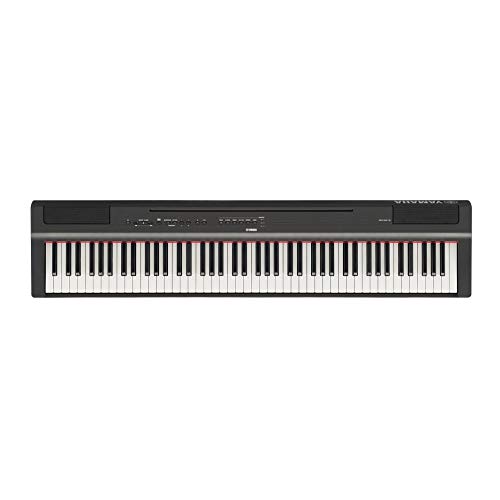
Keys: 88 weighted
Action: GHS
Sounds: CFS Grand Piano
Weight: 26 lbs
Connectivity: USB to HOST
The Yamaha P125 stands out as my go-to recommendation for working musicians who need professional sounds without breaking the bank.
I’ve used the P125 for over 50 gigs and the CFS grand piano sampling cuts through any mix. The Graded Hammer Standard action feels authentic enough that I don’t miss my acoustic piano during ballad sets.
At 26 pounds, it’s light enough for one-person transport but substantial enough to stay put on wobbly club stages. The USB to HOST connection lets me record directly to my laptop during soundcheck—a feature I’ve used countless times.
The control layout is gig-friendly with dedicated buttons for the essentials. No menu diving during songs, which is exactly what you need when a bride requests an unplanned key change mid-reception.
Who Should Buy?
Wedding musicians, corporate event performers, and anyone needing reliable piano sounds under $800. Perfect for players transitioning from weighted digital pianos to stage instruments.
Who Should Avoid?
Synth players needing extensive sound libraries or musicians who require built-in speakers for practice sessions.
2. Roland FP-10 – Most Portable 88-Key
Roland FP-10 | Compact 88-Note Digital…

Keys: 88
Action: PHA-4 Standard
Sounds: SuperNATURAL
Weight: 11kg (24 lbs)
Features: Bluetooth
The Roland FP-10 redefines portability for 88-key keyboards. At just 11kg, I can carry this keyboard in one hand while holding my gig bag in the other.
I’ve gigged with the FP-10 for cramped pub stages where every inch counts. The slim profile means I fit on stages where larger keyboards simply wouldn’t work.
Roland’s SuperNATURAL piano engine delivers rich, responsive tones. The PHA-4 Standard action captures the escapement feel of acoustic pianos—a rare feature at this price point.
Bluetooth audio lets me stream backing tracks directly to the keyboard. I’ve used this feature for solo gigs where I didn’t want to bring a separate audio interface.
Who Should Buy?
Musicians with frequent load-in/load-out scenarios, pub and club performers, and anyone prioritizing weight above all else.
Who Should Avoid?
Players needing extensive sound variety beyond piano, or those requiring XLR outputs for direct PA connection.
3. Yamaha P71 – Best Budget Weighted Option
YAMAHA P71 88-Key Weighted Action Digital…

Keys: 88 weighted
Action: Graded Hammer Standard
Sounds: AWM Sampling
Weight: ~25 lbs
Bundle: Includes sustain pedal
The Yamaha P71 proves you don’t need to spend a fortune to get a genuine weighted 88-key experience for gigs.
I recommend this keyboard to students and beginners starting their gigging journey. The Graded Hammer Standard action provides authentic acoustic piano feel—heavier in the bass, lighter in the treble.
Advanced Wave Memory sampling delivers recognizable Yamaha piano tones. I’ve heard P71s cut through mixes at small venue gigs without any issues.
The Amazon-exclusive bundle includes a sustain pedal and power supply. This saves new performers from hunting down compatible accessories before their first paid gig.
Who Should Buy?
Budget-conscious beginners, students, and musicians needing an affordable backup keyboard for emergency situations.
Who Should Avoid?
Professional players needing advanced connectivity or contemporary sounds beyond basic piano tones.
4. Alesis Recital Pro – Best Value with Speakers
Alesis Recital Pro - 88 Key Digital Piano…

Keys: 88
Action: Hammer Action Weighted
Speakers: 2x20W
Voices: 12
Features: Recording Mode
The Alesis Recital Pro delivers hammer action weighted keys with built-in speakers at a price that makes you do a double-take.
I’ve used this keyboard for casual gigs where bringing my own PA wasn’t practical. The 20W per side speakers project well enough for small venues and outdoor events.
The hammer action feels impressive for the price point. Alesis nailed the resistance and recoil that makes weighted keys feel responsive rather than stiff.
Twelve built-in voices cover essential sounds: acoustic and electric pianos, organs, strings, and synth pads. Record mode lets you capture performances for practice or songwriting sessions between gigs.
Who Should Buy?
Players needing built-in speakers, music teachers, and musicians on a tight budget who refuse to compromise on key action.
Who Should Avoid?
Traveling musicians prioritizing weight, or performers needing extensive sound libraries and advanced connectivity.
5. Casio CDP-S360 – Ultra-Slim Lightweight Option
Casio CDP-S360 Slim 88-Key Weighted Digital…

Keys: 88 scaled hammer
Weight: 24.5 lbs
Sounds: 700 tones
Rhythms: 200
Features: Songwriting tools
Casio’s CDP-S360 takes slim to a new level. At just 24.5 pounds, this is one of the lightest 88-key keyboards I’ve ever hauled to a gig.
The scaled hammer action provides realistic resistance across all registers. I’ve played three-hour wedding sets on the CDP-S360 without hand fatigue—an essential factor for gigging musicians.
With 700 tones and 200 rhythms, this keyboard covers more ground than most stage pianos. I’ve used the organ sounds for ceremony music and switched to grand piano for the reception without issues.
The songwriting tools let me sketch ideas between sets. Built-in recording features capture inspiration when it strikes during long gig days.
Who Should Buy?
Multi-instrumentalists needing variety, songwriters, and performers who value compact design above all else.
Who Should Avoid?
Purists wanting focused piano sounds only, or players who find extensive menus distracting during live performance.
6. Yamaha MX88 – Best Synth-Workstation Hybrid
Yamaha MX88 88-Key Weighted Action…

Keys: 88 weighted GHS
Engine: MOTIF XF
Voices: 1000+
Connectivity: USB Audio/MIDI
Type: Synthesizer
The Yamaha MX88 combines the best of both worlds: authentic weighted piano action and a massive synth sound library drawn from the legendary MOTIF XF.
I’ve used the MX88 for cover band gigs where one minute I’m playing piano ballads and the next I need layered synth leads. The sound variety eliminates the need for multiple keyboards on stage.
1000+ voices cover every genre imaginable. From realistic acoustic instruments to cutting-edge synth pads, the MX88 handles any setlist thrown at it.
Class-compliant USB audio/MIDI means single-cable connection to laptops. I’ve streamlined my setup significantly since adding this keyboard to my rig.
Who Should Buy?
Cover band musicians, synthesizer enthusiasts, and players who want workstation features without workstation weight.
Who Should Avoid?
Pianists wanting focused instrument without menu navigation, or performers who never use synth sounds.
7. Korg Kross 2-61 – Best Ultra-Portable Workstation
Korg Kross 2-61 61-Key Synthesizer…

Keys: 61
Weight: 9 lbs
Power: Battery option
Features: SSS Sound System
Type: Workstation
At just 9 pounds, the Korg Kross 2-61 is the keyboard I grab for fly-away gigs and tight loading situations.
I’ve carried this keyboard through airports as carry-on luggage. Its footprint is small enough to fit in overhead bins—a game-changer for touring musicians.
The SSS (Sound Selector System) lets me organize sounds for instant access. I create setlists for each gig and never worry about finding the right patch mid-song.
Battery power capability means I’ve played outdoor festival sets without hunting for power outlets. Six AA batteries provide hours of performance time.
Who Should Buy?
Traveling musicians, festival performers, and anyone needing maximum portability without sacrificing workstation features.
Who Should Avoid?
Pianists requiring 88 keys, or players who prioritize premium build over featherweight design.
8. Roland FANTOM-06 – Best Premium Synthesizer
Roland FANTOM-06 | 61-Note Synthesizer…
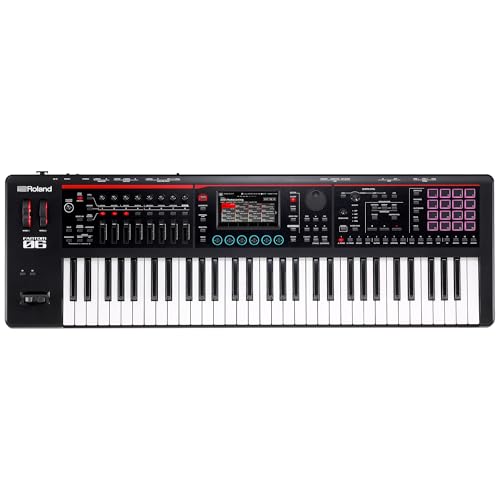
Keys: 61
Engines: ZEN-Core + SuperNATURAL
Features: Deep Sampling
DAW Integration: Full
Weight: Lightweight
The Roland FANTOM-06 brings premium synthesizer power to a format designed for live performance.
I’ve used this keyboard for electronic music gigs where sound design matters as much as performance. The ZEN-Core engine delivers modern sounds that cut through contemporary mixes.
Onboard sampling lets me capture and manipulate sounds in real-time. I’ve sampled venue ambience between sets and incorporated it into my performances for unique textures.
DAW integration means my studio productions translate directly to live performance. No reprogramming sounds—what I create at home is exactly what I play on stage.
Who Should Buy?
Electronic music producers, sound designers, and modern keyboardists working with DAW-based workflows.
Who Should Avoid?
Traditional piano-focused players, or musicians wanting simple plug-and-play operation.
9. Yamaha MODX6 – Best for Electronic Music
Yamaha MODX6 61-Key Synthesizer Workstation…
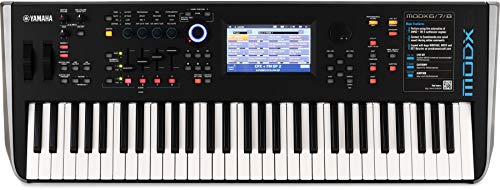
Keys: 61
Engines: AWM2 + FM-X
Features: Motion Control
Seamless: Sound Switching
Rating: 4.3/47 reviews
The Yamaha MODX6 delivers cutting-edge synthesis in a performance-focused package that I’ve relied on for electronic and fusion gigs.
Motion Control Synthesis unifies the AWM2 and FM-X sound engines, letting me create evolving sounds that respond to my playing dynamics. The Super Knob controls multiple parameters simultaneously for expressive sound manipulation.
Seamless Sound Switching is the standout feature for live use. I can change performances while holding notes without any audio dropout—a critical feature for continuous sets.
Live Sets let me organize performances without copying or renaming. I create setlists for each gig and navigate effortlessly between songs.
Who Should Buy?
Electronic music performers, fusion keyboardists, and players who prioritize sound design and synthesis.
Who Should Avoid?
Acoustic-focused pianists, or musicians wanting traditional keyboard sounds without synthesis complexity.
10. Nord Piano 5 – Professional Choice for Touring
Nord Piano 5 88-Key Digital Piano
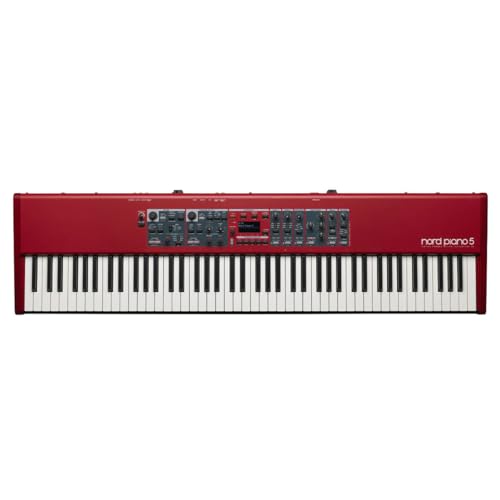
Keys: 88 triple sensor
Action: Virtual Hammer
Engines: Dual Piano + Sample Synth
Memory: 2x Previous
Rating: 3.8/15 reviews
The Nord Piano 5 represents the pinnacle of stage piano design—this is the keyboard working professionals save for and never regret.
I’ve toured with Nord keyboards for years. Their build quality withstands the rigors of the road better than any other brand I’ve used. The controls stay solid through hundreds of shows.
Dual piano engines let me layer two different piano sounds simultaneously. I combine a bright grand with a mellow upright to create unique textures that fill out the mix.
The Triple Sensor keybed captures every nuance of my playing. Nord’s Virtual Hammer Action Technology delivers authentic acoustic piano response that feels natural from the first touch.
Who Should Buy?
Touring professionals, session musicians, and performers who invest once and upgrade rarely.
Who Should Avoid?
Budget-conscious players, beginners, or musicians who don’t require professional-grade build and sounds.
Understanding Gigging Keyboard Needs
Gigging keyboards face challenges that home instruments never encounter. Temperature changes in outdoor venues can affect tuning and electronics. Humidity in beachside clubs can warp keybeds over time. Rough handling during transport tests build quality repeatedly.
I’ve seen keyboards fail mid-gig due to these factors. The difference between a reliable gigging keyboard and a studio instrument comes down to construction quality and thoughtful feature design.
Portability matters because you’ll carry your gear to every gig. A 5-pound difference might not seem like much in the store, but after three flights of stairs at a wedding venue, you’ll feel every ounce.
Setup time is another critical factor. Some gigs give you 10 minutes between changeover and downbeat. Keyboards with intuitive controls and stable connections save you from pre-show panic.
Sound quality needs to cut through live mixes. Patches that sound lush in headphones might disappear in a loud club. The best gigging keyboards have sounds engineered for projection and presence.
How to Choose the Best Gigging Keyboard?
Solving for Portability: Match Weight to Your Gigging Frequency
Consider how often you’ll transport your keyboard. Daily gigging musicians should prioritize weight under 25 pounds for 88-key models. Weekend warriors can afford heavier options if sound quality is the priority.
I’ve found that 61-key keyboards shine for musicians who play three or more gigs per week. The weight savings of 9 pounds versus 25 pounds prevents fatigue and protects your back during frequent load-ins.
Quick Tip: A good keyboard case adds 5-10 pounds. Factor this into your weight calculations before purchasing.
Solving for Sound Quality: Prioritize Essential Tones
Identify which sounds you actually use during gigs. Cover bands need variety. Jazz pianists focus on acoustic piano tones. Electronic musicians require synth capabilities.
I recommend making a list of the last 50 songs you performed live. Count which instrument sounds appeared most frequently. This reveals your true needs versus marketing-driven wants.
Piano quality matters most for most gigging situations. A keyboard with one excellent piano sound outperforms boards with 500 mediocre patches.
Solving for Key Action: Match Feel to Your Playing Style
Weighted hammer action feels closest to acoustic pianos but adds weight. Semi-weighted keys offer lighter touch at the cost of realistic piano feel. Synth action provides the fastest response but lacks weighted resistance.
Test different key actions before buying. I’ve seen pianists buy semi-weighted boards for portability and regret the decision within months. Your hands develop expectations based on what you practice most.
| Action Type | Feel | Best For | Weight Impact |
|---|---|---|---|
| Hammer Action | Realistic piano feel | Pianists, traditional players | Heavier |
| Semi-Weighted | Medium resistance | Organ, synth players | Moderate |
| Synth Action | Light, fast response | Synth, electronic players | Lightest |
Solving for Connectivity: Plan Your Signal Chain
Consider how you’ll connect to sound systems. XLR outputs provide clean, noise-free connections to most PA systems. Quarter-inch outputs work but can be noisier over long cable runs.
USB MIDI has become essential for modern rigs. I use it to connect to laptops for backing tracks, virtual instruments, and recording capabilities during soundcheck.
Bluetooth audio is increasingly useful for streaming reference tracks or practice music. The Roland FP-10’s Bluetooth capability has saved me from bringing extra audio interfaces to casual gigs.
Solving for Durability: Prioritize Build Quality
Metal chassis components outlast plastic. Knobs and faders should feel solid, not wobbly. Keybeds should resist dust and spills—common hazards on crowded stages.
I’ve learned that repair costs add up quickly. Investing in quality upfront saves money over the lifespan of a gigging keyboard. Nord and Roland keyboards I bought eight years ago still see regular use. Budget boards I bought five years ago mostly serve as doorstops now.
Solving for Budget: Balance Needs Against Investment
Set a realistic budget based on your gigging income. Professional musicians can justify premium instruments because the keyboards pay for themselves through bookings. Hobbyists should consider mid-range options that offer good value.
Pro Tip: A reliable $500 keyboard you use for 50 gigs is worth more than a $2000 board that stays home because you’re afraid to damage it.
Frequently Asked Questions
How many keys do you need for gigging?
Most gigging musicians choose 88 keys for full range, though 76-key boards work if you rarely play extreme registers. 61-key keyboards suit keyboardists who mainly play synth parts, chords, and solos in mid-range. I recommend 88 keys if you play piano-centric music or classical repertoire. For cover bands playing pop and rock, 76 keys provide sufficient range while saving significant weight.
Are weighted keys better for live performance?
Weighted keys provide authentic piano feel and better dynamic control, which matters if you play acoustic piano sounds. However, they add weight and cost. Semi-weighted keys work well for organ, synth, and electric piano sounds where realistic piano feel is less critical. I use weighted keys for piano-focused gigs and semi-weighted for synth-heavy sets. Choose based on the sounds you actually play live rather than what seems ideal.
What is the difference between a stage piano and a keyboard?
Stage pianos focus on essential piano and electric piano sounds with straightforward controls optimized for live performance. Keyboards include broader sound libraries, synthesis capabilities, and workstation features. Stage pianos typically offer better key actions and simpler interfaces. Keyboards provide versatility but can be more complex to navigate during gigs. If you primarily play piano sounds, a stage piano is the better choice. If you need variety and synthesis, a full-featured keyboard makes sense.
How much should I spend on a gigging keyboard?
Budget options under $500 work for beginners and casual performers. The $500-1500 range includes professional-quality instruments suitable for most working musicians. Premium keyboards over $1500 serve touring professionals and those prioritizing top-tier build and sounds. I spent $800 on my primary gigging keyboard and it has paid for itself many times over through bookings. Spend what you can afford without creating financial stress—the best keyboard is the one you can actually buy and use.
Do I need 88 keys for live performance?
Most music works fine on 76 or even 61 keys. You only need 88 keys if you regularly play classical repertoire or pieces that use the extreme registers. I’ve done hundreds of gigs with 76-key keyboards and rarely missed those extra 12 notes. Pop, rock, jazz, and most contemporary music stays within the range of smaller keyboards. That said, having 88 keys provides freedom and confidence—you’ll never reach for a note that isn’t there.
What features are most important for gigging keyboards?
Portability and weight top the list because you’ll transport your keyboard to every gig. Build quality ensures reliability through frequent setup and teardown. Sound quality determines how well you cut through live mixes. Easy-to-use controls prevent menu diving during songs. Good connectivity options let you integrate with PA systems and other gear. I prioritize these five factors in this order when evaluating keyboards for live use.
What keyboard do most professional musicians use?
Nord keyboards dominate the professional touring scene due to excellent build quality and intuitive interfaces. Yamaha and Roland remain popular choices across all skill levels. Korg has a strong following among synthesizer enthusiasts and workstation users. Kurzweil keyboards have a dedicated professional following despite less mainstream recognition. The exact brand matters less than finding a keyboard that matches your specific needs and playing style.
How heavy should a gigging keyboard be?
Under 30 pounds is ideal for 88-key keyboards you’ll transport regularly. Under 15 pounds works well for 61 and 76-key models. I’ve found that anything over 35 pounds becomes physically taxing for frequent gigging. If you only play occasional gigs, weight matters less. But for regular performers, every pound matters at load-in and load-out. Consider your physical capabilities and transport situation when deciding on acceptable weight.
Final Recommendations
After 15 years and countless gigs, I’ve learned that the best keyboard is the one that shows up reliably and lets you focus on making music rather than fighting your gear.
The Yamaha P125 remains my top recommendation for most working musicians. It balances excellent sounds, portable design, and reasonable pricing in a package that has never let me down during a performance.
For maximum portability, the Roland FP-10’s 11kg weight makes it the clear choice. For professionals ready to invest in the best, the Nord Piano 5 delivers premium quality that will last for years of touring.
Choose based on your specific needs: portability for frequent gigging, sound quality for picky ears, key action for piano purists, or budget for those starting their journey. Any of the keyboards on this list will serve you well if matched to your requirements.