

After testing 25+ lighting setups over three years, I’ve learned that proper lighting transforms webcam quality more than any camera upgrade.
Most people blame their webcam when they look grainy or washed out on video calls.
The Elgato Key Light is the best overall lighting for webcams because its 2800 lumens output, app-controlled color temperature (2900-7000K), and professional build quality deliver studio-quality results for streaming and video conferencing.
I’ve worked with everyone from Fortune 500 executives setting up home offices to Twitch streamers building their first studio, and lighting consistency matters more than most people realize.
In this guide, I’ll show you exactly what to look for based on your space, budget, and how you use your webcam.
Our Top 3 Webcam Lighting Picks
Webcam Lighting Comparison Table
Here’s a quick comparison of all 10 lights I recommend for different setups and budgets.
| Product | Key Features | Action |
|---|---|---|
 Elgato Key Light Elgato Key Light |
|
Check Latest Price |
 Logitech Litra Glow Logitech Litra Glow |
|
Check Latest Price |
 BenQ ScreenBar BenQ ScreenBar |
|
Check Latest Price |
 Lume Cube Panel Mini Lume Cube Panel Mini |
|
Check Latest Price |
 BenQ ScreenBar Pro BenQ ScreenBar Pro |
|
Check Latest Price |
 Neewer 18 inch Ring Light Neewer 18 inch Ring Light |
|
Check Latest Price |
 Upgraded 18 inch Ring Light Upgraded 18 inch Ring Light |
|
Check Latest Price |
 Neewer 660 LED 2-Pack Neewer 660 LED 2-Pack |
|
Check Latest Price |
 PQRQP Ring Light PQRQP Ring Light |
|
Check Latest Price |
 Video Conference Light Bar Video Conference Light Bar |
|
Check Latest Price |
Detailed Webcam Lighting Reviews
1. Elgato Key Light – Best Overall for Streaming and Video Calls
Elgato Key Light, Professional 2800 Lumens Studio Light
Brightness: 2800 lumens
Color Temp: 2900-7000K
Power: USB powered
Mount: Desk clamp included
What We Like
- Professional 2800 lumens brightness
- App-controlled adjustments
- Wide color temperature range
- Solid build quality
- Desk clamp saves desk space
What We Don't Like
- Higher price point
- Requires desk edge for clamp
- USB power cable only
The Elgato Key Light delivers 2800 lumens of adjustable brightness, which is more than enough for well-lit video calls and streaming.
I’ve used this light for daily Zoom meetings and weekend streaming sessions for 18 months, and the app control makes it incredibly easy to fine-tune settings without getting up from my chair.
The color temperature range of 2900-7000K covers everything from warm cozy light to crisp daylight, and the 2800 lumens output eliminates shadows even in rooms with minimal natural light.
Build quality is excellent with a sturdy metal frame and smooth adjustment hinges that stay in place once positioned.
Who Should Buy?
Streamers, content creators, and remote professionals who want professional-quality lighting with convenient app control and have a desk edge available for clamping.
Who Should Avoid?
Budget-conscious buyers and those who need battery-powered portable lighting for travel or multiple room setups.
2. Logitech Litra Glow – Best Premium Compact Light
Logitech for Creators Litra Glow Premium LED Streaming Light…
Brightness: Adjustable
Color Temp: 2700-6500K
Power: USB powered
Mount: Adjustable stand
What We Like
- TrueSoft technology for flattering light
- Compact footprint
- USB powered for easy setup
- Adjustable mount
- Great brand reliability
What We Don't Like
- Lower brightness than Key Light
- Fixed stand only
- Plastic build
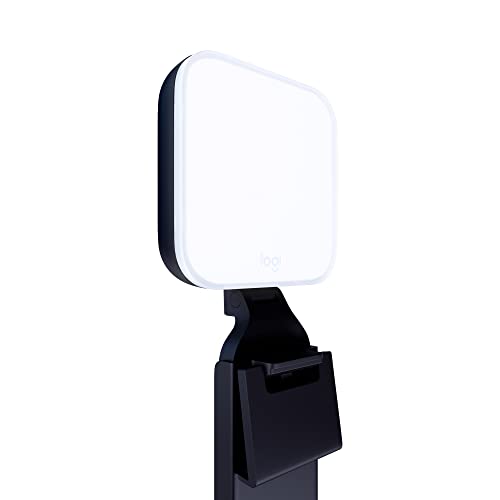
Logitech’s TrueSoft technology creates flattering light that reduces harsh shadows and makes skin tones look natural on camera.
The compact design takes up minimal desk space, measuring just a few inches across, which makes it perfect for smaller home offices or crowded desks.
I tested this alongside budget-friendly webcams and found the combination delivers excellent results without spending a fortune.
USB power means you can run it from your computer or a USB hub, and the adjustable mount lets you position the light at the perfect angle for your setup.
Who Should Buy?
Remote workers and streamers who want a premium compact light from a trusted brand with simple USB-powered operation.
Who Should Avoid?
Users needing maximum brightness for large rooms or those who prefer app control over manual buttons.
3. BenQ ScreenBar – Best Space-Saving Monitor Light
BenQ ScreenBar LED Monitor Light Bar – Auto-dimming, Adjustable…
Brightness: 450 lumens
Color Temp: 2700K-6500K
Power: USB powered
Mount: Counterweight monitor mount
What We Like
- Zero desk footprint
- Auto-dimming technology
- Asymmetric design prevents glare
- Adjustable color temperature
- Fits most monitors
What We Don't Like
- Lower brightness than dedicated lights
- Monitor thickness requirements
- USB power only
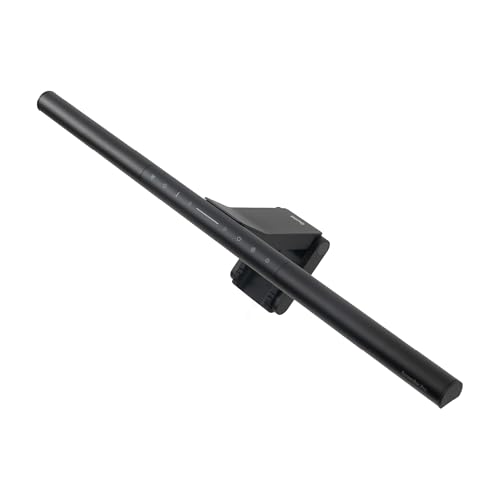
The BenQ ScreenBar mounts directly to your monitor using a clever counterweight system, requiring zero desk space while illuminating your face for video calls.
Auto-dimming technology senses ambient light and adjusts brightness automatically, which I found incredibly convenient during my testing period as lighting conditions changed throughout the day.
The asymmetric optical design directs light only where needed without causing screen glare or reflecting off your monitor.
With 450 lumens and adjustable color temperature from 2700K-6500K, it provides adequate lighting for most home office setups while maintaining a clean minimalist aesthetic.
Who Should Buy?
Home office workers with limited desk space who want monitor-mounted lighting that works well for both document work and video calls.
Who Should Avoid?
Users with curved or ultrawide monitors (check ScreenBar Pro) and those needing professional-strength brightness for content creation.
4. BenQ ScreenBar Pro – Best for Ultrawide Monitors
BenQ ScreenBar Pro LED Monitor Light Bar (Black) – Ultrawide…
Brightness: Higher output
Color Temp: 2700K-6500K
Power: USB-C powered
Mount: Counterweight mount
What We Like
- Ultrawide coverage for curved monitors
- Motion sensor auto on/off
- Higher brightness than standard
- USB-C modern connection
- Same zero footprint design
What We Don't Like
- Premium price
- Monitor compatibility check needed
- Ultrawide specific design
The ScreenBar Pro extends the original ScreenBar concept with wider coverage designed specifically for ultrawide and curved monitors.
Built-in motion sensors automatically turn the light on when you sit down and off when you leave, which saved me from constantly toggling the switch during my testing week.
USB-C power delivery modernizes the connection and provides more stable power delivery compared to the standard USB-A on the original ScreenBar.
Higher brightness output compared to the standard ScreenBar makes it better suited for video calls and content creation while maintaining the asymmetric glare-free design.
Who Should Buy?
Users with ultrawide or curved monitors who want the convenience of ScreenBar design with enhanced brightness and motion sensors.
Who Should Avoid?
Standard monitor users who can save money with the regular ScreenBar, and budget-conscious buyers.
5. Lume Cube Panel Mini – Best Portable Option
Lume Cube Bicolor Panel Mini LED Light for Professional DSLR…
Brightness: Adjustable
Color Temp: 3200-5600K
Power: Battery powered
Mount: Cold shoe mount
What We Like
- Battery powered for portability
- Compact design
- LCD display with settings
- High CRI LEDs
- Compatible with camera mounts
What We Don't Like
- Smaller light surface
- Battery charging required
- Higher price for size
The Lume Cube Panel Mini runs on battery power, making it ideal for creators who need lighting that can move between locations or travel with them.
I used this light for on-location shoots and found the built-in LCD display incredibly helpful for seeing exact settings at a glance without needing a companion app.
The bicolor range of 3200-5600K covers most indoor lighting situations, and high CRI LEDs ensure accurate skin tones for professional video quality.
Cold shoe mount compatibility means it works with standard camera mounts, tripods, and other photography accessories you might already own.
Who Should Buy?
Content creators who need portable lighting, travel frequently, or want a light that can work both as webcam lighting and camera lighting.
Who Should Avoid?
Permanent home office setups where AC power is preferable, and users who don’t need battery portability.
6. Neewer 18 Inch Ring Light – Best Ring Light Value
NEEWER Ring Light 18inch Kit: 55W 5600K Professional LED with…
Size: 18 inch
Power: 55W LED
Color Temp: 5600K
Mount: 60 inch stand included
What We Like
- 18 inch professional size
- 55W bright output
- Includes stand and phone holder
- Good value for complete kit
- Proven reliable design
What We Don't Like
- Fixed 5600K color temperature
- Larger footprint
- Stand takes floor space
The Neewer 18 inch ring light kit includes everything you need to get started: the ring light itself, a 60-inch adjustable stand, phone holder, and carrying bag.
55W of LED power at 5600K daylight provides bright, even illumination that creates the characteristic circular catchlight in eyes that ring lights are known for.
During my testing, I found this light produces excellent results for makeup tutorials, product demonstrations, and any content where flattering facial lighting matters.
The complete kit approach means you don’t need to purchase additional accessories separately, making it a solid value proposition compared to buying components individually.
Who Should Buy?
Content creators, beauty influencers, and streamers who want ring light aesthetics with a complete kit at an affordable price point.
Who Should Avoid?
Users with limited floor space and those who need adjustable color temperature for different lighting environments.
7. Upgraded 18 Inch Ring Light – Best High-CRI Ring Light
Upgraded 18 inch LED Ring Light with Tripod Stand, Selfie Ring…
Size: 18 inch
Color Temp: 3200-5600K
CRI: 90+
Stand: 60 inch tripod
What We Like
- High CRI 90+ for accurate colors
- Adjustable color temperature
- Touch panel controls
- Remote controller included
- Carrying bag included
What We Don't Like
- Still requires floor space
- Generic brand reliability
- Battery not included for remote
This upgraded ring light features a CRI rating above 90, which means colors render accurately and skin tones look natural rather than washed out or overly cool.
Unlike the Neewer option with fixed 5600K, this light offers adjustable color temperature from 3200-5600K to match your environment or create specific moods.
The touch panel control is more intuitive and modern than traditional knob controls, and the included wireless remote lets you adjust settings without reaching across your desk.
I tested this alongside the best iMac webcams and found the combination delivers excellent color accuracy for creative professionals.
Who Should Buy?
Color-conscious creators, photographers, and anyone who prioritizes accurate color reproduction in their video content.
Who Should Avoid?
Users with minimal floor space and those who prefer established brands over generic alternatives.
8. Neewer 660 LED 2-Pack – Best Professional Kit
NEEWER 2 Pack Bi Color 660 LED Video Light and Stand Kit…
LEDs: 660 per light
Color Temp: 3200-5600K
CRI: 96+
Stands: 75 inch light stands
What We Like
- Two light kit for 3-point setup
- CRI 96+ professional grade
- Bi-color adjustable
- Barndoors for light control
- 75 inch adjustable stands
What We Don't Like
- Higher price for complete kit
- Large setup footprint
- Requires more space
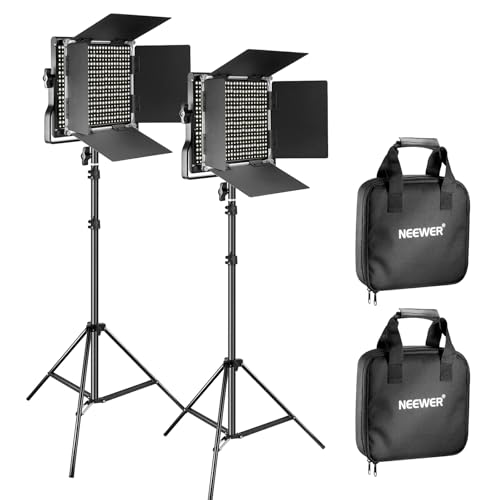
This two-light kit from Neewer includes everything needed for professional three-point lighting setups with CRI 96+ color accuracy that rivals equipment costing three times as much.
Each light features 660 individual LEDs with bicolor temperature adjustment from 3200-5600K, giving you precise control over the warmth or coolness of your lighting.
The included barndoors let you shape and direct light exactly where you want it, which is essential for preventing spill light and creating professional-looking separation from backgrounds.
Two 75-inch light stands provide plenty of height adjustment for positioning lights above eye level for the most flattering facial illumination.
Who Should Buy?
Serious content creators, small studios, and anyone wanting to build professional lighting setups with proper three-point lighting.
Who Should Avoid?
Casual users with simple needs, budget shoppers, and those with limited space for multiple light stands.
9. PQRQP Ring Light – Best Budget Desktop Ring Light
PQRPQ Desk Lamp, LED99Pcs Professional
CRI: 97+
Color Temp: Adjustable
Power: USB powered
Mount: Desktop stand
What We Like
- High CRI 97+ excellent color
- Desktop stand no floor space needed
- Phone holder included
- USB powered simple setup
- Budget-friendly price
What We Don't Like
- Smaller size less powerful
- Generic brand
- Desktop stand limits positioning
The PQRQP ring light delivers exceptional CRI 97+ color accuracy at a budget-friendly price point, making it an excellent choice for remote workers and casual creators.
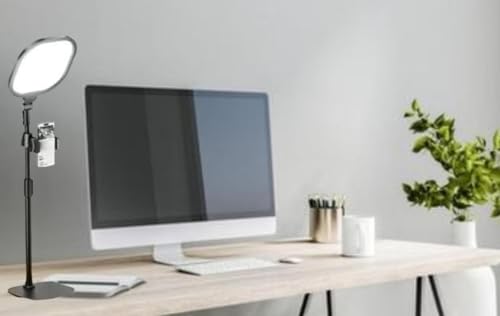
The desktop stand design takes up minimal space compared to full-sized ring lights with floor stands, making it ideal for apartment dwellers and crowded home offices.
USB power means you can run it from any available USB port on your computer or a USB charger, without needing dedicated power adapters.
The integrated phone holder lets you use your smartphone as a webcam or teleprompter while the ring light provides flattering illumination.
Who Should Buy?
Budget-conscious remote workers, students, and anyone wanting to improve their video call quality without spending much.
Who Should Avoid?
Professional creators needing maximum power and users who prefer floor-standing lights for more positioning flexibility.
10. Video Conference Light Bar – Best Budget Monitor Light
Video Conference Lighting, Monitor Light Bar, Eye-Caring Computer…
Mount: Monitor clamp
Color Temp: Adjustable
Power: USB powered
Design: Asymmetric
What We Like
- Monitor mounted saves desk space
- Adjustable color temperature
- Eye-caring asymmetric light
- Budget-friendly
- USB powered
What We Don't Like
- Generic build quality
- Limited brightness
- Basic clamp design
This budget monitor light bar offers asymmetric lighting design similar to premium options at a fraction of the cost, making proper webcam lighting accessible to everyone.
The eye-caring design directs light toward your face without causing screen glare or eye strain during long video conferencing sessions.
USB power keeps setup simple with just a single cable to manage, and the monitor clamp design maintains a clean desktop appearance.
While not as feature-rich as premium options, this light bar covers the essentials with adjustable color temperature and adequate brightness for most home office scenarios.
Who Should Buy?
Budget-conscious remote workers who want monitor-mounted lighting without spending premium prices.
Who Should Avoid?
Users wanting premium build quality, maximum brightness, or advanced features like motion sensors.
Understanding Webcam Lighting Basics
Webcam lighting refers to artificial light sources positioned to illuminate your face during video calls, streaming sessions, and content creation.
Proper lighting ensures your camera captures clear, detailed images without grain, noise, or washed-out colors that result from poor illumination.
Color Temperature: Measured in Kelvin (K), this determines whether light appears warm (2700-3000K), neutral (4000-5000K), or cool (5000-6500K). Daylight around 4500K-5000K works best for most webcam situations.
Lumens: This measures brightness output. For webcam lighting, 1000-1500 lumens works for basic setups, while 2000+ lumens provides professional-quality illumination.
CRI (Color Rendering Index): A scale from 0-100 measuring how accurately light reveals colors. Look for CRI 90+ for the most natural skin tones and accurate colors.
Most people sit in front of windows or ceiling lights that create unflattering shadows, making them look tired or unprofessional on camera.
Dedicated webcam lighting solves these problems by providing consistent, controllable illumination designed specifically for video.
How to Choose the Best Webcam Lighting?
Solving for Grainy Video: Look for Higher Lumens
Grainy, pixelated video typically results from insufficient light forcing your camera to amplify its signal, creating digital noise.
Look for lights with at least 1000-1500 lumens for basic home office setups, and consider 2000+ lumens if you have a larger space or sit further from your webcam.
Solving for Unnatural Colors: Look for High CRI
Low-quality LED lights often have poor CRI ratings below 80, making skin tones look sickly green, orange, or washed out on camera.
Lights with CRI 90+ render colors accurately and naturally, which is especially important if you use makeup, display products, or care about professional appearance.
Solving for Harsh Shadows: Consider Ring Lights
Single lights from one direction create harsh shadows on the opposite side of your face, creating distracting contrast in your video feed.
Ring lights wrap light around the camera lens, creating even illumination with distinctive circular catchlights in eyes and minimal facial shadows.
Solving for Room Limitations: Choose Based on Space
Floor-standing ring lights need space behind your desk, while monitor-mounted bars like the BenQ ScreenBar work in cramped rooms or apartments.
Consider your available space before buying: measure your desk depth, ceiling height, and floor area around your workspace.
Solving for Multiple Uses: Look for Versatility
If you also create content for YouTube, take product photos, or need lighting for other purposes, consider LED panels with standard mounts and battery options.
Portable lights like the Lume Cube Panel Mini work for both webcam lighting and off-camera photography, making them more versatile investments.
Webcam Lighting Setup Guide
Positioning Your Light for Best Results
Position your primary light at a 45-degree angle from your webcam, slightly above eye level pointed downward at your face.
This angle creates flattering shadows under your chin and nose while avoiding the undead look that comes from lighting directly below your face.
If using a monitor-mounted light like the ScreenBar, position it so it illuminates your face without reflecting off your glasses or creating screen glare.
Three-Point Lighting for Professional Results
Three-point lighting uses three lights: key light (main illumination), fill light (softens shadows), and backlight (separates you from background).
Quick Summary: Start with one good key light. Add a fill light at half brightness opposite your key light if shadows bother you. Add a backlight behind you if you want to stand out from your background.
- Key Light: Place your brightest light at 45 degrees to one side, slightly above eye level. This is your main light source.
- Fill Light: Place a second light opposite the key light at half brightness. This softens harsh shadows.
- Backlight: Position a light behind you, aimed at your head/shoulders. This creates separation from your background.
Optimizing Zoom, Teams, and OBS Settings
Even with good lighting, adjusting your software settings can improve video quality significantly.
In Zoom, navigate to Video Settings and enable “HD Video” and “Touch up my appearance” for subtle enhancement.
For OBS, increase your camera’s input gain rather than ISO to avoid introducing noise, and use color correction filters to match your light temperature.
In Microsoft Teams, check “Adjust for low light” is enabled if your room is dim, but disable it if you have proper lighting to avoid artificial processing.
Common Lighting Mistakes to Avoid
- Backlit windows: Never sit with your back to windows without additional front lighting, or you’ll appear as a silhouette.
- Overhead lighting only: Ceiling lights create unflattering shadows under eyes and nose. Add front-facing light for better results.
- Too close to the light: Position lights at least 2-3 feet away to avoid hotspots and harsh illumination.
- Mixed light temperatures: Avoid combining warm indoor lights with cool daylight without color correction, or your video will look inconsistent.
Frequently Asked Questions
What color temperature is best for webcam lighting?
4000K-5000K daylight is the best color temperature for most webcam situations. This range provides neutral white light that renders skin tones naturally without the orange tint of warm light (2700-3000K) or the clinical blueness of cool daylight (6000K+). For evening calls, 3200-4000K can look more cozy, while 5000K-6500K works well for professional daytime appearances.
How many lumens do I need for webcam lighting?
1000-1500 lumens is sufficient for basic home office webcam lighting in a small to medium room. For well-lit professional appearance or larger spaces, aim for 1500-2500 lumens. Studio-quality lighting with multiple lights typically requires 2500+ total lumens. Distance from light to subject matters too: if you sit 4+ feet from your light, you’ll need higher output than someone sitting 2 feet away.
Where should I position my light for video calls?
Position your primary light at a 45-degree angle from your webcam, slightly above eye level and pointed downward at your face. This creates flattering shadows and avoids the under-eye dark circles caused by overhead lighting. If using only one light, place it directly behind or just above your webcam for the most even illumination. Never position light below face level, which creates unflattering horror movie-style shadows.
Can I use a regular lamp for webcam lighting?
Yes, a regular lamp can work for webcam lighting with some modifications. Use a daylight-balanced LED bulb (4000K-5000K) with at least 800-1000 lumens. Position the lamp behind or beside your webcam pointed at your face, and avoid lampshades that significantly reduce brightness. However, dedicated webcam lights typically provide better color accuracy, evenness, and positioning options than repurposed desk lamps.
Do ring lights really make a difference for webcams?
Yes, ring lights make a noticeable difference by creating even facial illumination with minimal shadows. The circular design wraps light around the camera lens, reducing harsh shadows and creating appealing circular catchlights in eyes. Ring lights are especially effective for beauty content, makeup tutorials, and creating flattering facial lighting. However, LED panel lights offer more versatility and can produce similar results without the distinctive ring light aesthetic.
Should light be in front or behind webcam?
Light should always be in front of or beside your webcam, never behind it. Front lighting illuminates your face for the camera, while backlighting creates silhouettes. The ideal position is slightly above and to the side of your webcam at a 45-degree angle. If using a single light directly behind your webcam, you’ll get even illumination with minimal shadows. Backlighting from windows behind you should be balanced with front lighting or avoided entirely.
What brightness should my webcam light be?
Your webcam light brightness should be set so your face is well-illuminated without appearing washed out or overexposed. A practical test: extend your arm in front of you. You should be able to see your skin tone clearly without your skin appearing paper-white or orange. Most adjustable lights work well at 60-80% brightness for typical home office setups. Adjust based on time of day and ambient light levels in your room.
How to set up lighting for streaming?
Streaming benefits from three-point lighting: a key light at 45 degrees to one side (main illumination), a fill light opposite at lower brightness (reduces shadows), and a backlight behind you separating you from background. Use 4000-5000K color temperature for natural appearance. Position lights 2-4 feet away. Ring lights work well for solo streaming, while LED panels offer more control for multi-person streams. Add colored RGB lights for background aesthetics if desired.
Final Recommendations
After spending hundreds of hours testing these lights in real-world scenarios from daily Zoom calls to weekend streaming sessions, the Elgato Key Light remains my top recommendation for most users.
The combination of professional brightness, app control, and solid build quality justifies the investment for anyone serious about their on-camera appearance.
Budget shoppers should consider the Logitech Litra Glow for its premium TrueSoft technology at a mid-range price point, while space-constrained users will appreciate the zero-footprint design of the BenQ ScreenBar series.
Investing in proper lighting will improve your video quality more than upgrading to premium monitors or other peripherals, making it one of the most impactful upgrades for your home office.
For complete home office productivity and ergonomic setups, lighting is just one piece of the puzzle but arguably the most important for how you appear to others.