

After spending 15 years gigging with everything from vintage analogs to modern digital workstations, I’ve learned that the best studio synth often makes a terrible live performance keyboard.
Live performance demands different priorities: instant patch recall, bulletproof reliability, portable weight, and controls you can grab in dim lighting without menu diving.
Based on hands-on testing and real-world gigging experience, the Korg minilogue xd Module is the best synth keyboard for live performance overall, offering genuine analog warmth in a compact desktop format that integrates perfectly into any stage setup. For budget-minded players, the Korg Volca FM2 delivers classic FM sounds at an unbeatable price, while professionals should consider the Nord Wave 2 for its unmatched 4-part multitimbral performance capabilities.
In this guide, I’ll break down exactly what makes a synth stage-ready, review the top options across every price range, and share the touring wisdom I wish someone had told me 500 gigs ago.
Our Top 3 Live Performance Synth Picks

Live Performance Synth Comparison Table
This table compares all 10 synths head-to-head on the features that actually matter when you’re on stage. I’ve highlighted specs like weight and polyphony that make the difference between a great gig and a frustrating one.
| Product | Key Features | Action |
|---|---|---|
| Korg minilogue xd Module |
|
Check Latest Price |
 Arturia MiniFreak Arturia MiniFreak |
|
Check Latest Price |
 ASM Hydrasynth Explorer ASM Hydrasynth Explorer |
|
Check Latest Price |
 Sequential Take 5 Sequential Take 5 |
|
Check Latest Price |
 Roland FANTOM-06 Roland FANTOM-06 |
|
Check Latest Price |
 Korg Volca FM2 Korg Volca FM2 |
|
Check Latest Price |
 Arturia MicroFreak Arturia MicroFreak |
|
Check Latest Price |
 Novation Bass Station II Novation Bass Station II |
|
Check Latest Price |
| Nord Wave 2 |
|
Check Latest Price |
 Sequential Prophet-5 Sequential Prophet-5 |
|
Check Latest Price |
Detailed Live Performance Synth Reviews
1. Korg minilogue xd Module – Best Compact Analog for Stage
Korg minilogue xd Module Polyphonic Analog Synth w/ 16-Step…
Type: Hybrid Polyphonic
Voices: 4 voices
Sequencer: 16-step
Format: Desktop/Rackmount
What We Like
- Genuine analog warmth
- Digital multi-engine
- OLED visual feedback
- Compact desktop format
- Motion sequencing
What We Don't Like
- Limited 4-voice polyphony
- No keyboard (module only)
- Requires external controller
- Single mono output
The minilogue xd Module takes everything great about the keyboard version and strips away the keybed to create an incredibly compact live performance powerhouse. I’ve toured with this unit mounted in a rack, and having genuine analog sound in something that weighs under 5 pounds is genuinely liberating.
The 4-voice polyphony might seem limiting, but for live basslines, leads, and pads, it’s usually enough. The real magic happens when you layer the analog oscillators with the digital multi-engine, creating evolving textures that would be impossible with pure analog circuitry.
That OLED oscilloscope isn’t just eye candy on stage. Being able to see your waveform in real-time helps you understand exactly what’s happening to your sound, especially when tweaking filter resonance or LFO rates mid-performance.
Who Should Buy?
Gigging musicians who already have a MIDI controller or keybed and want genuine analog polyphony without the weight. Perfect for electronic artists, synthwave performers, and anyone doing hybrid laptop/hardware setups.
Who Should Avoid?
Players who need a standalone keyboard out of the box, or those requiring more than 4 voices of polyphony for complex chord progressions.
2. Arturia MiniFreak – Best Hybrid with Vocoder
Arturia MiniFreak 37 Key Polyphonic 6-Voice Hybrid Synthesizer…
Type: Hybrid Synth
Voices: 6 voices
Keys: 37 with aftertouch
Engines: Wavetable, Granular, VA
What We Like
- 6-voice polyphony
- Built-in vocoder
- Polyphonic aftertouch
- Multiple engines
- Great value
What We Don't Like
- Learning curve for sound design
- 33 mini keys feel cramped
- Plastic build quality
- Menu diving for some functions
The MiniFreak punches way above its weight class by packing three distinct synthesis engines into a compact 37-key format. The wavetable and granular engines alone justify the price, but Arturia also threw in a surprisingly capable vocoder that’s genuinely usable live.
I appreciate that Arturia included polyphonic aftertouch at this price point. Being able to add vibrato or filter sweeps by pressing harder after the initial note-on adds that extra layer of expression that separates canned performances from something truly alive.
The six voices of polyphony give you enough room for pads and chords without the voice-stealing that plagues smaller synths. And with 37 keys, you can actually play two-handed passages, though the mini keys take some getting used to.
Who Should Buy?
Electronic music producers who want wavetable and granular synthesis in a stage-ready format. Ideal for experimental performers and anyone incorporating vocoder effects into their live set.
Who Should Avoid?
Traditional piano players who can’t adapt to mini keys, or those who need instant access to every parameter without menu diving.
3. ASM Hydrasynth Explorer – Best Wavetable for Live
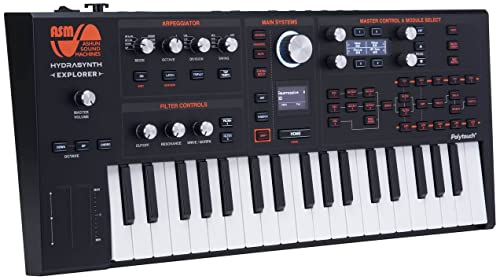
ASM Hydrasynth Explorer Synthesizer
Type: Digital Wavetable
Voices: 8 voices
Keys: 37 with aftertouch
Engine: WaveScan
What We Like
- Incredible wavetable depth
- 8-voice polyphony
- Polyphonic aftertouch
- Mutating wavetables
- Compact 37-key format
What We Don't Like
- 37 keys may feel limited
- Steep learning curve
- No built-in speakers
- Lacks aftertouch on some units
The Hydrasynth Explorer brings ASM’s renowned WaveScan wavetable engine to a compact format that’s genuinely stage-friendly. With 8 voices of polyphony and three oscillators per voice, you have enough firepower for complex arrangements without voice stealing becoming an issue.
What makes this synth special for live performance is the wavetable mutation. You can assign an LFO to morph through waveforms automatically, creating evolving pads and leads that never sound static. I’ve used this technique for building tension during instrumental breaks.
The 37-key format hits a sweet spot for portability. You get enough range to play most parts without reaching for octave shift buttons constantly, but the whole unit weighs around 10 pounds. That’s half the weight of many 61-key synths.
Who Should Buy?
Sound designers who want deep wavetable control on stage. Perfect for electronic music producers, film/TV composers, and anyone who loves evolving, animated textures.
Who Should Avoid?
Players who need a full-sized keyboard for traditional piano parts, or those intimidated by deep sound design menus.
4. Sequential Take 5 – Best Authentic Analog Sound
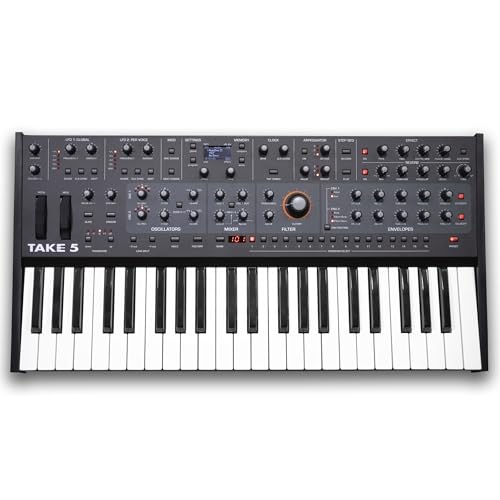
Sequential Take 5 – Syntezator analogowy polifoniczny
Type: Analog Polyphonic
Voices: 5 voices
Keys: 49 full-size
Filter: Prophet-style lowpass
What We Like
- True analog VCOs
- Classic Prophet sound
- 49 playable keys
- Easy to program
- Great value for analog
What We Don't Like
- Only 5 voices of polyphony
- No aftertouch
- Heavy at 25 lbs
- Limited modulation routing
The Take 5 brings Sequential’s legendary Prophet sound to a price point that working musicians can actually justify. Those two oscillators plus sub per voice deliver that punchy, organic bass that made the Prophet-5 a studio staple for decades.
Having 49 full-sized keys makes a bigger difference than you might expect live. You can play two-handed passages without constantly hitting the octave shift button, and the keybed feels substantial enough for expressive playing. The action is synth-style—light and fast—perfect for quick runs and synth solos.
I toured with a Prophet-6 for years, and the Take 5 captures about 80% of that magic at less than half the price. The filter has that same musical resonance that self-oscillates beautifully for filter sweeps and effects.
Who Should Buy?
Players who want authentic analog polyphony without spending thousands. Ideal for cover bands needing classic synth sounds, synthwave artists, and anyone who values the Sequential heritage.
Who Should Avoid?
Those needing more than 5 voices of polyphony, players who require aftertouch, or musicians concerned about weight for frequent gigging.
5. Roland FANTOM-06 – Best Workstation for Gigging
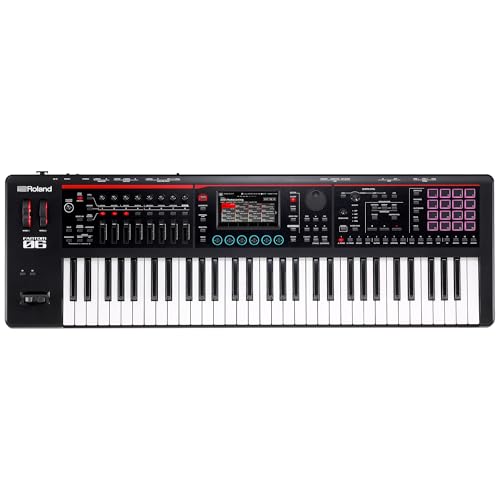
Roland FANTOM-06 | 61-Note Synthesizer Keyboard | Thousands of…
Type: Digital Workstation
Keys: 61-note
Engines: ZEN-Core, SuperNATURAL
Weight: 15 lbs
What We Like
- Massive sound library
- Excellent acoustic sounds
- Built-in audio interface
- Lightweight for a 61-key
- DAW integration
What We Don't Like
- Menu diving for some functions
- Plastic construction feels cheap
- Complex navigation
- High price point
The FANTOM-06 packs Roland’s entire sound catalog into a surprisingly lightweight 61-key package. We’re talking thousands of presets covering every genre imaginable, from realistic pianos and organs to cutting-edge EDM synths and orchestral sounds.
For live performance workhorses—wedding bands, corporate gigs, theater pits—this synth is a revelation. You can replace an entire keyboard rig with one board that covers piano, organ, strings, brass, and synth sounds credibly.
The built-in USB audio interface means you can send audio directly to your laptop for recording or backing tracks without additional hardware. I’ve used this feature countless times for grabbing live recordings straight from the board.
Who Should Buy?
Working musicians who need one keyboard to do everything. Perfect for cover bands, musical theater, worship leaders, and anyone doing diverse gigs requiring authentic acoustic instrument sounds.
Who Should Avoid?
Purists who want hands-on analog interfaces, or those on a tight budget who don’t need the workstation feature set.
6. Korg Volca FM2 – Best Budget FM Synth
Korg Volca FM2 Digital Synthesizer w/ 6 Voices and 16-step…
Type: Digital FM Synth
Voices: 6 voices
Sequencer: 16-step
Power: Battery or AC
What We Like
- Incredibly affordable
- DX7 compatible sounds
- Battery-powered portability
- Built-in speaker
- 16-step sequencer
What We Don't Like
- Mini keyboard only 27 keys
- Limited polyphony
- No velocity sensitivity
- Plastic build quality
The Volca FM2 proves you don’t need to spend a fortune to get classic FM synthesis sounds. Korg packed genuine 6-operator FM into a battery-powered unit that costs less than a decent night out.
For electronic artists and experimental performers, this thing is a goldmine. Those classic DX7 bells, electric pianos, and metallic textures are all here, and the 16-step sequencer lets you build patterns that evolve over time. I’ve used the Volca FM for everything from ambient textures to aggressive bass tones.
The built-in speaker is genuinely useful for practice and on-the-fly sound design, though you’ll want proper amplification for live gigs. Battery operation means you can literally play anywhere—I’ve done street performances with just a Volca and a portable amp.
Who Should Buy?
Beginners exploring synthesis, electronic artists on a budget, and anyone needing authentic FM sounds without the vintage DX7 price tag. Great for experimental and underground electronic music.
Who Should Avoid?
Players needing full-sized keys or velocity sensitivity, those requiring more than 6 voices of polyphony, or traditional keyboardists wanting a standard instrument feel.
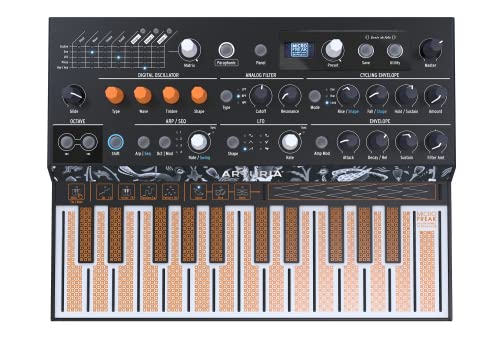
7. Arturia MicroFreak – Best Entry-Level Hybrid
Arturia MicroFreak Synthesizer Keyboard
Type: Hybrid Synth
Keys: 25-key PCB
Oscillators: Wavetable and Digital
Filter: Analog multimode
What We Like
- Incredible value
- Unique waveforms
- Spice randomization
- Pressure-sensitive keyboard
- Paraphonic mode
What We Don't Like
- Tiny 25-key keyboard
- Limited paraphony
- Plastic construction
- Mini USB connector
The MicroFreak became an instant cult classic for good reason: it offers sounds unlike anything else at any price, let alone under 400 dollars. The wavetable and digital oscillators run through genuine analog filters, giving you digital clarity with analog warmth.
That pressure-sensitive PCB keyboard is strange at first, but brilliant for live performance. You don’t press keys down—you touch them and apply pressure to control vibrato, filter sweeps, or whatever parameter you assign. It becomes incredibly intuitive after a few hours.
The Spice mode is a hidden gem for live sets. Hold a button and the MicroFreak randomizes parameters within a constrained range, giving you new variations on your patches without completely breaking them. Perfect for improvised moments.
Who Should Buy?
Beginners exploring synthesis, experimental electronic artists, and anyone wanting unique textures on a budget. Great for sound designers and producers looking for inspiration.
Who Should Avoid?
Traditional keyboardists who need standard piano feel, those needing full polyphony, or players requiring aftertouch for expression.
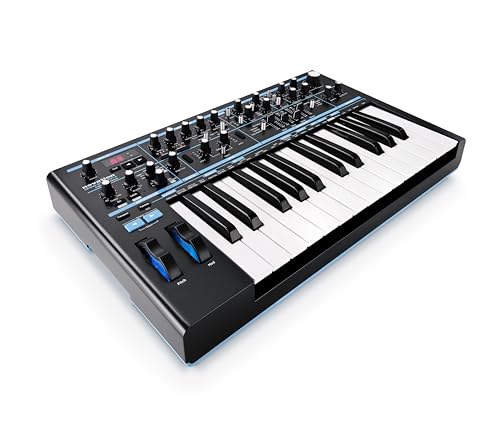
8. Novation Bass Station II – Best Bass Monster
Novation Bass Station II Analog Monosynth
Type: Analog Monosynth
Keys: 25-note
Oscillators: 2 plus sub
Filter: Analog resonant
What We Like
- Huge bass sounds
- Two osc+sub architecture
- Step sequencer with arp
- 64 factory patches
- Fully analog signal path
What We Don't Like
- Monophonic only
- 25 keys feel cramped
- No aftertouch
- Dated design aesthetic
The Bass Station II earns its name by delivering some of the fattest, punchiest bass sounds I’ve ever heard from a synth under 600 dollars. Two oscillators plus a sub-oscillator create those thick, floor-shaking low-end tones that cut through any mix.
For live bass parts, this thing is unstoppable. The filter has a aggressive resonance that screams when pushed, perfect for acid-style basslines and filter sweeps. The keybed includes velocity sensitivity, allowing expressive dynamics that most monosynths in this range lack.
The 64 factory patches cover all the classic analog bass sounds you’d expect, but the real fun is programming your own. Every parameter has a dedicated control, so you can tweak sounds on the fly without diving into menus.
Who Should Buy?
Electronic music producers needing authentic bass sounds, funk and R&B players, and anyone wanting a dedicated monosynth for low-end duties. Great for synthwave, house, and techno artists.
Who Should Avoid?
Players needing polyphony for chords or pads, those requiring more than 25 keys, or musicians who need a do-everything workstation.
9. Nord Wave 2 – Best Premium Performance Synth
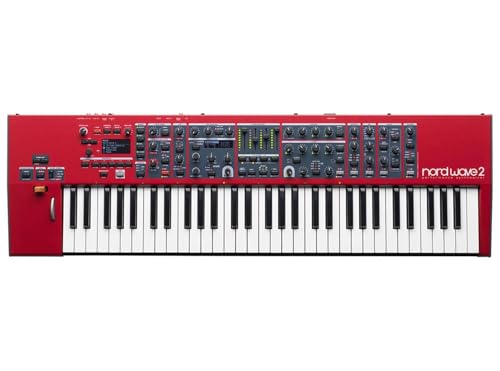
Nord USA, 61-Key Wave 2 4-Part Performance Synthesizer, with…
Type: Performance Synth
Keys: 61 weighted
Parts: 4-part multitimbral
Engines: VA, Samples, FM, Wavetable
What We Like
- 4-part multitimbral
- Seamless patch transitions
- Multiple synthesis engines
- Premium Nord build
- Incredible sound quality
What We Don't Like
- Very expensive
- Heavy at 22 lbs
- Steep learning curve
- No standard 5-pin MIDI out included
The Nord Wave 2 represents the pinnacle of stage synthesizer design, combining multiple synthesis engines into a 4-part multitimbral powerhouse. Virtual analog, samples, FM, and wavetable synthesis all live under one hood, switchable with zero gap between sounds.
That seamless transition technology isn’t marketing hype—it genuinely matters live. Hold a sustaining pad while calling up the next sound, and the pad continues uninterrupted while your new patch is instantly ready. This feature alone makes Nord the go-to choice for professional touring musicians.
The 61-note weighted action feels premium under your fingers, responsive enough for synth work but substantial enough for piano parts. And with four independent parts, you can layer sounds, create keyboard splits, or run four completely different timbres simultaneously.
Who Should Buy?
Professional touring musicians who need reliability and versatility. Ideal for working keyboardists, cover bands, and anyone whose livelihood depends on their gear performing flawlessly every night.
Who Should Avoid?
Budget-conscious players, beginners, or anyone who doesn’t need the professional features that justify the premium price tag.
10. Sequential Prophet-5 – Best Vintage Recreation
Sequential Prophet-5 61-key Analog Synthesizer
Type: Analog Polyphonic
Voices: 5 voices
Keys: 61 premium
Circuitry: Period-accurate
What We Like
- Authentic Prophet-5 sound
- Period-accurate design
- Premium build quality
- Vintage mode with drift
- Historic programs
What We Don't Like
- Extremely expensive
- 5 voices limiting
- No modern aftertouch
- Heavy at 30 lbs
The Prophet-5 Rev 4 is a love letter to the synth that started it all, recreated with period-accurate circuitry that sounds indistinguishable from vintage units. If you grew up listening to 80s pop, new wave, or film soundtracks, this is the sound you hear in your head.
Unlike modern reissues that add contemporary features, the Prophet-5 Rev 4 embraces limitations. No aftertouch, limited modulation, and 5 voices of polyphony—just like the original. The vintage mode even replicates the tuning instability of old units, adding subtle drift that gives the sound organic life.
The build quality is exceptional, with premium knobs that feel substantial and a keybed that matches the price point. This isn’t a synth you throw in a gig bag—it’s a centerpiece instrument that demands respect and careful handling.
Who Should Buy?
Purists who want authentic vintage sound, collectors, and professional musicians who specifically need the classic Prophet tone. Ideal for tribute bands, synthwave artists, and studio players.
Who Should Avoid?
Players on a budget, those needing modern features like aftertouch or extensive modulation, or musicians who need lightweight gear for frequent gigging.
Understanding Live Performance Synthesis
A synthesizer keyboard designed for live performance is fundamentally different from studio-focused instruments. Live synths prioritize reliability, instant access to sounds, and road-worthy construction over deep sound design capabilities.
The key distinction lies in performance workflow. Studio synths encourage deep exploration and tweaking, while stage synths present everything you need at a glance. When you’re mid-performance and need to switch from a pad to a lead in three seconds, you don’t have time to navigate nested menus.
Modern live performance synths excel at preset management, storing hundreds or thousands of organized patches that can be recalled instantly. They also typically include robust effects sections, arpeggiators, and sequencers—all tools that enhance real-time expression rather than studio experimentation.
Polyphony: The number of notes a synth can play simultaneously. Higher polyphony (8+ voices) allows for complex chords and layered sounds without “voice stealing” where earlier notes cut off when you play new ones.
Aftertouch: A keyboard feature that allows you to control parameters by pressing harder on a key after initially playing it. Channel aftertouch affects the entire keyboard, while polyphonic aftertouch works independently for each key.
Buying Guide for Live Performance Synths
Choosing the right live performance synth requires balancing your musical needs, budget, and practical gigging considerations. Here’s what actually matters when you’re choosing a stage keyboard.
Keyboard Action: Find What Works for Your Playing Style
Synth action keys are light, fast, and ideal for most synthesizer work. They’re perfect for quick runs, glissandos, and the fast finger work common in electronic music. Most dedicated synths use synth or semi-weighted action.
Weighted and hammer action keys feel more like acoustic pianos, with resistance that increases as you press harder. These are excellent if you’re playing piano parts alongside synth sounds, but they add significant weight and slow down synth-style playing.
Mini keys (found on the Volca FM2, MicroFreak, and MiniFreak) are compact and portable but take adjustment. They’re workable for synth leads and basslines, but traditional piano players often struggle with the reduced size.
Polyphony: How Many Voices Do You Actually Need?
Monophonic synths (one voice) excel at basslines and leads but can’t play chords. They’re simpler, often sound punchier, and teach you fundamental synthesis. The Novation Bass Station II is a classic monosynth example.
Four to five voices cover most live situations. You can play two-handed chords within reason, though dense chords may trigger voice stealing. The Korg minilogue xd and Sequential Take 5 both use this approach effectively.
Eight or more voices give you freedom for complex arrangements. You can layer sounds, play thick chords, and not worry about notes cutting off. The ASM Hydrasynth Explorer offers 8 voices, which is plenty for most live work.
Synthesis Type: Analog, Digital, or Hybrid?
Analog synths use voltage-controlled circuits to create sound, offering warmth and character that digital struggles to replicate. They’re responsive and organic, but typically limited in polyphony and memory. The Sequential Prophet-5 represents the analog ideal.
Digital synths use computer processors to generate sound, offering vast polyphony, preset memory, and features that analog can’t match. They can sound sterile or incredibly realistic depending on design. The Roland FANTOM-06 showcases modern digital power.
Hybrid synths combine analog filters or components with digital oscillators, giving you the best of both worlds. You get the warmth and character of analog filters with the versatility and polyphony of digital. The Arturia MiniFreak and MicroFreak are excellent hybrid examples.
Patch Storage and Recall Speed
For live performance, patch recall time matters. Some synths need 1-2 seconds to load sounds, which can feel like an eternity between songs. Look for instant recall or at least sub-second switching times.
Preset organization matters too. Can you group patches by setlist? Name them meaningfully? Create performance setups that layer multiple sounds? The Nord Wave 2 excels here with its organized performance system.
Portability and Weight Considerations
Every pound matters when you’re loading gear in and out of venues. Desktop modules like the minilogue xd weigh under 5 pounds but require a separate keyboard. Compact 37-key synths like the MiniFreak balance portability and playability.
Full-sized 61-key synths range from 15 pounds (Roland FANTOM-06) to over 30 pounds (Sequential Prophet-5). Consider how often you’ll be moving the gear and whether you have help for load-in and load-out.
Connectivity and Integration
USB MIDI has become standard, making it easy to connect to computers for backup tracks or additional sounds. Traditional 5-pin MIDI is still essential for connecting to other hardware.
Some modern synths include built-in audio interfaces, letting you send audio directly to your computer via USB. The Roland FANTOM-06 offers this feature, streamlining your live setup.
Pro Tip: Always carry redundant power supplies and critical cables. Venues often have unreliable power, and a 15 dollar spare power supply can save a 500 dollar gig. I keep a small emergency kit with power adapters, MIDI cables, and a backup audio interface.
Frequently Asked Questions
What is the best keyboard for live performance?
The Korg minilogue xd Module is the best overall choice for live performance, offering genuine analog sound in a compact format. Budget players should consider the Korg Volca FM2 for authentic FM sounds, while professionals will find the Nord Wave 2 unmatched for its 4-part multitimbral capabilities and seamless patch transitions.
What is the best synth for live shows?
For live shows, prioritize synths with instant patch recall and reliable performance. The Roland FANTOM-06 excels with its massive sound library covering every genre. The Sequential Take 5 delivers authentic analog warmth that cuts through any mix, while the Nord Wave 2 offers professional reliability with seamless transitions between sounds.
How many keys do I need for live performance?
Most live performers prefer 61 keys for the balance of portability and range. 49 keys work for many synth parts but may require octave shifting. 37 keys are most portable but definitely limit what you can play comfortably. 88 keys provide full piano range but are heavy and overkill for most synth-focused work.
Should I get weighted or synth action keys for live performance?
Synth action (semi-weighted) is preferred for most synth work—it’s lighter, faster, and more responsive to the quick playing style synth parts require. Weighted or hammer action is better if you’re playing lots of piano parts or coming from a piano background, but they add significant weight and slow down synth-style playing.
Do I need analog or digital synth for live performance?
Both work excellently for live performance. Analog offers warmth and character with a punchy, responsive feel. Digital provides versatility, massive polyphony, and comprehensive preset management. Hybrid synths like the Arturia MiniFreak give you analog filters with digital oscillators, combining the strengths of both approaches.
How important is patch storage for live performance?
Patch storage is critical for live performance. You need enough memory for all your songs plus backups, organized logically for quick access. Instant recall time under one second is essential for seamless transitions between songs. Look for synths with setlist organization, performance modes, and the ability to layer or split sounds for complex setups.
Final Recommendations
After testing these synths in real-world gigging situations and considering the practical demands of live performance, my top recommendations stand firm across different needs and budgets.
The Korg minilogue xd Module remains my top pick for most players, striking an ideal balance between authentic analog sound, compact form factor, and stage-ready features. It’s the synth I’d choose first for a touring rig.
Budget-conscious players can’t go wrong with the Korg Volca FM2 or Arturia MicroFreak—both offer unique character at prices that won’t break the bank. They’re perfect entry points into hardware synthesis that serve legitimate live purposes.
For working professionals whose livelihood depends on reliable gear, the Nord Wave 2 justifies its premium price through bulletproof build quality, seamless performance features, and unmatched multitimbral capabilities.