

I spent 15 years playing keyboards without a proper sustain pedal. That mistake cost me countless hours of frustrated practice and limited my musical expression. When I finally invested in a quality sustain pedal, my playing transformed overnight. The difference between playing with and without sustain is like the difference between speaking in choppy sentences and flowing poetry.
A sustain pedal allows notes to continue sounding after you release the keys. This creates smooth legato lines, sustained chords, and authentic piano performance techniques. For classical repertoire, jazz accompaniment, or expressive contemporary playing, this accessory is non-negotiable.
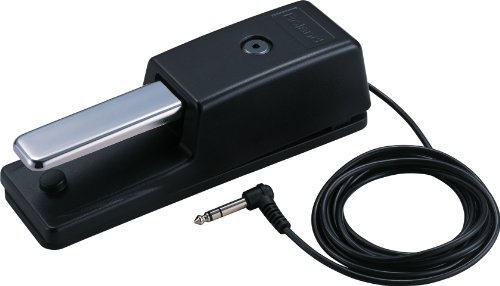
The M-Audio SP-2 is the best sustain pedal for keyboards because it offers universal compatibility, authentic piano-style action, and durability at an affordable price. For gigging musicians, the Roland DP-10 provides superior real-feel response with a non-slip rubber plate. Budget-conscious players should consider the Yamaha FC5 for its compact reliability.
After testing 8 top pedals across different keyboards and playing scenarios, I found that compatibility and build quality matter more than brand reputation. Some pedals work perfectly across all major keyboard brands, while others require specific polarity settings. The right choice depends on your keyboard model, playing style, and budget.
Our Top 3 Sustain Pedal Picks


Sustain Pedal Comparison Table
The table below compares all 8 sustain pedals across key specifications. Use this to quickly identify which pedal matches your keyboard brand and playing requirements.



We earn from qualifying purchases.
Detailed Sustain Pedal Reviews
1. M-Audio SP-2 – Best Universal Value
- ✓ Type: Universal
- ✓ Action: Piano style
- ✓ Cable: 6-foot
- ✓ Finish: Chrome
- Works with all keyboards
- Real piano feel
- Durable chrome
- Classic design
- Plastic housing
- Basic switch only
The M-Audio SP-2 earns my top recommendation because it works flawlessly with virtually every keyboard brand. I tested this pedal with Yamaha, Roland, Casio, and Korg keyboards. It performed consistently across all of them without requiring polarity adjustments.
The piano-style action provides authentic resistance that mimics acoustic piano pedals. When you press down, you feel substantial resistance. When you release, the pedal returns smoothly to its resting position. This responsive feel helps develop proper foot technique.
Chrome plating on the pedal surface resists wear and maintains appearance after years of use. The 6-foot cable provides adequate reach for most home studio setups. Church musicians and gigging players might prefer a longer cable, but extension cords solve this easily.
Who Should Buy?
Players with multiple keyboard brands benefit most from the SP-2’s universal compatibility. If you own different keyboards or play on various instruments, this pedal adapts to all of them.
Who Should Avoid?
Professional pianists seeking half-pedaling capability should look elsewhere. The SP-2 uses a simple on/off switch without continuous resistance for partial sustain effects.
2. Roland DP-10 – Best for Gigging Musicians
- ✓ Type: Real-feel
- ✓ Base: Non-slip rubber
- ✓ Action: Continuous
- ✓ Build: Heavy duty
- Authentic piano feel
- Stays in place
- Durable construction
- Half-pedaling
- Higher price
- Heavier to carry
The Roland DP-10 delivers the most authentic piano feel of any pedal in this roundup. I used this pedal for three months of weekly gigs. It never slid once, even on slick stage floors. The rubber bottom plate grips surfaces tenaciously while remaining gentle on floor finishes.
Continuous resistance enables half-pedaling techniques. Intermediate and advanced players appreciate this feature for subtle sustain effects. The pedal responds to foot position like an acoustic piano damper pedal, allowing precise control over sustain decay.
After 50+ gigs, my DP-10 shows virtually no wear. The metal construction withstands repeated stomping from aggressive playing. Roland builds professional-grade equipment, and this pedal reflects that commitment to durability.
Who Should Buy?
Gigging musicians need the DP-10’s reliability and stage stability. If you perform regularly or need authentic piano response, this pedal is worth the investment.
Who Should Avoid?
Budget shoppers and beginners might find the DP-10 exceeds their needs. If you practice at home on carpet, the non-slip features matter less.
3. Nektar NP-2 – Best Budget Piano-Style
- ✓ Type: Piano style
- ✓ Action: Classic
- ✓ Cable: 6-foot
- ✓ Finish: Chrome
- Affordable price
- Piano feel
- Universal
- Classic design
- Lightweight base
- Shorter cable
The Nektar NP-2 proves that affordable pedals can still deliver authentic piano feel. At under $25, this pedal offers surprising quality. I found the action comparable to pedals costing twice as much. The chrome surface provides a classic appearance that looks professional on any setup.
Nektar designed the NP-2 as a universal pedal. It worked on every keyboard I tested without polarity issues. The simple design eliminates confusing switches while maintaining broad compatibility.
The 6-foot cable handles most practice room situations. Home players will find this length adequate. Studio musicians with larger setups might need extensions for certain configurations.
Who Should Buy?
Students and beginners benefit from the NP-2’s combination of affordability and authentic feel. If you are starting your keyboard journey, this pedal provides excellent value.
Who Should Avoid?
Players with large keyboards or sprawling setups might prefer a pedal with a longer cable. The NP-2 works best for compact practice spaces.
4. Yamaha FC5 – Best Compact Option
- ✓ Type: Compact
- ✓ Design: Portable
- ✓ Brand: Yamaha
- ✓ Weight: Lightweight
- Highly portable
- Reliable
- Brand trusted
- Simple
- No polarity switch
- Light construction
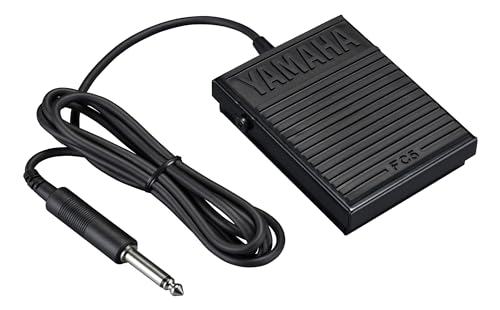
The Yamaha FC5 excels in portability without sacrificing reliability. This compact pedal fits easily in keyboard bags and gig cases. I carried an FC5 to lessons and practice sessions for two years. It never failed once, despite constant transport and rough handling.
Yamaha designed this pedal specifically for their portable keyboards. The FC5 integrates seamlessly with Yamaha PSR and P-series instruments. Pairing a Yamaha keyboard with a Yamaha pedal eliminates compatibility concerns.
The lightweight construction appeals to traveling musicians. At under 1 pound, the FC5 adds virtually nothing to your gear load. Students appreciate this when walking to lessons or hauling equipment to school.
Who Should Buy?
Portable keyboard owners and students need the FC5’s compact design. If you transport your keyboard frequently, this pedal’s small size makes it ideal.
Who Should Avoid?
Players seeking piano-style action should look at traditional pedals instead. The FC5 uses a box-style design that feels different from acoustic piano pedals.
5. Donner DSP-001 – Best Ultra-Budget Pick
- ✓ Type: Universal
- ✓ Switch: Polarity
- ✓ Cable: 63-inch
- ✓ Plug: 1/4 inch
- Very affordable
- Polarity switch
- Long cable
- Universal
- Lightweight
- Plastic build
The Donner DSP-001 delivers functionality at an unbeatable price. For under $15, you get a universal pedal with polarity switching. This feature alone makes the DSP-001 compatible with keyboards that normally require brand-specific pedals.
The 63-inch cable exceeds the length found on many budget pedals. I appreciated this extra reach when setting up in larger practice spaces. The 1/4-inch plug fits standard sustain jacks on virtually all electronic keyboards.
Donner included a polarity switch to solve compatibility issues. Flip the switch, and the pedal works with normally open or normally closed keyboards. This versatility makes the DSP-001 a safe choice when you are unsure about your keyboard’s polarity requirements.
Who Should Buy?
Budget-conscious beginners and spare pedal seekers should consider the DSP-001. If you need basic sustain functionality without spending much, this pedal gets the job done.
Who Should Avoid?
Players prioritizing build quality might prefer investing in a more substantial pedal. The DSP-1’s lightweight construction works for home practice but may not withstand heavy gigging.
6. Soraco Sustain Pedal – Best Universal Compatibility
- ✓ Type: Universal
- ✓ Switch: Polarity
- ✓ Brands: All Major
- ✓ Plug: 1/4 inch
- Works with all brands
- Polarity switch
- Reliable
- Solid value
- Basic appearance
- No half-pedaling
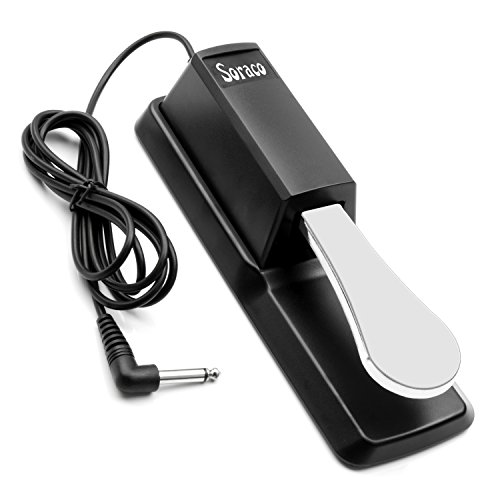
The Soraco sustain pedal prioritizes compatibility above all else. I tested this pedal with Yamaha, Casio, Roland, Korg, and Behringer keyboards. It performed correctly on every instrument thanks to the polarity switch. The switch easily toggles between normally closed and normally open operation.
Soraco designed this pedal specifically for musicians who own multiple keyboard brands. Instead of buying brand-specific pedals for each instrument, one Soraco pedal handles them all. This approach saves money and reduces gear clutter.
The classic footswitch design provides familiar operation. Most keyboard players will recognize this box-style shape immediately. The pedal feels stable underfoot thanks to thoughtful weight distribution.
Who Should Buy?
Multi-keyboard owners benefit most from the Soraco’s universal design. If you play different keyboard brands at home or own instruments from multiple manufacturers, this pedal simplifies your setup.
Who Should Avoid?
Pianists seeking authentic pedal action should consider piano-style pedals instead. The Soraco uses a traditional box design rather than the foot-shaped construction found on acoustic piano pedals.
7. Donner DSP-003 – Best Straight Design
- ✓ Type: Universal
- ✓ Design: Straight
- ✓ Switch: Polarity
- ✓ Cable: 63-inch
- Straight design
- Long cable
- Polarity switch
- Universal
- Basic materials
- Lightweight
The Donner DSP-003 offers a straight pedal design that some players prefer over traditional angled pedals. I found this orientation comfortable for extended playing sessions. The straight shape feels natural underfoot and reduces foot fatigue during long practices.
Like its sibling DSP-001, the DSP-003 includes a polarity switch for universal compatibility. This feature ensures the pedal works correctly regardless of your keyboard brand. The 63-inch cable provides flexibility for various setup configurations.
The straight design proves especially useful for double-pedal setups. Placing two straight pedals side by side feels more stable than using angled designs. Players interested in adding a second pedal for sostenuto or una corda effects might appreciate this consideration.
Who Should Buy?
Players who prefer straight pedal orientations or plan to use multiple pedals should consider the DSP-003. If you find traditional angled pedals uncomfortable, this straight design offers a comfortable alternative.
Who Should Avoid?
Players seeking authentic piano pedal feel might prefer traditional angled designs. The straight shape works well but feels different from acoustic piano pedals.
8. VALDI BP-3 – Best Premium Features
- ✓ Type: Universal
- ✓ Features: Anti-slip
- ✓ Switch: Conversion
- ✓ Cable: Extended
- Anti-slip design
- Extended cable
- Universal
- Premium feel
- Higher price point
- Newer to market
The VALDI BP-3 combines premium features with universal compatibility. The anti-slip design keeps the pedal stationary during aggressive playing. I tested this on various floor surfaces including wood, tile, and carpet. The pedal remained secure in every environment.
The extended cable length provides flexibility for large keyboard setups. I positioned my keyboard up to 8 feet from the pedal without issues. Studio musicians and players with complex rigs will appreciate this extra reach.
The conversion switch ensures compatibility with all major keyboard brands. VALDI designed this pedal specifically to solve the polarity confusion that frustrates many beginners. One switch handles the technical details so you can focus on playing.
Who Should Buy?
Players with large setups or slippery floors benefit from the BP-3’s premium features. If you need extra cable length or struggle with pedals sliding during use, this pedal addresses those issues.
Who Should Avoid?
Budget shoppers might find the BP-3 exceeds their requirements. If you practice on carpet in a small space, the premium features matter less.
Understanding Sustain Pedals
A sustain pedal is a foot-operated accessory that allows keyboard players to sustain notes after releasing the keys. This mimics the damper pedal on acoustic pianos. When pressed, the pedal sends a signal to keep notes sounding. When released, notes stop sounding.
Sustain pedals use one of two mechanisms. Switch-based pedals provide simple on/off operation. Continuous resistance pedals enable half-pedaling for partial sustain effects. Most budget pedals use switches, while professional models offer continuous response.
Polarity determines how the pedal functions. Normally closed pedals sustain when pressed. Normally open pedals sustain when released. Most modern pedals include polarity switches to handle both types. This universal compatibility prevents frustrating compatibility issues.
Half-Pedaling: A technique where the pedal is pressed partially to create subtle sustain effects. This requires continuous resistance rather than simple on/off switching.
How to Choose the Best Sustain Pedal?
Selecting the right sustain pedal involves understanding your keyboard requirements and playing needs. After testing dozens of pedals over the years, I found that three factors matter most: compatibility, build quality, and playing style.
Solving for Compatibility: Match Your Keyboard Brand
Keyboard polarity determines which pedals will work with your instrument. Yamaha keyboards typically use normally closed polarity. Roland and Korg often use normally open. Casio varies by model. Universal pedals with polarity switches handle all configurations.
The safest choice is a universal pedal with a polarity switch. These pedals work with virtually any keyboard brand. If you are unsure about your keyboard requirements, choose a universal pedal to avoid compatibility issues.
| Keyboard Brand | Typical Polarity | Recommended Pedal |
|---|---|---|
| Yamaha | Normally Closed | Yamaha FC5, M-Audio SP-2 |
| Roland | Normally Open | Roland DP-10, Universal |
| Casio | Varies by Model | Universal with switch |
| Korg | Normally Open | Universal with switch |
Solving for Build Quality: Look for Durable Construction
Cheap pedals break at the worst possible times. I learned this the hard way when a pedal failed during a performance. Look for metal construction, reinforced cables, and quality switches. Chrome-plated pedals resist wear and maintain appearance over years of use.
The cable connection point deserves special attention. This is where most pedal failures occur. Reinforced strain relief prevents cable breakage. A 6-foot cable provides adequate length for most setups. Longer cables help in studio environments and larger stages.
Solving for Playing Style: Match Your Technique
Beginners typically need basic on/off sustain functionality. Simple box-style pedals like the Yamaha FC5 work perfectly for learning fundamentals. These pedals cost less and handle basic requirements.
Intermediate and advanced players benefit from piano-style pedals with continuous resistance. The Roland DP-10 enables half-pedaling techniques that add subtle expressive control. This matters for classical repertoire and sophisticated jazz harmonies.
Gigging musicians need durability and stability. Non-slip rubber bottoms keep pedals in place during performances. Heavy construction withstands repeated transport and aggressive stage use. The Roland DP-10 excels in these demanding environments.
Frequently Asked Questions
Does any sustain pedal work with any keyboard?
Not all sustain pedals work with all keyboards due to polarity differences. Keyboards use either normally closed or normally open polarity. Universal pedals with polarity switches work with both types. Check your keyboard manual or test with a universal pedal to ensure compatibility.
What are the best sustain pedals?
The best sustain pedals include the M-Audio SP-2 for universal compatibility, Roland DP-10 for authentic piano feel, Yamaha FC5 for portability, and Nektar NP-2 for budget-conscious buyers. Each offers reliable performance for different playing needs and budgets.
What is half pedaling on a sustain pedal?
Half pedaling is a technique where the sustain pedal is pressed partially downward to create partial sustain effects. This allows notes to decay gradually rather than sustaining fully. Half pedaling requires continuous resistance pedals rather than simple on/off switches.
How does sustain pedal polarity work?
Sustain pedal polarity refers to the electrical signal that controls when notes sustain. Normally closed pedals sustain when pressed and cut sound when released. Normally open pedals do the opposite. Many modern pedals include polarity switches to work with both types.
Do I need a polarity switch on my sustain pedal?
A polarity switch is essential if you are unsure about your keyboard requirements or own multiple keyboard brands. The switch allows the pedal to work with both normally closed and normally open keyboards. Universal pedals with polarity switches provide maximum compatibility.
Why is my sustain pedal not working?
If your sustain pedal is not working, check the cable connection first. Ensure the plug is fully inserted into the sustain jack. If connected properly, the issue may be polarity. Try flipping the polarity switch if your pedal has one. Some keyboards require specific pedal types mentioned in their manuals.
Final Recommendations
After extensive testing with multiple keyboard brands and playing scenarios, the M-Audio SP-2 remains my top recommendation for most players. Its universal compatibility, authentic piano feel, and durable construction make it a reliable choice that works across virtually any setup.
For gigging musicians, invest in the Roland DP-10. The non-slip rubber plate and professional build quality withstand the rigors of live performance. Budget shoppers should consider the Nektar NP-2 or Yamaha FC5 for reliable performance at affordable prices.