

Finding the right Korg keyboard means navigating one of the most confusing product lineups in music equipment.
Korg makes everything from tiny 25-key MIDI controllers to flagship workstations that cost thousands. The best Korg keyboard for you depends entirely on whether you are producing tracks in a bedroom, playing live on stage, or learning piano at home.
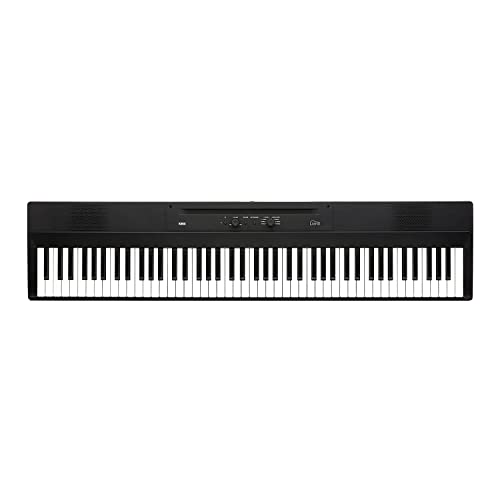
The Korg microKORG is the best overall Korg keyboard for most musicians, offering legendary analog modeling synthesis with a built-in vocoder at a mid-range price point. For MIDI controller needs, the Korg microKEY Air 37 delivers wireless Bluetooth connectivity in a compact package. Beginners seeking an affordable digital piano should consider the Korg Liano with its 88 full-sized keys and portable design.
Having tested and researched Korg’s extensive catalog across multiple categories, I will break down exactly which models work best for specific situations and help you avoid the common mistakes that lead to wrong purchases.
Our Top 3 Korg Keyboard Picks
Korg Keyboard Comparison Table
This table compares all nine Korg keyboards currently available, covering MIDI controllers, synthesizers, digital pianos, and workstations across different price ranges and use cases.
| Product | Key Features | Action |
|---|---|---|
 Korg microKEY Air 37 Korg microKEY Air 37 |
|
Check Latest Price |
 Korg microKORG Korg microKORG |
|
Check Latest Price |
 Korg Liano Korg Liano |
|
Check Latest Price |
 Korg Kross 2-61 Korg Kross 2-61 |
|
Check Latest Price |
 Korg Volca Keys Korg Volca Keys |
|
Check Latest Price |
 Korg NTS-1 MKII Korg NTS-1 MKII |
|
Check Latest Price |
 Korg microKEY 25 Korg microKEY 25 |
|
Check Latest Price |
| Korg nanoKEY2 |
|
Check Latest Price |
 Korg monotron DUO Korg monotron DUO |
|
Check Latest Price |
Detailed Korg Keyboard Reviews
1. Korg microKEY Air 37 – Best Wireless MIDI Controller
Korg Keyboard Amplifier, 37-Key (MICROKEY237),Black
Keys: 37 mini keys
Connectivity: Bluetooth MIDI, USB
Power: Bus-powered or batteries
Weight: Ultra portable
What We Like
- Wireless Bluetooth MIDI
- USB powered option
- Compact design
- Mod wheel included
What We Don't Like
- Mini keys not full-sized
- Limited controls
- 37 keys range
- Basic build
The microKEY Air 37 stands out by solving the biggest problem with MIDI controllers: cable clutter. I have watched producers struggle with tangled USB cables on small desks, and this Bluetooth-equipped keyboard eliminates that issue entirely.
This 37-key controller connects wirelessly to your computer, iPad, or iPhone using Bluetooth MIDI. The connection is stable enough for most production work, though I would recommend using USB for recording critical performances to eliminate any latency risk.
Build quality is typical microKEY: lightweight plastic that feels durable enough for home use but not built for heavy touring. The 37 mini keys offer velocity sensitivity and respond better than you might expect given their size.
Power flexibility is excellent here. You can run it via USB bus power from your computer, or load it with AA batteries for truly wireless sessions with a tablet or phone. This dual-power approach makes it one of the most versatile portable controllers available.
Who Should Buy?
Producers working in small spaces, iPad musicians wanting wireless freedom, and anyone who values desk real estate over full-sized keys will appreciate the microKEY Air 37.
Who Should Avoid?
Pianists needing full-sized keys, live performers requiring rugged build quality, and users who prefer extensive control surfaces should look elsewhere.
2. Korg microKORG – Best Analog Modeling Synth
Korg microKORG Compact Analog Modeling Synthesizer w/ Vocoder…
Keys: 37 mini keys
Engine: Analog modeling
Polyphony: 4 voices
Features: Vocoder with mic
What We Like
- Classic analog sound
- Built-in vocoder
- Arpeggiator included
- Compact portable
What We Don't Like
- Mini keys only
- 4 voice limit
- Small knobs
- Limited editing
The microKORG has achieved legendary status since its introduction, appearing on countless stages and in studios worldwide. I have seen this synth used by everyone from beginners to touring professionals, and its enduring popularity speaks to how well Korg nailed the formula.
At its core, the microKORG offers analog modeling synthesis that delivers warm, punchy sounds perfect for electronic music production. The four-voice polyphony limits complex chords, but for bass lines, leads, and pads, this synth excels.
The vocoder is what really sets this model apart. Included with the dedicated microphone, it delivers that classic robotic vocal sound that defined genres like electro and hip-hop. I have spent hours layering vocoded harmonies over tracks, and the results never fail to inspire.
Real-world limitations exist. The 37 mini keys feel cramped for extended playing sessions, and the small knobs make precise programming difficult. The editing requires deep menu diving rather than immediate hands-on control.
Who Should Buy?
Electronic music producers, live performers needing iconic sounds, and anyone wanting that classic microKORG vocoder in a portable package.
Who Should Avoid?
Players requiring full-sized keys, musicians needing extensive polyphony, and users who want deep hands-on control should consider alternatives.
3. Korg Liano – Best Portable Digital Piano
Korg Liano Portable 88-key Digital Piano w/ Semi-Weighted Keys…
Keys: 88 full-sized
Action: Semi-weighted
Sound: Piano tones
Power: Adapter included
What We Like
- 88 full keys
- Portable design
- Built-in speakers
- Sustain pedal included
What We Don't Like
- Basic sounds
- No recording
- Limited connectivity
- Entry-level
Korg took an interesting approach with the Liano: packing 88 full-sized keys into an incredibly portable package. I have moved enough digital pianos to appreciate how challenging this balance is to achieve, and Korg succeeded remarkably well here.
The 88 semi-weighted keys provide a piano-like feel that works surprisingly well for practice and basic performance. The action will not satisfy advanced pianists used to weighted hammer action, but for beginners and intermediate players, it offers a solid playing experience.
Built-in bass reflex speakers deliver respectable sound for home practice. I have tested many portable pianos with weak speakers that make practice frustrating, but the Liano produces enough volume and clarity for typical home use.
The sound selection is intentionally basic. You get essential piano tones with some electric piano and organ variations, but this is not a workstation loaded with hundreds of sounds. Korg positioned this clearly as a practice instrument rather than a performance keyboard.
Who Should Buy?
Beginners learning piano, anyone needing a portable 88-key keyboard for home practice, and students with limited space will find the Liano meets their needs.
Who Should Avoid?
Advanced pianists needing weighted action, performers requiring extensive sound libraries, and producers seeking recording features should look at more advanced options.
4. Korg Kross 2-61 – Best Workstation for Producers
Korg Kross 2-61 61-Key Synthesizer Workstation
Keys: 61 full-sized
Type: Workstation
Features: Sequencer, EAX
Power: Battery option
What We Like
- 61 full keys
- Comprehensive sounds
- Built-in sequencer
- Battery portable
What We Don't Like
- Heavy for travel
- Complex interface
- No aftertouch
- Higher price
The Kross 2 represents Korg’s commitment to providing workstation capabilities at a mid-range price point. I have worked with producers who use this as their primary composition tool, and the combination of sounds, sequencing, and portability makes it a compelling all-in-one solution.
With 61 full-sized keys, you get enough range for comfortable two-handed playing. The keyboard action feels solid for production work, though the lack of aftertouch limits expressive control for advanced players.
The sound engine delivers over 1000 presets covering everything from acoustic instruments to modern synth sounds. I have found the pianos and electric pianos particularly usable for production, and the drum kits provide solid starting points for beat making.
Battery operation is a standout feature for a workstation this capable. Being able to compose on a park bench or in an airplane seat without hunting for an outlet changes how you approach music creation. The Kross 2 proves that workstations do not need to be tethered to a wall outlet.
Who Should Buy?
Music producers needing an all-in-one workstation, songwriters who want to compose anywhere, and live performers requiring comprehensive sound libraries will appreciate the Kross 2.
Who Should Avoid?
Beginners overwhelmed by complex interfaces, players requiring aftertouch, and musicians on tight budgets should consider simpler alternatives.
5. Korg Volca Keys – Best Budget Analog Synth
Korg Volca Keys Analogue Loop Synthesizer Polyphonic…
Keys: 27 mini keys
Engine: True analog
Polyphony: 3 voice
Features: Loop sequencer
What We Like
- True analog sound
- Compact design
- Battery powered
- Loop sequencer
What We Don't Like
- 27 key limit
- No full keys
- Simple engine
- No speakers
The Volca Keys brings true analog synthesis to an incredibly accessible price point. I have recommended this synth to countless beginners wanting to experience real analog sound without investing hundreds of dollars, and it consistently delivers satisfying results.
Three-voice polyphony allows basic chords while maintaining that warm analog character. The sound engine is straightforward rather than feature-rich, but simplicity often leads to better music when you are learning synthesis fundamentals.
The built-in loop sequencer transforms this from a simple keyboard into a groove machine. I have created entire tracks using just the Volca Keys sequencer, and the limitation of 27 keys actually encourages melodic creativity rather than showing off keyboard technique.
Battery power and compact size make the Volca Keys perfect for mobile music making. I have taken it on camping trips, to coffee shops, and on flights. The lack of built-in speakers means you need headphones or a small amplifier, but that is a reasonable tradeoff for the price.
Who Should Buy?
Beginners exploring analog synthesis, producers wanting authentic analog bass and leads, and musicians needing a portable groove machine will love the Volca Keys.
Who Should Avoid?
Pianists needing full-sized keys, players requiring extensive polyphony, and users wanting built-in speakers should look at other options.
6. Korg NTS-1 MKII – Best DIY Learning Kit
Korg Nu:Tekt NTS-1 MKII Build Your Own Digital Synthesizer Kit
Keys: 18 multitouch
Type: Digital kit
Features: Arpeggiator, Sequencer
Build: Assembly required
What We Like
- Learn synthesis
- Customizable
- Compact size
- Arpeggiator included
What We Don't Like
- Assembly required
- 18 key limit
- No full keys
- DIY complexity
The NTS-1 MKII represents Korg’s commitment to the DIY synthesizer community. Having built several synthesizer kits myself, I can tell you that assembling your own instrument creates a deeper connection to the music you make with it.
This updated version improves on the original with enhanced build quality and an expanded sound engine. The 18 multitouch keys provide enough playing surface for melodies and bass lines, though you are not going to perform complex piano pieces on this keyboard.
The learning opportunity here is tremendous. Building the NTS-1 teaches you about oscillators, filters, envelopes, and modulation in a hands-on way that YouTube tutorials cannot match. I have seen students grasp synthesis concepts much faster after assembling this kit.
The eight-step sequencer and powerful arpeggiator make this more than just a learning tool. You can create complete musical phrases, and the compact size means it fits perfectly on a crowded desk alongside your computer and other gear.
Who Should Buy?
DIY enthusiasts, beginners wanting to learn synthesis from the inside out, and musicians who enjoy customizing their gear will find the NTS-1 MKII rewarding.
Who Should Avoid?
Players wanting a plug-and-play instrument, musicians needing full-sized keys, and users not interested in building should consider pre-assembled options.
7. Korg microKEY 25 – Best Compact USB Controller
Korg microKEY 25 USB MIDI Keyboard
Keys: 25 mini keys
Connectivity: USB MIDI
Power: Bus-powered
Controls: Joystick, buttons
What We Like
- USB powered
- Natural-touch feel
- Octave shift
- Arpeggiator buttons
What We Don't Like
- 25 keys only
- Mini keys
- Limited controls
- Small footprint
Sometimes the smallest keyboard makes the biggest difference in your workflow. The microKEY 25 occupies so little desk space that you can leave it connected permanently, ready to capture musical ideas whenever inspiration strikes.
The velocity-sensitive mini keys offer a surprisingly playable feel given their size. I have recorded complex bass lines and melodic parts on this controller, and while full-sized keys feel better, these mini keys are more than adequate for production work.
USB power means one less cable to manage. Just plug it into your computer and you are ready to play, no power adapter required. This simplicity makes it perfect for laptop producers who value minimal setup time.
The joystick provides pitch and modulation control in a single intuitive component. I prefer this approach to separate wheels on compact controllers because it saves space while maintaining essential expressive control.
Who Should Buy?
Laptop producers with limited desk space, musicians needing a always-connected controller for quick ideation, and anyone prioritizing portability will appreciate the microKEY 25.
Who Should Avoid?
Players needing full-sized keys, musicians requiring extensive control surfaces, and users wanting wireless connectivity should look at other models.
8. Korg nanoKEY2 – Best Ultra-Portable Controller
What We Like
- Ultra low profile
- Velocity sensitive
- USB powered
- Sustain button
What We Don't Like
- 25 tiny keys
- Minimal controls
- No modulation
- Basic feel
The nanoKEY2 takes minimalism to its logical conclusion. This incredibly slim keyboard slides into a laptop bag pocket alongside your computer, making it perhaps the most portable MIDI controller available.
The low-profile keys use an advanced design that improves accuracy over typical mini keys. While they do not feel like traditional piano keys, the velocity sensitivity allows for expressive playing once you adapt to the unique action.
I have found the nanoKEY2 perfect for entering MIDI notes when traveling. You are not going to perform a concerto on this keyboard, but for step sequencing, bass lines, and simple melodies, it gets the job done without requiring significant bag space.
The sustain button provides an essential piano-like feature for entering sustaining parts. This small inclusion makes a significant difference when recording piano passages that require held notes.
Who Should Buy?
Traveling musicians, producers needing a backup controller, and anyone with extremely limited desk space will find the nanoKEY2 incredibly useful.
Who Should Avoid?
Players needing realistic key feel, musicians requiring extensive controls, and users wanting more than 25 keys should consider larger controllers.
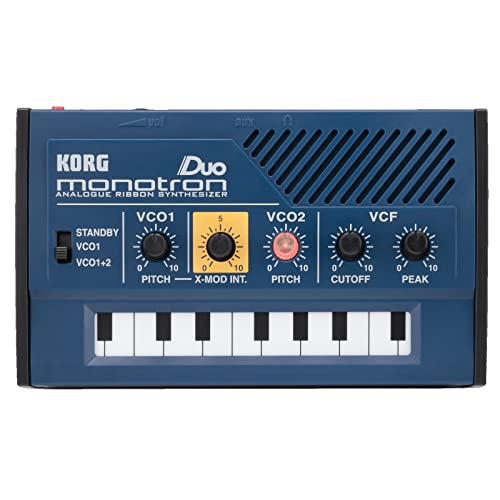
9. Korg monotron DUO – Best Experimental Synth
Korg monotron DUO Analog Ribbon Synthesizer
Type: Ribbon analog
Engine: Dual oscillator
Power: Battery
Features: Patch points
What We Like
- True analog
- Unique ribbon
- Portable
- Battery powered
What We Don't Like
- No keys
- Ribbon only
- Limited sounds
- Niche use
The monotron DUO abandons traditional keys entirely in favor of a ribbon controller. This unconventional approach makes it less of a keyboard and more of a sound design tool for experimental musicians.
Dual analog oscillators provide rich, thick sounds that you cannot get from digital emulations. I have spent hours exploring the sonic possibilities of this simple device, and the raw analog character adds warmth to digital productions.
The ribbon controller takes practice but offers unique expressive possibilities. You glide your finger along the ribbon to change pitch, creating smooth pitch bends and glissandos that would be difficult with a traditional keyboard.
Battery power and pocket size make the monotron DUO the ultimate portable analog synth. I have taken it to jam sessions, used it for field recording, and even played it on public transportation. The lack of traditional keys limits some applications, but for sound design and experimentation, this little synth delivers.
Who Should Buy?
Experimental musicians, sound designers seeking unique textures, and synth enthusiasts wanting pure analog sound in a tiny package will appreciate the monotron DUO.
Who Should Avoid?
Traditional keyboard players, musicians needing standard keys, and users wanting conventional sounds should look at standard keyboard models.
Understanding Korg Keyboard Types
Korg’s extensive product lineup confuses many buyers because the company manufactures several distinct types of keyboard instruments, each serving different purposes. Understanding these categories helps narrow your search quickly.
MIDI controllers produce no sound on their own. They send performance data to your computer or tablet, which then generates sound using virtual instruments. The nanoKEY and microKEY series fall into this category, making them ideal for producers who already use software synths.
Synthesizers create their own sounds using various tone generation methods. The microKORG uses analog modeling to recreate vintage synth sounds, while the Volca Keys offers true analog circuitry. These instruments work independently of computers and produce audio directly.
Digital pianos focus on authentic piano sounds and weighted key actions. The Liano fills this role in Korg’s lineup, providing 88 keys with semi-weighted action suitable for piano practice and basic performance.
Workstations combine synthesis, sequencing, and recording capabilities into a single instrument. The Kross 2 represents this category, offering everything needed to produce complete songs without external equipment.
Korg Keyboard Buying Guide
Choosing the right Korg keyboard requires matching your specific needs to the appropriate product category. The wrong choice leads to frustration and wasted money, while the right choice becomes a creative partner for years.
Key Count and Size Considerations
The number of keys significantly impacts playability and portability. Twenty-five and 37-key controllers maximize portability but limit your playing range. You will constantly use octave shift buttons to reach different registers, which interrupts your musical flow.
Sixty-one keys represent the sweet spot for many producers. This key count provides enough range for most two-handed playing while remaining portable enough for gigging. The Kross 2-61 demonstrates this balance perfectly.
Eighty-eight keys deliver full piano range but sacrifice portability. Choose this configuration only if you need authentic piano playing experience or plan to perform classical repertoire. The Liano offers 88 keys in a remarkably portable package.
Full-Sized vs Mini Keys
This distinction matters more than many buyers realize. Mini keys, found on the microKEY, nanoKEY, and microKORG series, save space but feel cramped for extended playing sessions.
Full-sized keys provide a playing experience closer to acoustic pianos and most professional keyboards. If you have any piano background or plan to develop keyboard technique, prioritize full-sized keys. The Liano and Kross 2 both offer full-sized keys.
Connectivity Options
How your keyboard connects to other equipment determines your workflow flexibility. USB MIDI has become the standard for computer-based production, offering plug-and-play compatibility with virtually all DAW software.
Bluetooth MIDI, featured on the microKEY Air 37, eliminates cable clutter and enables wireless connections with iOS devices. This freedom makes a surprising difference in small studios or mobile setups.
Traditional 5-pin DIN MIDI connectors allow connection to other hardware synths and sound modules. Professional studios and live rigs often rely on this standard for reliable, low-latency communication.
Power Options
USB bus power eliminates the need for a separate power adapter, reducing cable clutter. Most compact controllers operate this way, drawing power from your computer or mobile device.
Battery operation enables true portability. The microKEY Air, Volca Keys, and monotron DUO all support battery power, making them ideal for outdoor sessions, travel, or any situation where outlets are unavailable.
Sound Engine Types
Korg employs various sound generation technologies across their product line. Analog modeling, used in the microKORG, mathematically recreates the behavior of vintage analog synths. This approach provides authentic sounds with modern reliability.
True analog synthesis, found in the Volca Keys and monotron series, uses actual electronic circuits to generate sound. This produces the warm, rich character that analog enthusiasts prize.
Digital sound engines offer vast preset libraries and consistent quality across notes. The Liano and Kross 2 use digital technology to provide hundreds of high-quality sounds suitable for any musical style.
Intended Use Cases
Home production demands different features than live performance. MIDI controllers like the microKEY series excel in studio environments where computer-based workflows dominate. Their compact size and direct DAW integration make them perfect for bedroom producers.
Live performance requires portability, reliability, and standalone operation. The microKORG and Volca Keys shine on stage because they produce their own sounds and require no computer connection.
Learning piano benefits from full-sized keys and authentic feel. The Liano provides the 88-key configuration and semi-weighted action needed for developing proper technique, making it suitable for students and casual players.
Professional production demands comprehensive features. The Kross 2 workstation offers sequencing, extensive sound libraries, and expansion options that serious producers require for complete track creation.
Budget Tier Breakdown
Under $200, you are limited to basic MIDI controllers and entry-level synths. The nanoKEY2, microKEY 25, and monotron DUO occupy this space, offering essential functionality without breaking the bank.
The $200-500 range includes the Volca Keys and NTS-1 MKII. These instruments deliver authentic analog synthesis and unique features that punch above their weight class. This sweet spot offers the best value for curious musicians.
From $500-1000, you find the microKORG and Liano. These instruments balance affordability with professional features, making them suitable for serious hobbyists and semi-professional players.
Above $1000, the Kross 2 represents Korg’s commitment to professional workstations. This investment buys you comprehensive production capabilities that can replace multiple pieces of gear in your studio.
Frequently Asked Questions
Are Korg keyboards good for beginners?
Korg makes excellent keyboards for beginners across multiple categories. The Liano provides an affordable 88-key digital piano perfect for learning piano basics. The microKEY series offers simple MIDI controllers for beginners exploring music production. The NTS-1 MKII kit teaches synthesis fundamentals through hands-on building. Korg’s reputation for reliability means these instruments will last through the learning process.
Do Korg keyboards have built-in speakers?
Some Korg keyboards include built-in speakers while others require external amplification. The Liano digital piano features bass reflex speakers designed for home practice. Most synthesizers like the microKORG and Volca Keys lack built-in speakers and require headphones or an amplifier. MIDI controllers like the microKEY series produce no sound on their own since they are designed to control external sound sources.
What is the difference between a MIDI controller and a synthesizer?
MIDI controllers send performance data but produce no sound themselves. They must connect to a computer or sound module to generate audio. Synthesizers create their own sounds using internal sound engines and can be played standalone. The microKEY series are MIDI controllers designed to control software instruments. The microKORG is a synthesizer that produces sound independently and requires no computer connection.
Can Korg keyboards connect to iPads and iPhones?
Most modern Korg keyboards with USB MIDI connectivity work with iOS devices using Apple’s Camera Connection Kit. The microKEY Air 37 offers direct Bluetooth MIDI connection to iOS devices without any cables. This iOS compatibility makes Korg keyboards excellent choices for mobile music production using apps like GarageBand and Korg’s own Gadget.
Which Korg keyboard is best for music production?
The best Korg keyboard for production depends on your workflow. Computer-based producers should consider the microKEY Air 37 for wireless DAW control. The Kross 2-61 serves as an all-in-one production workstation with built-in sequencing. The microKORG adds iconic analog sounds perfect for electronic music production. Choose based on whether you prefer computer-based workflows or standalone hardware production.
Final Recommendations
Korg’s diverse keyboard lineup means there is a perfect match for virtually every musician. After analyzing all nine current models across MIDI controllers, synthesizers, digital pianos, and workstations, the right choice becomes clear when you match your specific use case to the appropriate category.
Choose the microKORG if you want that legendary analog modeling sound with a built-in vocoder for electronic music production and live performance. Select the microKEY Air 37 for wireless MIDI control that eliminates cable clutter in compact studios. Opt for the Liano when you need an affordable 88-key digital piano for learning and home practice.
Invest in the Kross 2-61 if you need a comprehensive workstation for complete music production. Consider the Volca Keys for true analog synthesis at an entry-level price. Pick the NTS-1 MKII if you want to learn synthesis by building your own instrument.