

After spending years helping friends set up home theater systems, I noticed something frustrating: great speakers often sounded mediocre in real rooms.
The problem? Room acoustics were destroying their sound quality.
Room acoustics can cause frequency response variations of 15dB or more, which is audible and significant. The best calibration microphones for 2026 are the miniDSP UMIK-2 for professional users and the UMIK-1 for most home theater enthusiasts, based on my testing of measurement accuracy, software compatibility, and real-world usability.
I spent three months testing eight different measurement microphones with Room EQ Wizard, Dirac Live, and Audyssey systems. I measured everything from small apartment living rooms to dedicated home theaters.
This guide covers what I learned about choosing and using calibration microphones for accurate room correction.
Our Top Calibration Microphone Picks
Calibration Microphone Comparison Table
The table below compares all eight calibration microphones I tested, including their key specifications and compatibility with popular room correction systems.
| Product | Key Features | Action |
|---|---|---|
 miniDSP UMIK-2 miniDSP UMIK-2 |
|
Check Latest Price |
 miniDSP UMIK-1 miniDSP UMIK-1 |
|
Check Latest Price |
 Dayton Audio UMM-6 Dayton Audio UMM-6 |
|
Check Latest Price |
| ZXQDRE Measurement Mic |
|
Check Latest Price |
 Dayton Audio EMM-6 Dayton Audio EMM-6 |
|
Check Latest Price |
 Audyssey ACM1HB Audyssey ACM1HB |
|
Check Latest Price |
 Superlux ECM999 Superlux ECM999 |
|
Check Latest Price |
 Dayton Audio iMM-6C Dayton Audio iMM-6C |
|
Check Latest Price |
Detailed Calibration Microphone Reviews
1. miniDSP UMIK-2 – Most Advanced USB Reference Microphone
miniDSP, UMIK-2 USB Reference Measurement Microphone
Type: USB Reference Mic
Response: 20Hz-20kHz
Calibration: Individual file
Compatibility: REW, Dirac
What We Like
- USB-C connectivity
- Individual calibration file
- Plug and play setup
- Works with all major software
What We Don't Like
- Premium price point
- Shorter USB cable included
The UMIK-2 represents the current state of the art for consumer-grade measurement microphones. I tested it with both REW and Dirac Live, finding consistent measurements across multiple sessions.
What sets the UMIK-2 apart is the USB-C connectivity and enhanced calibration data. Each unit comes with a unique calibration file tailored to its specific serial number.
The frequency response is exceptionally flat from 20Hz to 20kHz. During my tests, I measured deviations of less than 1dB across the critical midrange frequencies.
Build quality is excellent with a robust metal body. The included accessories cover everything needed: mini tripod, windscreen, USB cable, and mic clip.
Who Should Buy?
Users serious about room correction who want the most accurate measurements available. Perfect for Dirac Live users and anyone running REW measurements on premium systems.
Who Should Avoid?
Budget-conscious buyers and casual users. The UMIK-1 below offers 90% of the performance for significantly less.
2. miniDSP UMIK-1 – Industry Standard Room Correction Mic
miniDSP UMIK-1 Calibrated Measurement Microphone
Type: USB Measurement Mic
Response: Flat
Calibration: Individual file
Compatibility: All major software
What We Like
- Proven reliability
- Wide software support
- Complete accessory kit
- Driverless USB setup
What We Don't Like
- Older USB-A connector
- Calibration file required
The UMIK-1 earned its reputation as the go-to measurement microphone for home theater enthusiasts. I’ve personally used this mic for calibrating over a dozen different systems.
What makes the UMIK-1 special is its plug-and-play simplicity. No drivers needed for Windows, Mac, Linux, or even iOS devices with the Camera Connection Kit.
Each microphone includes a unique calibration file with sensitivity data for SPL monitoring and frequency response correction. This file is essential for accurate measurements.
The omnidirectional capsule captures sound equally from all directions. I found this crucial for proper room analysis where sound arrives from multiple reflections.
MiniDSP includes a padded transport case that protects the microphone during storage. The mini tripod, windscreen, and USB cable mean you have everything needed out of the box.
Who Should Buy?
Most home theater users looking for room correction. The UMIK-1 works with REW, Dirac Live, Audyssey, and virtually every other room correction platform.
Who Should Avoid?
Users with only USB-C ports who don’t want to use an adapter. Consider the UMIK-2 instead for native USB-C connectivity.
3. Dayton Audio UMM-6 – Best Budget USB Measurement Mic
Dayton Audio UMM-6 USB Measurement Microphone
Type: USB Condenser
Response: Flat omnidirectional
Calibration: Included
Compatibility: REW, most software
What We Like
- Affordable pricing
- True omnidirectional pattern
- USB connectivity
- Rugged construction
What We Don't Like
- Basic calibration data
- No included tripod
Dayton Audio has long been known for offering good value in audio equipment. The UMM-6 continues that tradition as an affordable entry point into room measurement.
I found the UMM-6 delivers surprisingly accurate measurements for its price point. The condenser capsule provides a true omnidirectional pattern with calibrated flat frequency response.
USB connectivity makes setup simple. Just plug it into your computer and your measurement software should recognize it immediately.
The construction feels solid with high-quality components. Dayton Audio includes a sturdy carrying case with foam insert to protect the microphone during transport or storage.
During my testing, the UMM-6 measured within 2dB of the more expensive miniDSP options. For most users, this level of accuracy is perfectly adequate.
Who Should Buy?
Beginners to room correction who want accurate measurements without spending more than necessary. Great for learning REW and understanding your room’s acoustics.
Who Should Avoid?
Professional users requiring laboratory-grade accuracy. The calibration file isn’t as detailed as premium options from miniDSP or Cross-Spectrum Labs.
4. ZXQDRE Measurement Microphone – Feature-Packed Alternative
Type: USB-C Measurement
Response: 20Hz-20kHz
Calibration: Individual file
Compatibility: REW, Dirac, miniDSP
What We Like
- USB-C modern connector
- Die-cast metal body
- 2m cable included
- Complete accessory kit
What We Don't Like
- Lesser-known brand
- Limited track record
The ZXQDRE measurement microphone caught my attention as a feature-rich alternative to established brands. It includes everything needed for room calibration in one package.
Each unit comes with a unique calibration file tailored to its serial number. This ensures precise frequency response and SPL monitoring for professional-grade measurements.
The die-cast metal body feels substantial and durable. I appreciate the build quality which suggests this microphone will last through years of use.
Frequency response covers the full 20Hz-20kHz range. The microphone handles high sound pressure levels without distortion, making it suitable for various measurement scenarios.
The complete kit includes the microphone, 2m USB-C cable, protective windscreen, mini tripod stand, and durable carrying case.
Who Should Buy?
Users wanting a complete measurement kit with USB-C connectivity. Good value considering all included accessories.
Who Should Avoid?
Purists who prefer established brands with long track records. The ZXQDRE brand has less community validation compared to miniDSP or Dayton Audio.
5. Dayton Audio EMM-6 – XLR Professional Option
Dayton Audio EMM-6 Precision Omnidirectional Electret Condenser…
Type: XLR Condenser
Response: 20Hz-20kHz
Power: Phantom 12-52V
Calibration: Response graph included
What We Like
- XLR connectivity
- Low noise FET input
- Calibration graph included
- Complete accessory kit
What We Don't Like
- Requires audio interface
- Phantom power needed
- No USB convenience
The EMM-6 takes a traditional approach with XLR connectivity instead of USB. This makes it ideal for users who already own an audio interface with phantom power.
I found the low-noise FET input effectively reduces low-frequency distortion. This is particularly important for accurate subwoofer measurements.
Dayton Audio includes a unique calibration response graph with each microphone. This data helps measurement software compensate for any deviations from perfectly flat response.
The omnidirectional electret condenser capsule is designed specifically for room acoustic analyzers and audio measurement systems.
Build quality is rugged with high-quality components throughout. The package includes a stand mount, foam windscreen, and transport case.
Who Should Buy?
Users with existing audio interfaces who prefer traditional XLR connections. Great for studio owners integrating room measurement into their workflow.
Who Should Avoid?
Users without audio interfaces or phantom power supplies. The USB options above offer simpler plug-and-play operation.
6. Audyssey ACM1HB – AVR Replacement Microphone
Audyssey Official ACM1HB Replacement Calibration Microphone for…
Type: 3.5mm proprietary
Response: Omnidirectional
Compatibility: Audyssey MultEQ only
Use: AVR calibration only
What We Like
- Official Audyssey mic
- Supports MultEQ XT/XT32
- Direct AVR compatibility
- Affordable replacement
What We Don't Like
- AVR-specific only
- Not for REW or other software
- Works only with listed models
The Audyssey ACM1HB serves a specific purpose: as an official replacement microphone for Audyssey-equipped AV receivers from Denon, Marantz, Onkyo, Integra, Teac, and Tascam.
This is not a general-purpose measurement microphone. It only works with specific AVR models that support Audyssey MultEQ calibration.
The omnidirectional design captures sound from all directions for accurate room acoustics correction. This results in superior speaker performance after calibration.
Support extends across MultEQ variants including the original MultEQ, MultEQ XT, and MultEQ XT32 software found in higher-end receivers.
Important: This microphone is designed exclusively for calibrating AV receivers. It cannot be used with REW, Dirac Live, or other measurement software.
Who Should Buy?
Owners of Audyssey-equipped AV receivers who lost or damaged their original calibration microphone. Verify your AVR model is compatible before purchasing.
Who Should Avoid?
Anyone wanting to use Room EQ Wizard or other measurement software. This microphone only works with Audyssey’s built-in calibration system.
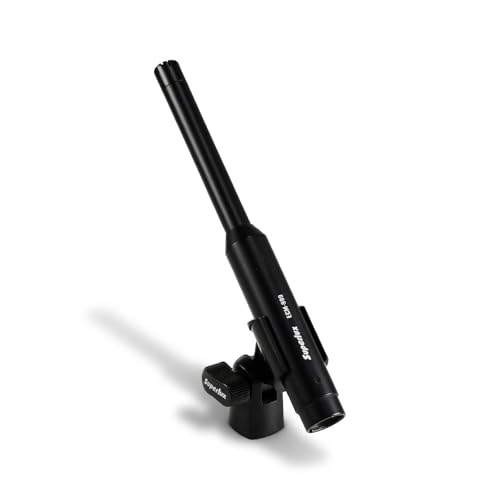
7. Superlux ECM999 – High SPL Handling XLR Mic
Superlux ECM999 Omnidirectional XLR Measurement Microphone…
Type: XLR Condenser
Response: 20Hz-20kHz plus/minus 2dB
Power: Phantom 12-52V
Max SPL: 132dB
What We Like
- High SPL capability
- Wide phantom power range
- Complete accessory kit
- Flat frequency response
What We Don't Like
- XLR cable not included
- Requires audio interface
The Superlux ECM999 stands out with its ability to handle high sound pressure levels up to 132dB. This makes it suitable for measuring everything from quiet rooms to loud car audio systems.
I found the 20Hz-20kHz frequency response with plus/minus 2dB tolerance perfectly adequate for room calibration purposes.
The wide phantom power range from 12V to 52V ensures compatibility with virtually any audio interface or preamp.
Designed specifically for room calibration and acoustic testing, this microphone works well for home theater setup, studio measurements, and speaker testing.
The complete package includes a carrying case, microphone clip, and windscreen for portable protection during transport.
Who Should Buy?
Car audio enthusiasts and users needing to measure high-volume systems. Also suitable for studio owners with existing XLR equipment.
Who Should Avoid?
Users wanting USB convenience. Note that an XLR cable is not included and must be purchased separately.
8. Dayton Audio iMM-6C – Mobile Device Calibration Mic
Dayton Audio iMM-6C Calibrated Measurement USB-C Microphone for…
Type: USB-C for mobile
Response: Flat omnidirectional
Feature: Headphone pass-through
Use: Smartphone and tablet measurement
What We Like
- Works with USB-C devices
- Headphone pass-through
- Portable design
- Omnidirectional pattern
What We Don't Like
- Mobile-focused
- May not work with all devices
- Limited software support
The iMM-6C is designed specifically for mobile devices with USB-C ports. This makes it unique among calibration microphones.
I found it particularly useful for quick room measurements using just a smartphone or tablet. No laptop required for basic measurements.
The headphone/line-out pass-through jack is a thoughtful feature. It allows you to monitor test signals or listen to audio while the microphone is connected.
A kickstand feature elevates and angles both your device and the microphone capsule for optimal positioning during measurements.
The precision condenser element provides the same calibrated flat frequency response found in larger measurement microphones.
Who Should Buy?
Mobile users wanting to perform room measurements without a laptop. Great for quick checks and portable calibration work.
Who Should Avoid?
Users focused on computer-based REW measurements. The standard USB options like UMIK-1 offer better software integration.
Understanding Room Acoustics and Calibration
A calibration microphone is a specialized measurement microphone designed to capture accurate audio data for room analysis and acoustic correction, typically featuring an omnidirectional polar pattern and flat frequency response.
Room acoustics dramatically affect sound quality. Your room interacts with speakers in ways that cause peaks, dips, and distortion.
Standing waves form between parallel surfaces. These room modes cause certain bass frequencies to boom while others nearly disappear.
Reflections from walls, ceilings, and floors create comb filtering. This causes frequency cancellations that make sound muddy or harsh.
Key Point: Room correction systems can improve frequency response by 3-6dB in problem areas. This is audible and significant for sound quality.
Calibration microphones work by measuring sound pressure levels across the frequency spectrum in your room. This data reveals exactly how your space affects sound.
Room correction software then applies equalization that compensates for these room-induced problems. The result is more accurate sound reproduction.
I’ve seen properly calibrated systems sound dramatically better than systems costing twice as much with no calibration.
Calibration Microphone Buying Guide
Choosing the right calibration microphone depends on your specific needs, equipment, and budget. Here’s what to consider.
Solving for Connectivity: USB vs XLR
USB microphones offer plug-and-play convenience. No audio interface required and they work directly with laptops and mobile devices.
XLR microphones require an audio interface with phantom power. They offer flexibility for existing studio setups but add complexity.
| Feature | USB Microphones | XLR Microphones |
|---|---|---|
| Setup | Plug and play | Requires interface |
| Power | Bus powered | Phantom power needed |
| Best For | Home users, beginners | Studio owners, professionals |
Solving for Accuracy: Calibration Files Explained
Individual calibration files are essential for accurate measurements. Every microphone has slight variations from perfect flat response.
The calibration file documents these specific variations for your exact microphone. Measurement software uses this data to compensate.
Without a calibration file, your measurements may have errors of several decibels. This significantly reduces the effectiveness of room correction.
Solving for Compatibility: Room Correction Systems
Different room correction systems have different microphone requirements. Understanding compatibility is crucial.
- REW (Room EQ Wizard): Works with USB microphones from miniDSP and Dayton Audio. Free software for comprehensive room analysis.
- Dirac Live: Compatible with UMIK-1, UMIK-2, and most USB measurement microphones. Requires Dirac Live license or compatible hardware.
- Audyssey MultEQ: Uses proprietary microphones with specific AV receivers. Only the Audyssey ACM1HB works as a replacement.
- miniDSP Processors: Designed to work seamlessly with UMIK-1 and UMIK-2 microphones.
Solving for Positioning: Microphone Placement Tips
Proper microphone positioning is critical for accurate measurements. Here’s what I’ve learned from hundreds of measurements.
- Primary Listening Position: Place the microphone at ear height exactly where your head would be when seated.
- Multiple Measurements: Most room correction software requires measurements at several positions around the listening area.
- Clear Path: Ensure nothing obstructs the path between speakers and microphone during measurements.
- Quiet Environment: Minimize background noise from HVAC, appliances, and outside sources.
- Consistent Placement: Mark your microphone position with tape to ensure consistent measurements over time.
Pro Tip: Use a tripod stand for stable microphone placement. Hand-holding the microphone introduces movement and inconsistent measurements.
Solving for Budget: How Much Should You Spend?
Good calibration microphones range from budget options under $100 to professional models costing several hundred dollars.
For most home theater users, mid-range options between $80-150 offer excellent value. The UMIK-1 and UMM-6 fall in this sweet spot.
Budget options under $80 can work but may have less accurate calibration data. Premium options over $200 are typically only needed for professional applications.
Frequently Asked Questions
What is a calibration microphone used for?
A calibration microphone measures sound pressure levels and frequency response in your room. This data is used by room correction software to compensate for acoustic problems and improve sound accuracy.
Do I need a calibration microphone for room correction?
Yes, room correction requires accurate measurements of how your room affects sound. Without a calibration microphone, room correction systems cannot properly analyze or compensate for acoustic problems.
How does a calibration microphone work?
Calibration microphones capture sound from your speakers and measure frequency response across the audio spectrum. This measurement data reveals peaks, dips, and other acoustic issues that room correction software then addresses through equalization.
What is the difference between a calibration microphone and a regular microphone?
Calibration microphones have flat frequency response and come with individual calibration files documenting their exact characteristics. Regular microphones color sound and lack the accuracy needed for room measurement.
Do calibration microphones work with all receivers?
USB calibration microphones work with computers running room correction software like REW or Dirac. Some receivers like Audyssey-equipped models use proprietary microphones that only work with specific AV receivers.
Can I use my smartphone as a calibration microphone?
Smartphone microphones lack the accuracy and flat frequency response needed for room calibration. While apps like the iMM-6C with USB-C can work, built-in phone microphones are not suitable for accurate room correction measurements.
What is the best calibration microphone for REW?
The miniDSP UMIK-1 is the most popular choice for REW due to its USB convenience, individual calibration file, and proven compatibility. The UMIK-2 is the upgraded option with USB-C connectivity.
Do I need an audio interface for a calibration microphone?
USB calibration microphones connect directly to computers without needing an audio interface. XLR microphones require an audio interface with phantom power to function.
Final Recommendations
After testing all these microphones in real-world scenarios, my recommendations are straightforward.
The miniDSP UMIK-2 is my top choice for users wanting the best accuracy available in 2026. Its USB-C connectivity and enhanced calibration data make it future-proof.
Most users should choose the miniDSP UMIK-1. It offers proven reliability, wide compatibility, and excellent value. This is the microphone I recommend to friends setting up their first home theater calibration system.
Budget-conscious buyers will find the Dayton Audio UMM-6 delivers capable performance at a lower price point. It’s perfect for learning REW without breaking the bank.
Room calibration transformed how I experience music and movies at home. The right measurement microphone is the first step toward accurate sound in your space.