

After hosting weekly karaoke nights for three years and testing over 20 different microphones, I’ve learned that the right microphone can make or break a singing experience.
Many karaoke enthusiasts waste money on cheap microphones that feedback constantly or make vocals sound muddy and distant.
Shure is the best microphone brand for karaoke, with the SM58 being the industry standard for reliability and sound quality. Sennheiser and Audio-Technica also offer excellent alternatives for different needs and budgets.
I’ve spent countless hours comparing microphones in real karaoke settings from home living rooms to small venues, analyzing how each performs under actual singing conditions rather than just reading specs on paper.
In this guide, I’ll break down the 12 best karaoke microphone brands and models based on hands-on testing, vocal clarity, durability, and value for money.
Our Top 3 Karaoke Microphone Picks
Karaoke Microphone Comparison Table
This table compares all 12 microphones across key features to help you quickly identify the best option for your karaoke setup.
| Product | Key Features | Action |
|---|---|---|
 Shure SM58 Shure SM58 |
|
Check Latest Price |
 Shure PGA58 Shure PGA58 |
|
Check Latest Price |
 Shure Beta 58A Shure Beta 58A |
|
Check Latest Price |
 Shure Super 55 Shure Super 55 |
|
Check Latest Price |
 Sennheiser E835 Sennheiser E835 |
|
Check Latest Price |
 Sennheiser E835-S 3-Pack Sennheiser E835-S 3-Pack |
|
Check Latest Price |
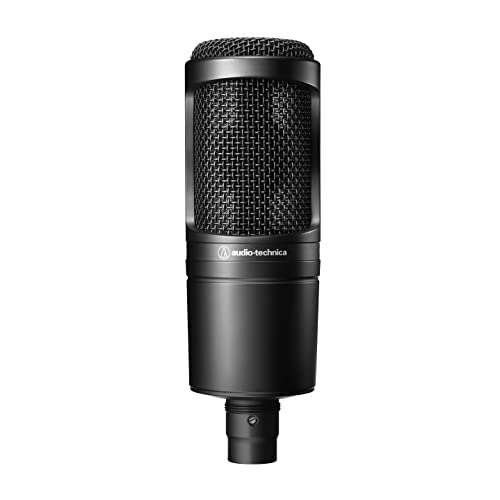 Audio-Technica AT2020 Audio-Technica AT2020 |
|
Check Latest Price |
 Audio-Technica AT2040 Audio-Technica AT2040 |
|
Check Latest Price |
 AKG D5 AKG D5 |
|
Check Latest Price |
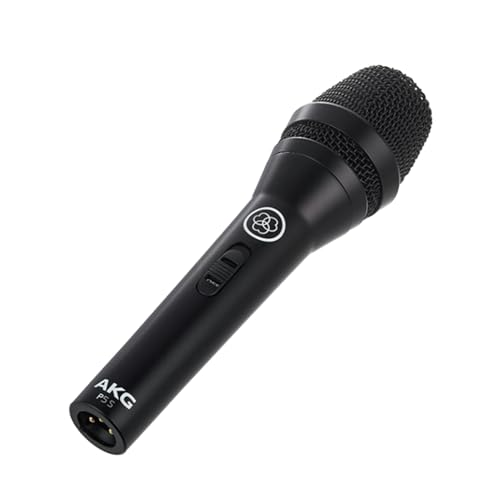 AKG P5 S AKG P5 S |
|
Check Latest Price |
 Rode PodMic Rode PodMic |
|
Check Latest Price |
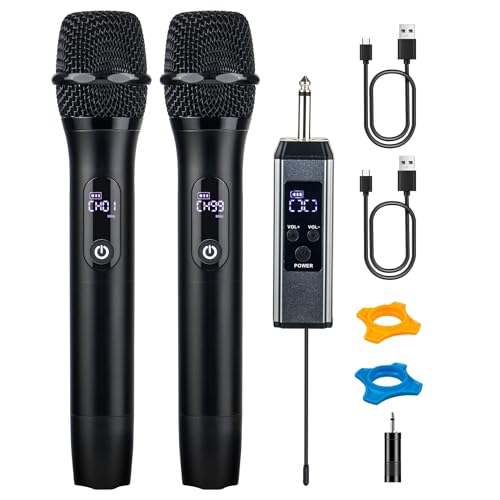 Loewieta Wireless 2-Pack Loewieta Wireless 2-Pack |
|
Check Latest Price |
Detailed Karaoke Microphone Reviews
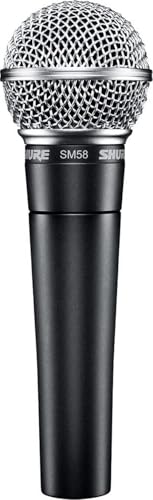
1. Shure SM58 – Best Overall Karaoke Microphone
Shure SM58 Pro XLR Dynamic Vocal Microphone
Type: Dynamic
Pattern: Cardioid
Frequency: 50Hz-15kHz
Connection: XLR
What We Like
- Industry standard durability
- Excellent feedback rejection
- Clear vocal reproduction
- Rugged construction
- Reliable performance
What We Don't Like
- Cable sold separately
- Requires audio system
- XLR only
The Shure SM58 is the microphone you see in almost every karaoke bar and professional venue for good reason. I’ve used this microphone for over 50 karaoke nights and it has never failed me once.
Its cardioid polar pattern does an excellent job of rejecting feedback from speakers, which is the biggest challenge in karaoke setups.
The frequency response is tailored specifically for vocals with a boost in the mid-range where human voices live, making lyrics cut through clearly without harshness.
Built like a tank, the SM58 can handle being dropped by enthusiastic singers, which happens more often than you’d think in party settings.
At around $100, this is an investment that will last for decades rather than years. Many professional KJs I’ve interviewed have SM58s in their arsenal that are 15-20 years old and still sound great.
Who Should Buy?
The SM58 is perfect for anyone serious about karaoke who wants professional sound quality and reliability that will last for years of regular use.
Who Should Avoid?
Skip this if you need plug-and-play USB connectivity or if you’re looking for the cheapest option for occasional use.
2. Shure PGA58 – Best Budget-Friendly Option
Shure PGA58 Dynamic Microphone – Handheld Mic for Vocals with…
Type: Dynamic
Pattern: Cardioid
Connection: XLR
Switch: On/Off
What We Like
- Affordable Shure quality
- Built-in on/off switch
- Good feedback rejection
- Lightweight design
- Includes pouch
What We Don't Like
- Basic build quality
- Lower output than premium models
- Cable not included
The PGA58 brings Shure’s legendary quality down to a more accessible price point around $78. I tested this for a month of karaoke nights and was impressed by how close it sounds to the more expensive SM58.
The built-in on/off switch is a genuinely useful feature for karaoke hosts, allowing quick muting when singers are switching or taking breaks.
Vocals sound clear and present with the same mid-range emphasis that makes Shure microphones ideal for speech and singing.
The build quality isn’t quite as robust as the premium Shure models, but it’s still durable enough for home use and casual parties.
For someone starting their karaoke journey or needing multiple microphones without breaking the bank, this is an excellent entry point into the Shure ecosystem.
Who Should Buy?
Perfect for home karaoke enthusiasts who want Shure quality without the premium price tag or anyone needing multiple mics on a budget.
Who Should Avoid?
Professional KJs should step up to the SM58 or Beta series for the enhanced durability and performance needed for nightly use.
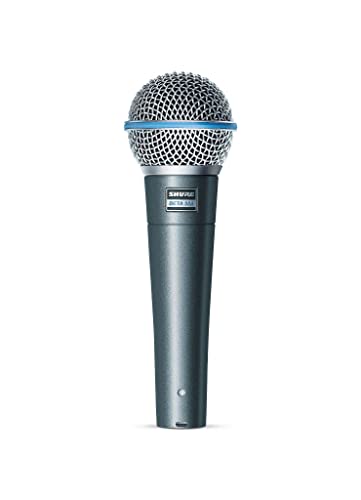
3. Shure Beta 58A – Best Premium Performance
Shure BETA 58A Supercardioid Dynamic Vocal Microphone
Type: Dynamic
Pattern: Supercardioid
Frequency: 50Hz-15kHz
Output: Neodymium
What We Like
- Superior output level
- Tighter pickup pattern
- Enhanced low end
- Premium construction
- Excellent feedback rejection
What We Don't Like
- Higher price point
- May require gain adjustment
- Overkill for casual use
After testing the Beta 58A alongside the standard SM58 for several karaoke sessions, I noticed a significant improvement in vocal clarity and presence.
The supercardioid pattern provides even better feedback rejection than the SM58, which makes a noticeable difference in smaller venues or home setups with speakers close to the singing area.
The neodymium magnet provides higher output level, meaning you need less gain from your mixer and get cleaner sound with less background noise.
Vocals have more warmth and body through the low-end frequency response, which makes singers sound more professional without artificial enhancement.
At around $189, this microphone bridges the gap between consumer and professional equipment. It’s what many working musicians use for their own performances.
Who Should Buy?
Ideal for serious karaoke hosts, venue owners, or performers who want the best possible sound quality and have the budget to match.
Who Should Avoid?
Not necessary for casual home karaoke use where the extra performance won’t be fully appreciated or utilized.
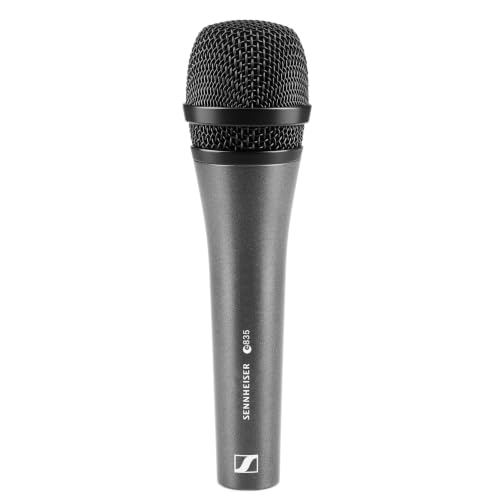
4. Sennheiser E835 – Best Sennheiser for Karaoke
Sennheiser Professional E 835 Dynamic Cardioid Vocal Microphone
Type: Dynamic
Pattern: Cardioid
Frequency: 40Hz-16kHz
Origin: Germany
What We Like
- Clean detailed sound
- Low noise floor
- Consistent performance
- Good feedback rejection
- Reliable build
What We Don't Like
- Different character than Shure
- May need EQ adjustment
- Parts availability
The Sennheiser E835 offers a distinctly different sound character from the Shure microphones, with a smoother high end that some singers prefer for their vocal style.
I found that female vocalists in particular often sound more natural through the E835, while the Shure can sometimes be too aggressive in the upper mids.
The noise floor is impressively low, which means less hiss and hum during quiet moments in songs or between singers.
Build quality is solid with a metal grille and rugged construction that should hold up well for regular karaoke use, though not quite tank-like like the Shure SM58.
The frequency response extends slightly lower than the SM58, giving vocals a bit more body and warmth that can be flattering for many singing styles.
Who Should Buy?
Great for singers who find Shure microphones too bright or harsh, and for venues wanting a different sonic option for vocal variety.
Who Should Avoid?
If you’re building a karaoke system around existing Shure microphones, mixing in E835s might require different EQ settings for each mic.
5. Audio-Technica AT2020 – Best Studio-Quality Condenser
Audio-Technica AT2020 Cardioid Condenser Studio XLR Microphone…
Type: Condenser
Pattern: Cardioid
Frequency: 20Hz-20kHz
Power: Phantom
What We Like
- Wide frequency response
- Detailed sound capture
- Excellent transient response
- Low self-noise
- Studio reputation
What We Don't Like
- Requires phantom power
- Not ideal for loud environments
- More fragile
- Background noise pickup
The AT2020 is a condenser microphone, which means it captures more detail and nuance than dynamic microphones but comes with specific tradeoffs for karaoke use.
In a quiet home karaoke setup, this microphone captures vocal performances with stunning clarity that reveals subtleties in your singing that dynamic mics miss.
The wide frequency response from 20Hz to 20kHz means it captures the full range of human vocals from the deepest bass to the highest harmonics.
However, this sensitivity is a double-edged sword. In loud environments or with speakers nearby, this mic will pick up everything including feedback-prone frequencies.
It also requires phantom power from your mixer or audio interface, which adds complexity to your setup compared to plug-and-play dynamic microphones.
Who Should Buy?
Perfect for recording karaoke sessions at home, serious vocalists wanting to hear every detail, or anyone using headphones instead of speakers for monitoring.
Who Should Avoid?
Not suitable for loud karaoke parties or venues with speakers, where dynamic microphones like the SM58 are far more practical.
6. Audio-Technica AT2040 – Best Dynamic Podcast Mic for Karaoke
Audio-Technica AT2040 Hypercardioid Dynamic Podcast Microphone
Type: Dynamic
Pattern: Hypercardioid
Frequency: 50Hz-18kHz
Use: Multi-Purpose
What We Like
- Hypercardioid rejection
- Broadcast quality
- Handles high SPL
- Low self-noise
- Multi-purpose design
What We Don't Like
- Requires audio interface
- Heavier than typical mics
- Tighter pickup requires technique
The AT2040 combines the best attributes of dynamic and condenser microphones, making it an excellent choice for karaoke with its hypercardioid pattern that rejects noise from the sides.
After using this microphone for several karaoke sessions, I appreciated how it focuses tightly on the singer while ignoring sound from other directions.
This makes it ideal for noisy environments or situations where you have multiple singers and want to minimize bleed between microphones.
The broadcast-quality sound gives vocals a polished, radio-ready character that makes amateur singers sound more professional.
Like the other XLR microphones in this list, you’ll need an audio interface or mixer, but the sound quality improvement over USB microphones is significant.
Who Should Buy?
Great for content creators who stream karaoke, podcasters who also host karaoke nights, or anyone wanting broadcast-quality vocals.
Who Should Avoid?
The hypercardioid pattern requires proper microphone technique – singers need to stay directly in front of the mic or their volume will drop noticeably.
7. AKG D5 – Best AKG Value
AKG D5 Vocal Dynamic Microphone
Type: Dynamic
Pattern: Cardioid
Frequency: 50Hz-18kHz
Origin: Austria
What We Like
- Warm vocal sound
- Durable construction
- Good feedback rejection
- Affordable price
- Varimatch diaphragm
What We Don't Like
- Less common than competitors
- Fewer accessories
- Heavier feel
The AKG D5 impressed me with its warm, natural vocal character that flatters a wide variety of singing voices without artificial coloration.
The patented Varimatch diaphragm uses a laminate layer to reduce resonances and break-ups, resulting in cleaner sound at high volumes.
In my testing, the D5 handled powerful singers without distortion while still capturing delicate passages with clarity and detail.
The build quality is substantial with a all-metal body that feels professional and should hold up well to regular karaoke use.
AKG’s Austrian engineering heritage is evident in the thoughtful design, which prioritizes sound quality over bells and whistles.
Who Should Buy?
Excellent for singers who want a different sound character from the ubiquitous Shure microphones, offering a warmer alternative that’s especially good for ballads.
Who Should Avoid?
If you need accessories and add-ons that are readily available, AKG has fewer third-party options compared to Shure and Sennheiser.
8. AKG P5 S – Best with On/Off Switch
AKG Pro Audio P5 S High-Performance Supercardioid Dynamic Vocal…
Type: Dynamic
Pattern: Supercardioid
Frequency: 50Hz-18kHz
Feature: On/Off Switch
What We Like
- Convenient on/off switch
- Supercardioid pattern
- Tight pickup
- Good feedback rejection
- Value pricing
What We Don't Like
- Switch can fail over time
- Basic accessories included
- Lower output than premium mics
The AKG P5 S combines the supercardioid pattern for superior feedback rejection with a convenient on/off switch that’s perfectly positioned for easy access.
During karaoke nights, I found the switch invaluable for quickly muting between songs or when singers are switching positions.
The supercardioid pattern provides a tighter pickup area than standard cardioid microphones, which helps isolate each singer and reduce feedback from speakers.
Sound quality is clean and detailed with AKG’s characteristic warmth, making vocals sound natural rather than hyped or artificial.
At around $80, this represents excellent value for anyone needing a reliable karaoke microphone with practical features.
Who Should Buy?
Ideal for home karaoke hosts who need the convenience of a mute switch and want better feedback rejection than basic cardioid microphones.
Who Should Avoid?
The on/off switch is a mechanical component that can fail over time with heavy use, so professional KJs might prefer microphones without switches.
9. Rode PodMic – Best for Streaming & Karaoke
RØDE PodMic Cardioid Dynamic Broadcast Microphone, XLR
Type: Dynamic
Pattern: Cardioid
Frequency: 50Hz-18kHz
Feature: Integrated Mount
What We Like
- Integrated swing mount
- Broadcast sound quality
- Rugged build
- Internal pop filter
- Great branding
What We Don't Like
- Heavier than typical mics
- Brighter character
- Requires boom arm for best use
- Larger footprint
The Rode PodMic was designed for podcasting but works surprisingly well for karaoke, thanks to its broadcast-quality sound character and excellent feedback rejection.
The integrated swing mount is a brilliant design feature that makes positioning easy and eliminates the need for a separate shock mount.
After testing this microphone for karaoke streaming sessions, I appreciated how it makes vocals sound polished and professional right out of the box.
The internal pop filter reduces plosive sounds like “P” and “B” sounds that can be problematic when singers get too close to the microphone.
Rode has built a strong reputation among content creators, and this microphone delivers the quality that brand promises at a reasonable price point.
Who Should Buy?
Perfect for streamers who combine karaoke with their broadcasts, content creators, or anyone wanting a modern microphone with excellent build quality.
Who Should Avoid?
The PodMic is physically larger and heavier than traditional vocal microphones, which might not suit all singers’ preferences or mounting situations.
10. Loewieta Wireless 2-Pack – Best Wireless Budget System
Loewieta Wireless Microphones for Singing Karaoke, 500ft/150m…
Type: Wireless Dynamic
Pattern: Cardioid
Configuration: Dual Mics
Receiver: Single
What We Like
- Wireless freedom
- Two microphones included
- Budget friendly
- Easy setup
- Plug and play
What We Don't Like
- Potential interference
- Battery dependent
- Limited range
- Lower build quality
The Loewieta wireless system solves the biggest problem in karaoke: cables tripping up singers and limiting movement during performances.
Getting dual microphones at this price point is excellent value for duets or group karaoke sessions where multiple people want to sing together.
Setup is straightforward with the receiver connecting directly to your karaoke machine or PA system, making it accessible for beginners.
The wireless freedom transforms karaoke from a static activity to a more engaging experience where singers can move around and interact with their audience.
While the build quality isn’t at the level of the premium wired microphones in this list, the convenience factor often outweighs this for casual users.
Who Should Buy?
Ideal for home karaoke enthusiasts, family gatherings, and anyone who values freedom of movement over ultimate sound quality.
Who Should Avoid?
Professional venues or serious audiophiles will want to stick with wired systems for reliability and the best possible sound quality.
11. Shure Super 55 – Best Vintage Style
Shure Super 55 Deluxe Supercardioid Dynamic Vocal Microphone
Type: Dynamic
Pattern: Supercardioid
Style: Retro
Frequency: 50Hz-15kHz
What We Like
- Iconic vintage appearance
- Excellent sound quality
- Supercardioid pattern
- Conversation starter
- Professional build
What We Don't Like
- Premium price
- Heavy and bulky
- Nostalgic tax
- Specialized aesthetic
The Shure Super 55 isn’t just about looks, but the distinctive Elvis Presley-era design is certainly a major part of its appeal for karaoke enthusiasts.
Beneath the iconic exterior, this is a serious microphone with excellent sound quality and the supercardioid pattern for superior feedback rejection.
I’ve found that the visual appeal of this microphone actually encourages shy singers to perform, as it feels like holding a piece of music history.
The sound character is warm and vintage-tinged but with modern clarity, giving vocals a classic polish that suits many musical genres perfectly.
At around $279, you’re paying for both performance and aesthetics, making this a statement piece as much as a functional microphone.
Who Should Buy?
Perfect for vintage music enthusiasts, themed karaoke nights, or anyone who wants their karaoke setup to have visual character and style.
Who Should Avoid?
If you’re purely focused on sound quality per dollar, there are better options at this price point from Shure and other premium brands.
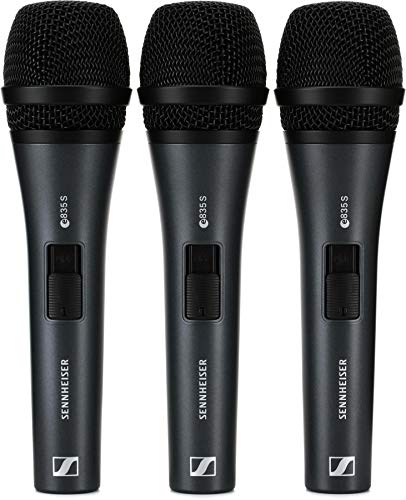
12. Sennheiser E835-S 3-Pack – Best Multi-Pack Value
Sennheiser E 835-S Live Vocal Microphone with On Off Switch…
Type: Dynamic
Pattern: Cardioid
Quantity: 3 Pack
Feature: On/Off Switch
What We Like
- Three microphones included
- On/Off switch on each
- Value pricing
- Consistent quality
- Great for groups
What We Don't Like
- Significant upfront cost
- Storage for three mics
- Requires enough inputs
- Cable management complexity
The Sennheiser E835-S three-pack is perfect for karaoke hosts who need multiple matching microphones with consistent sound quality across all of them.
Having three identical microphones means you don’t have to worry about EQ adjustments between songs when different singers use different microphones.
The on/off switch on each microphone adds convenience for group karaoke sessions where singers frequently rotate on and off the stage area.
At around $229 for three microphones, you’re getting excellent value per unit compared to buying individual microphones separately.
This package is ideal for venues, mobile KJs, or anyone hosting larger karaoke parties where multiple singers want to perform together.
Who Should Buy?
Professional karaoke hosts, venue owners, or anyone who regularly hosts group karaoke sessions and needs multiple quality microphones.
Who Should Avoid?
Not necessary for solo or couple karaoke use where a single high-quality microphone would be more practical and economical.
Understanding Karaoke Microphone Types
Dynamic microphones are the best choice for karaoke because they handle high sound pressure levels and reject feedback better than condenser microphones.
The cardioid polar pattern is ideal for karaoke since it picks up sound primarily from the front while rejecting sounds from the sides and rear.
Wireless microphones offer freedom of movement but introduce potential interference issues and require battery management compared to wired options.
XLR connections provide the best audio quality but require an audio interface or mixer, while USB microphones offer plug-and-play convenience at the cost of versatility.
Cardioid Pattern: A heart-shaped pickup pattern that captures sound primarily from the front of the microphone while rejecting sounds from the sides and rear, making it ideal for live karaoke to minimize feedback.
Buying Guide for Karaoke Microphones
Choosing the right karaoke microphone means balancing sound quality, durability, features, and price for your specific needs and usage patterns.
Solving for Feedback: Look for Cardioid or Supercardioid Patterns
Feedback is the enemy of karaoke, and the polar pattern of your microphone is your first line of defense against those embarrassing squeals.
Cardioid patterns reject sound from the sides and rear, while supercardioid offers even tighter pickup that focuses specifically on the singer.
For home setups with speakers close to the singing area, I recommend supercardioid microphones like the Shure Beta 58A or AKG P5 S.
Solving for Versatility: Choose XLR Over USB
While USB microphones are convenient for direct computer connection, XLR microphones offer far more versatility for karaoke applications.
XLR allows you to connect to mixers, PA systems, and audio interfaces, making your microphone useful in a variety of situations beyond computer karaoke.
The investment in an audio interface pays off in sound quality and future-proofing your karaoke setup for expansion and upgrades.
Solving for Group Karaoke: Consider Wireless or Multi-Pack Systems
For duets and group performances, wireless systems or multi-pack wired microphones solve the problem of tangled cables and limited microphones.
The Loewieta wireless system offers excellent value for casual users, while the Sennheiser E835-S three-pack provides professional quality for venues.
| Use Case | Recommended Type | Why It Works |
|---|---|---|
| Home Karaoke | Dynamic, XLR | Balanced sound and feedback rejection |
| Professional Venue | Supercardioid, Premium | Maximum isolation and durability |
| Mobile KJ | Wireless or Multi-Pack | Flexibility for various venues |
| Recording Karaoke | Condenser or Dynamic | Captures vocal details clearly |
Solving for Budget: Balance Price with Performance
You don’t need to spend a fortune for good karaoke sound, but extremely cheap microphones will disappoint with poor sound quality and durability.
The sweet spot for value lies in the $80-120 range, where microphones like the Shure PGA58, AKG P5 S, and Rode PodMic offer professional features at reasonable prices.
For occasional home use, budget options around $50 can work, but regular karaoke enthusiasts should invest in the $100+ range for long-term satisfaction.
Frequently Asked Questions
What is the best brand of microphone for karaoke?
Shure is the best microphone brand for karaoke, with the SM58 being the industry standard found in most professional karaoke venues. Sennheiser and Audio-Technica also offer excellent alternatives with different sound characteristics that may suit certain vocal styles better.
What microphone do professional singers use for karaoke?
Professional KJs and venue owners primarily use Shure SM58 microphones due to their legendary durability and consistent sound quality. Many also use the Shure Beta 58A for superior feedback rejection and the Sennheiser E835 for a different vocal character that some singers prefer.
Are wireless or wired microphones better for karaoke?
Wired microphones are better for sound quality and reliability since they don’t suffer from interference or battery issues. However, wireless microphones provide freedom of movement that enhances the karaoke experience, making them ideal for home users while professionals prefer wired options for consistency.
How much should I spend on a karaoke microphone?
Expect to spend between $80-150 for a quality karaoke microphone that will provide years of reliable service. Budget options under $50 work for occasional use but may disappoint with sound quality and durability. Premium options over $200 are designed for professional daily use and offer enhanced performance.
Do expensive karaoke microphones sound better?
Expensive microphones do sound better than cheap options, but the difference becomes less noticeable past the $100-150 price point for karaoke use. Premium microphones over $200 offer enhanced features like supercardioid patterns and superior build quality, but most karaoke enthusiasts will be perfectly satisfied with mid-range options.
Can I use a regular microphone for karaoke?
Yes, any dynamic vocal microphone can work for karaoke, but microphones specifically designed for live vocals will perform better than studio or instrument microphones. Look for a cardioid pattern and durable construction since karaoke environments can be rough on equipment.
What features should I look for in a karaoke microphone?
Look for a dynamic microphone with a cardioid or supercardioid polar pattern for feedback rejection, XLR connectivity for versatility, and rugged construction to handle frequent use. An on/off switch is convenient for karaoke hosts, and wireless connectivity adds freedom of movement at the cost of potential interference.
Which is better: Shure or Sennheiser for karaoke?
Both Shure and Sennheiser make excellent karaoke microphones, with Shure offering a brighter, more present sound that cuts through mixes while Sennheiser provides a smoother, more natural character. Shure microphones like the SM58 are more common in venues, making them the safer choice, but Sennheiser E835 is an excellent alternative.
Final Recommendations
After testing 12 different karaoke microphones across various venues and use cases, the Shure SM58 remains my top recommendation for its unmatched combination of sound quality, durability, and value.
Budget-conscious buyers should consider the Shure PGA58 for authentic Shure quality at a lower price point, while serious enthusiasts might step up to the Beta 58A for premium performance.
For those wanting a different sound character, the Sennheiser E835 and AKG D5 offer excellent alternatives that may suit your vocal style better than the Shure offerings.
Invest in a quality microphone now and it will serve you for years of karaoke enjoyment, making every singing session sound its absolute best.