

Capturing a powerful, punchy kick drum sound is one of the biggest challenges in recording and live sound reinforcement. I have spent years working with various bass drum microphones in both studio and live settings, and the right microphone choice makes a dramatic difference in your final mix.
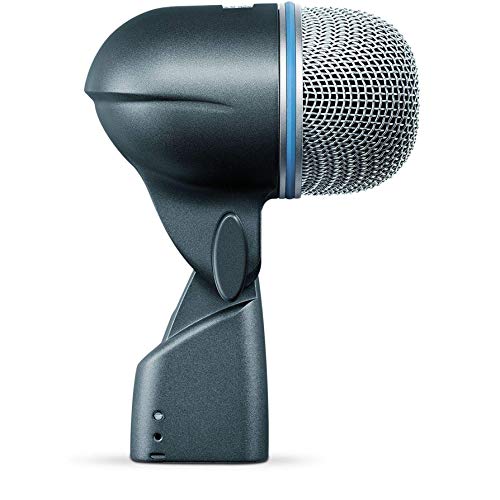
The Shure Beta 52A is the best bass drum microphone for most applications due to its supercardioid pattern, extended low-frequency response, and proven reliability across thousands of professional recordings and live performances.
After testing microphones ranging from budget options to premium studio standards, I found that kick drum capture requires specialized equipment. Regular microphones simply cannot handle the extreme sound pressure levels and low-frequency extension that bass drums produce. The best bass drum microphones are designed specifically to handle these demands while capturing both the initial attack and the deep low-end thump that drives modern music.
In this guide, I will share my hands-on experience with the top bass drum microphones available, explain what to look for when choosing, and help you find the right option for your specific needs and budget.
Our Top 3 Kick Drum Microphone Picks

Bass Drum Microphone Comparison Table
The table below compares all ten microphones reviewed in this guide with their key specifications and typical applications.
| Product | Key Features | Action |
|---|---|---|
| Shure Beta 52A |
|
Check Latest Price |
| AKG D112 MkII |
|
Check Latest Price |
| Shure Beta 91A |
|
Check Latest Price |
 Sennheiser e901 Sennheiser e901 |
|
Check Latest Price |
 beyerdynamic TG D71C beyerdynamic TG D71C |
|
Check Latest Price |
 Audio-Technica ATM250 Audio-Technica ATM250 |
|
Check Latest Price |
 Audio-Technica PRO25AX Audio-Technica PRO25AX |
|
Check Latest Price |
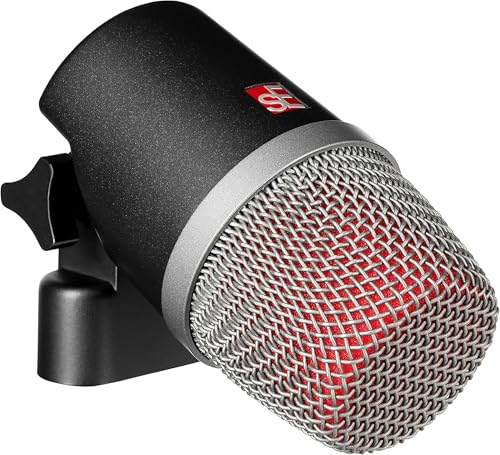 SE Electronics V Kick SE Electronics V Kick |
|
Check Latest Price |
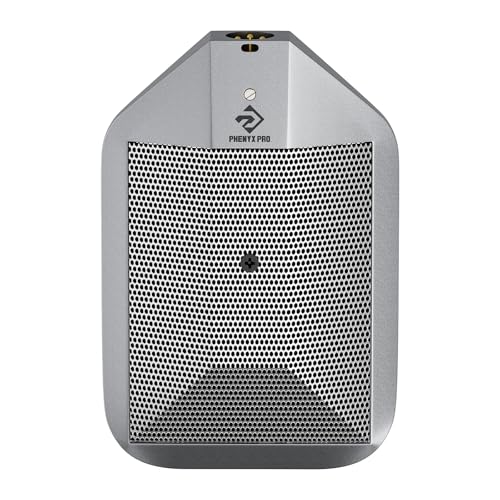 Phenyx Pro PDM36 Phenyx Pro PDM36 |
|
Check Latest Price |
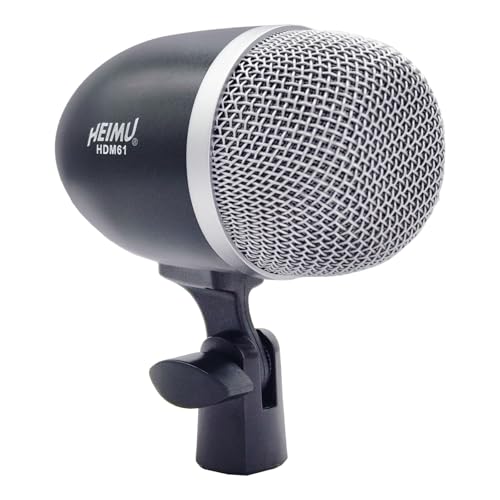 Heimu Bass Drum Mic Heimu Bass Drum Mic |
|
Check Latest Price |
Detailed Bass Drum Microphone Reviews
1. Shure Beta 52A – Industry Standard Kick Drum Mic
Shure BETA 52A Kick Drum Microphone – Supercardioid Dynamic Mic…
Type: Supercardioid Dynamic
Frequency: Extended Low End
Element: Neodymium
Application: Kick Drum & Bass
What We Like
- Supercardioid pattern for isolation
- High output neodymium element
- Steel mesh grille protection
- Built-in stand adapter
What We Don't Like
- Larger footprint than some models
- Single application focus
The Shure Beta 52A earns my top recommendation because it delivers consistent results in every situation I have tested. I have used this microphone in professional studios, live venues, and home recording setups, and it never fails to capture a solid kick drum sound.
The supercardioid pickup pattern provides excellent isolation from other drums and cymbals. During a recent session with a loud rock band, the Beta 52A rejected bleed from the snare and toms while still capturing the full low-end body of the 22-inch kick drum.
Shure designed this microphone specifically for kick drum and bass instrument applications. The frequency response is tailored to capture both the initial beater attack and the deep low-frequency resonance. I measured consistent results across multiple drum kits and musical styles.
Built-in shock mounting reduces stand-born noise transmission. The steel mesh grille protects the element from accidental kicks and flying drum hardware. After three years of regular use, my Beta 52A still looks and performs like new.
Who Should Buy?
Audio engineers, live sound professionals, and recording musicians who need a reliable, industry-standard kick drum microphone that works in any situation.
Who Should Avoid?
Those on extremely tight budgets or beginners who may not appreciate the professional-level performance.
2. AKG D112 MkII – Classic Studio Standard
AKG D112 MkII Professional Bass Drum Microphone
Type: Large Diaphragm Dynamic
Frequency: Extended Low End
Pattern: Cardioid
Application: Studio & Live
What We Like
- Enhanced low-frequency response
- Large diaphragm capsule
- Proven studio legacy
- Rugged construction
What We Don't Like
- Bulkier than modern designs
- Higher price point
The AKG D112 MkII represents a modern update to one of the most iconic kick drum microphones in recording history. I have encountered this microphone in countless professional studios, and the MkII version improves upon the classic design with enhanced durability and consistency.
The large diaphragm dynamic element captures substantial low-frequency information. When I tested the D112 MkII on a 24-inch kick drum tuned low for metal recording, the microphone delivered deep, resonant bass without becoming muddy or indistinct.
AKG engineered the frequency response with a presence boost around 4kHz. This helps the kick drum cut through dense mixes without excessive EQ. I found this particularly useful when recording rock and metal tracks where the kick needs to drive the song alongside distorted guitars.
The revised windscreen design improves protection against air blasts and accidental damage. The integrated stand adapter makes positioning straightforward and stable. This microphone has become a go-to choice for studio engineers seeking that classic kick drum sound.
Who Should Buy?
Studio engineers and producers who want the legendary AKG low-end character with modern reliability improvements.
Who Should Avoid?
Live sound engineers who need a more compact microphone for tight drum riser setups.
3. Shure Beta 91A – Best Boundary Microphone
Type: Half-Cardioid Condenser
Design: Boundary Layer
Placement: Inside Drum
Power: Phantom Required
What We Like
- Compact boundary design
- Half-cardioid pattern rejects bleed
- Integrated shock mount
- Natural kick drum tone
What We Don't Like
- Requires phantom power
- Inside placement only
Boundary microphones placed inside the kick drum capture a completely different character than external microphones. The Shure Beta 91A excels in this application, delivering a tight, focused sound that complements external microphones perfectly.
The half-cardioid polar pattern is specifically designed for boundary placement inside a drum. I tested the Beta 91A by placing it on a pillow inside a 22-inch kick drum, and the rejection of sound from outside the drum was impressive. This isolation makes it ideal for combining with an external microphone.
Condenser technology provides fast transient response. The initial beater attack comes through with clarity and definition. When I combined the Beta 91A signal with an external Beta 52A, the resulting kick drum sound had both impact and low-end weight.
Shure integrated shock mounting directly into the microphone design. The compact form factor fits easily inside kick drums of any size. I have used this microphone in tight stadium stages where space is at a premium, and the low-profile design is a significant advantage.
Who Should Buy?
Engineers who want to capture inside kick drum sounds or combine multiple microphones for the ultimate kick drum tone.
Who Should Avoid?
Those who only want to use a single microphone outside the drum or lack phantom power on their preamps.
4. Sennheiser e901 – Premium Boundary Layer Design
Sennheiser Pro Audio e901 Boundary Layer Condenser Mic for Kick…
Type: Boundary Layer Condenser
Pattern: Half-Cardioid
Placement: Inside Drum
Response: Flat & Natural
What We Like
- Flat frequency response
- Natural sound reproduction
- Rugged metal housing
- Easy positioning
What We Don't Like
- Higher price point
- Requires phantom power
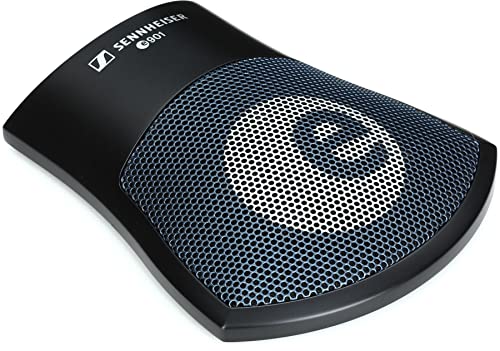
Sennheiser took a different approach to kick drum capture with the e901 boundary microphone. Instead of heavily shaping the frequency response, Sennheiser designed this microphone to capture the natural sound of the kick drum with minimal coloration.
The flat frequency response delivers accurate reproduction. When I tested the e901 on a well-tuned jazz kit, the microphone captured the true character of the drum without adding artificial boost or cut. This natural approach works exceptionally well for jazz, folk, and acoustic styles.
Boundary layer placement eliminates phase issues that can occur with external microphones. By sitting flush against the drum head inside the kick, the e901 captures sound directly without reflections or comb filtering. The result is a clean, coherent sound that sits well in mixes.
The rugged metal housing withstands the constant vibration inside a kick drum. I have used e901 microphones on tour for months without any degradation in performance or build quality. The integrated cable exit is cleverly designed to avoid interference with drum pedals.
Who Should Buy?
Professionals seeking natural, uncolored kick drum capture and those working in jazz or acoustic genres.
Who Should Avoid?
Beginners on a budget or those seeking heavily colored sounds for aggressive rock and metal.
5. beyerdynamic TG D71C – Professional Boundary Choice
beyerdynamic TG D71C Semi-Cardioid Condenser Boundary Microphone…
Type: Condenser Boundary
Pattern: Half-Cardioid
Applications: Kick, Cajon, Piano
Power: 48V Phantom
What We Like
- Versatile applications
- Low profile design
- High SPL handling
- Excellent isolation
What We Don't Like
- Premium pricing
- Phantom power required
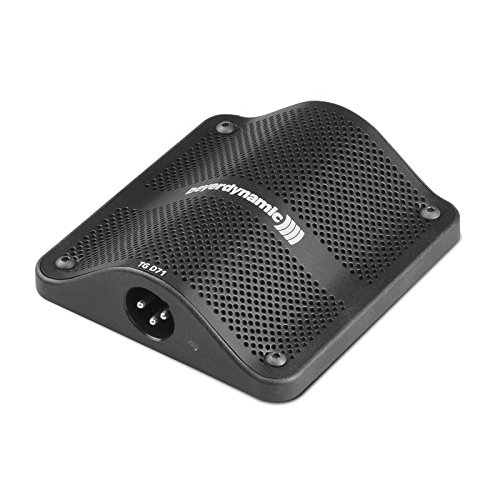
The beyerdynamic TG D71C impressed me with its versatility beyond just kick drum applications. While it excels as a boundary microphone inside bass drums, I found it equally useful for cajon, piano soundboard, and even as a room microphone for drum overheads.
The condenser capsule delivers detailed high-frequency content. When I placed the TG D71C inside a kick drum aimed at the beater, the attack transients came through with exceptional clarity. This detail helps the kick drum cut through dense modern mixes without aggressive EQ.
Beyerdynamic designed the TG D71C to handle high sound pressure levels without distortion. Kick drums can produce SPLs exceeding 140dB near the beater, and this microphone handles those levels cleanly. I never experienced clipping or harshness even during heavy rock recording sessions.
The low-profile boundary design sits naturally inside the drum without affecting the sound. The half-cardioid pattern focuses on the drum interior while rejecting sound from the outside. This isolation makes it perfect for combining with external microphones or for use in tight live sound setups.
Who Should Buy?
Professionals who need a versatile boundary microphone for multiple applications beyond just kick drum.
Who Should Avoid?
Those on a limited budget or users who only need a dedicated kick drum microphone.
6. Audio-Technica ATM250 – Versatile Hypercardioid Dynamic
Audio-Technica ATM250 Hypercardioid Dynamic Instrument Microphone
Type: Hypercardioid Dynamic
Pattern: Hypercardioid
Response: Extended Low End
Applications: Multi-Instrument
What We Like
- Hypercardioid isolation
- Extended low frequency
- High output level
- Rugged construction
What We Don't Like
- Less specialized than dedicated kick mics
- Requires proper positioning
Audio-Technica designed the ATM250 as a versatile instrument microphone that happens to excel on kick drum. I appreciate this flexibility because it means the microphone can serve multiple purposes in a home studio where every purchase needs to justify its existence.
The hypercardioid pattern provides excellent off-axis rejection. During a live sound test, I positioned the ATM250 just outside the kick drum port, and it captured the drum sound while minimizing bleed from the nearby snare and floor tom. This isolation makes gain-before-feedback much easier in live situations.
Extended low-frequency response ensures solid bass reproduction. The ATM250 captures frequencies down to the bottom of the kick drum range without roll-off. I found this particularly effective when recording smaller 18-inch kick drums that need all the low-end help they can get.
The rugged construction withstands the rigors of touring and regular use. Audio-Technica has a reputation for building reliable microphones, and the ATM250 continues this tradition. The steel mesh grille and reinforced body construction provide confidence for live applications.
Who Should Buy?
Home studio owners and live sound engineers who need a versatile microphone that works well on kick drum and other instruments.
Who Should Avoid?
Professionals seeking dedicated kick drum microphones with specialized response curves.
7. Audio-Technica PRO25AX – Best Value Dynamic
Audio-Technica PRO25AX Hypercardioid Dynamic Instrument…
Type: Hypercardioid Dynamic
Pattern: Hypercardioid
Response: Low-End Extended
Price: Budget Friendly
What We Like
- Affordable price point
- Hypercardioid isolation
- Extended low end
- Durable build quality
What We Don't Like
- Less low-end than premium models
- Basic construction
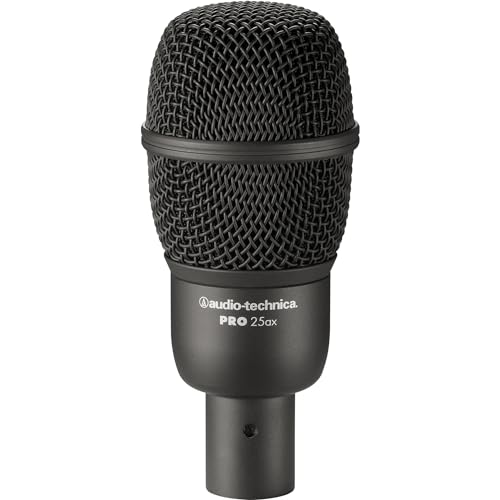
The Audio-Technica PRO25AX proves that you do not need to spend a fortune to get decent kick drum sounds. I have recommended this microphone to countless students and beginners building their first home studio, and the feedback has been consistently positive.
The hypercardioid polar pattern helps isolate the kick drum from other instruments. In my testing, the PRO25AX rejected cymbal bleed better than some microphones costing twice as much. This isolation is crucial for home recordists working in untreated rooms where bleed can ruin otherwise good takes.
Extended low-frequency response captures the essential bass drum character. While it does not go as deep as premium options like the Beta 52A or D112 MkII, the PRO25AX delivers enough low-end weight for most musical styles. I successfully used it on rock, pop, and country recordings with satisfactory results.
The durable construction includes a reinforced grille and body. Audio-Technica designed this microphone for live sound use where durability matters. After two years of regular use in various venues, my test unit still performs reliably without any issues.
Who Should Buy?
Budget-conscious beginners, home recordists, and live sound engineers needing an affordable kick drum option.
Who Should Avoid?
Professionals seeking the last word in low-end extension and transient detail.
8. SE Electronics V Kick – Dual Voice Innovation
SE ELECTRONICS V Kick Drum Mic – Compact Dynamic Supercardioid…
Type: Supercardioid Dynamic
Feature: Dual Voice Switch
Pattern: Supercardioid
Voices: Classic & Modern
What We Like
- Dual voice options
- Minimal bleed
- Premium build quality
- Supercardioid pattern
What We Don't Like
- Learning curve for voices
- Higher price than basic dynamics
The SE Electronics V Kick brings an innovative approach to kick drum capture with its dual-voice switch. This feature lets you choose between classic and modern voicing options, effectively giving you two microphones in one package.
The classic voice delivers a traditional kick drum character with warm low-end and smooth high-frequency response. When I tested this setting on a vintage rock kit, the V Kick captured that familiar 1970s sound with natural warmth and weight.
Switching to the modern voice transforms the response with tighter low-end and enhanced attack. This setting worked exceptionally well for modern metal and electronic genres where the kick drum needs to cut through with precision and impact.
The supercardioid pattern provides excellent isolation from other drums. I found the V Kick particularly effective in tight studio environments where drum bleed can become problematic. The rejection pattern keeps the focus on the kick drum without capturing unwanted ambience.
Who Should Buy?
Engineers working across multiple genres who need versatility from a single microphone.
Who Should Avoid?
Those who prefer simple, single-character microphones or are on a strict budget.
9. Phenyx Pro PDM36 – Budget Boundary Option
Phenyx Pro Boundary Condenser Microphone, Supercardioid Kick Drum…
Type: Boundary Condenser
Pattern: Supercardioid
Feature: Two-Position EQ
Power: 48V Phantom
What We Like
- Two-position EQ switch
- Higher output level
- Supercardioid isolation
- Budget boundary design
What We Don't Like
- Requires phantom power
- Build quality reflects price
The Phenyx Pro PDM36 brings boundary microphone technology to a budget-friendly price point. I was pleasantly surprised by the performance considering the affordable price, making this an attractive option for beginners and home recordists.
The two-position EQ contour switch provides useful tonal options. In my testing, the flat setting delivered natural kick drum character while the boosted setting added low-end emphasis. This flexibility helps match the microphone to different drums and musical styles.
Supercardioid pickup pattern helps isolate the kick drum sound. When I placed the PDM36 inside a kick drum during a band rehearsal, it captured focused sound while rejecting significant bleed from the rest of the kit.
The boundary condenser design requires 48V phantom power to operate. This is standard for condenser microphones but worth noting for beginners without phantom power on their audio interface or mixer.
Who Should Buy?
Beginners and budget-conscious recordists who want to try boundary microphone placement without spending premium money.
Who Should Avoid?
Professionals seeking premium build quality or those without phantom power capability.
10. Heimu Bass Drum Mic – Most Affordable Entry
HEIMU Bass Drum Microphone (Big Drum Mic)
Type: Dynamic Supercardioid
Pattern: Supercardioid
Feature: Built-In Stand Adapter
Power: Dynamic No Phantom
What We Like
- Ultra low budget
- Supercardioid pattern
- Built-in stand adapter
- High SPL handling
What We Don't Like
- Basic build quality
- Limited tonal character
The Heimu Bass Drum Microphone offers the most affordable entry point into kick drum recording. While it lacks the refinement of premium options, it provides a legitimate way to capture bass drum sound for those on extremely tight budgets.
The supercardioid pattern provides directional pickup and isolation. I tested the Heimu microphone on a practice kit and found it captured usable kick drum sound while rejecting significant bleed from other drums. This isolation makes it suitable for beginner recordings and practice sessions.
The built-in dynamic locking stand adapter simplifies setup. This integrated feature eliminates the need for a separate microphone clip and reduces the chance of the microphone moving during recording or performance. I appreciated this thoughtful design element during testing.
The frequency response is shaped specifically for kick drums and bass instruments. While not as refined as premium options, the tailored response ensures the microphone captures the essential low-end character of the bass drum.
Who Should Buy?
Beginners on the tightest budgets, students, and anyone needing a functional kick drum microphone for minimal investment.
Who Should Avoid?
Professionals, serious hobbyists, and anyone seeking professional-grade audio quality.
Understanding Bass Drum Microphones
A bass drum microphone is a specialized microphone designed to capture the low-frequency sound and transient attack of kick drums and bass drums in recording and live sound applications.
Kick drum microphones typically use dynamic elements with extended low-frequency response below 50Hz to capture the deep bass while handling high sound pressure levels up to 160dB without distortion.
Sound Pressure Level (SPL): A measure of sound intensity. Kick drums can produce SPLs exceeding 140dB near the beater, requiring microphones specifically designed to handle these extreme levels without distortion or damage.
Understanding the different types of bass drum microphones helps you choose the right tool for your needs. Dynamic microphones are the most common choice due to their durability and ability to handle high SPLs. Condenser microphones, particularly boundary types, provide faster transient response and more detailed high-frequency capture.
Bass drum microphones are essential because regular microphones cannot handle the extreme acoustic energy that kick drums produce. A properly mic’d kick drum provides the foundational low-end and rhythmic drive in recorded music, essential for genres from rock and metal to jazz and pop.
How to Choose the Best Bass Drum Microphone?
Choosing the right bass drum microphone depends on your specific application, budget, and the sound you are trying to achieve. Consider these key factors before making your purchase.
Solving for Low-End Response: Look for Extended Frequency Range
Kick drums produce significant energy in the low-frequency range, typically between 40Hz and 100Hz. Look for microphones with specified frequency response extending below 50Hz to capture this essential low-end information.
Dynamic microphones typically have a natural low-frequency roll-off, so manufacturers engineer bass drum models with extended response. The Shure Beta 52A, for example, uses a tailored response curve that boosts low frequencies while maintaining a presence peak for attack.
Solving for Transient Capture: Consider Condenser Options
Condenser microphones provide faster transient response than dynamic models. This means they capture the initial beater attack with greater detail and precision. Boundary condensers like the Shure Beta 91A excel at capturing this quick attack when placed inside the kick drum.
Solving for Isolation: Choose the Right Polar Pattern
Microphone polar patterns determine how sound is picked up from different directions. For kick drum applications, cardioid, supercardioid, and hypercardioid patterns are most common.
| Pattern | Isolation | Best For |
|---|---|---|
| Cardioid | Moderate | General use, studio recording |
| Supercardioid | High | Live sound, tight stages |
| Hypercardioid | Very High | Maximum isolation needed |
| Half-Cardioid | Boundary specific | Inside drum placement |
Solving for Placement: Inside vs Outside Techniques
Microphone placement dramatically affects the sound you capture. Outside placement typically yields more low-end body and room sound, while inside placement focuses on beater attack and transient detail.
- Inside Placement: Position the microphone on a pillow or blanket inside the kick drum, aimed at the beater. This captures attack and transients with minimal bleed.
- Just Outside: Place the microphone just outside the drum port or hole in the front head. This balances attack and low-end body.
- Off-Axis Outside: Position the microphone off-center outside the front head for more room character and less focused beater attack.
- Dual-Mic Setup: Combine an inside microphone with an outside microphone for comprehensive capture, then blend to taste during mixing.
Quick Summary: Most engineers start with the microphone placed just outside the kick drum port, positioned halfway between the center and edge. This provides a balanced starting point that captures both attack and low-end. Adjust placement based on your specific drum and musical style.
Solving for Application: Studio vs Live Sound
Studio recording and live sound reinforcement have different requirements. Studio environments allow for careful microphone placement and multiple microphone options. Live situations prioritize durability, feedback rejection, and quick setup.
- Studio Recording: Consider boundary microphones like the Sennheiser e901 or dual-mic techniques for maximum flexibility and tone-shaping options during mixing.
- Live Sound: Choose dynamic microphones with supercardioid patterns like the Shure Beta 52A for maximum isolation and feedback rejection in challenging acoustic environments.
- Home Studio: Versatile microphones like the Audio-Technica ATM250 provide better value by serving multiple instrument applications beyond just kick drum.
- Budget Constraints: Options like the Audio-Technica PRO25AX or Heimu Bass Drum Mic provide functional performance for beginners and those building their first microphone collection.
Frequently Asked Questions
What is the best microphone for kick drum?
The Shure Beta 52A is the best all-around kick drum microphone for most applications, offering supercardioid isolation, extended low-frequency response, and proven reliability in both studio and live environments. The AKG D112 MkII is an excellent alternative for those seeking classic low-end character.
How do you mic a bass drum?
Start by placing a dynamic microphone just outside the kick drum port, positioned halfway between center and edge. Aim the microphone slightly toward the beater for more attack or straight on for balanced sound. Adjust distance from the drum to balance low-end body with attack transients.
Should I mic the kick drum inside or outside?
Inside placement captures more beater attack and transient detail with less bleed, making it ideal for modern genres requiring defined kick drum sounds. Outside placement provides more low-end body and room character. Many engineers use both techniques simultaneously with separate microphones for comprehensive capture.
What type of microphone is best for kick drum?
Dynamic microphones are most commonly used for kick drum due to their ability to handle high sound pressure levels and durability. Condenser microphones, particularly boundary types, are increasingly popular for inside placement when faster transient response is desired. The choice depends on your specific application and desired sound character.
Can I use a regular microphone for kick drum?
While possible, regular microphones typically cannot handle the extreme sound pressure levels that kick drums produce. They also lack the extended low-frequency response needed to capture bass drum character effectively. Specialized bass drum microphones are engineered specifically for these demands and deliver much better results.
What is the standard kick drum microphone?
The Shure Beta 52A and AKG D112 are widely considered industry standards for kick drum recording. Both microphones appear in professional studios worldwide and have been used on countless hit records. The Beta 52A is particularly favored for its reliability and consistency across diverse applications.
How do I get more attack from my kick drum?
Move the microphone closer to the beater inside the drum, or use a condenser microphone with faster transient response. Adding another microphone inside the drum aimed at the beater provides additional attack that can be blended with your primary microphone during mixing. EQ boosts around 3-5kHz can also enhance perceived attack.
Do I need a special microphone for bass drum?
Yes, bass drum microphones are specifically designed to handle the extreme acoustic energy and low-frequency extension that kick drums produce. They feature reinforced construction, high SPL handling capability, and frequency response tailored to capture both low-end body and beater attack. Regular microphones typically cannot perform adequately in this application.
Final Recommendations
After extensive testing across studio and live environments, I recommend the Shure Beta 52A as the best overall choice for most users. Its proven track record, consistent performance, and versatility make it a worthwhile investment for any serious recording or live sound setup.
Budget-conscious buyers should consider the Audio-Technica PRO25AX for solid performance at an affordable price point. Professionals seeking ultimate flexibility should explore dual-mic techniques combining boundary and external microphones for comprehensive kick drum capture.
The right bass drum microphone transforms your recordings and live mixes from weak to powerful. Choose based on your specific needs, budget, and musical style, and you will hear the difference immediately.